Understand first why orthodontic treatment takes longer

When you are young, your teeth are still growing,
and because movement is relatively faster,
if you are going to get orthodontic treatment,
it is better to do it in your teens if possible.
If you do it as an adult, tooth movement is slower,
and the gum bone becomes firmer,
so it is better to start at least a year earlier if possible.
Adults have many factors to consider,
such as existing prosthetics, oral diseases, root length,
wisdom teeth, and the jawbone.
Because diagnosis of these factors and all the
preparation steps must be included,
the duration of adult orthodontic treatment
can vary considerably.
To shorten it, before making a plan,
it is most necessary to check the overall condition
and go through the process of stabilizing it.
Check whether there is any oral disease before starting
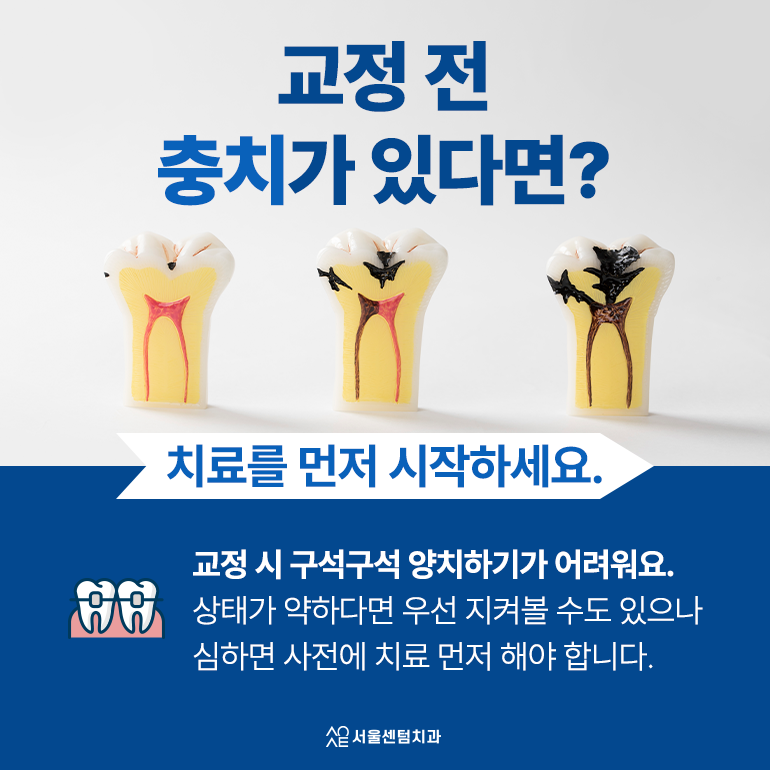
After preliminary examinations such as panoramic X-rays,
oral scans, occlusion analysis,
and checking gum health to accurately understand
the tooth alignment,
appliances are attached.
If cavities or periodontitis are found during the examination,
treatment must be completed before orthodontic treatment begins.
If you rush to attach the appliance without going through
this process,
problems such as inflammation and root damage
may occur during treatment.
The higher the diagnostic accuracy and the better the condition,
the smoother the process will be,
and the more likely unnecessary time will be reduced,
so if there is any treatment needed, please receive it first. ^^
Average duration varies depending on the concern

Because the treatment direction and scope vary,
rather than proceeding simply because the teeth are not aligned,
-
I want to improve protruding teeth
-
I want to correct a receding chin or underbite
-
I have significant discomfort due to facial asymmetry
-
I only want to lightly straighten the front teeth
It is important to have a more specific goal,
so I recommend thinking it over.
If we assume only the front teeth are being aligned,
it tends to be completed in about 6 months.
If facial improvement is also involved, such as protruding teeth
or a receding chin,
it can take 1 year and 6 months or more.
The same applies when there is jaw asymmetry or an unstable bite,
but please note that it can vary depending on severity.
Whether extraction is needed also has an effect.
The decision on whether to extract teeth is also one of the factors
that determine the duration of adult orthodontic treatment.
When space needs to be secured,
2 to 4 teeth are extracted and moved to
match the alignment and bite.
Because some time is needed until the space left by extraction is closed,
treatment tends to take longer.
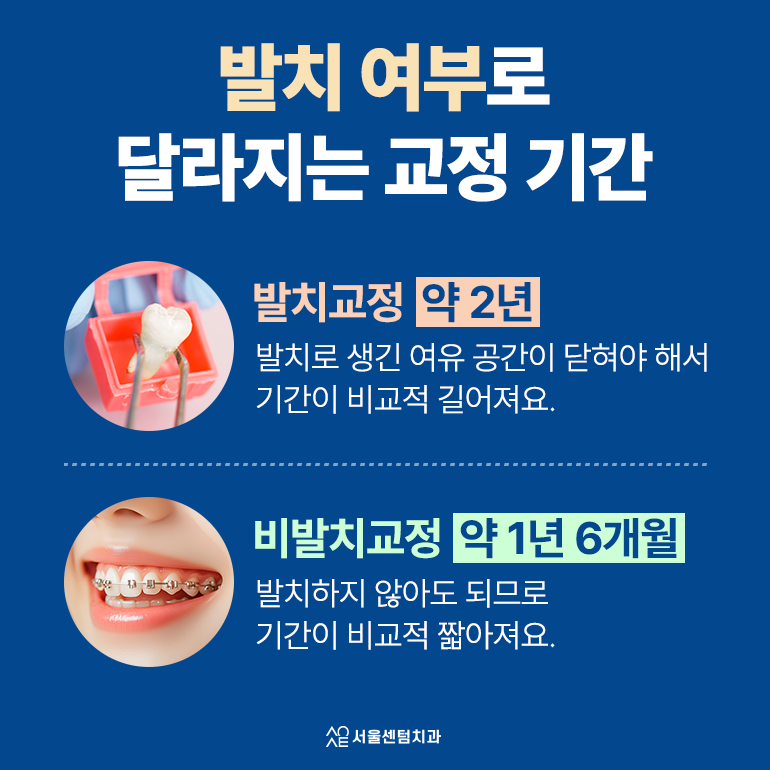
If extraction is included, it usually takes around 2 years,
while non-extraction treatment is often completed in about 1 year and 6 months.
Non-extraction treatment uses interproximal reduction or mini-screws
to create space and guide tooth movement,
with the advantage that it can be completed relatively quickly.
Because no teeth are extracted, many people say they want to
proceed with non-extraction treatment.
However, choosing non-extraction solely for the goal of faster treatment is not right,
and the extraction decision must be made by considering the oral structure,
whether the teeth protrude, and bite stability,
in order to maintain the results for a long time.
Conditions that can shorten treatment time
Orthodontic speed is also influenced by lifestyle habits,
so if you have bad habits,
you need to make an effort to correct them.
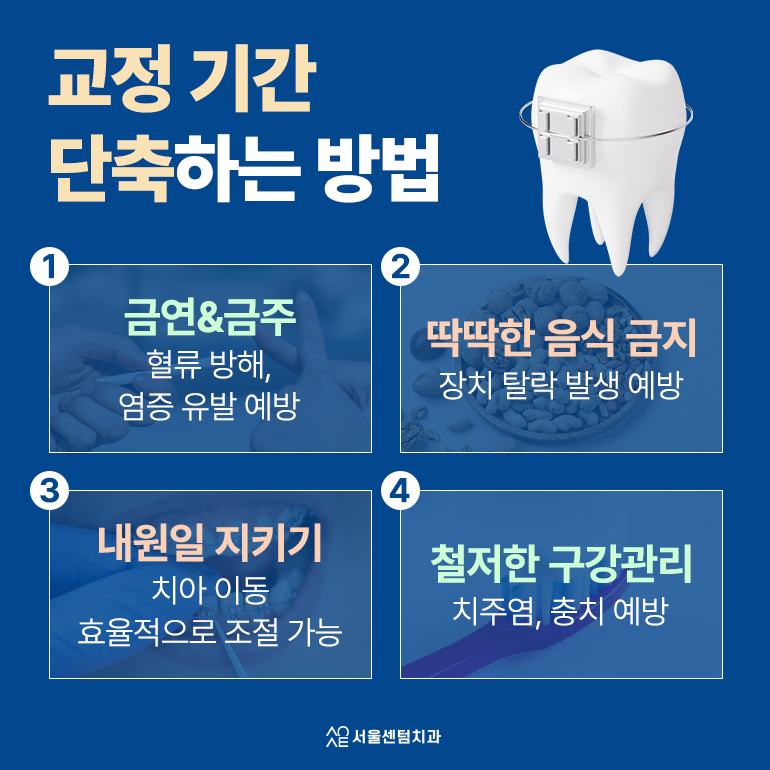
Smoking and drinking can interfere with blood flow,
slow the rate of tooth movement,
and cause inflammation,
so it is better to avoid them.
If your gums are healthy and oral hygiene is well maintained,
this also benefits the bone,
which can speed up movement response.
Keeping regular appointment intervals and properly caring for the appliances
also helps a great deal.
This is such an important matter that I always tell our patients
to keep their appointment days well.
If visits are delayed or appliances are repeatedly damaged,
the number of days you need to wear braces may increase.
A retention phase is also part of adult orthodontic treatment
You may think it is completely over once the appliance is removed,
but that is not the case.
Teeth must go through a retention phase of 1 to 2 years
before they stabilize in their new position.
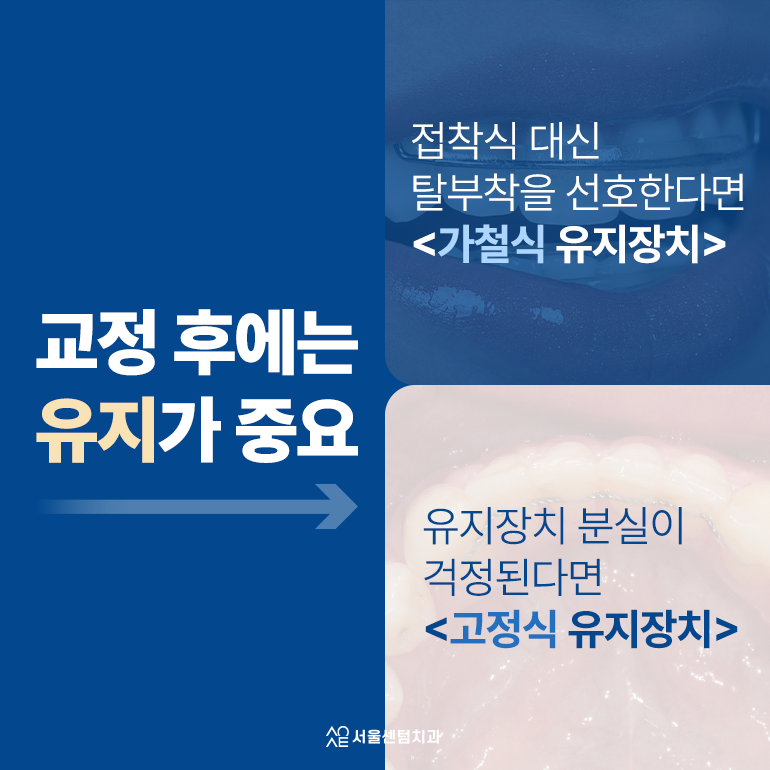
For this, a fixed retainer may be attached,
or a removable retainer may be recommended.
If you do not wear the retainer properly,
your teeth may return to their original position,
so even after the retention phase is over,
I hope you continue wearing it consistently.
The factors that determine orthodontic speed vary depending on lifestyle habits
and oral condition.
That is why it is difficult to guarantee that treatment will be finished within a few months.
Teeth need to be moved at a steady pace
in order to achieve stable results without damaging the tissues.
Rather than excessive adjustment and unsuitable lifestyle habits,
consistent and proper visits and management
produce the best results, so please keep paying attention.
Cervical abrasion, causes of brown teeth?
Implant drinking, on the day of placement? How many days?