Key points to know before placing multiple implants

When several teeth have been lost,
or when teeth become loose due to gum disease, fractures, or aging,
and dental alignment needs to be restored,
a full-mouth implant treatment may be chosen.
Compared with partial implants, the structure, level of difficulty, and design are different,
so there are many factors to consider during treatment.
Factors such as jawbone strength, gum shape,
and occlusion habits need to be analyzed
for the best results,
and because the cost also varies depending on many other factors,
it is helpful to know in advance
how much it usually costs
and how that amount is determined.
What process is needed? The cost depends on it
Today’s topic is
the cost of full-mouth implants, and first I’d like to talk about that.
However, it is difficult to give an exact figure because
each dental clinic is different and the price range is wide.
If both the upper and lower jaws are included,
it is generally around
10 million to 25 million KRW.
Depending on the situation, it may be higher
or lower than that.
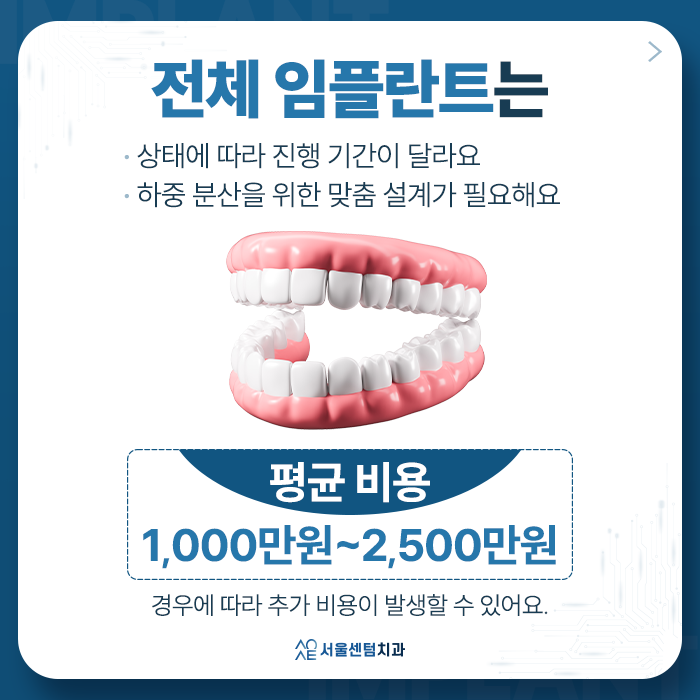
Depending on the condition of the jawbone, the fixture is placed first,
and then the abutment and prosthesis are
fixed step by step.
If the teeth are loose, extraction is performed first,
followed by a stabilization period.
At this time, trying to do everything quickly by
extracting many teeth all at once
can place a physical burden on the body to the point that
problems such as bleeding and swelling may occur,
so we generally recommend doing it in stages.
For a while, the implanted area must be handled carefully,
so if both sides are treated at once,
eating can also become inconvenient.
Staging the treatment is even more beneficial for patients with conditions such as diabetes or high blood pressure,
or for older patients.
Also, how many implants can be placed in one visit
depends on the patient’s condition and gum health.
Even if extraction has already been done,
there are cases where it is difficult to place everything in one session,
so you need to discuss it with the medical team.
The key reasons full-mouth implant costs differ by clinic
Looking at these price differences,
you may wonder why they are so large.
Among the patients who visit our clinic,
there are many times when they tell us that they had a consultation at another dental clinic,
and the price they were given then is different from ours.
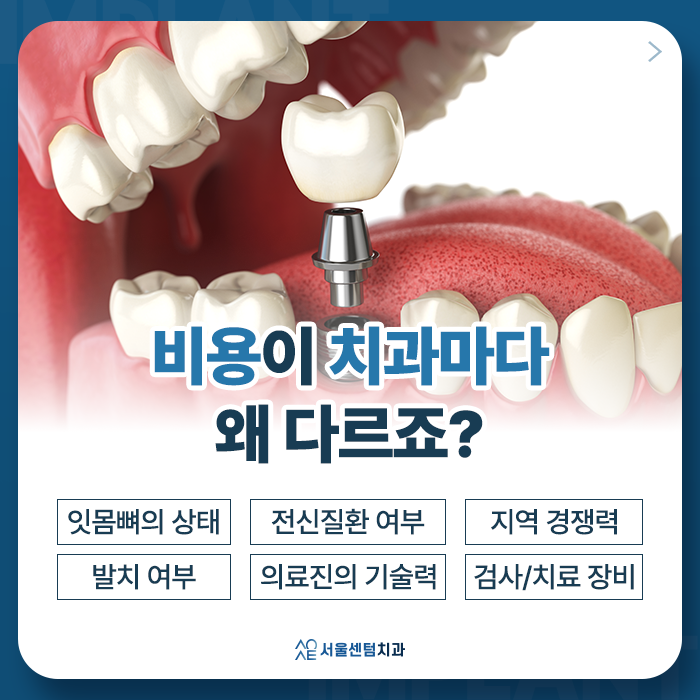
That is because there are many factors that create cost differences.
One reason is that the condition of the gum bone determines the scope of treatment.
If there is not enough bone, the structure may become unstable,
so auxiliary procedures such as bone grafting or sinus lift surgery may be needed.
The brand of implant materials and
whether digital equipment (CT, Panorama X-ray, etc.) is used,
as well as the condition of the gums or teeth,
can also change the level of difficulty.
Did you know that the location of the dental clinic also matters?
Hospitals and clinics in areas with lower competition tend to have higher prices,
so the final amount can be significantly higher.
The opposite would be less burdensome, right?
That may be why even people living in other regions
seek out a place in Seoul, such as our dental clinic.
Prices and results also vary depending on the type of prosthesis
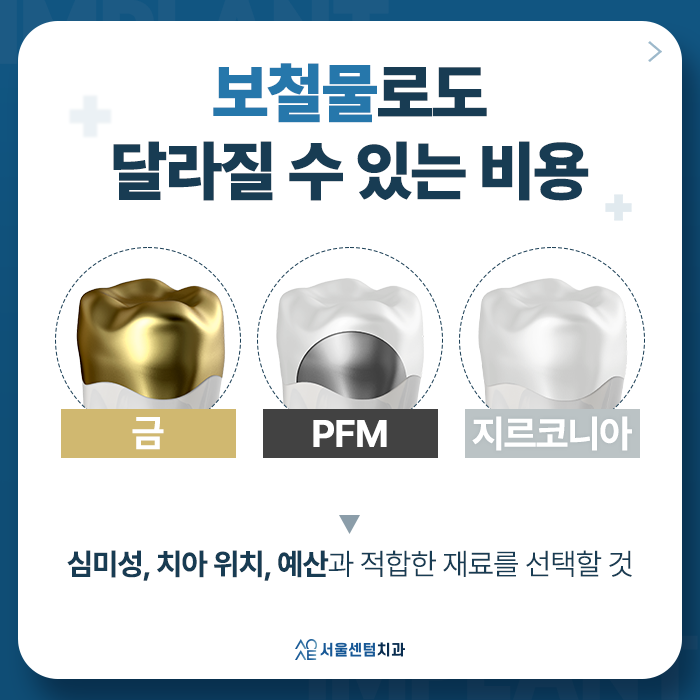
Prostheses are linked to both the treatment result and the price,
and are responsible for chewing force, aesthetics, and durability.
Among them, zirconia
has excellent strength and aesthetics,
but tends to be more expensive.
Gold is also on the higher end in terms of price,
and while it is often used because of its high durability,
its noticeable color is a drawback.
On the other hand, PFM is less expensive,
and its appearance is closer to zirconia,
but it is less durable and over time
the metal part may become visible.
Each has its own pros and cons,
so please consider the placement location, aesthetics, budget, and other factors
comprehensively
when choosing an appropriate prosthesis.
Treatment period and management: important points not to overlook
Full-mouth implants are not completed in a short time.
From diagnosis to fixture and abutment placement,
prosthesis attachment, and maintenance,
it can take at least 6 months to over 1 year.

The reason the period becomes longer is that
additional procedures may be needed,
and because an occlusal adaptation process is required.
Depending on the recovery speed of the gums and bone,
it may also be necessary to adjust the schedule.
If recovery is delayed, the treatment period may also become longer,
so we check at every visit
and decide whether to move on to the next stage.
In addition, because it is important to adjust the implant position, angle, and depth
so that the force generated during chewing does not concentrate in a specific area,
and instead is distributed evenly,
a custom design is created while considering the patient’s jaw movement and gum height as well.
The cost of full-mouth implants can therefore vary greatly
depending on this complex design process
and the condition of the bone.
All of these steps are procedures to increase the quality of the treatment,
so please be patient and proceed with the treatment.
Occlusal design determines how long the restoration lasts
The force by which teeth interlock,
i.e. occlusal force, is so important that it directly affects structural stability,
which is why I emphasized it above as well.
It determines how comfortably you can go about daily life.
If the occlusion is biased to one side,
it can cause various problems such as loosening of the abutment, crown fracture, and bone resorption.
Therefore, it is necessary to carefully design the load distribution of all prostheses,
and even after treatment, structural stability must be continuously maintained
through regular occlusal adjustments.
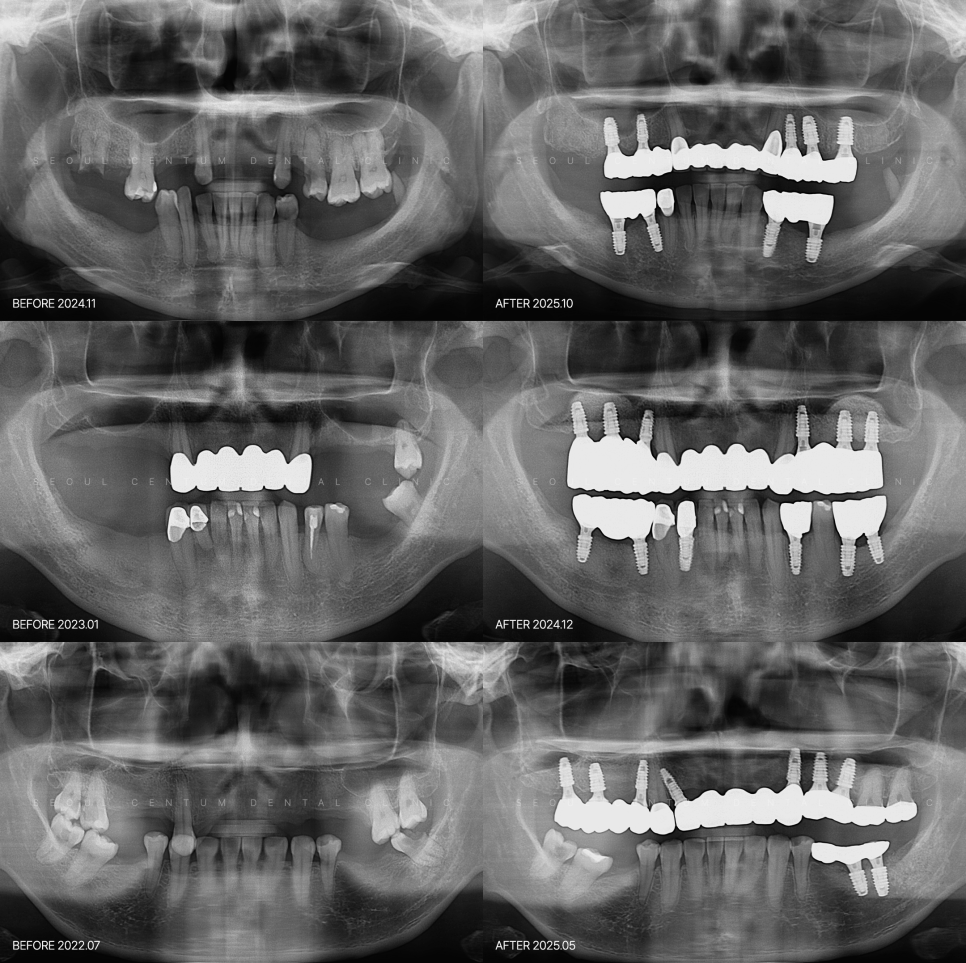
When choosing a dental clinic,
how about making the ability to design treatment suited to my oral structure
the top priority?
This is because treatment needs to proceed based on the interaction of many factors,
such as the number and angle of implants, the shape of the prosthesis,
the height of the occlusion, and movement of the temporomandibular joint.
Through a detailed examination,
first find out what treatment plan is possible,
whether additional procedures are needed,
and which materials may be appropriate.
If you want to maintain a stable condition in the long term,
prioritizing other factors over cost
is more likely to help you make a wise choice!

I hope this post was helpful for those considering full-mouth implants,
and I’ll wrap up here.
If you have any questions, please leave a comment
or contact the dental clinic!
Please do not leave cervical abrasion or notched teeth untreated
Let’s learn more about the implant structure