How can we make implant treatment suitable for me?
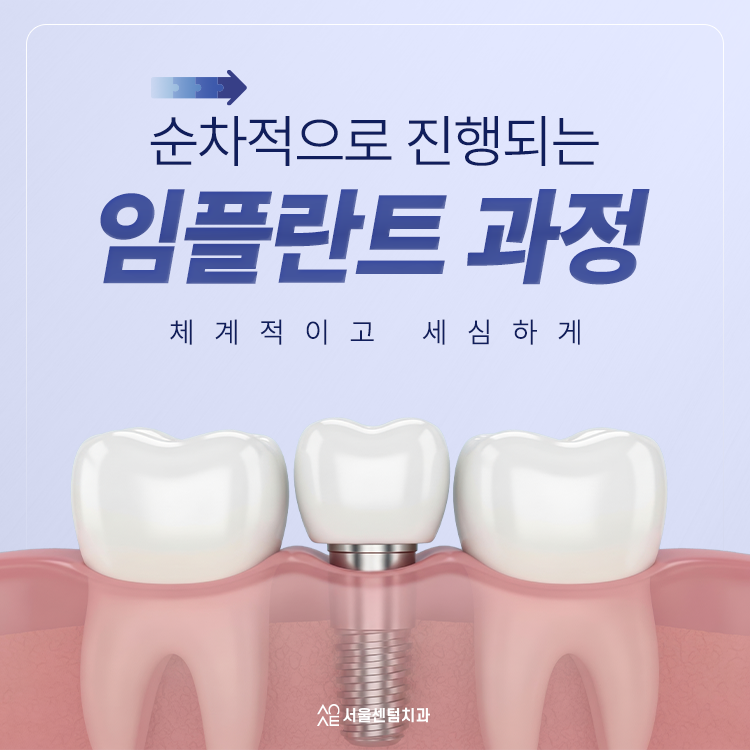
When a tooth has been lost or needs to be replaced,
getting an implant is a wise choice.
If you leave the empty space alone, you may experience
various inconveniences and problems.
Because it recreates the structure of a natural tooth
as similarly as possible, there is little sense of awkwardness,
and it is a precise treatment designed with everything in mind,
from bonding with the bone to the bite structure.
The implant procedure may vary somewhat depending on
the patient’s oral condition and the environment of the jawbone,
but the basic stages can be said to be fixed.
If you understand this flow in advance,
it will help reduce anxiety,
and you will also understand why a certain period of time is needed.
The first step starts with consultation and a detailed diagnosis

The starting point is a sufficient consultation and detailed diagnosis,
where the entire oral structure is examined together.
Through an oral examination, panoramic X-rays,
3D CT scans, and other imaging,
the thickness, height, and density of the jawbone,
as well as the position of the nerves, are carefully checked.
It is also determined whether the jawbone is sufficient
and whether additional bone grafting is needed.
In cases where there are systemic conditions such as diabetes or high blood pressure,
since recovery can be affected,
there is thorough consultation with the medical team.
(*Especially because bleeding may be delayed)
In this way, the initial diagnostic stage
becomes the reference point for determining the overall treatment direction.
Placing the fixture, which serves as the framework
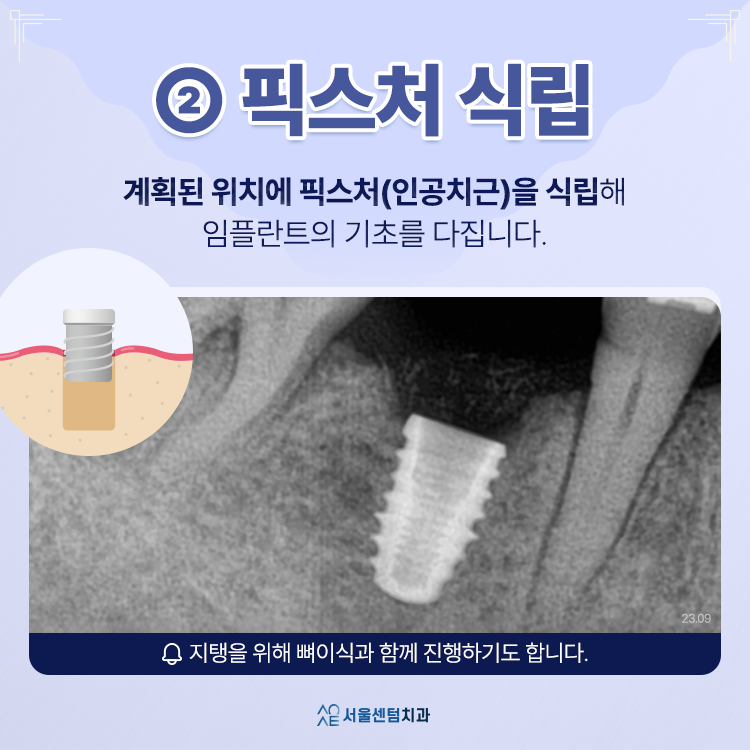
Once the treatment plan is finalized based on the diagnostic results,
the procedure begins in earnest.
The gum at the planned site is opened,
and the fixture, the artificial tooth root, is placed first.
You can think of it as similar to installing rebar when constructing a building.^^
Depending on the individual, the surgery time and
degree of difficulty may differ.
If the jawbone condition is good,
you can proceed directly to fixture placement,
but if not, bone grafting is performed first.
This is a part that is often considered in the implant procedure.
That is because poor jawbone condition is common.
Going through the key osseointegration period
The osseointegration period is an important stage.
It refers to the fixture firmly
bonding with the jawbone.
Even if there is no visible change on the outside,
this can be seen as the period when the most important procedure
is taking place inside.
Usually, it takes about 2 to 3 months,
but in some cases it may take longer.
If the bone and artificial tooth root do not
stably bond during this period,
there may be a higher risk of loosening or falling out
when the abutment is later attached
or the prosthetic restoration is placed on top.
Therefore, having 충분한 recovery time
is very important.
While coming in for regular checkups from time to time,
the condition is monitored, and when it is judged to be fine,
the next step is taken.
Connecting the abutment to provide support
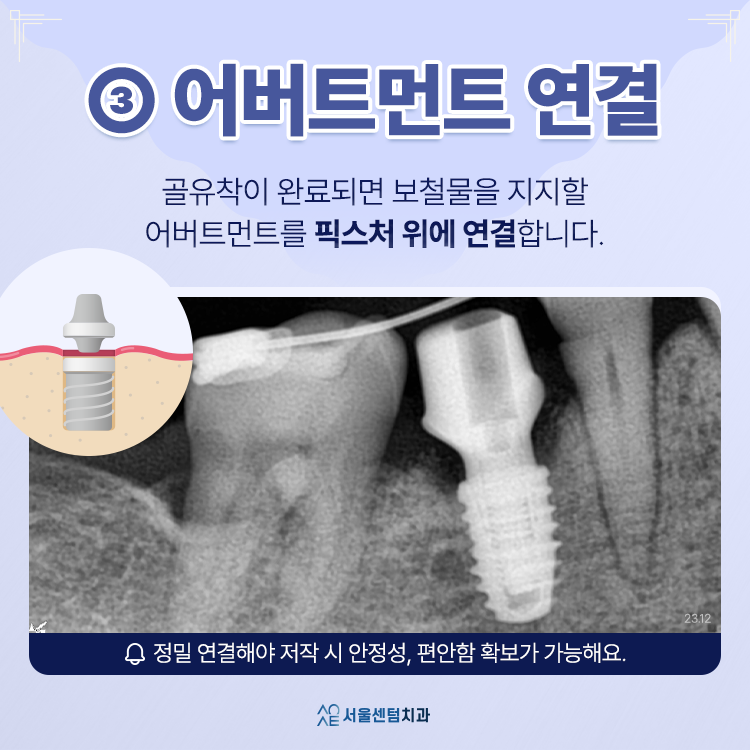
Once osseointegration is stably completed,
the process moves on to connecting the abutment,
the pillar component.
The abutment connects the fixture placed inside the gum
with the prosthetic restoration visible from the outside,
effectively transmitting chewing force
and playing a functional role in maintaining the bite.
If it is not tightened properly and an error occurs,
problems such as the abutment loosening or the prosthetic restoration falling out can happen.
In the end, the abutment is a key link that improves the overall completion,
so it must be tightened firmly so it does not come loose.
After that, impressions are taken
to make a customized prosthetic restoration.
Finally, the custom prosthetic restoration is placed
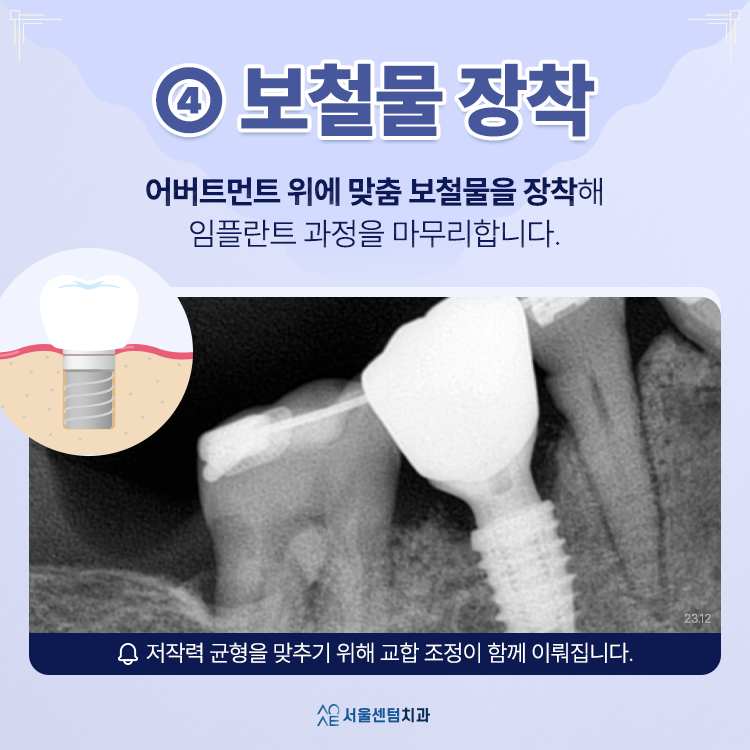
After the abutment, the prosthetic restoration is placed,
taking into account the tooth height, bite,
and the harmony of color and shape with the surrounding teeth.
After placement, when the mouth is closed,
the bite condition when chewing,
whether the chewing force is not concentrated on one side,
and whether there is any difference in height compared with the surrounding teeth
are carefully checked.
If necessary, fine adjustments are repeated
to bring it into the proper condition.
In this way, the implant procedure
enters its final stage.
So far, we have looked at the implant procedure
in detail.
As you can see, since there are quite a few steps,
it does not finish in just one day.
Because it continues from diagnosis to fixture placement,
the osseointegration period, abutment and
prosthetic placement, and post-treatment care,
time and care are required.
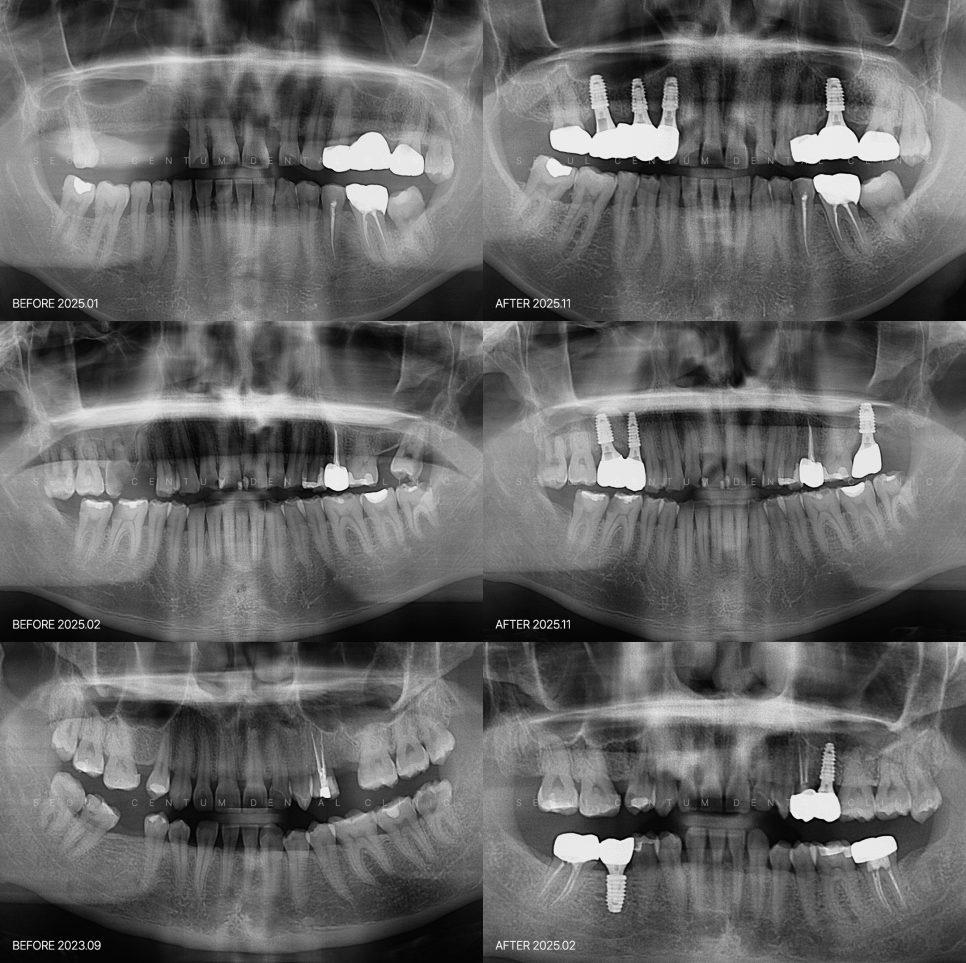
If you understand the overall structure and make a plan
that fits your own oral condition,
you can expect satisfying results in both function and aesthetics.
In particular, because a medical team with extensive know-how
must carefully proceed according to each individual’s situation,
it will be possible to use it stably for a long time.
After fully understanding the overall flow,
I hope you choose a dental clinic where medical staff
with extensive implant treatment experience are on site
and receive help there.
With the wish that everyone has a happy New Year,
I will conclude here.^^
Why you should not ignore implant swelling and pain
Why do symptoms that occur in the early stages of tooth decay require quick action?