When you are pregnant, is it better to get an implant now or after giving birth?
When you keep seeing patients in a dental clinic,
you end up having consultations constantly.
As we talk through consultations, it’s surprisingly common for people who are pregnant
or about to give birth to come to the clinic
with very worried expressions on their faces.
“Is it okay to have an implant consultation now?”
“Should I do it after giving birth, or is it okay
to do it now?”
If you search on Naver, there is a lot of information about implants for pregnant women
and implants after childbirth,
but it can still be a confusing topic,
making you wonder whether this or that is right for your own situation.
In actual visits, because people are understandably
worried about medical treatment,
they are often more afraid of making the wrong choice.
Today, rather than talking about textbook knowledge,
I want to explain, based on real consultation and patient cases,
which choice is more realistic for pregnant women considering implants
and for implants after childbirth.
I’m okay with the pain, but it won’t affect the baby, right?
This is a common question in many cases
when pregnant patients are considering implants.
“I’m okay with the pain.”
“Will it affect the baby?”
These are the two questions people ask most often.
Because they are pregnant,
they naturally have to be sensitive to each small treatment,
including medication.
Whether anesthesia is okay,
whether X-rays are okay,
whether taking medicine is okay, and so on.
In the end, because of all these worries,
many people conclude, Then I’ll just do it after giving birth!
I’m not saying that choice is wrong.
However, not every dental problem can wait long enough for the timing to be delayed.
That is the point.
Situations in which pregnant women should still consider implants
When talking with patients, there are cases where even pregnant women
should definitely consider implants.
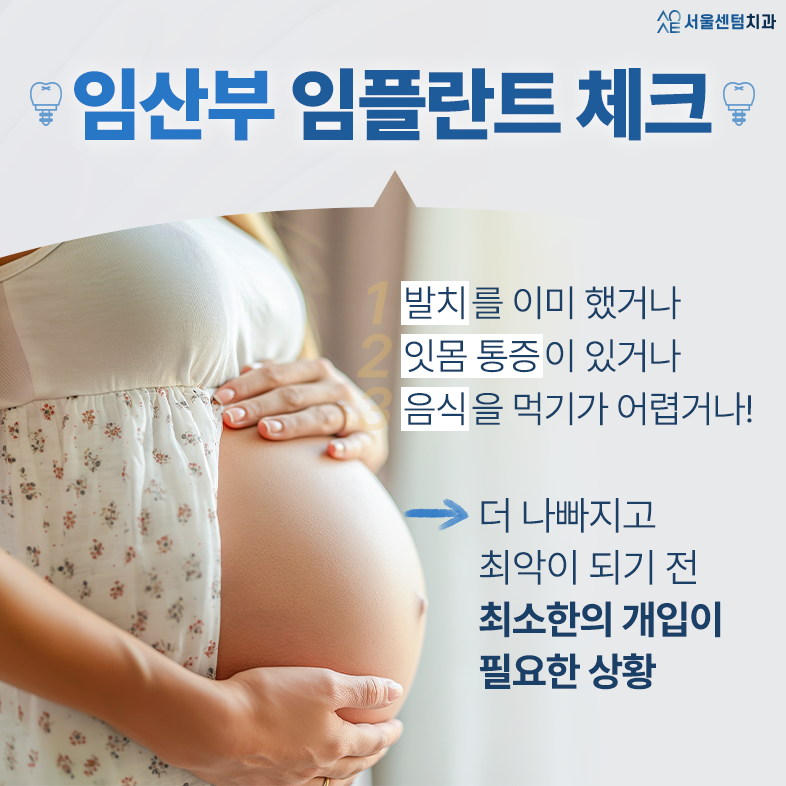
If a tooth has already been extracted,
but there is ongoing gum pain
and it is becoming increasingly difficult to eat,
this is something that should be considered.

There are also cases where a dental problem already existed
before pregnancy,
but the inflammation becomes worse during pregnancy
and the condition becomes apparent.
In these cases, telling the patient to just wait until after giving birth
would often be too difficult for them to manage in daily life.
For pregnant women, implants are not a choice made because they are convenient,
but rather a treatment option considered when minimal intervention is needed
before the condition gets worse or reaches a worst-case scenario.
Pregnant women’s implants require a different approach
In the case of implants for pregnant women,
they are not carried out in exactly the same way as ordinary implants.
Only the absolutely necessary steps are done with minimal anesthesia,
and unnecessary imaging and medications are avoided as much as possible.
In most cases, rather than completing everything at once,
a step-by-step approach is chosen.
The priority is first to control immediate pain or inflammation.
The actual implant placement itself may be postponed until after childbirth.
This can be seen as a way to reduce the burden during pregnancy
while preparing so that the implant can be placed right after giving birth.
Implants after childbirth
From a purely medical standpoint, doing it after childbirth clearly has more advantages.
The range of options for anesthesia and medication is wider,
the diagnostic and treatment plan can be more flexible,
and maintenance and management after recovery become much easier.
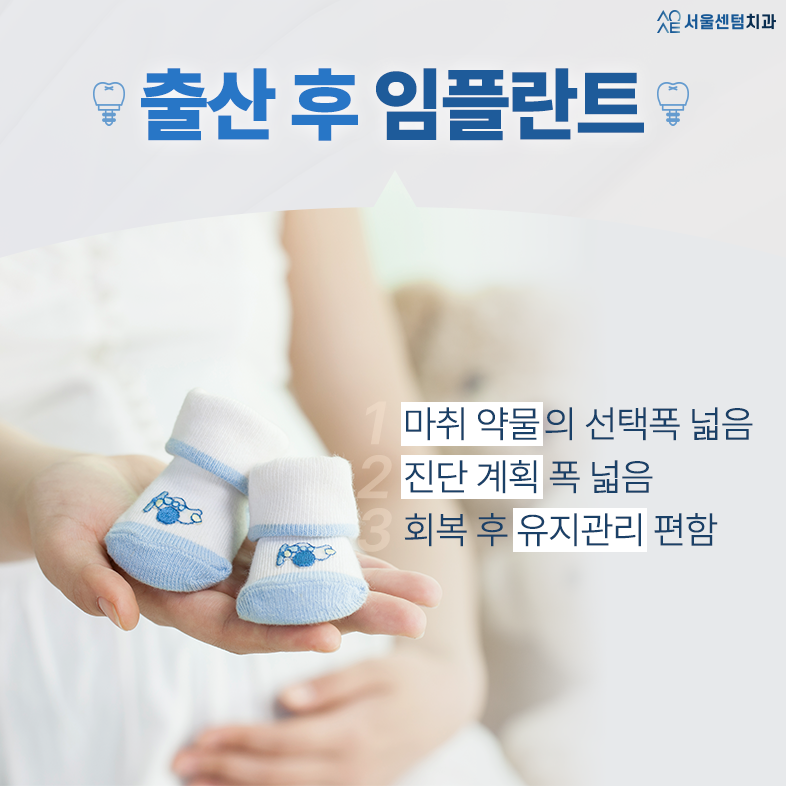
So the statement that it is better after giving birth is not a rumor.
However, depending on each person’s situation,
there are many cases where the implant after childbirth does not proceed as planned.
If you end up postponing the implant and coming back after childbirth
After giving birth, especially with a newborn,
I understand very well that you may not have much time,
but please do not forget that the mother’s health is important.
“After I gave birth, I was so busy I couldn’t think straight.”
“I didn’t have time to come to the dentist.”
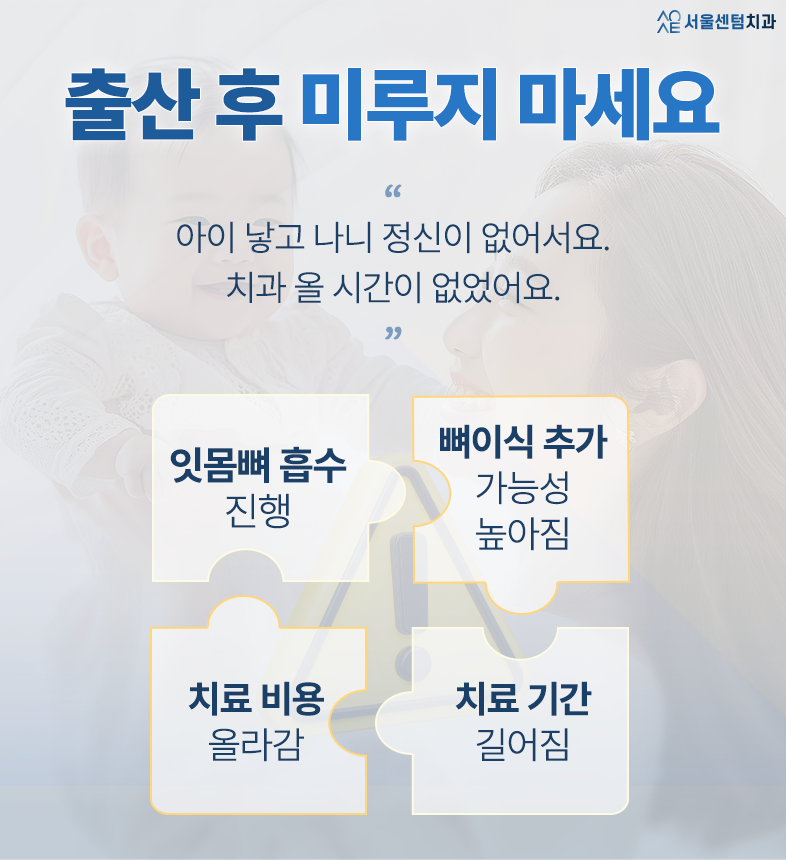
Delaying dental treatment because of postpartum recovery, childcare, and sleep deprivation
is a common case.
But if one or two years pass like that, the problem gets bigger.
The jawbone may continue to resorb,
bone grafting may become necessary,
and in the end, treatment costs increase
and the treatment period becomes longer.
Summary of criteria for choosing implants for pregnant women
Between implants during pregnancy and implants after childbirth,
there is no single answer that is always correct.
Instead, if we set minimum criteria,
Candidates for considering implants during pregnancy
A condition where pain or inflammation keeps recurring
A case where extraction can no longer be delayed
A case where treatment can be divided into stages
A stable period with no special issues in obstetric care
Cases where implants after childbirth are more suitable
A case with almost no pain
A case where living with temporary prosthetics is possible
A situation where regular management is possible
A case where there is enough time to wait for treatment
It should not be about whether it must be done right now,
but about a place that can accurately assess my condition.
Implants are even more difficult to consider during pregnancy
At Seoul Centum Dental Clinic, we never recommend treatment unconditionally.
We explain the possible options in the current condition,
along with the pros and cons of the better option after childbirth,
and we respect the pregnant patient’s choice.
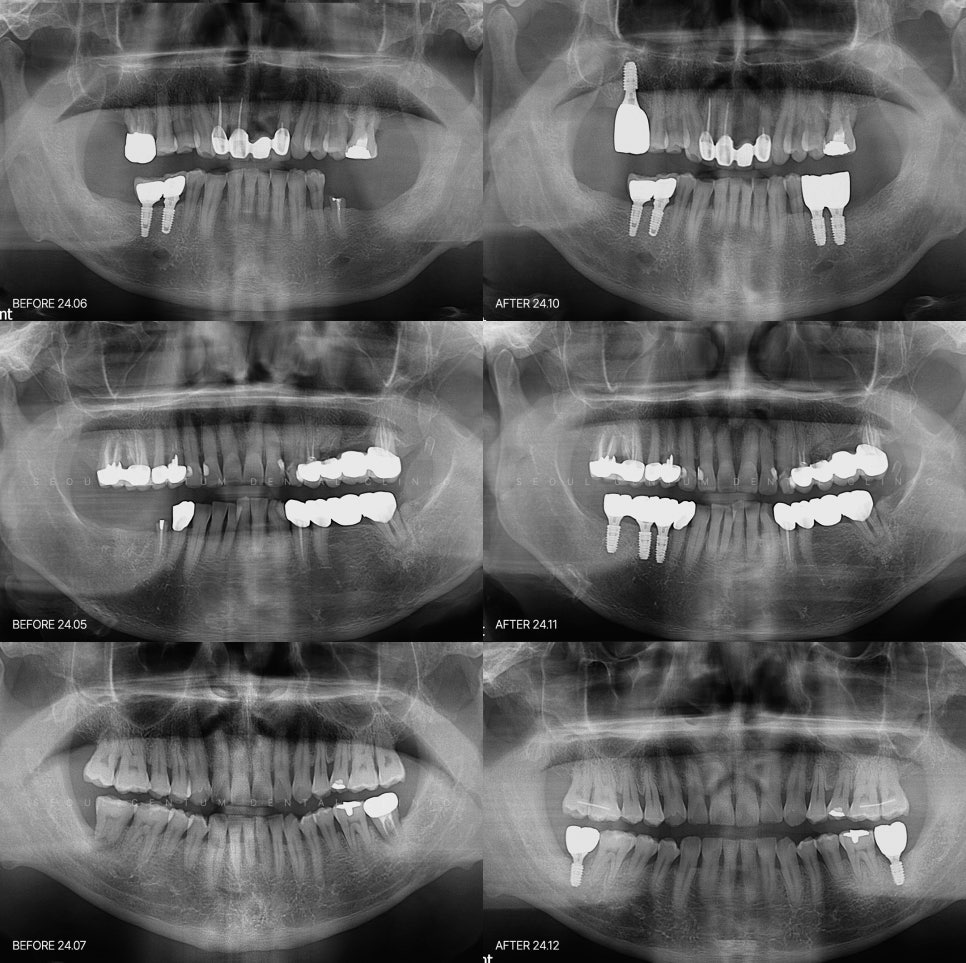
Rather than asking online, What should I do about treatment now that I’m pregnant?
you can reach a clear conclusion through an actual examination and consultation.

If you have any dental treatment concerns right now,
please contact Seoul Centum Dental Clinic without hesitation.
Timing for implant after extraction
Aesthetic prosthetics