Can a loose tooth that is easy to overlook simply be left alone?
When a formerly healthy tooth starts to feel slightly loose
It is easy to brush off as no big deal.
You might just think, “Isn’t it because my body is tired?”
There are times when a loose tooth does need treatment.
A slight amount of movement may be normal,
but if it happens repeatedly,
it may not be a temporary symptom.
Because it is highly likely to be a signal that a problem such as inflammation or structural damage is occurring in the mouth,
an early, detailed diagnosis is needed to identify the cause and take appropriate measures.
If you suddenly notice that feeling while eating something hard,
or if the tooth feels loose and sensitive when you push it with your tongue,
you need to respond even more quickly.
If the cause is gum inflammation, improving periodontal disease is key
One of the most common causes is gum inflammation.
When tartar builds up over time, the gums swell and weaken,
and even the jawbone around the teeth (alveolar bone) is resorbed,
which weakens support.
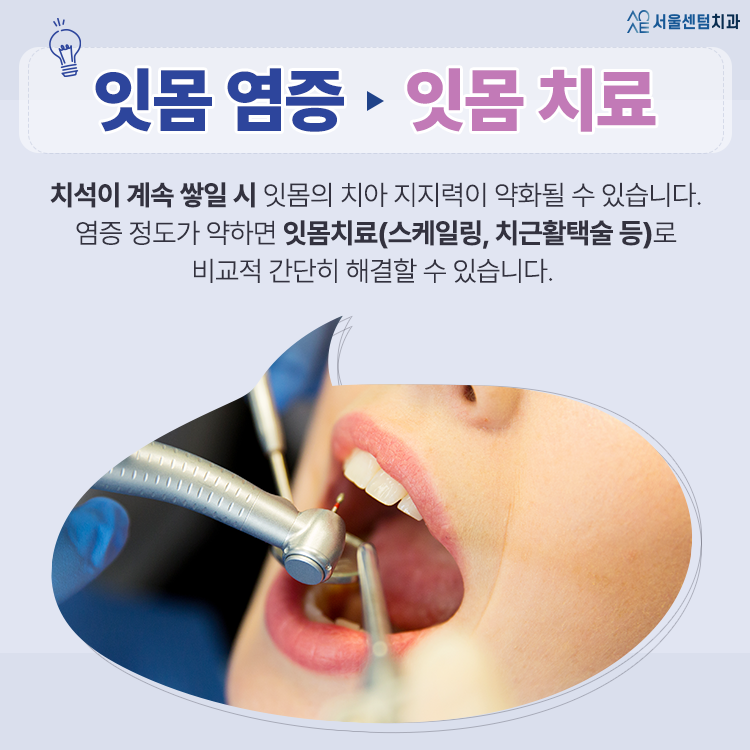
In such cases, step-by-step gum treatment such as scaling and root planing
should be performed first.
That is because the tooth may be temporarily loose due to inflammation.
If the inflammation is mild and has only recently occurred, that is somewhat fortunate,
but if it persists for a long time or the alveolar bone damage is severe,
the tooth may need to be extracted and replaced with an implant.
If the cause is bite imbalance, splinting is needed
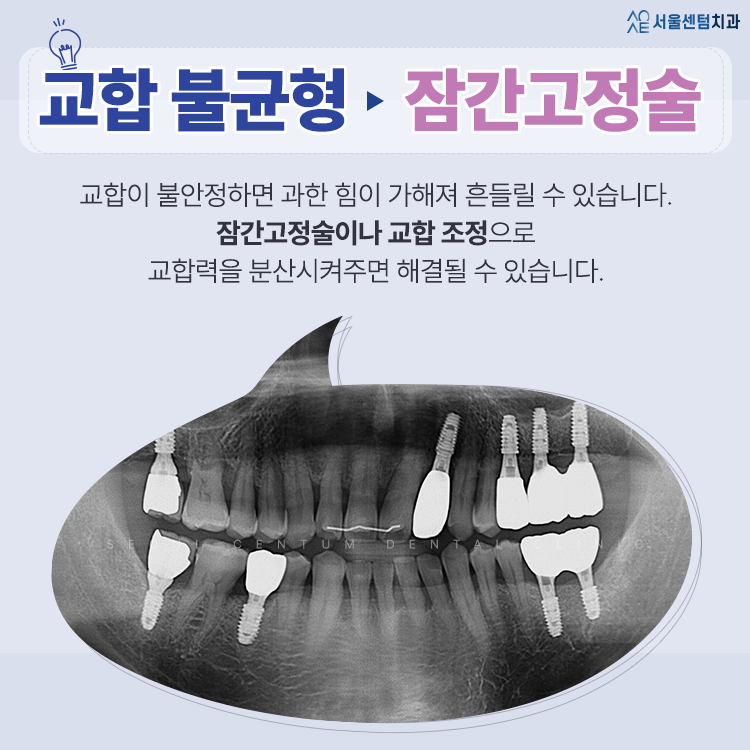
The way the upper and lower teeth fit together is called the bite,
and if the teeth are unstable,
it can be a cause.
This occurs when excessive force is concentrated on one area,
and local wear or cracks may also be accompanied.
In the long term, it may also affect the tooth root.
In this case, treatment for a loose tooth may include splinting, which fixes the neighboring teeth together with wire,
and bite adjustment, such as slight reshaping,
so that the force is distributed more evenly and recovery becomes possible.
Think of it like putting a cast on a fractured arm or leg.
If the cause is trauma or impact, splinting or replantation
If the tooth becomes loose due to a sudden accident
or external impact,
there is even the possibility of nerve damage,
so a prompt visit to the dentist is necessary.
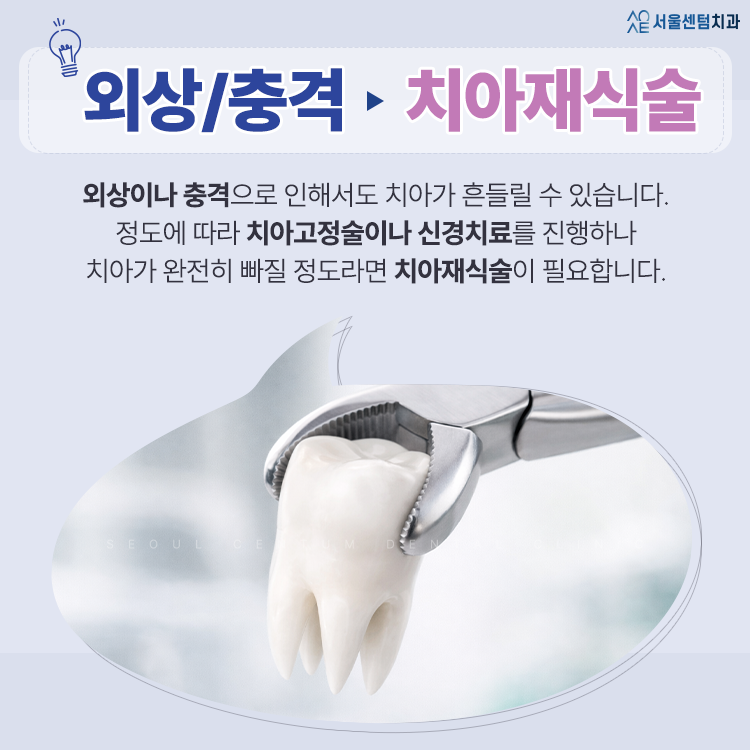
If the looseness is mild and the nerve condition is relatively good,
the tooth is splinted and monitored for about 1 to 2 months.
If the root has also been damaged, root canal treatment is performed,
and if the tooth has completely come out but the conditions are suitable,
a procedure called replantation, which attempts to place it back in,
may also be performed.
If a tooth falls out, you should visit the dentist as quickly as possible,
even if only a minute has passed,
so that the likelihood of needing more extensive treatment is lower.
If it becomes loose after root canal treatment, crown replacement or an implant
After root canal treatment, blood supply is cut off
and the inside is hollow,
so it becomes relatively weaker than the original condition, which had no problems.
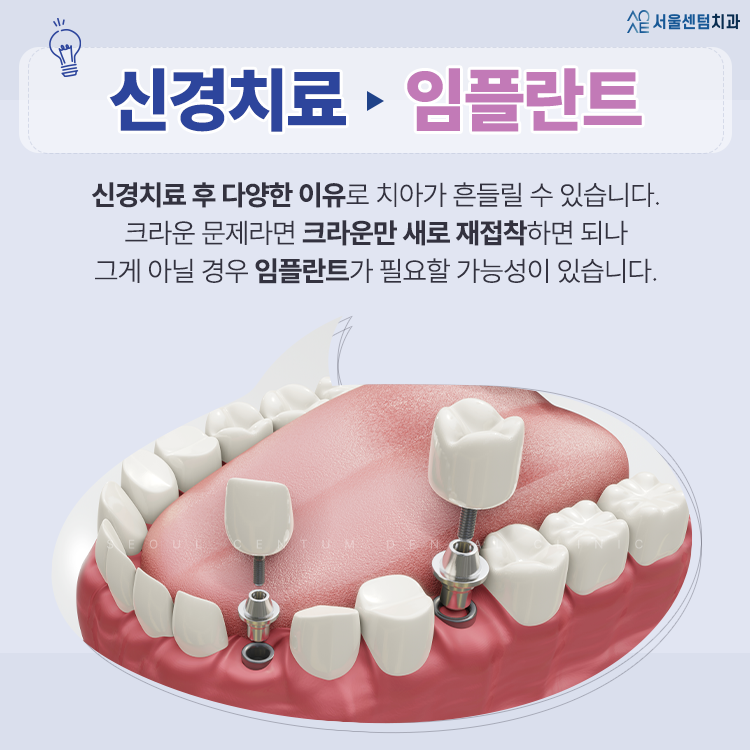
It may become loose if it is old or receives an impact,
but sometimes only the crown is the problem,
so after a detailed examination, depending on the results,
a new crown may be made and bonded.
Conversely, if the cause is a problem with the nerve,
root canal treatment may be performed.
If the condition is severe, a crown alone may not be enough,
and replacing it with an implant should be considered.
It can also be due to surrounding factors.
Sometimes, even if no obvious problem is visible,
the surrounding gums may have receded too much
or alveolar bone resorption may be progressing,
leaving insufficient support and causing looseness.
If the possibility of preservation is judged to be low,
a treatment plan for an implant will be made.
Because proper fixation is necessary,
bone grafting may also need to be done together.
The longer it is left untreated,
the number of affected teeth may increase,
so please be careful.
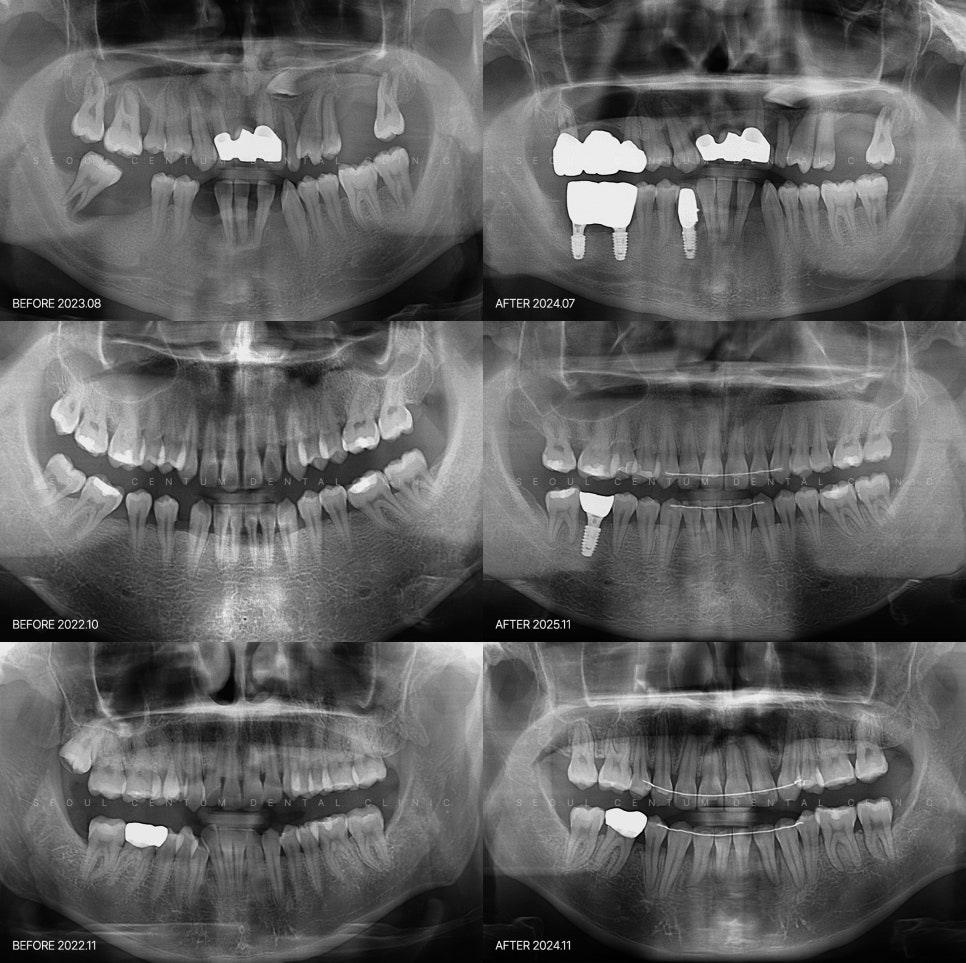
Whether the cause is inflammation or a structural problem
is difficult to determine on your own.
Treatment for a loose tooth should begin with an early, accurate diagnosis
to examine the overall balance within the mouth,
and if necessary, multiple methods should be combined.
If it is left untreated,
both the extent of the problem and the cost can increase,
so please remember that responding quickly when you feel an abnormal sign
is the most effective solution.
Check when gum recession resin treatment is needed
What should be considered when getting an implant at the dentist?