There is a reason pain starts in the jaw.

When opening your mouth or eating
have you ever often experienced a sense of
stiffness or clicking around the jaw in daily life?
These symptoms may quickly subside due to
temporary muscle fatigue,
but if they recur or become more widespread,
they can develop into problems involving the oral structure as a whole.
When moving the jaw, the joint, muscles, and teeth
move together,
so if the balance of one element is disrupted,
it is easy for pain to follow.
Looking at the pattern and the situation in which it occurs
is the first step in identifying the cause of jaw pain.
Because it can start as a slight discomfort and gradually worsen,
an active diagnosis is needed.
Warning signs revealed through jaw joint movement
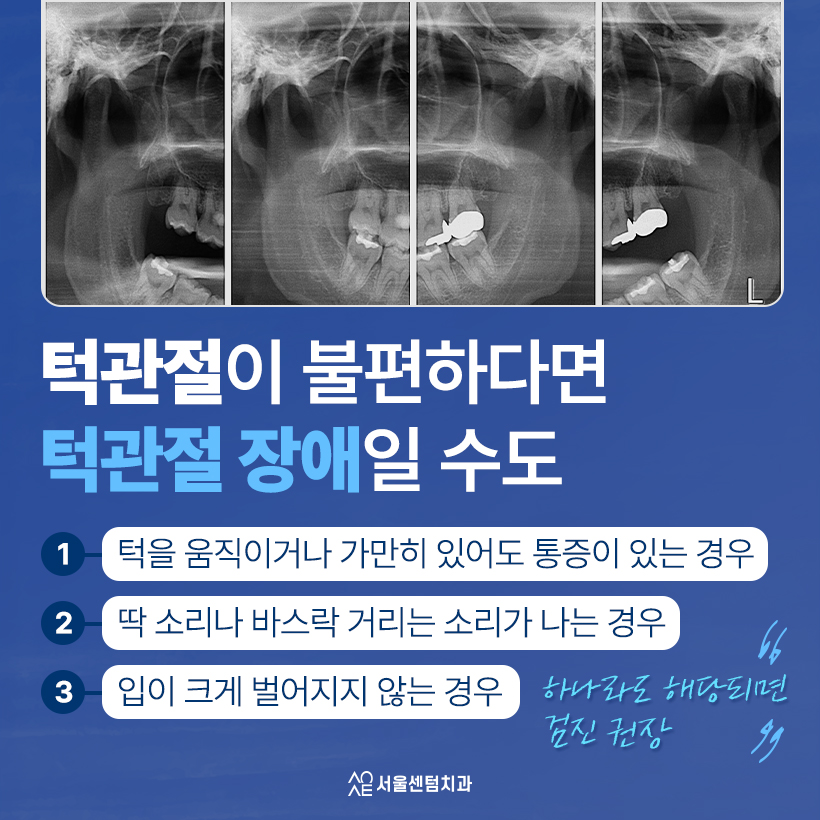
Jaw pain may occur temporarily,
but it can also easily lead to temporomandibular joint disorders.
A clicking sound when opening the mouth or
restricted mouth-opening range
may accompany it.
If bone position abnormalities or changes in
the friction surface of the joint accumulate,
pain may spread to the area around the ears
or to the temples.
In particular, if you feel stiffness or discomfort when opening your mouth after waking up,
you may suspect reduced jaw joint function.
It should be approached by evaluating the occlusion and
the movement of the jaw joint together.
Discomfort created by unconscious habits

Do you grind your teeth during sleep or
have the habit of clenching them unconsciously?
Or do you have the habit of resting your chin on your hand
or sleeping on your side?
These habits place continuous pressure on the jaw muscles and joints,
so it is better to be as mindful as possible
and gradually correct them.
They can lead to long-term pain.
If the tongue line looks uneven,
or tooth wear or cracks are observed as well,
there is a possibility that the burden has already been accumulating.
This is one of the most common causes of jaw pain.
Burden caused by occlusal imbalance
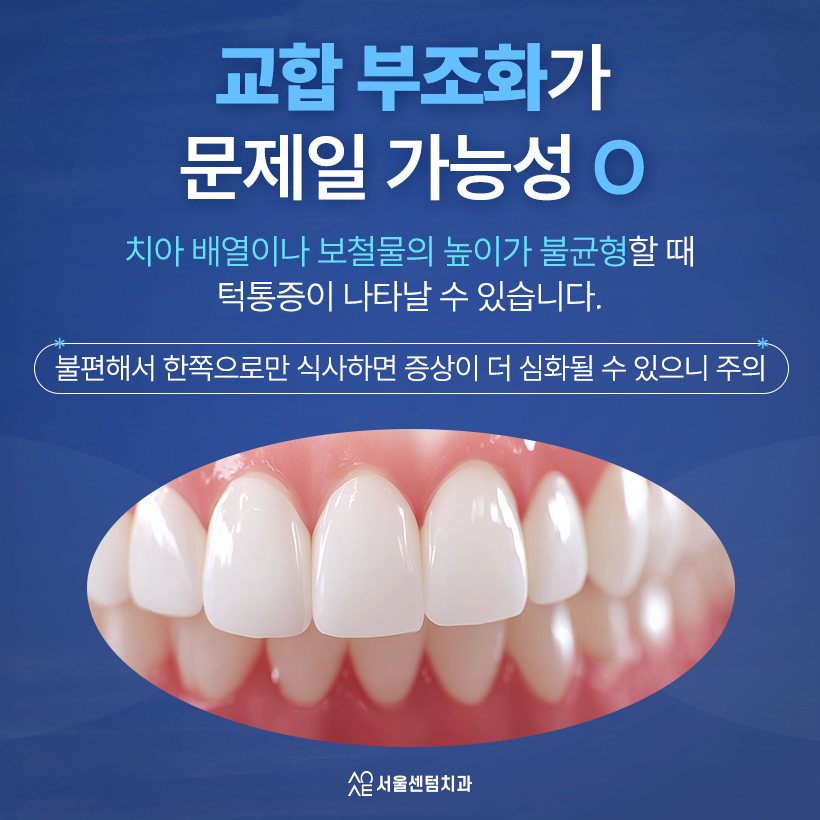
Problems can also occur when the alignment or height of the teeth is not correct.
If force is concentrated to one side while eating,
an uneven load is placed on the jaw, and if it continues,
the joint may be used repeatedly only in a specific direction,
causing pain.
If jaw discomfort started after recently receiving prosthetic treatment or orthodontic treatment,
an occlusion check may be necessary.
It can also be caused by the teeth.
If a cavity or periodontal disease leads to the habit of chewing with a particular tooth,
asymmetric force may be transmitted.
Repeatedly chewing only on one side distorts the jaw joint usage pattern
and can lead to pain.
In particular, if a prosthesis does not fit properly,
the load during chewing becomes concentrated,
making it possible for the problem to develop further.
Pain that appears as the condition of the teeth changes can also become a clue
that leads you to find the cause of jaw problems inside the mouth.
Stress also causes tension in the jaw muscles.

You may have heard the saying, 'Stress is the root of all illness.'
When stress builds up and you unconsciously
repeat the behavior of clenching your teeth tightly,
it can also cause discomfort in the jaw.
If you check the condition of the muscles,
they are often contracted.
There are also cases where the bones have problems.
If stress is the problem,
you need to approach it while also considering your lifestyle pattern.
While receiving treatment, you should make efforts on your own,
such as getting enough rest to relieve stress,
which can help with faster improvement.
Because symptoms tend to arise due to multiple causes rather than just one,
a comprehensive diagnosis that includes lifestyle patterns and habits
is necessary.
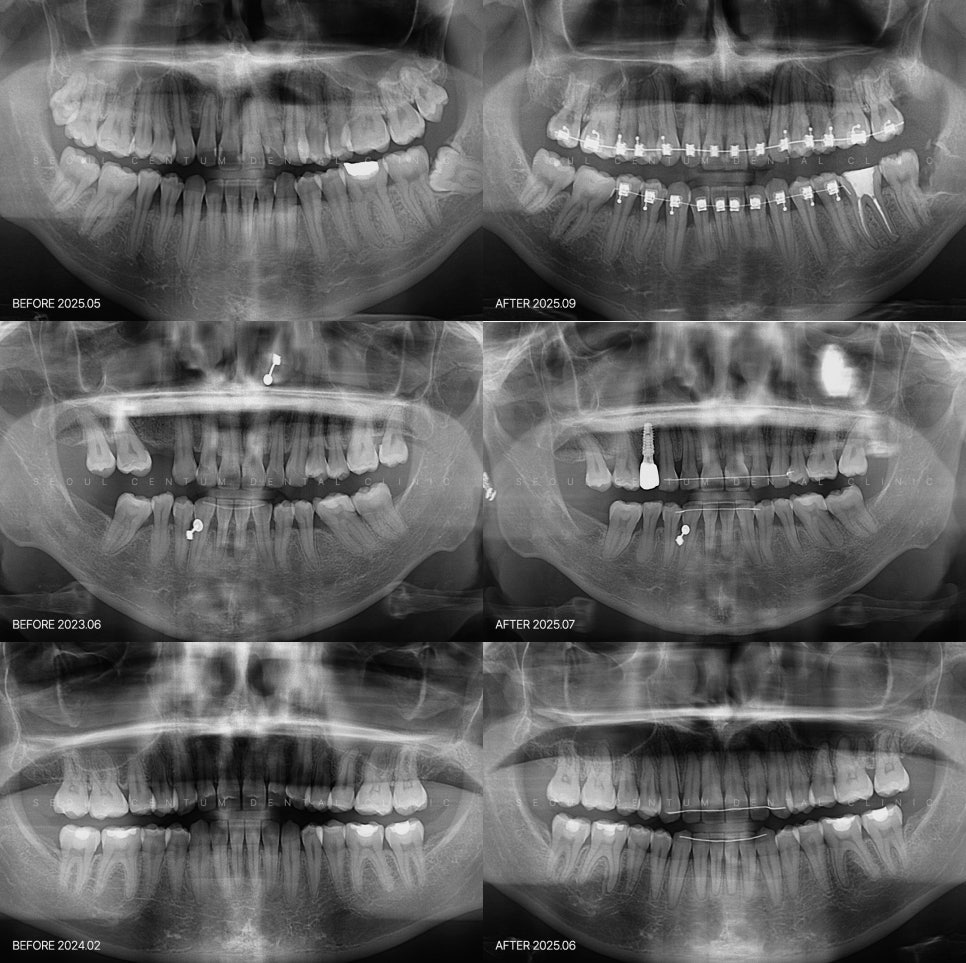
If symptoms recur
or gradually spread over a wider area,
the entire oral structure should be examined in detail.
Headaches may occur,
and the neck and shoulders can also become stiff.
If the cause of jaw pain is accurately distinguished,
it helps reduce unnecessary worry and establish a care direction
that matches the condition.
Because recovery can be stabilized through treatments such as splints and Botox,
when discomfort appears, it would be good to visit a place like
our Seoul Centum Dental Clinic before the symptoms worsen further.

Let’s look at how long implant pain lasts
What should be done if a molar breaks?