What You Need to Know After the Death Incident in Sedation Anesthesia Implant Dentistry on Story Hunt
Hello. This is Seoul Centum Dental Clinic.
Recently, after the Story Hunt program aired
an incident in which a patient died during
sedation anesthesia implant treatment,
we have been receiving more inquiries from
people who feel increasingly anxious.
“Sedation anesthesia implant treatment is
supposed to be safe, right?”
“Isn’t sedation anesthesia something that is
normally done at dental clinics?”
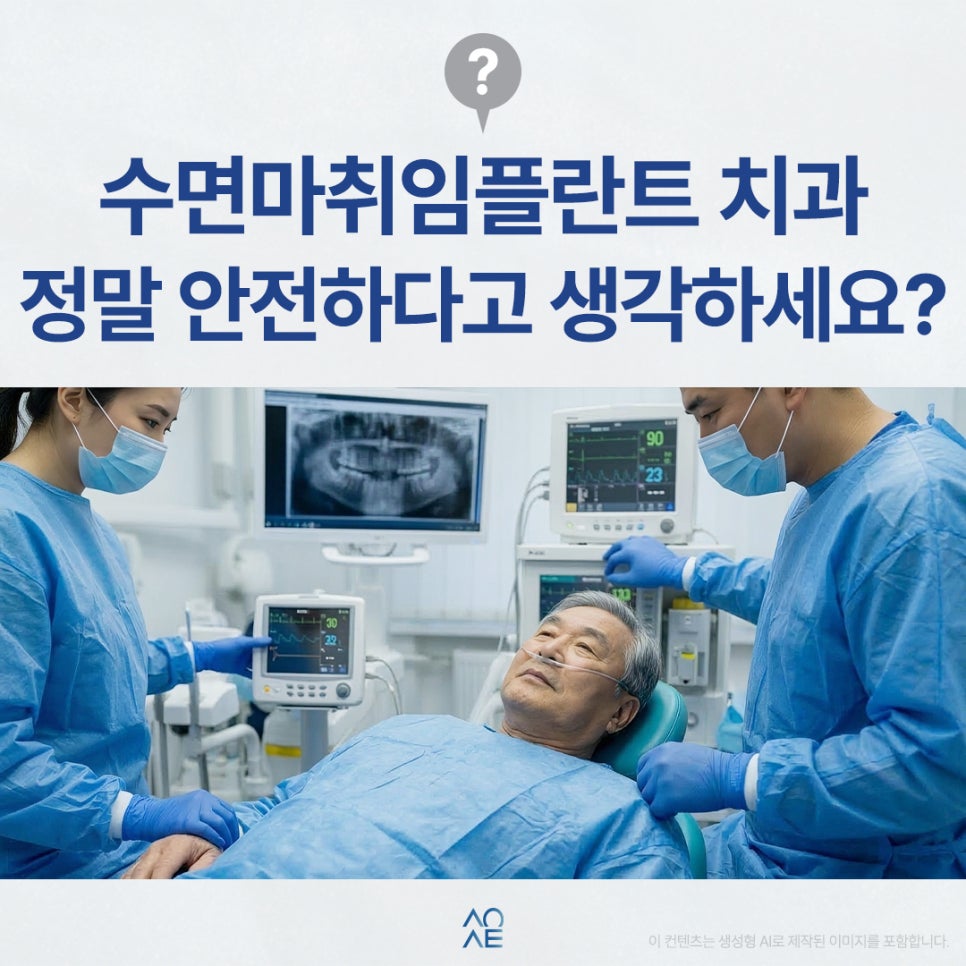
In fact, these kinds of questions have
come up quite often before as well,
but it feels like they have increased even more lately.
Sedation anesthesia implant treatment is actually
not a treatment method recommended for every patient.
I will explain the real meaning and risks of
sedation anesthesia implant treatment, which
has recently become a topic of concern,
and the role anesthesia plays in implant treatment.
Isn’t There Really Such a Thing as Sedation Anesthesia Implant Treatment?
When many people hear the term sedation anesthesia,
they imagine undergoing surgery while completely asleep.
But did you know that what dental clinics refer to
as sedation anesthesia is different from the
sedation anesthesia we normally think of?
To be precise, it is called conscious sedation.
It refers to a treatment method in which
procedures are performed while the patient is in
a sedated state that reduces tension and fear,
rather than under general anesthesia,
where consciousness is completely lost.
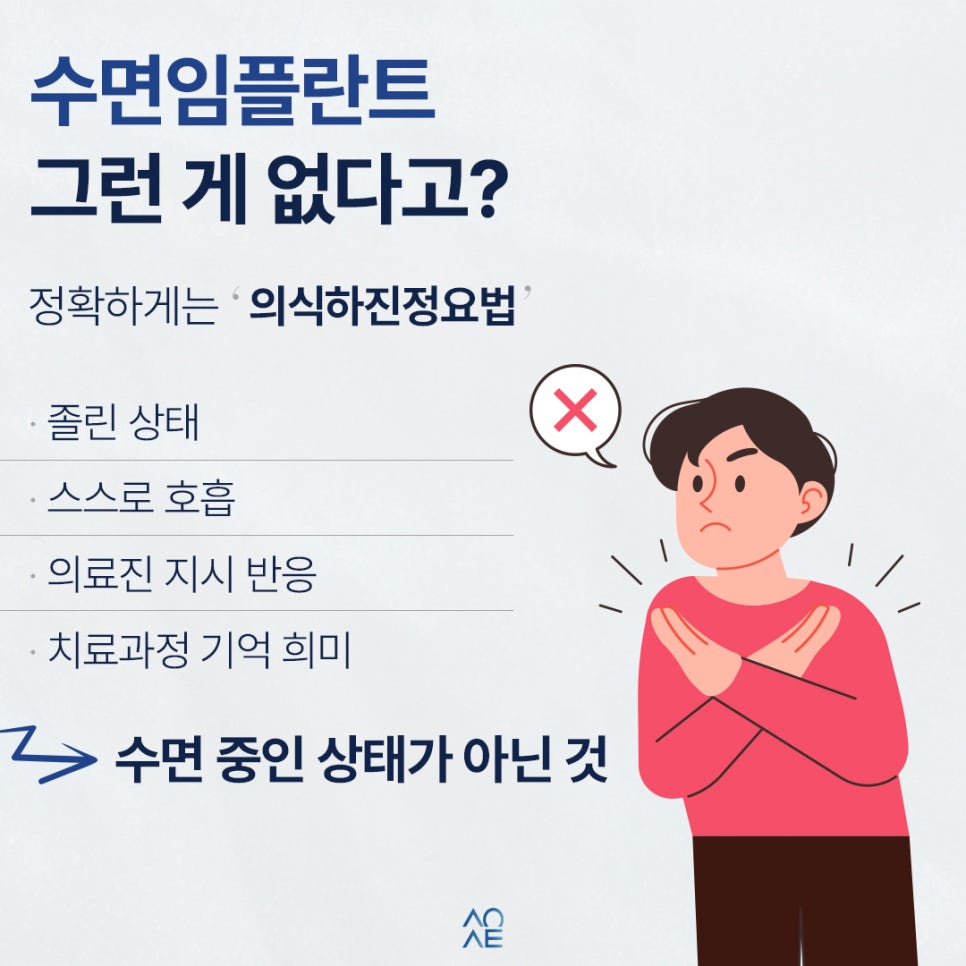
The patient becomes drowsy but continues to breathe
on their own, responds to the medical staff’s
instructions, and tends to have a blurred memory
of the treatment process.
In short, because it leads to a state where you
feel like you slept through it and do not remember
it, people often feel as if the treatment was over
when they woke up.
But what is called sedation anesthesia implant treatment
is ultimately conscious sedation,
and the patient is not actually asleep.
Why Is It Controversial?
The recent incident introduced on Story Hunt
also started from this point.
The drugs used for sedation anesthesia can,
in some cases, be medications that affect the
central nervous system.
These medications reduce anxiety and tension,
but they also carry risks.
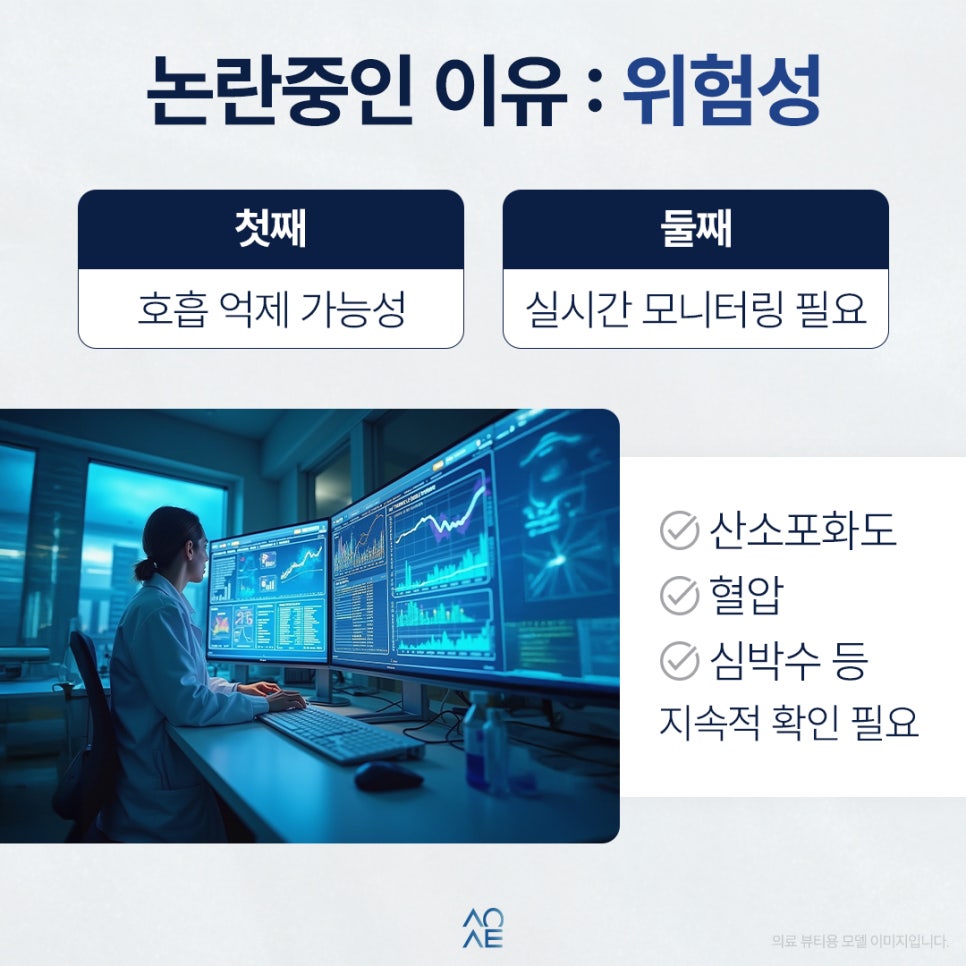
First, there is the possibility of respiratory depression.
Sedative drugs can suppress breathing,
and in elderly patients or those with underlying
conditions, decreased respiration may occur.
Second, real-time monitoring is necessary.
During sedation anesthesia, oxygen saturation,
blood pressure, heart rate, and other vital signs
must be continuously checked.
If there is no system in place to respond immediately
when an emergency occurs, it can lead to a major accident.
Anesthesia Is Not the Most Important Thing
Because it is implant surgery, many people understandably
feel burdened and scared, so they focus a lot on anesthesia.
But in reality, what matters most is not simply
avoiding pain at the moment, but undergoing a treatment
that prevents pain in the future.
Many people think that sedation anesthesia is necessary
in order to avoid pain.
In fact, regardless of sedation anesthesia, what eliminates
pain in the treatment area is local anesthesia.

You can think of it as a partial anesthesia that blocks
the gums and nerves.
Sedation anesthesia, on the other hand, reduces fear,
relieves tension, and blurs memory, helping block
awareness of the procedure.
Since it does not actually reduce physical pain,
it cannot be said that it is absolutely necessary
for implants.
Why Seoul Centum Dental Clinic Does Not Use Sedation Anesthesia
For a long time, Seoul Centum Dental Clinic has been
performing implant treatment centered on local anesthesia
without sedation anesthesia.
The reason is clear.
To avoid creating unnecessary systemic risk.
If sedation anesthesia makes the procedure feel painless,
patients may feel reassured and proceed more comfortably,
but in reality there are risk factors involved.
We believe it is an unnecessary measure because implant
surgery can be performed without pain using local anesthesia alone.

If you ask, “Isn’t there anything better for the patient
if local anesthesia is used?” the answer is that the
patient’s condition can be checked in real time.
There is also no risk of respiratory depression,
and recovery after surgery is faster.
The risk of systemic side effects can also be minimized.
Even though surgery itself can be frightening,
after the procedure many patients say things like,
“Did it really finish that quickly?”
“I was worried, but it didn’t hurt at all!”
“I worried for nothing.”
In implant surgery, rather than the anesthesia method,
accurate diagnosis, bone condition analysis,
implant placement planning, and infection control
are what determine the treatment outcome.
I Thought Sleeping Was Better
After seeing the recent sedation anesthesia implant issue,
many patients say this.
But the most important standards in implant treatment are:
Safe anesthesia
Accurate surgery
Experienced medical staff
Systematic aftercare
However, that does not mean everyone needs sedation anesthesia.
It may be considered in cases such as:
when dental phobia is extremely severe
when multiple implants are being performed at the same time
when a long surgery is required
After the recent Story Hunt broadcast,
interest in sedation anesthesia implant treatment has increased.
But what matters is not simply whether to do it under
sedation, but how safely the treatment itself is carried out.
Implant treatment can be performed stably with local anesthesia alone,
as long as it is carried out under accurate diagnosis and the plan of experienced medical staff.
It is a good choice to decide, through sufficient consultation,
whether sedation anesthesia is needed or whether local anesthesia
is possible, based on the patient’s condition.
If you are looking for a dental clinic before undergoing implant treatment,
I hope you will check the safety and experience of the treatment first,
rather than focusing only on the anesthesia method.
If You Found a Black Spot on a Tooth?
Review of the Second Implant Surgery