When you’re advised to get an implant for the tooth next to a wisdom tooth that was extracted due to periodontitis,
you may be told that the problem is severe, so the tooth should be extracted,
and that the tooth right next to it should be treated the same way,
meaning an implant is also needed.
If you suddenly hear that more than two teeth need to be extracted,
you can’t help but wonder whether it’s the right course of action.
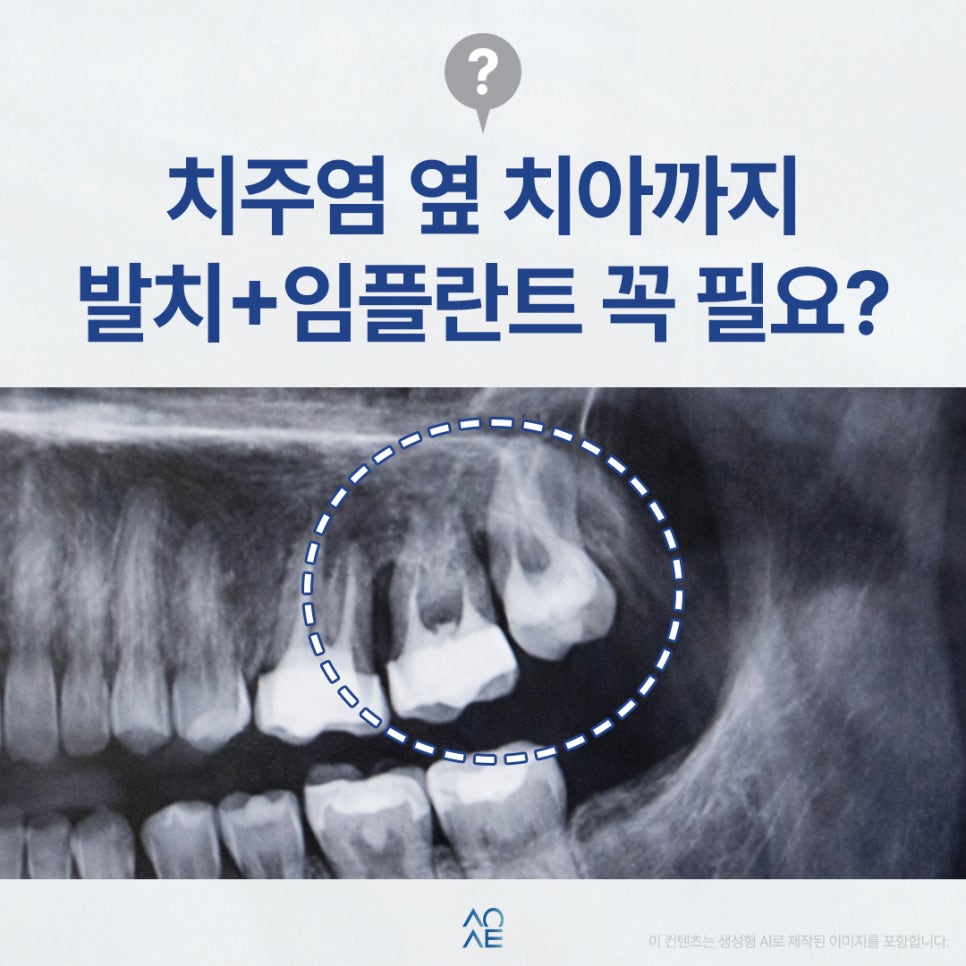
If You’re Advised to Get an Implant Beside Periodontitis, Determine Whether It’s Necessary
For a wisdom tooth, that may be acceptable,
but since the molar next to it is a permanent tooth,
you’ll naturally be much more cautious.
That’s especially true if there is no pain.
In situations like this, you need to calmly check whether the current condition of the tooth
is truly at a level that requires extraction,
or whether it can still be treated and preserved.
The treatment direction for periodontal disease can change depending on how far it has progressed.
Extraction of the last molar (wisdom tooth) is relatively common.
Have you ever had an X-ray taken at a dental clinic?
Based on that, the rearmost molar is called a wisdom tooth (the second molar).
Anyone would look at it and say, “Oh, that’s a wisdom tooth.”
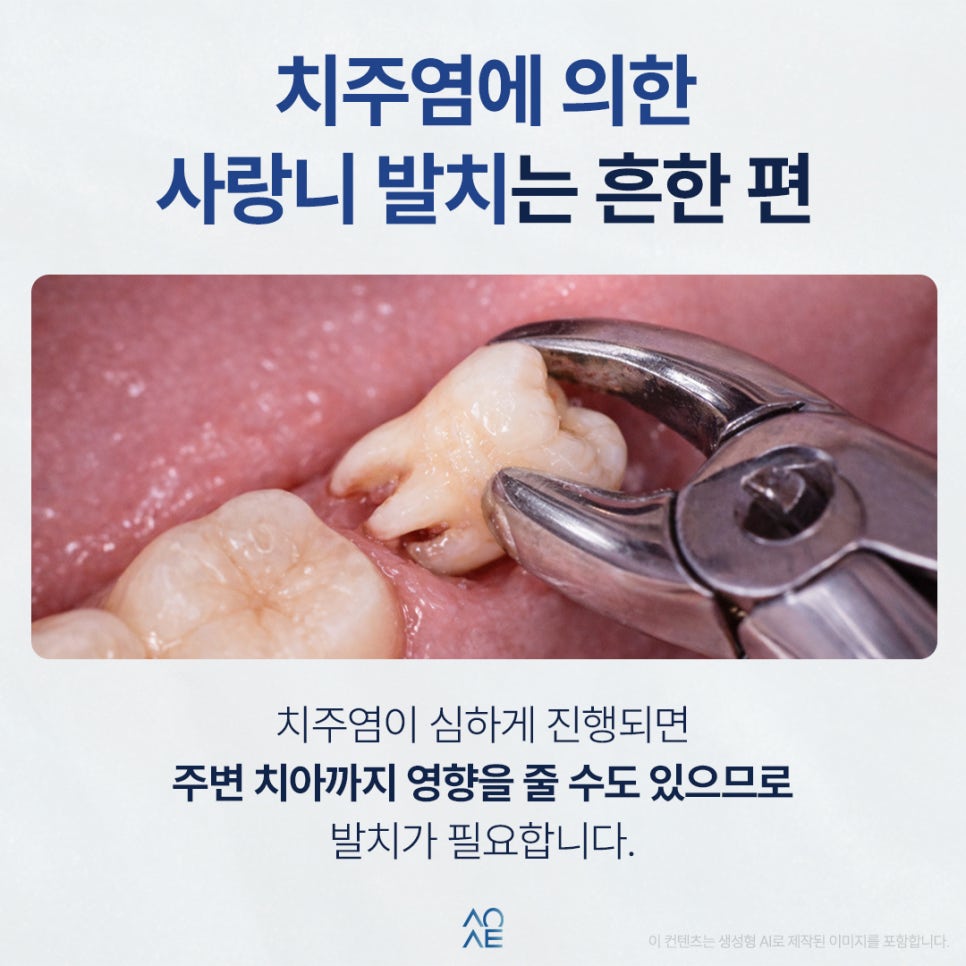
If it grows without any problems, it can simply be monitored,
but in cases where severe periodontitis leads to extraction,
that happens relatively often.
Among patients who visit our clinic,
there are many cases like this due to inflammation.
If this problem progresses for a long time in any tooth,
the surrounding jawbone is gradually resorbed,
and the foundation supporting the tooth becomes weaker.
When a lot of bone has been lost, there are cases where extraction has no choice but to be selected.
Whether the tooth next to it also needs treatment requires a separate judgment

There are cases where, after wisdom tooth extraction, extraction of the adjacent tooth is also recommended.
If there is no pain and the tooth remains upright,
a situation where extraction is immediately necessary
may not actually be the case.
Periodontitis can spread to the surrounding area,
but that does not mean every tooth
will progress to the same stage.
It is important to assess together how much jawbone remains,
whether the tooth is severely loose,
and whether it is likely to respond to periodontal treatment.
After comprehensively checking these factors,
the treatment direction is determined.
Monitoring the condition with periodontal treatment

In some cases, it may also be possible to consider managing the condition with gum treatment such as scaling or root planing,
while continuing to observe it.
Even if periodontitis is present,
it does not immediately lead to extraction.
If the inflammation is somewhat controlled
and the tooth is not very loose,
there is a way to monitor the condition for a certain period of time.
Because molars play an important role in chewing,
if preservation is possible,
it is better to look into ways to use them as much as possible.
When is an implant needed after extraction?
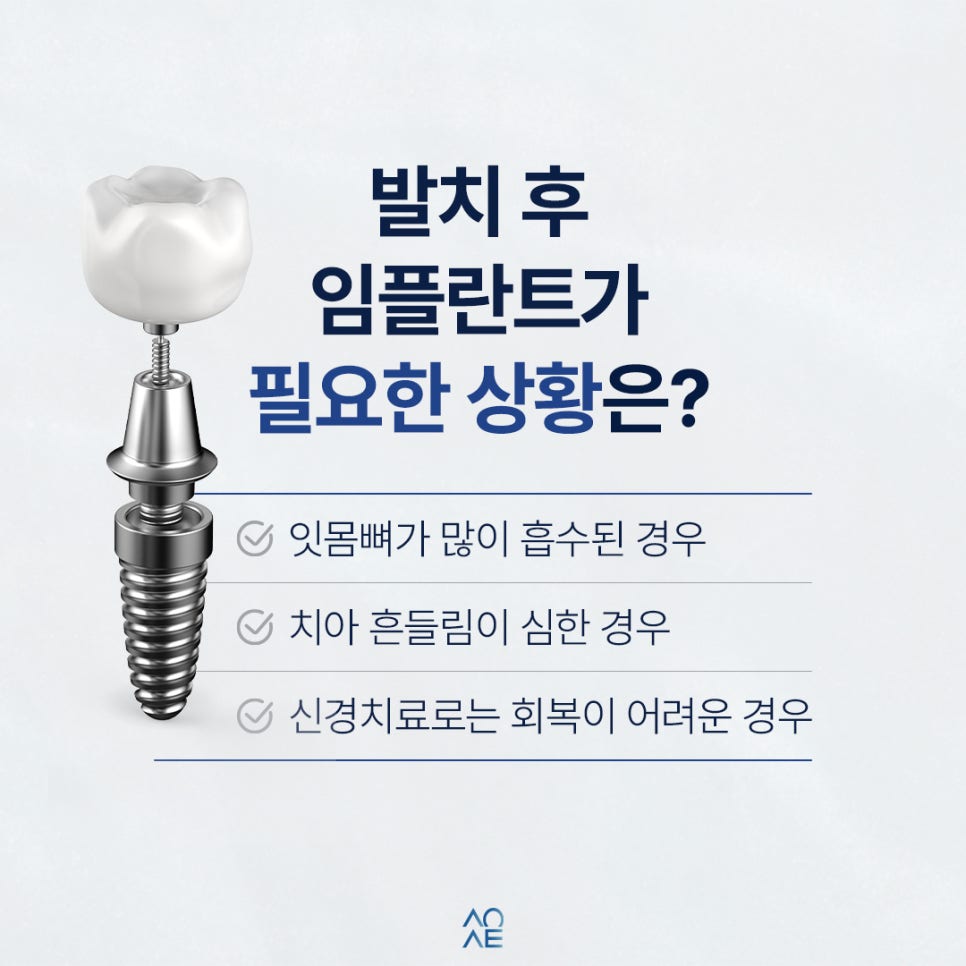
If the loss of jawbone is very severe
or the tooth is extremely loose,
such a decision may be necessary.
If the root cannot be sufficiently supported,
long-term maintenance may be difficult.
In severe cases, the possibility of developing implant-related periodontitis in the future
must also be considered.
Things to consider when deciding on an implant
Although it is an effective alternative for restoring lost tooth function,
it is not always the first choice in every situation.
Preserving natural teeth as much as possible
is often better for oral health in the long run.
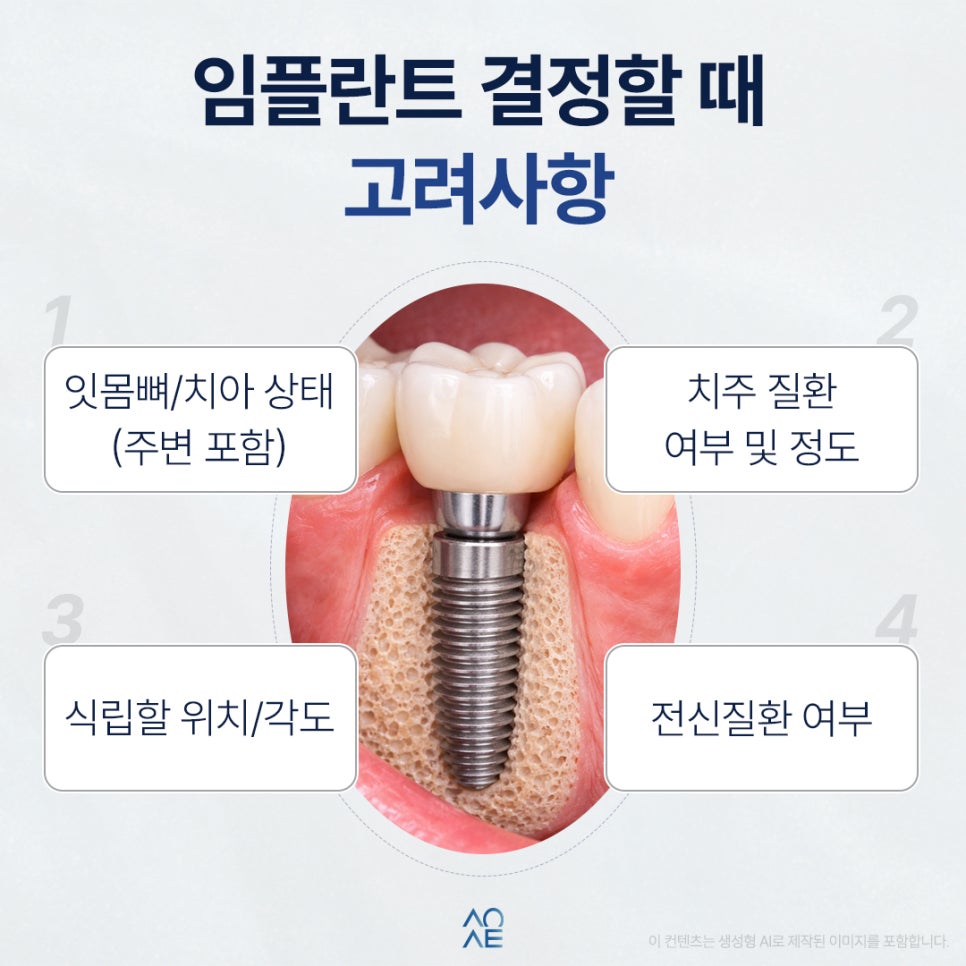
Therefore, before deciding on extraction, the current tooth condition,
jawbone condition, and the extent of periodontal disease progression
must be evaluated comprehensively.
That can help reduce the future risk of complications such as implant-related periodontitis
and may lead to more stable treatment outcomes.
To summarize today’s discussion,
even if you are advised to extract the tooth next to the one affected by periodontitis,
it is not something that is immediately necessary in every case.
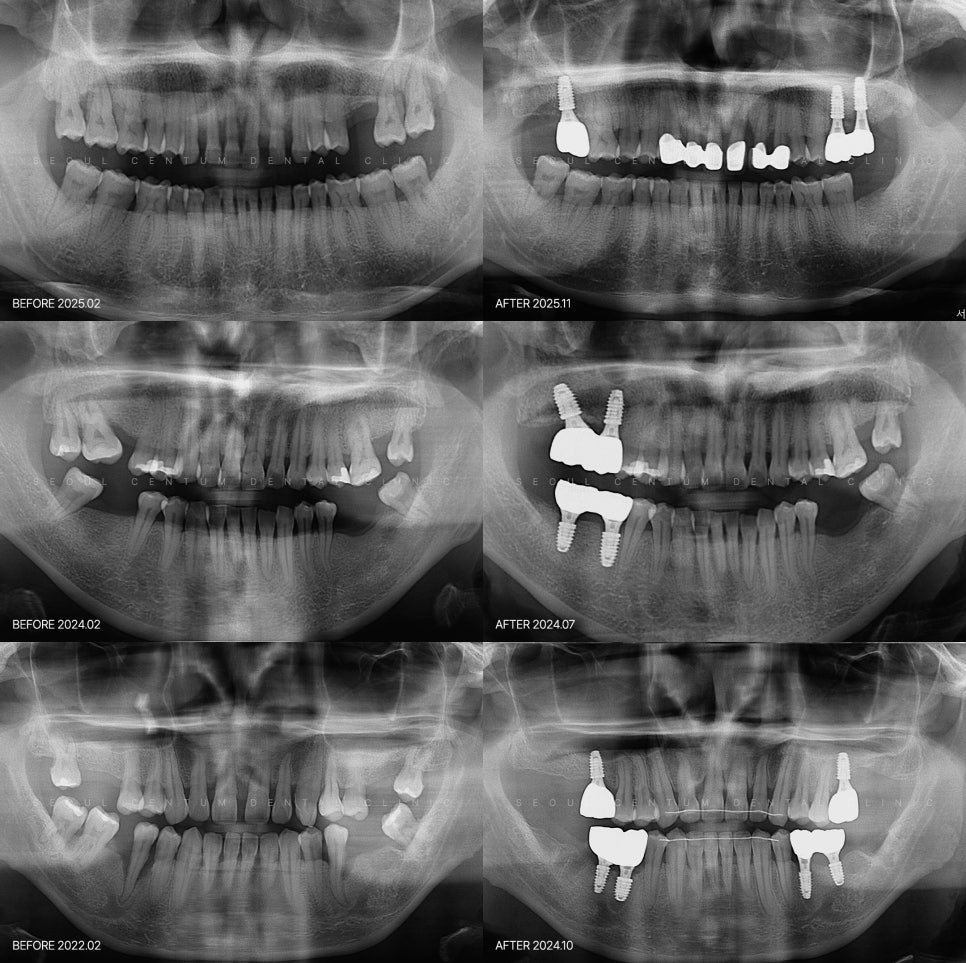
If there is no pain and the tooth is relatively stable,
its progress can be monitored with periodontal treatment.
If the condition is quite poor, restoring function with an implant
may be the better choice.
The most important thing is to accurately judge the prognosis of the current tooth,
so if you are unsure, it may be a good idea to get a second opinion
from another dental clinic. ^^

Explaining the cause when black spots appear on teeth
Implant second surgery review: Many say it hurts less?