I’m worried that my tooth may have fractured because it became sensitive after I bit into something hard.
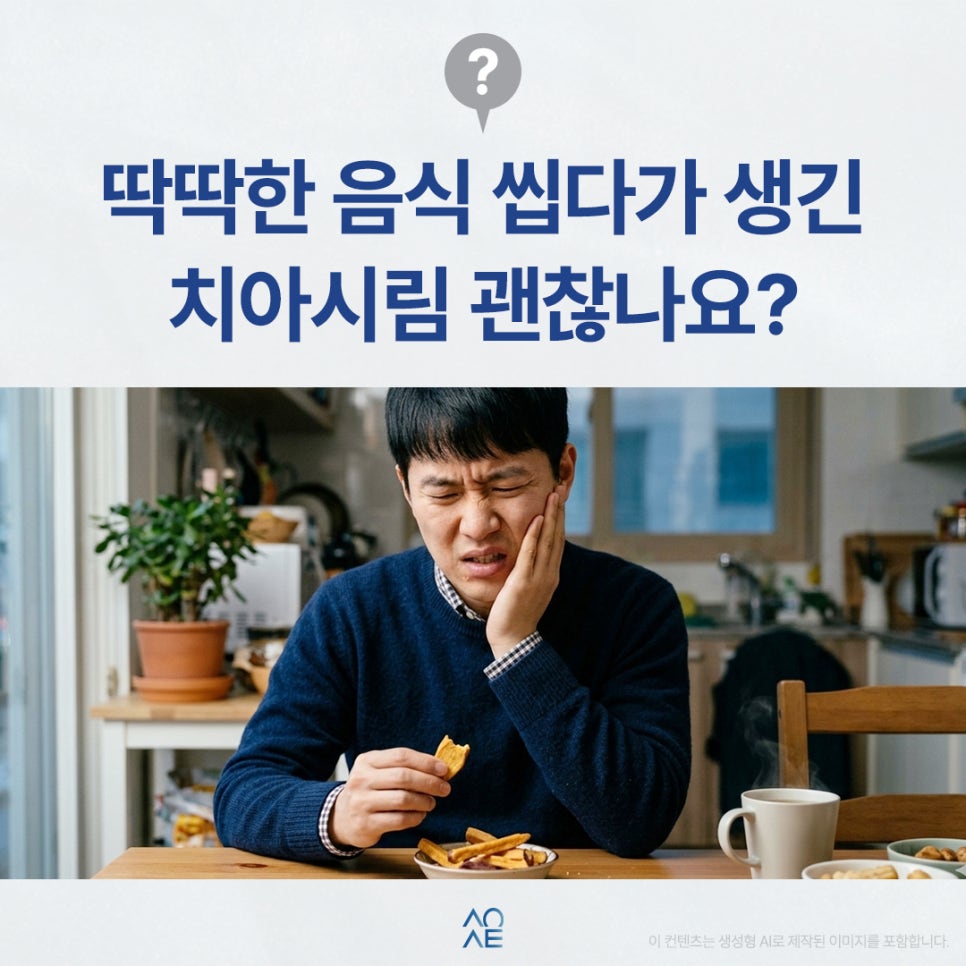
When eating, if you suddenly bite down hard on a solid food,
the impact may be transferred to the tooth, causing
a throbbing or sensitive sensation.
You may be worried that the tooth has cracked in this situation.
However, tooth sensitivity that appears immediately after an impact
does not necessarily mean that a crack has occurred.
The assessment may vary depending on how long the symptoms last,
whether they recur,
and whether pain remains when chewing.
Could it be temporary?
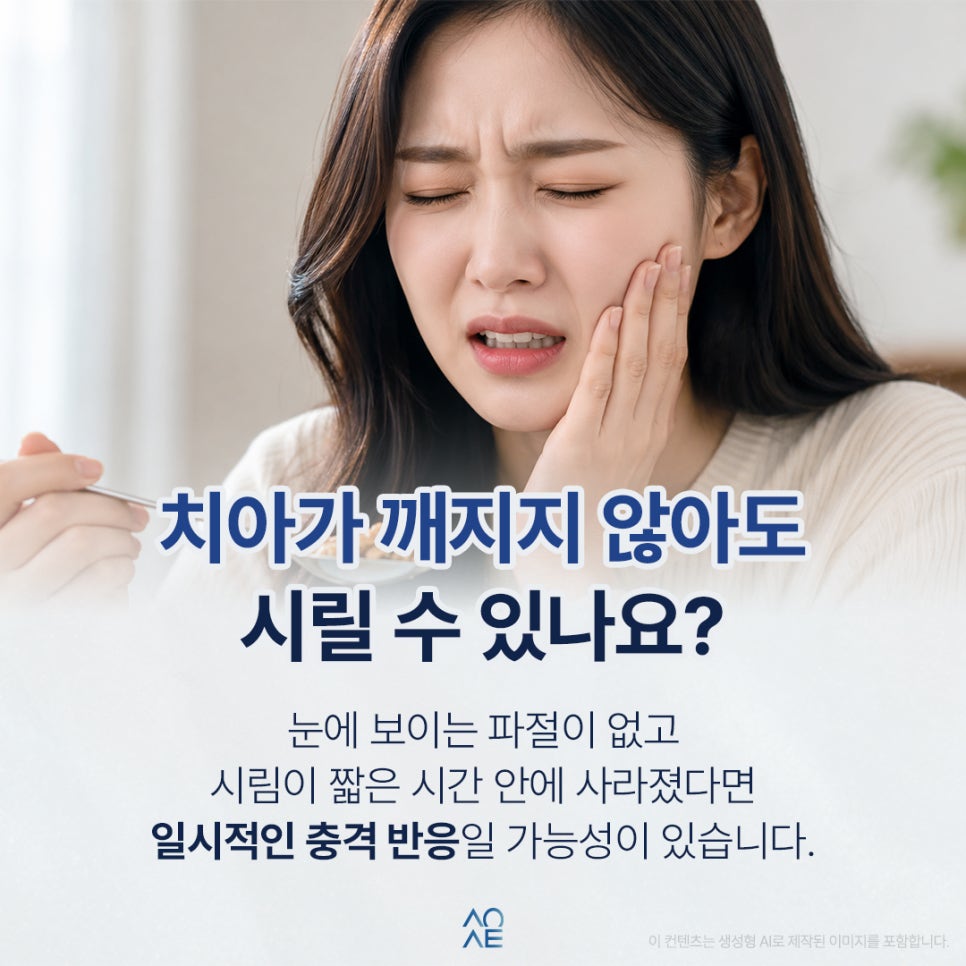
When a strong impact is transmitted to a tooth,
the nerve may briefly
respond sensitively.
You may feel a sharp, uncomfortable sensation strong enough to make you frown,
or experience a tingling feeling.
If the symptoms subside within a few minutes,
it may be a temporary response to the impact.
If there is no visible fractured area
and you did not hear a crunching sound,
it is difficult to conclude that the tooth has suffered significant damage.
Of course, microscopic cracks that cannot be seen from the outside
may cause vague symptoms in the early stages.
Even if there does not appear to be any major problem right away,
it is a good idea to monitor the tooth’s response for several days.
Why can a cracked tooth also become sensitive?
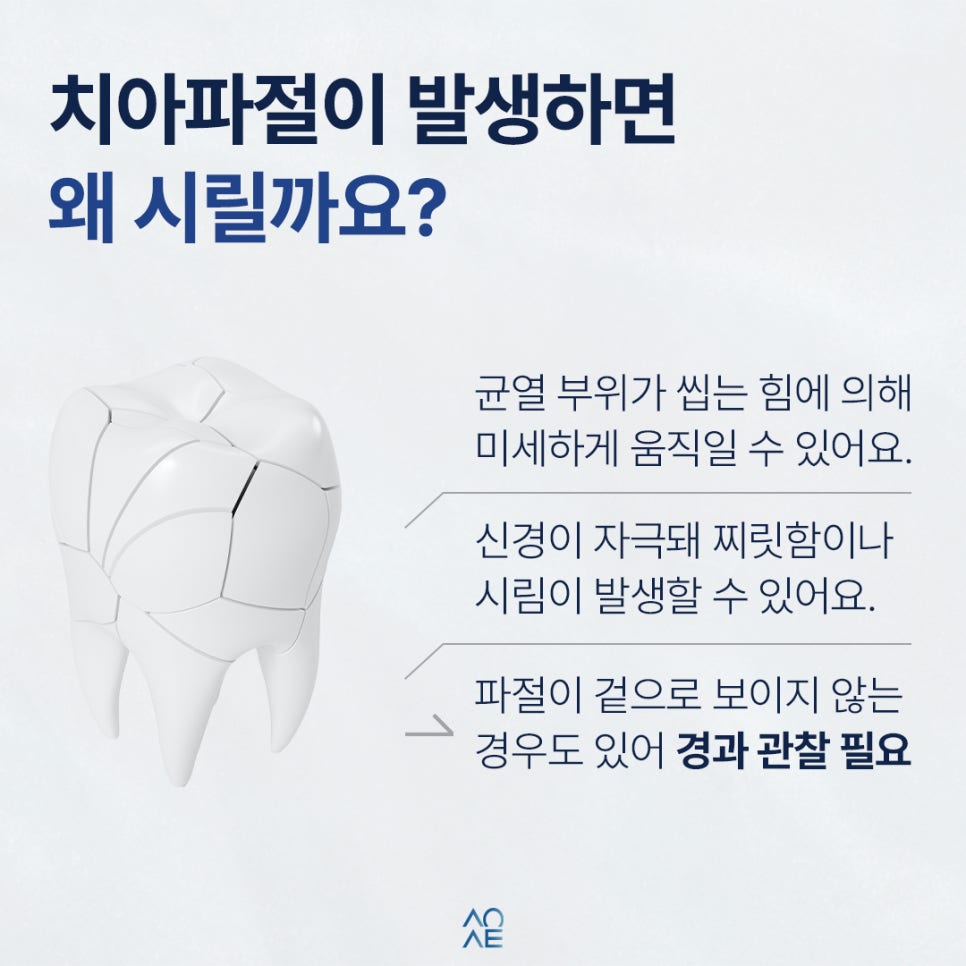
This is because internal irritation
can be transmitted toward the nerve
even when the tooth looks normal on the outside.
In particular, when chewing forces are applied,
the area of the crack may open very slightly and then close again,
which can irritate the internal tissues.
This process may cause a brief sharp or sensitive sensation.
However, rather than concluding that the tooth is cracked
based on sensitivity occurring only once,
it is important to consider whether the symptoms recur after the impact
and whether discomfort occurs only when chewing in a particular direction.
If the symptoms disappeared quickly, does that mean everything is definitely fine?
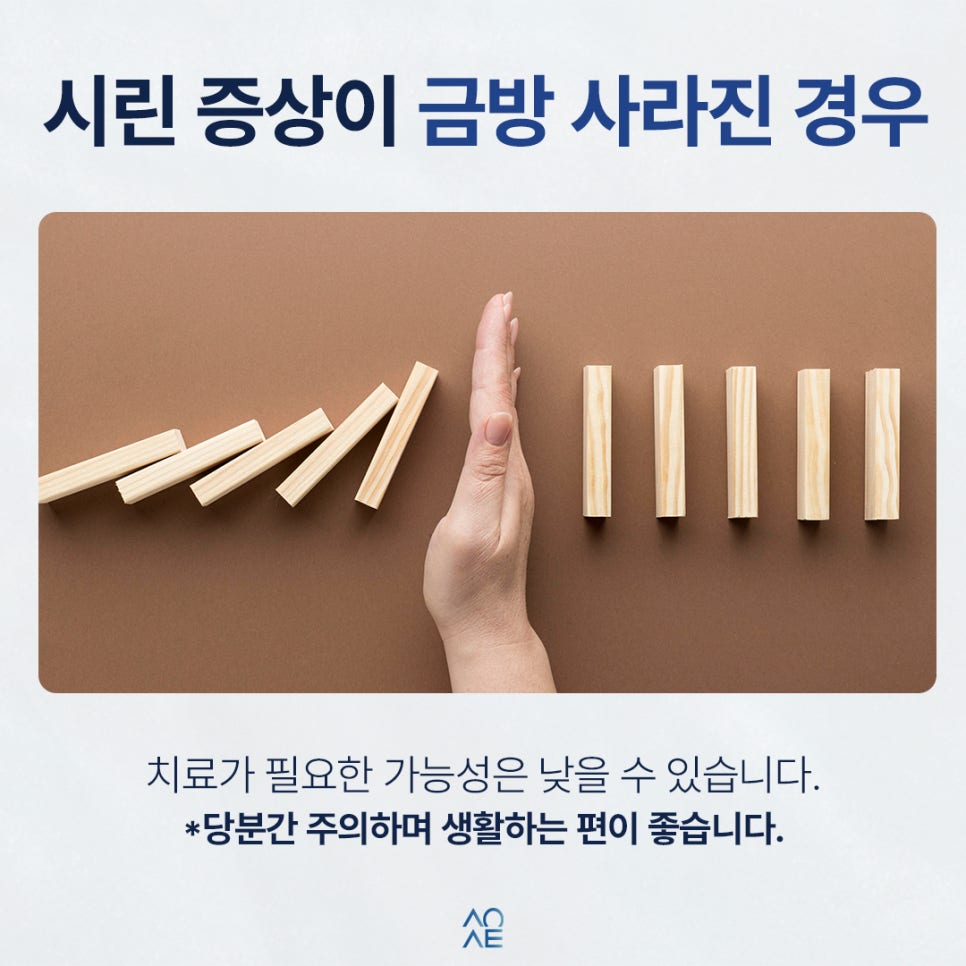
In this situation, the likelihood of an urgent problem
may be considered low,
but it is important to check whether discomfort in the same area
recurs over several days.
This is because some cases do not begin with severe pain
and instead start with mild discomfort.
If a sharp sensation appeared immediately after a strong impact,
the sensitivity disappeared after about five minutes,
and only a slight tingling feeling remains,
it is more likely to be a response from the tissues around the tooth
after being affected by the impact.
The area may feel sensitive for a while,
so it is better to use it carefully.
What should you check when tooth sensitivity keeps recurring?
There is a difference between a symptom that appears once and disappears
and one that occurs repeatedly.

If the tooth continues to react to cold foods and drinks,
the surface or interior may have become sensitive.
Particular caution is needed if the same area
repeatedly feels sharp and sensitive,
or throbs even when you are doing nothing.
Pain when the tooth is lightly tapped
may also result from various causes,
including tooth decay, gum recession, and wear at the neck of the tooth,
so it is important to distinguish the pattern of symptoms.
How is it checked at the dentist’s office?
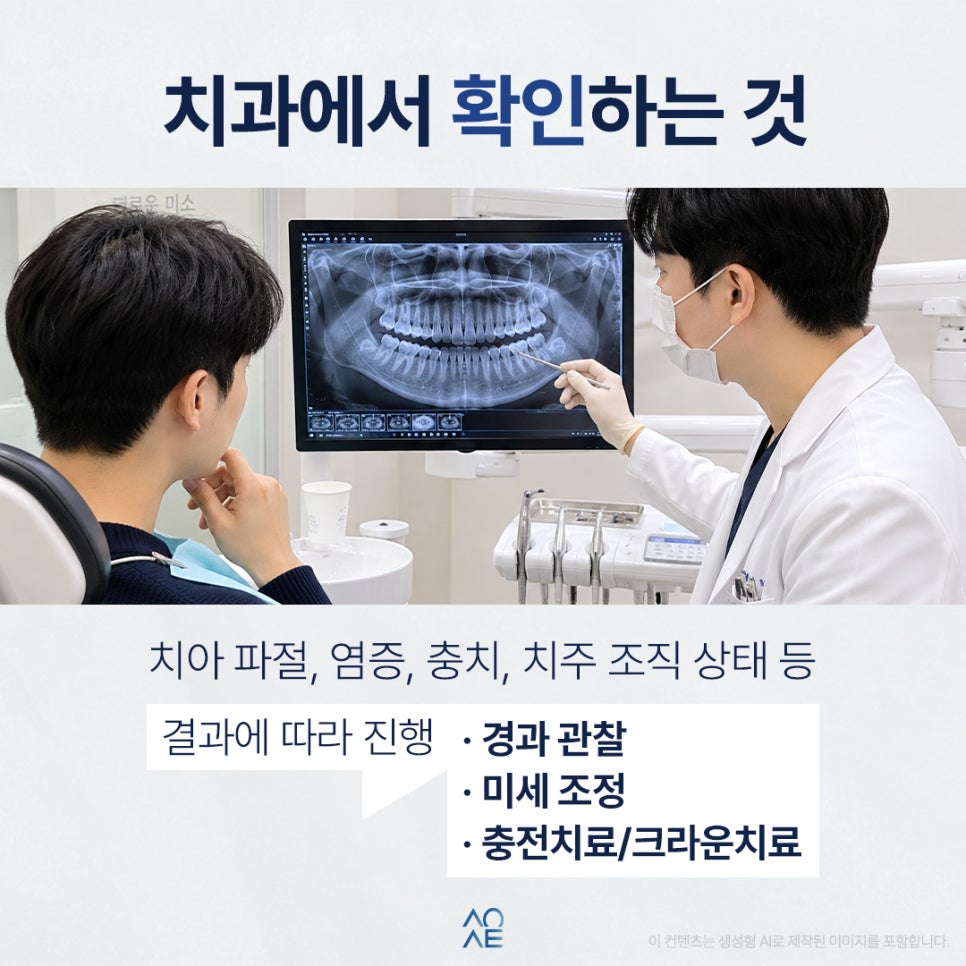
If you visit a dentist because the symptoms persist,
the tooth is first examined visually for signs of fracture.
If necessary, a panoramic X-ray may be taken
to check for surrounding inflammation, tooth decay,
and the condition of the periodontal tissues.
If a crack is suspected,
a bite test may also be performed
to see whether pain occurs when you bite down.
However, not all microscopic cracks
can be immediately identified on an X-ray.
Therefore, the diagnosis is often made
by considering the pattern of symptoms and the tooth’s responses together.
If there is no major fracture or nerve damage,
taking medication and monitoring the progress
may be sufficient,
while minor adjustment may be needed if the bite is making excessive contact.
The necessary measures vary depending on the condition,
so monitoring changes in your symptoms for the time being should be the priority.
How should I care for it while monitoring its progress?
You should be careful to avoid putting strain on the area
for several days.
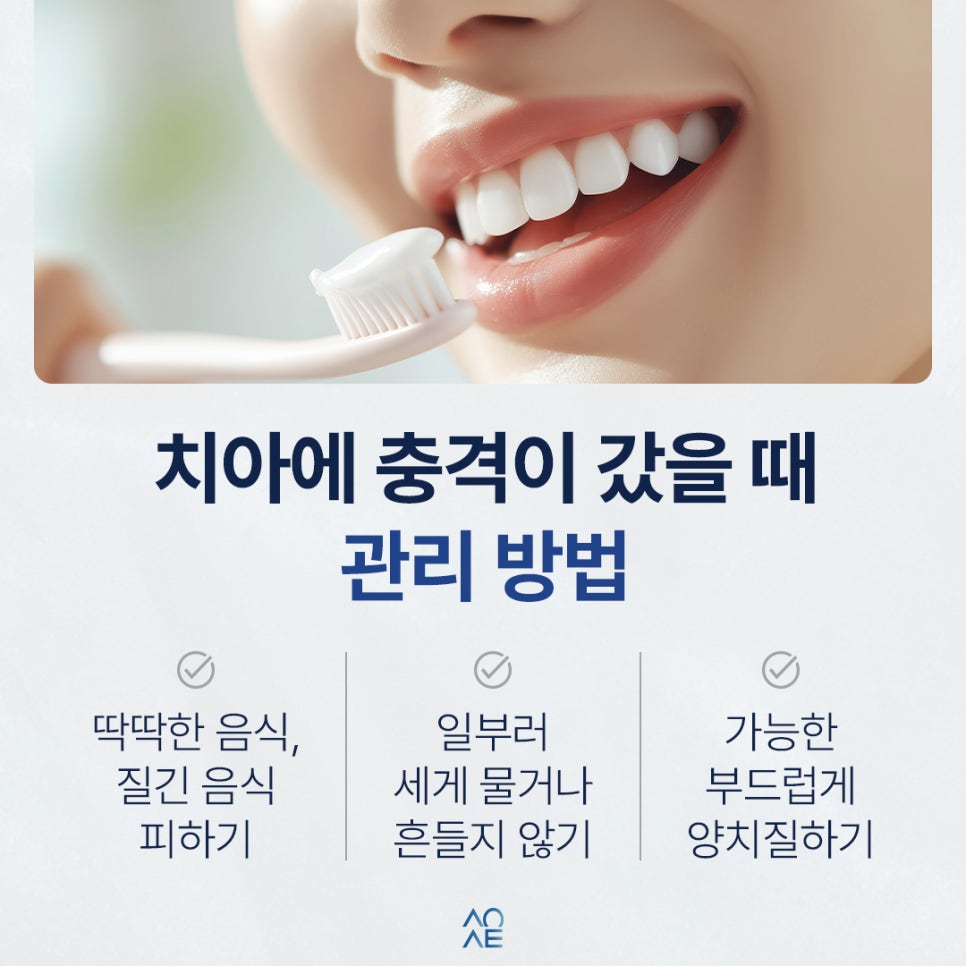
Even if the sensitive feeling disappears quickly,
avoid eating hard foods right away.
Repeated stimulation of the periodontal ligament and nerve
while they are recovering
can increase the likelihood that the discomfort will return.
For the time being, avoid foods that require strong chewing,
such as tough meat,
nuts, ice, and foods containing bones,
and try to eat on the opposite side if possible.
When brushing your teeth, use less force
and brush with a soft toothbrush.
Rather than deliberately testing the area’s reaction
by touching it with cold or hot food,
please observe whether the symptoms naturally decrease.
I hope you understand that even if tooth sensitivity occurs briefly
after eating something hard,
it is difficult to say that the tooth definitely has a crack.
If the symptoms disappeared within a short time
and there was no noticeable sense of fracture,
it may well have been a temporary response to the impact.

Teeth can be sensitive even to minor impacts,
so it is worth observing any changes
with a little extra care.
Avoid excessive stimulation
and allow the tooth time to settle.
↓ If you have other questions you would like answered, please read on ↓
The pain in one of my crowns went away—do I need an implant?
I’m in my 30s and feel overwhelmed wondering whether I really need an implant.