Why can’t a cavity be treated with an insurance-covered material?
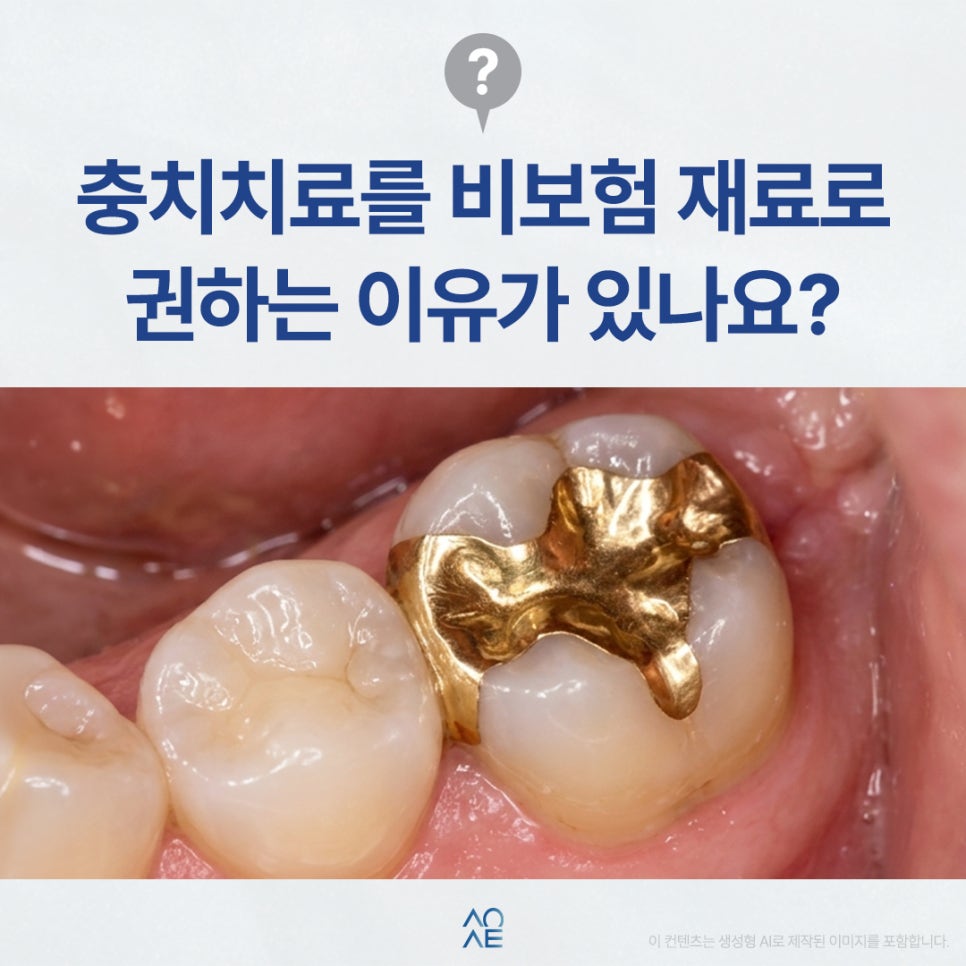
It may seem simple to think of cavity treatment as
filling a small cavity and covering a large one.
Even when the cavity does not look particularly large,
it can be confusing to hear from a dentist
that treatment with an insurance-covered material would be difficult
and that a non-covered material should be used instead.
Because there is a difference in cost,
you may even wonder whether an excessive treatment is being recommended.
In fact, treatment is not decided based on size alone.
The location of the cavity, the amount of remaining tooth structure, and other factors
are considered together when determining the treatment method.
Can an insurance-covered material always be used if the cavity is small?

If the affected area is small, treatment often ends
with a simple filling.
However, the standard for “small” here
does not necessarily mean what can be seen with the naked eye.
Even if it looks small on the outside,
it may have spread widely inside the tooth,
and when it develops between teeth,
the actual area of damage may be larger.
Even if the affected area is small, when its location is difficult to treat,
it may be difficult to create a stable shape
using only an insurance-covered material.
To determine whether an insurance-covered material can be used for cavity treatment,
various factors—including the extent and location—must be examined together,
and it is also necessary to consider
whether the treatment can be maintained over the long term.
Why might non-covered treatment be recommended for a cavity between teeth?
Cavities that develop between teeth, known as interproximal cavities,
are often more difficult to treat than expected.
This is because the restoration must be performed precisely
so that food does not easily become trapped at the contact point.
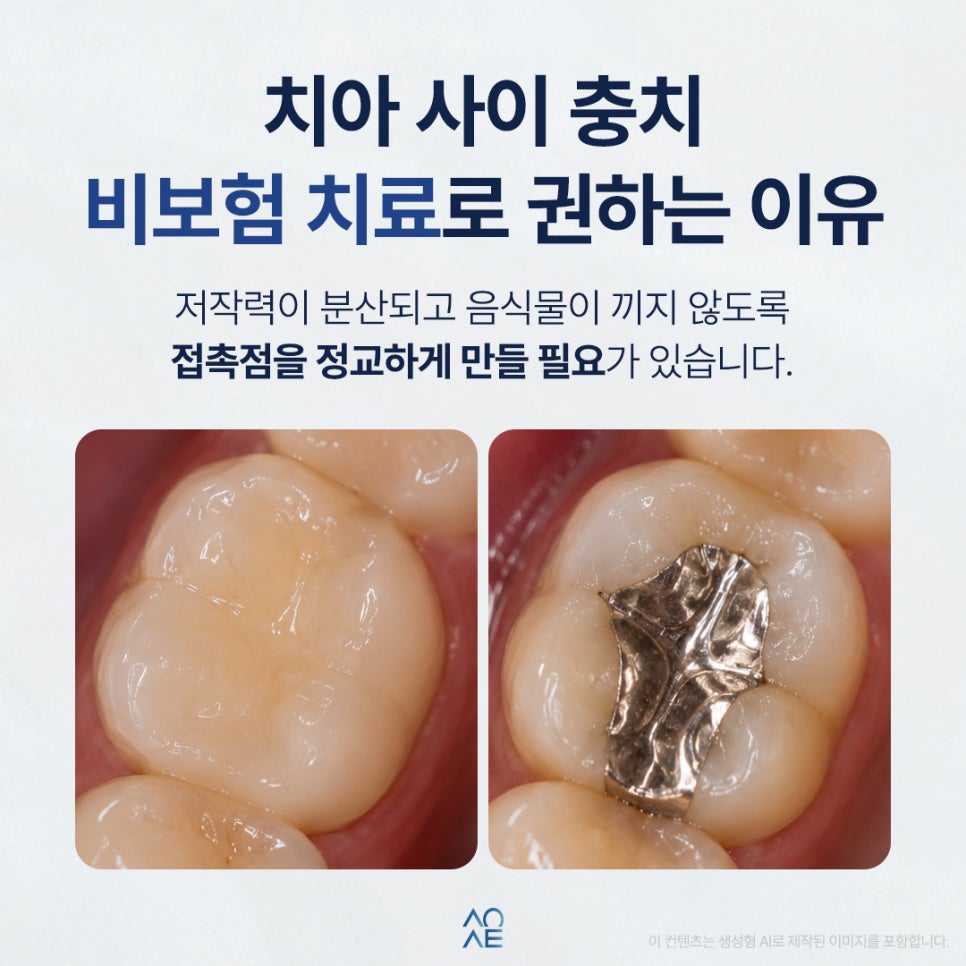
If this area is not treated properly,
food may continue to become trapped frequently,
or the gums may become irritated.
If the area is not managed properly at that point,
an environment that makes cavities more likely to develop may be created.
In particular, when the cavity occurs between molars,
substantial chewing forces are applied,
so the material’s strength and fit must be carefully considered.
For these reasons, a non-covered restoration
such as a composite resin or inlay may sometimes be recommended.
Would the criteria be different if the area receives a lot of chewing force?

The location of the cavity also has a significant influence on the decision.
If the cavity has progressed to a molar or to a cusp
(the raised, mountain-like part of a tooth) that receives substantial force,
the filling material may be less likely to last for a long time.
When eating,
repeatedly transmitted strong pressure
can cause the material to wear, crack,
or become dislodged.
In such cases, an inlay, onlay,
or crown may be necessary regardless of the extent of progression.
What is the difference between insurance-covered and non-covered cavity treatment?

Filling materials covered by insurance, such as amalgam,
have the advantage of placing less financial burden on the patient.
However, they are not suitable for every situation.
Some materials may have limitations in terms of appearance, strength,
or reproducing the tooth’s shape,
and their retention may be reduced
when the contact point between teeth
or another area requiring a precise restoration is involved.
On the other hand, non-covered materials
such as composite resin, ceramic inlays, and gold inlays
can be selected by considering strength, color, fit, and other factors
according to the location and purpose.
Of course, this does not mean
that non-covered treatment is always better.
An insurance-covered material may be sufficient in some cases,
but if it is judged unlikely to last long
because of the location or functional demands,
another material may be recommended.
Please keep this in mind.
Is recommending non-covered treatment excessive treatment?
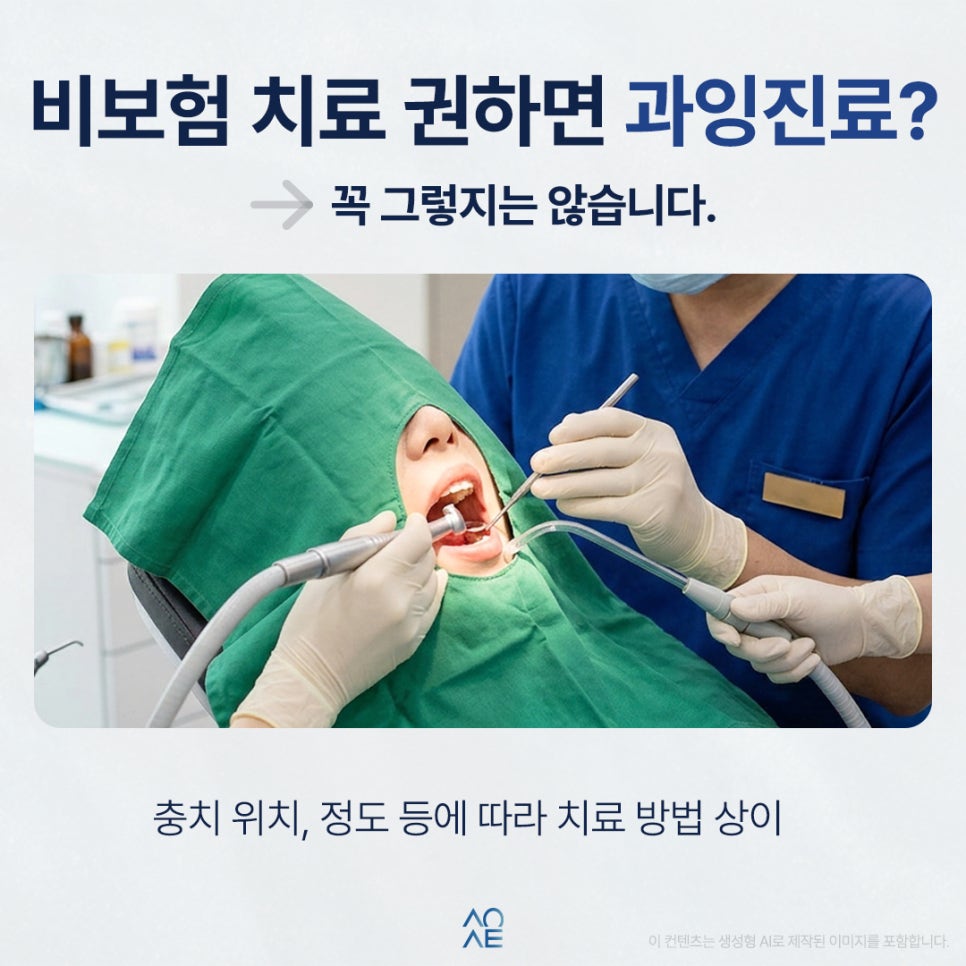
Because the appropriate treatment differs from person to person,
it can be difficult to say
that it is necessarily excessive treatment.
From the patient’s perspective,
it is important to make a decision after receiving a sufficient explanation,
so if you have questions—such as
why treatment with an insurance-covered material was considered difficult,
where the problematic location is,
or how the treatment methods differ—you may ask your dentist.
It will be much easier to understand
if the explanation is given while looking at X-rays
or oral photographs together.
If only expensive treatment is recommended without much explanation,
or if you feel that there is not enough information about your options,
seeking another opinion elsewhere
may also be one approach.
If an insurance-covered material is sufficient,
it can reduce the financial burden,
but if it is not appropriate for the location or function,
the likelihood of needing retreatment may increase.

Before treatment, ask the dental professional in charge
to explain the various opinions and options thoroughly.
Understanding and choosing the method that is right for you
can help reduce misunderstandings
and allow the results
to be maintained more stably.
I was diagnosed with a cavity and am worried that the treatment may be excessive.
How often should regular checkups be scheduled after completing implant treatment?