Even if you do not have any pain related to your teeth,
if the swelling has occurred around a tooth,
you cannot help but feel concerned.
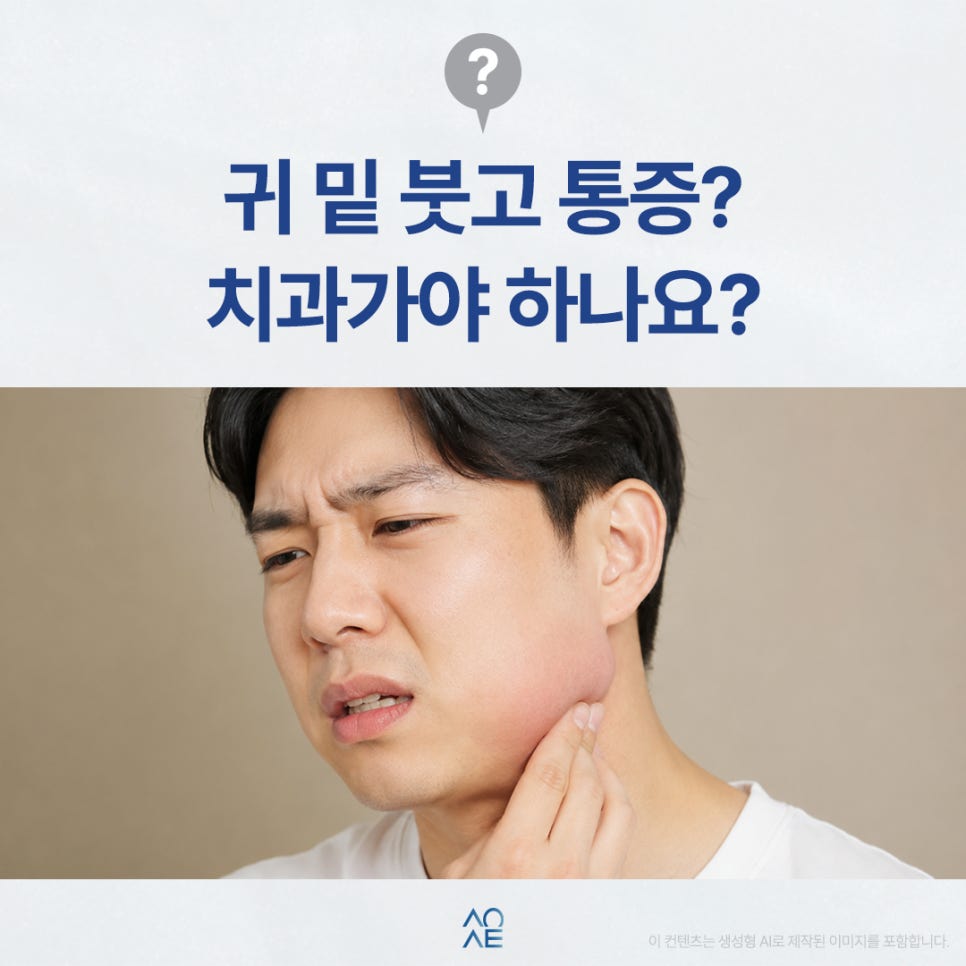
First of all, quite a few patients who contact us because they are experiencing pain around and under the ear also visit our clinic.
What could be causing the swelling and pain under the ear?
Under the ear = parotid gland, submandibular gland, and lymph nodes
Among the cases we will discuss today is that of a patient who came in for treatment because the area under the ear was significantly swollen.
However, the patient did not come in because of any particularly noticeable symptoms such as a cavity, tooth pain, pain while eating, or pain when opening the mouth.

The structures located in this area include the parotid gland, submandibular gland, and lymph nodes.
If there is no pain, a problem with the salivary glands or lymph nodes may be suspected, but this is not an area that can be examined through dental treatment.
However, there is one additional point that should be checked to determine whether the issue needs to be examined by a dentist.
What if it hurts when pressed?
From a dental perspective, there is one more thing that needs to be checked.
Specifically, it is necessary to separately check whether there is pain when the area is pressed with a finger.

It is also necessary to check whether the gum on the inner side of the lower molars in that area is swollen.
You should check whether you feel discomfort when chewing on that side, or whether there is pain when you press the tooth on the swollen side with your finger.
Should you visit a dentist when your jaw is swollen?
There are occasionally patients who experience cases like this.
In fact, when periodontitis or inflammation around the root of a molar spreads toward the outside of the jawbone, some patients may feel that the area under the ear is swollen or that the area beneath the jaw hurts.
In these cases, there may be little or no tooth pain, while only the face or area beneath the jaw becomes swollen, so the source of the pain may be overlooked.

Therefore, if your gums have recently become noticeably swollen, you feel discomfort when firmly pressing on a particular tooth, or you have pain only when chewing, we recommend also getting a dental examination.
On the other hand, if you have no particular symptoms in your teeth or gums, but the swelling worsens when eating and you feel a pulling sensation under the ear, the possibility of parotitis, salivary duct obstruction, or salivary gland stones is higher, so we recommend seeking medical attention.
If you have no dental symptoms, we recommend visiting an otolaryngology clinic for an ultrasound examination.
When symptoms seem minor like this, people often put off going to the hospital from one day to the next.
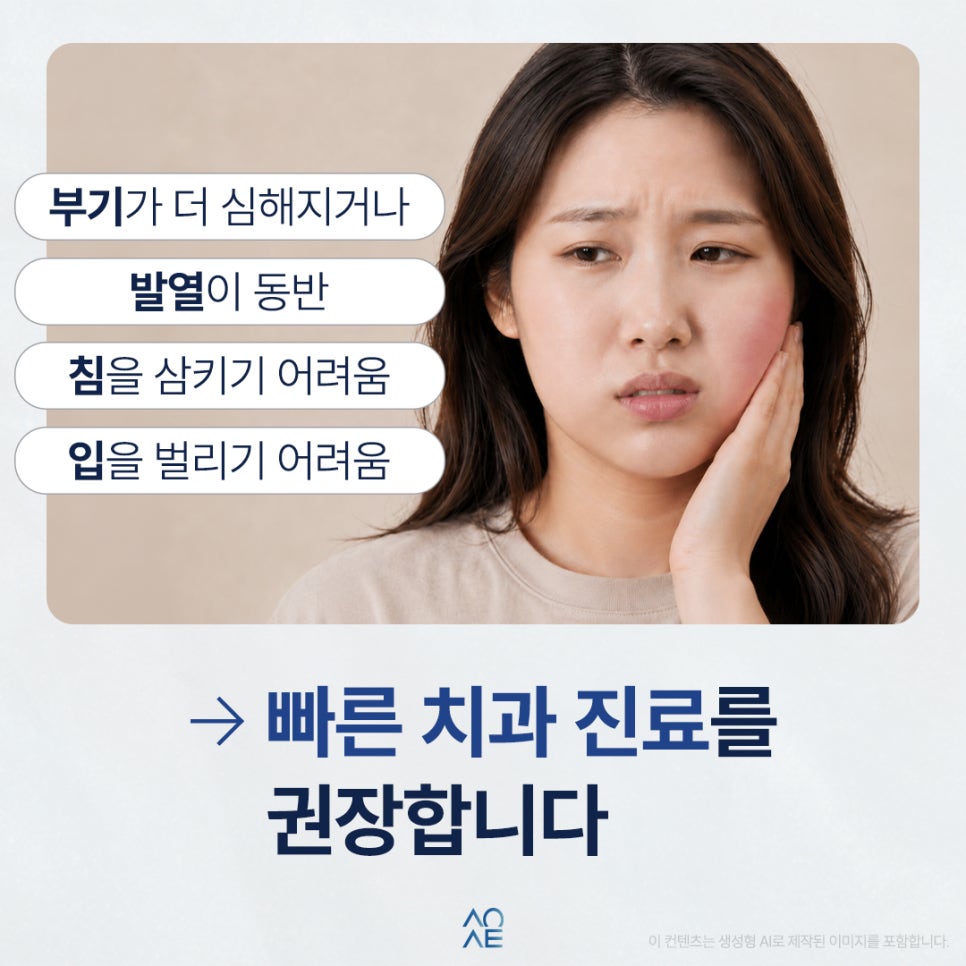
However, if the swelling becomes worse, is accompanied by a fever, you have difficulty even swallowing saliva, or you have difficulty opening your mouth, we recommend seeking medical attention promptly.
In fact, when you are in pain, it is very important to seek medical attention as soon as possible.
Delaying treatment may result in higher costs or the need for a longer course of treatment, allowing the problem to become more serious.
Today, we looked at symptoms that may be related to dentistry or to otolaryngology.
If you experience symptoms like these, we hope you will take the time to check them.
Previous post
Previous previous post