Can bone graft material be removed later?
If an examination shows that the amount of jawbone is
insufficient,
you may be told that bone grafting will need to be performed
along with the implant procedure.
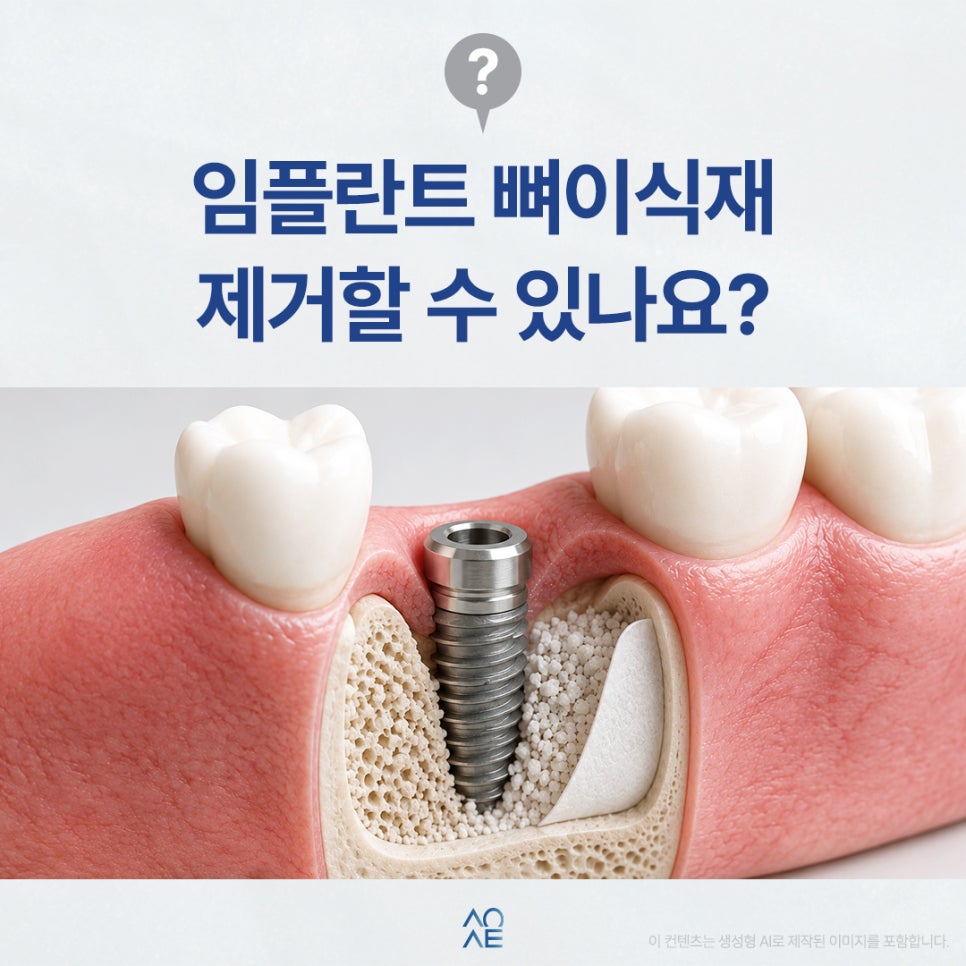
At that point, it is natural to wonder
whether it can be removed later
if a problem occurs.
Whether removal is possible may vary depending on
how much time has passed and how firmly the material has integrated.
I will explain the details below.
What is the role of bone graft material used for implants?
It can be used when insufficient jawbone
makes it difficult to support an implant
securely.
Bone graft materials are classified as autogenous bone, allogenic bone, xenogenic bone, and synthetic bone,
with differences in absorption rates and their ability to maintain their shape.
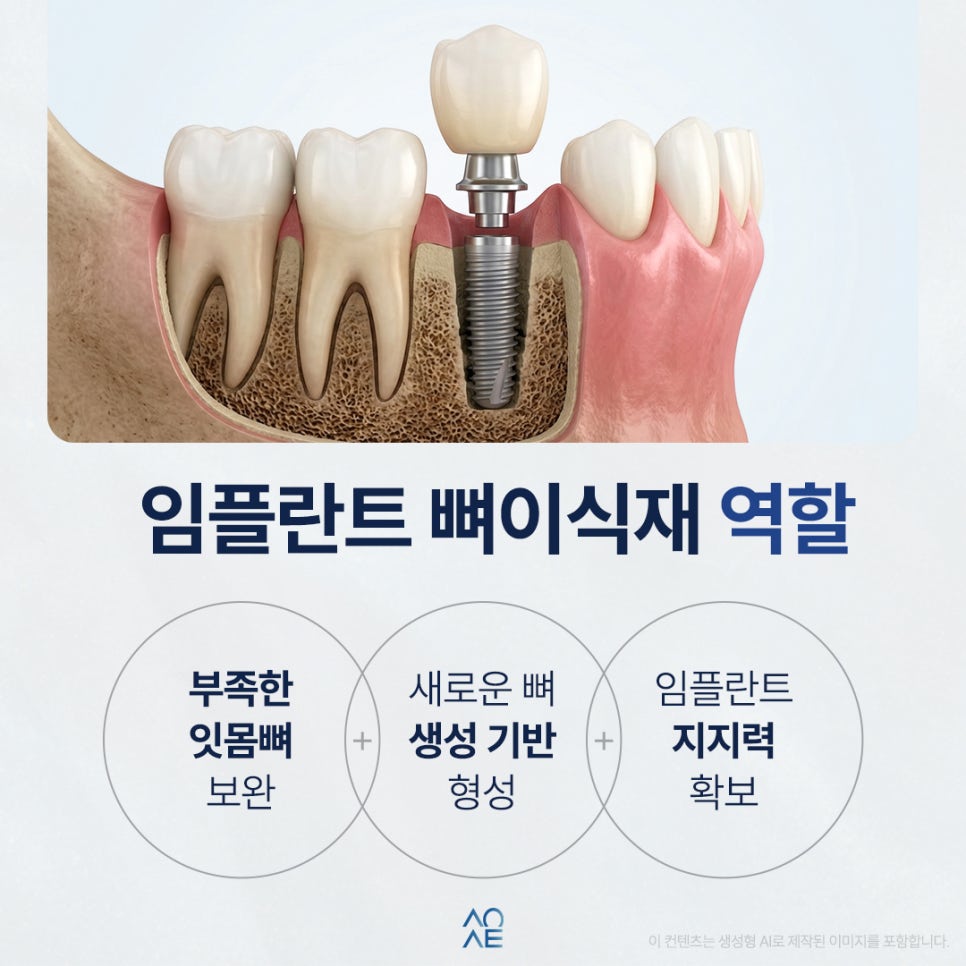
Some materials are absorbed relatively quickly
and replaced by newly formed bone,
while others maintain their shape for a long time
and help form bone in the surrounding area.
The graft material does not remain separately on its own;
it stabilizes together with the blood clot that forms, gum tissue,
and the existing bone.
For this reason, after a certain amount of time has passed,
it may become difficult to clearly distinguish
the graft material that was initially placed from the newly formed bone.
Can removal be attempted during the early period after surgery?

During this period, before it has fully integrated with the surrounding tissue,
there is a relatively higher chance that some or a substantial portion
can be removed along with infected tissue.
The extent depends on the condition.
If the entire graft material has developed a problem,
a wide area may be removed.
However, if the problem affects only part of it,
that area may be cleaned up while the rest is preserved.
If an implant was placed at the same time,
the stability of the implant fixture and the condition of the surrounding area
must also be evaluated.
Removing only the bone graft material
may not be the end of the treatment.
Is it still possible after time has passed?
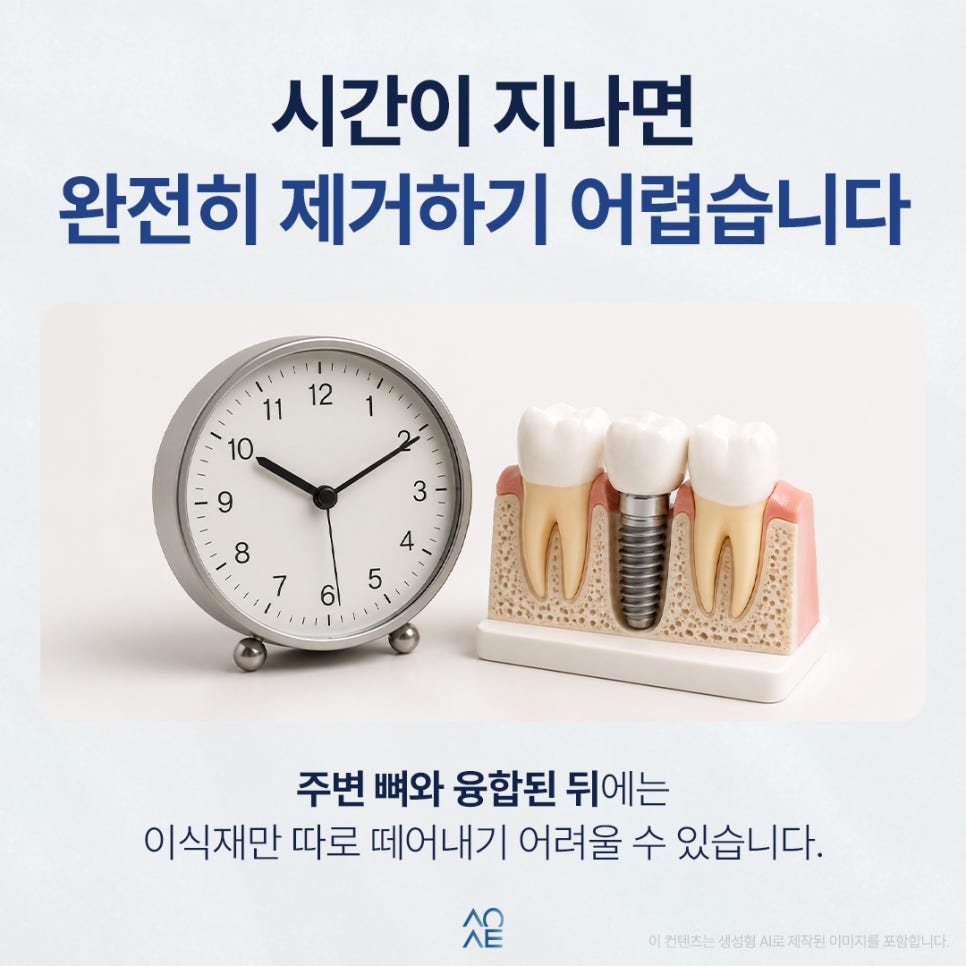
After several months or more, the bone graft material used for the implant
gradually mixes with the adjacent bone
and becomes incorporated into the bone tissue.
In practical terms, it is difficult
to selectively and cleanly remove only the graft material.
Trying to remove even the areas that have already integrated
could also damage healthy jawbone.
In particular, if osseointegration has progressed around the area,
an increase in the scope of removal
could also affect the stability of the implant fixture.
If there is no specific problem, reopening the area containing
already stabilized implant bone graft material
and removing it is not generally chosen.
What symptoms would lead to consideration of removal?
A decision is not made simply because
the material feels unfamiliar or causes anxiety.

If unusual signs develop, such as recurring swelling,
pain that continues for a long time,
or pus and an unpleasant odor,
an infection will be assessed.
Treatment may also be necessary if the gum wound
continues to open,
exposing the graft material,
or if a foreign-body reaction is suspected.
On the other hand, mild swelling or temporary foreign-body sensations
that occur during the initial healing process
often decrease over time,
so it is generally better to observe the progress for now.
The decision should be based on a comprehensive evaluation
of factors such as the extent of infection,
the condition of the jawbone,
and the stability of the implant,
rather than the severity of the symptoms alone.
Can healthy bone be preserved?

As mentioned above,
some healthy bone may also be lost,
so you should understand that complete preservation is difficult.
In particular, if the graft material was used over a wide area
or in a deep location, such as during a sinus lift,
the process of accessing the area may itself become more complicated.
Even if the material is removed,
if the area becomes deficient again,
another bone graft may be necessary.
The timing of implant placement may also be delayed
because additional healing time is required.

Bone graft material used for implants helps provide
stable support and fixation,
so if there is no particular problem, it is fine to leave it in place.
As healing progresses and the material blends
with the surrounding tissue over time,
it is more important to periodically check
whether the area currently undergoing treatment is healing well
than to focus on the material itself.

If recovery is progressing smoothly,
try not to worry too much
and calmly observe how it develops.
How long do veneers last? Check here if you want to know how many years they can be maintained
My teeth look translucent in color. Could there be a problem?