Can we postpone the dental appointment if our child has already had a checkup at daycare?
Children may receive
oral examinations and fluoride applications
at daycare or kindergarten.
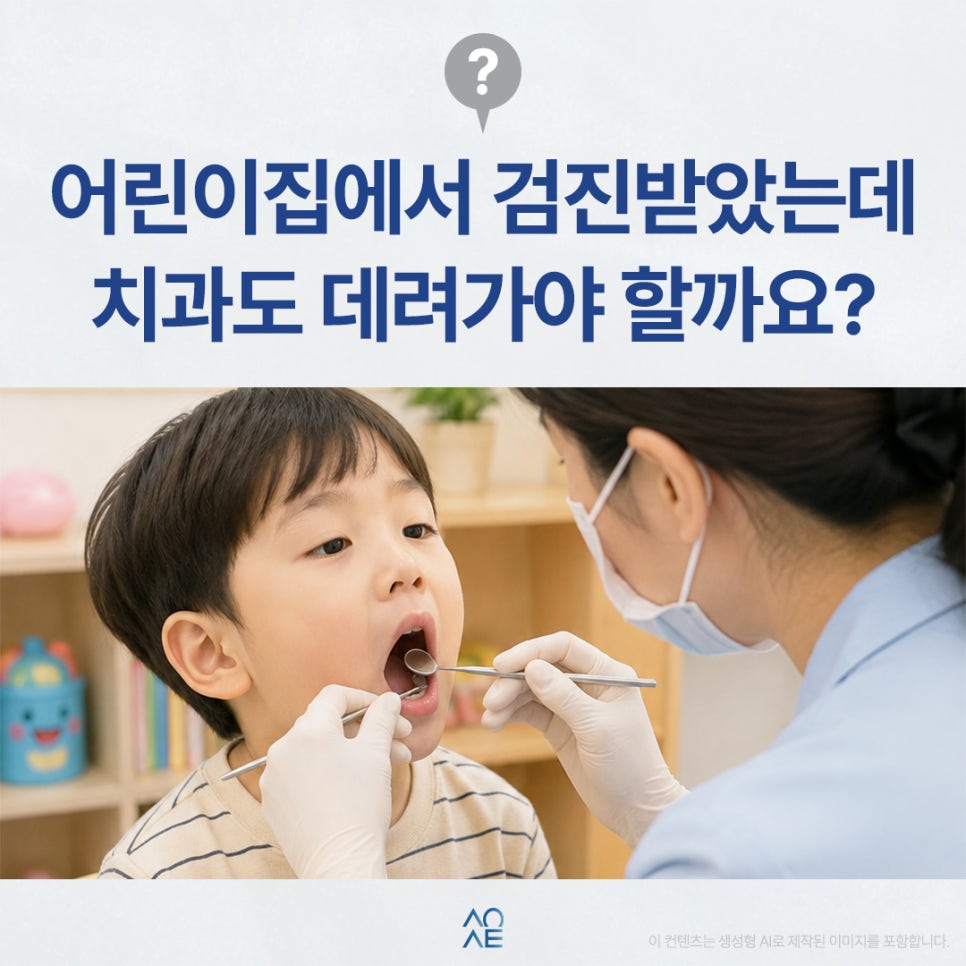
If this happens to coincide with
the time for a regular checkup at the dental clinic
your child usually visits,
it can be difficult to decide whether to visit the clinic
as scheduled or postpone the appointment.
Especially if a cavity was found during a previous examination
and is currently being monitored,
it becomes even more important to determine
how far apart the checkups should be scheduled.
A checkup at daycare is also meaningful
for assessing a child’s oral condition,
but the scope of the examination is not exactly the same
as one performed at the dental clinic they usually visit.
What can be checked at daycare?
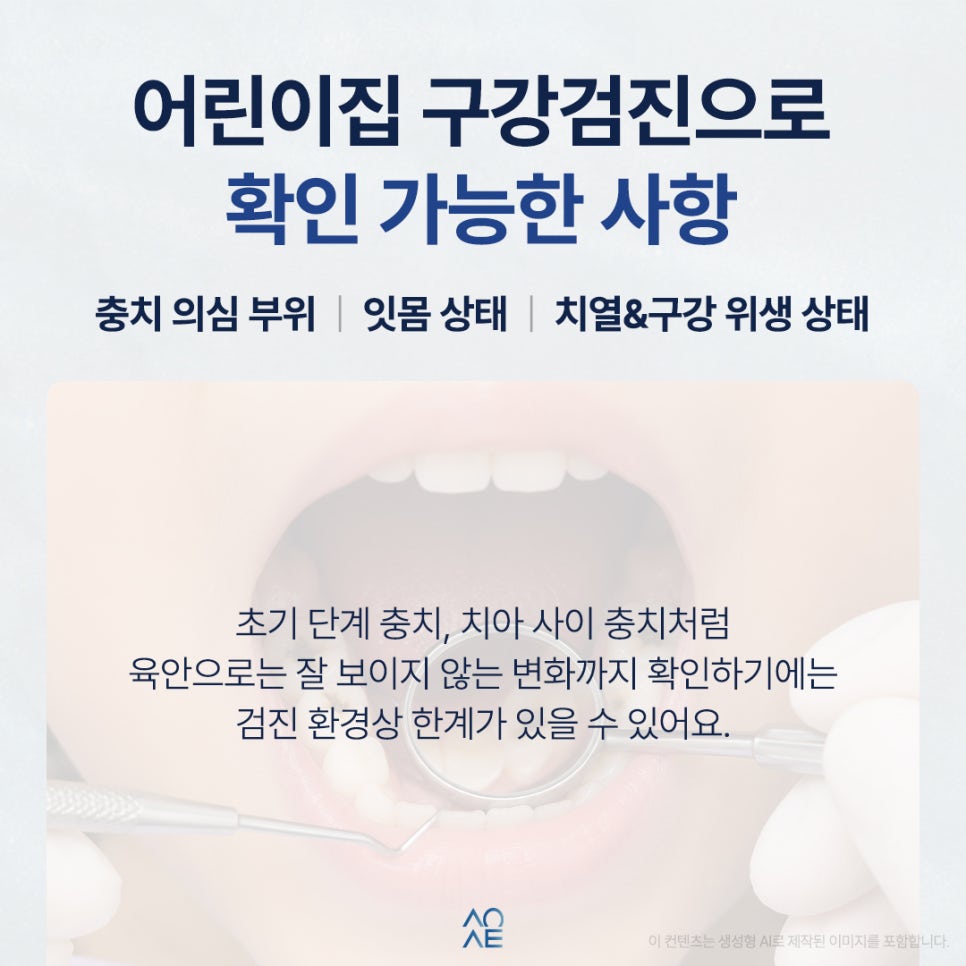
It can screen for whether there are teeth
where cavities are suspected,
what the gums are like, and whether there are
noticeable problems with the alignment of the teeth
or oral hygiene.
Because the oral conditions of several children
are examined visually within a limited amount of time,
there may be limitations to checking everything in detail.
There may also not be an environment equipped
for a sufficiently thorough dental examination,
such as examination equipment or a shadowless dental light.
Cavities in their early stages
may not show a clearly visible hole on the surface
and may appear only as a change in color.
If they are located in areas that are difficult to see,
such as grooves in the teeth or between adjacent teeth,
it may be difficult to compare their progression
with a visual examination alone.
Even if you are told that there were no particular problems
after the daycare checkup,
if there is a tooth that was already being monitored,
it is advisable to have it checked once more
at the dental clinic where your child has previously received care.
Why should changes be monitored more frequently around age six?
This is because the first molars
begin to emerge behind the primary teeth,
and the child enters the period
when the front teeth are also replaced by permanent teeth.

Because these teeth do not come up
in the spaces left by fallen primary teeth
but instead erupt farther back,
parents may easily overlook the fact
that they are permanent teeth.
Their grooves are deep, and until the teeth have fully erupted,
the toothbrush bristles may not reach them well.
As a result, food particles and plaque
may not be properly removed even with brushing.
Since this is a period when children may have difficulty
thoroughly brushing their back molars by themselves,
it is helpful for parents to assist them.
Even with careful checking,
some areas may be missed,
so through a pediatric dental checkup,
we recommend examining the condition of both
the existing primary teeth and the newly erupting permanent teeth.
Why should early cavities be compared with previous records?

Rather than treating an early cavity immediately,
its changes may be monitored while applying fluoride,
managing brushing, and adjusting eating habits.
If the tooth surface remains hard
and there is no change in its color or extent,
it may be managed without treatment.
However, if the lesion expands,
the surface becomes rough,
or a hole begins to form,
treatment may be needed.
If it was decided during a previous visit
to monitor three areas,
this time it is important not only to check
whether any new cavities have developed,
but also to determine how much those areas
have changed compared with before.
Can fluoride application replace a pediatric dental checkup?
It can help inhibit the progression of cavities
by strengthening the surface of the teeth.
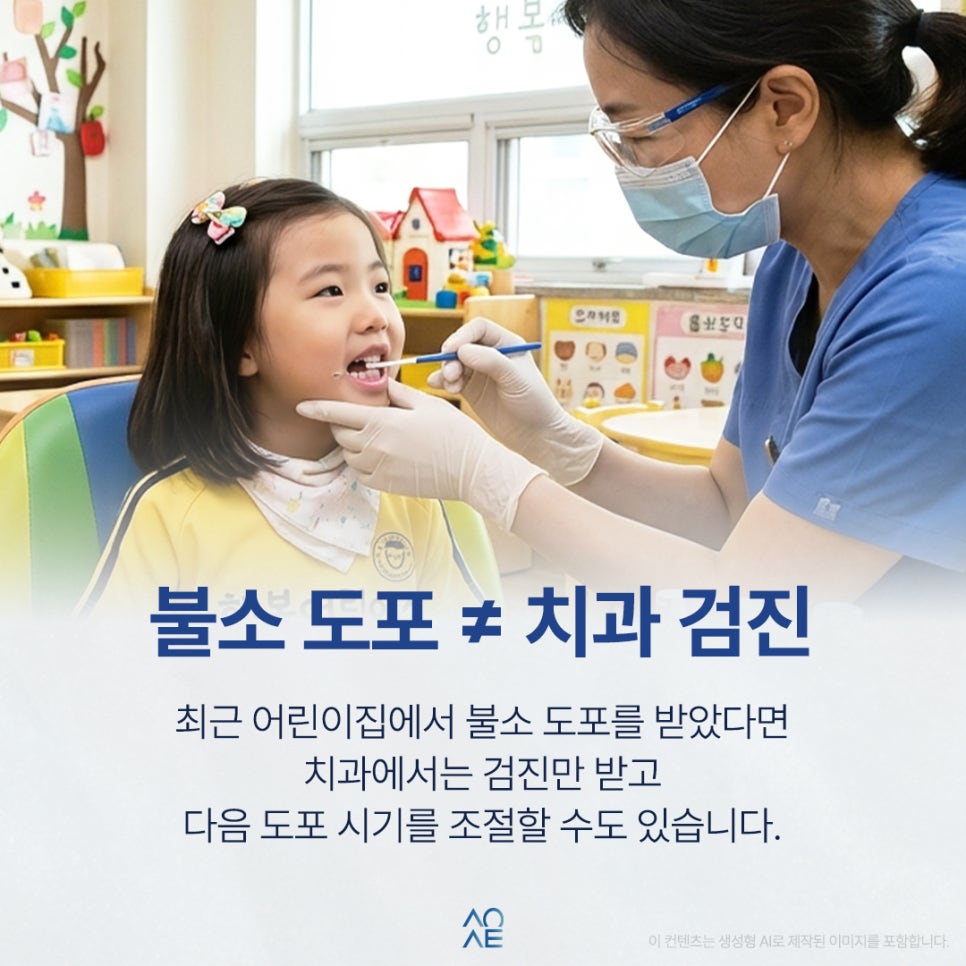
Although it can be particularly helpful
for children at high risk of cavities,
applying fluoride once does not make its effects last indefinitely.
It also does not confirm whether a cavity is progressing.
Because fluoride application and dental examinations
serve different purposes,
one should not be considered a complete substitute
for the other.
If an early cavity is being monitored,
checkups may be scheduled every three to six months.
If the risk is low and the condition is stable,
the interval may be extended.
If your child recently received a fluoride application at daycare,
you can consult a dental professional
to determine whether another application is needed
around the same time.
It is also possible to visit the clinic for an examination only
and set a new date for the next fluoride application.
Does my child need to visit the dentist right away?
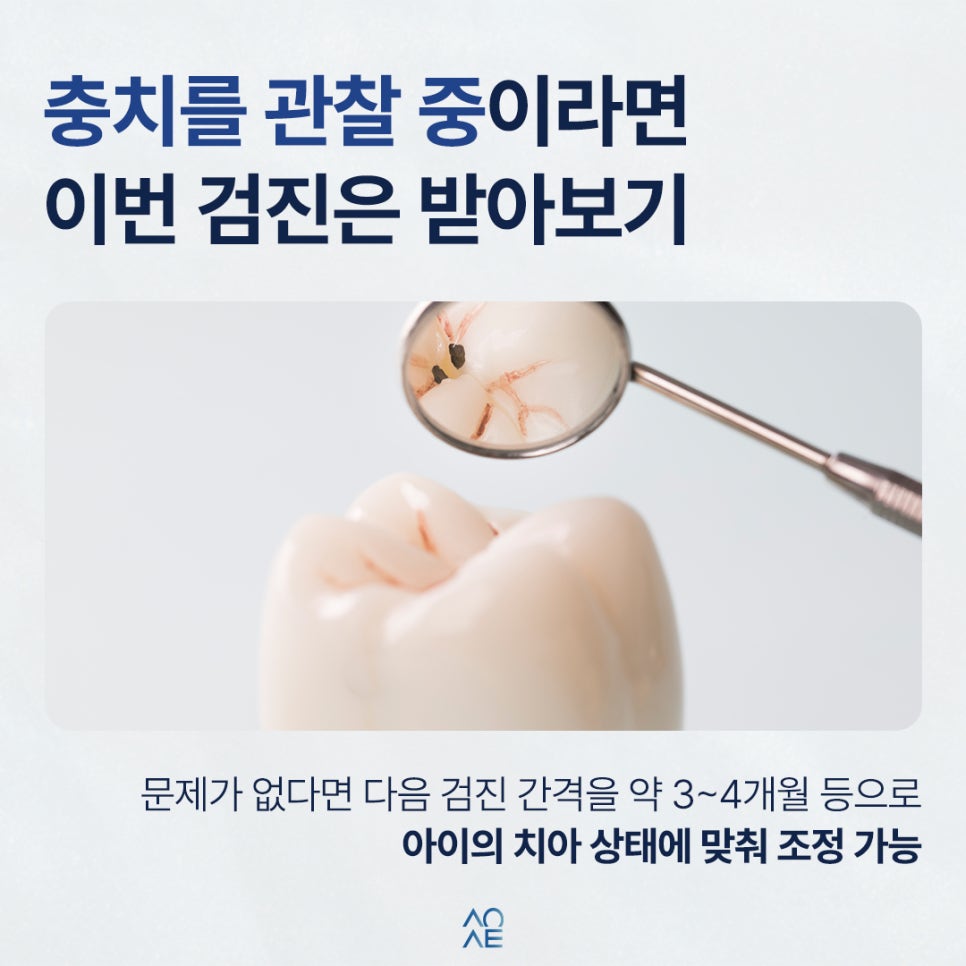
If a cavity was found in your child’s teeth
and is being monitored,
it is better to visit the clinic once
and compare the condition
rather than completely skipping the scheduled checkup.
The daycare examination can serve as a reference,
but comparing the current condition with the previous one
requires looking at past records.
At the dental clinic, you can also check
whether the newly erupted permanent teeth need sealants,
whether cavities are suspected between the teeth,
and which areas are difficult for the toothbrush to reach.
If this checkup shows that the condition has not
become worse and the permanent teeth are being well cared for,
the schedule can be adjusted to suit your child’s condition,
such as setting an interval of three to four months
for future visits.
Conversely, if there are signs of worsening,
the care method can be changed
or the timing of treatment can be moved up.
The interval between pediatric dental checkups
should be determined according to the changes
between the previous and current examinations.
If your child has regularly received
oral examinations and fluoride applications,
it can be said that you have been taking careful care
of their teeth.
Our conclusion is that, depending on whether
there was an existing cavity,
it is a good idea to have your child checked once more
at the dental clinic they usually visit.
If there are no significant changes,
from the next visit onward, you can simply have the condition checked
at the intervals recommended by the dental professional.
Please make sure your child receives the necessary care
so they can grow up healthy.
Can I get a dental implant in my 20s at my current age?
How long does pain after implant extraction last? I also had a bone graft.