Can temporary teeth break frequently?
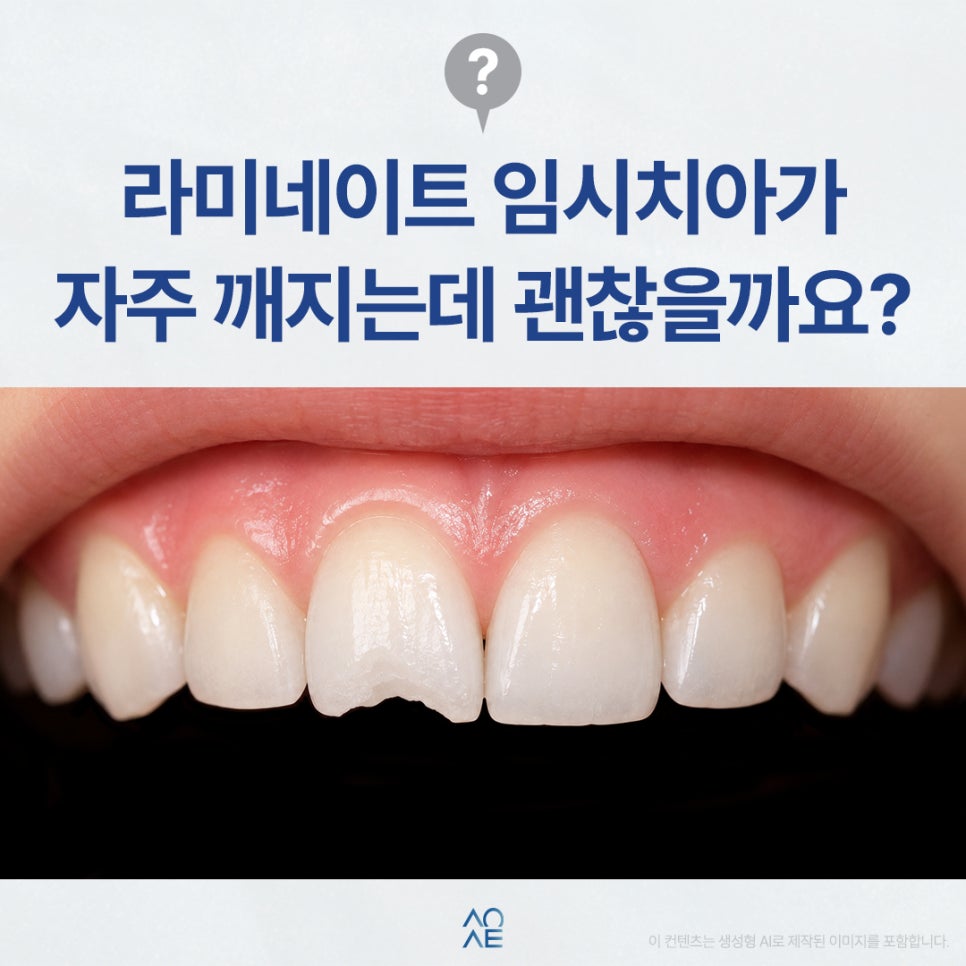
When undergoing laminate veneer treatment,
temporary teeth may be used for a certain period
until the final ceramic restorations are completed.
Even if everything seems fine,
you may wake up and find that part of one has broken,
or it may suddenly come loose.
This can make you worry that something has gone wrong
with the treatment process.
Because they differ from the final restorations,
temporary teeth may break or come loose
once during use.
However, if the same thing happens again
after the temporary tooth was remade due to breakage,
it is a good idea to check the cause.
Why are laminate veneer temporary teeth weaker than the final restorations?
They are used to protect the shape of the teeth
until the final restorations are completed
and to reduce unaesthetic gaps.
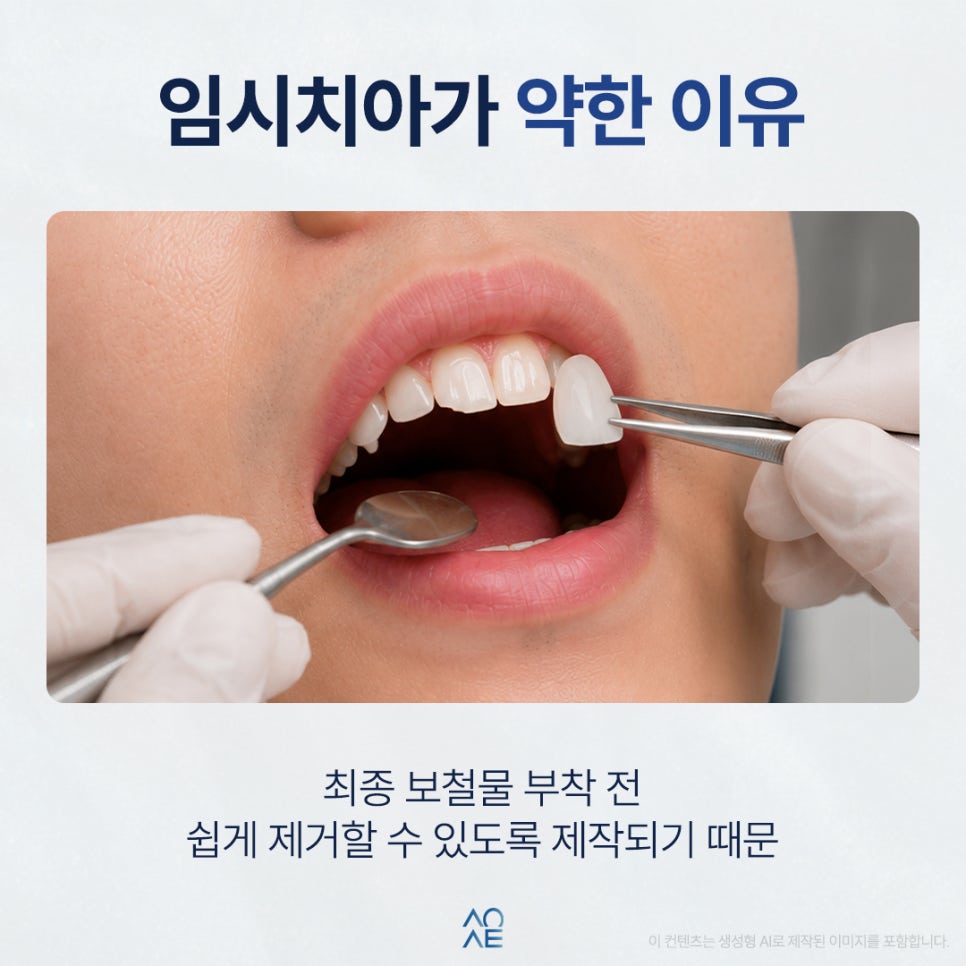
Since they are not intended for long-term use,
their material strength and adhesion are relatively low.
In particular, because they must be easy to remove
before final bonding,
they may be made using temporary cement,
or, in some cases, shaped with temporary resin material.
Because of these characteristics,
biting through hard foods with the front teeth
or chewing tough foods forcefully
may cause them to crack or partially come off,
so care is needed.
This is why, when a fracture occurs,
it is important to examine where the force was concentrated.
What could cause one to break while I was sleeping?
It is a good idea to check whether
you grind or clench your teeth during sleep.
When you clench your teeth, the front teeth may come
into forceful contact with each other,
or movement of the lower jaw may repeatedly transfer force
to the edge of the temporary tooth.

Because it is difficult to know your own habits during sleep,
some people say that there was no particular problem during the day,
but that a crack appeared or a piece came off only in the morning.
Also, if the front teeth normally bite deeply,
or if the bite causes the lower front teeth
to directly contact the inner side of the laminate veneer area,
we should point out that the risk of fracture may increase
even without nighttime habits.
In such cases, rather than repeatedly reattaching the temporary tooth,
it may be better to check where the upper and lower teeth make contact
and adjust the points where pressure is concentrated.
Can breakage also be caused by the thickness or shape?

The thickness of a temporary tooth varies depending on its shape,
the extent of tooth reduction,
and the final shape you want to create.
If the front teeth are protruding
or there is limited space,
it may be difficult to make the temporary tooth sufficiently thick,
and a thin edge may be vulnerable to repeated force.
Making it too thick can raise the bite
and cause it to hit the opposing tooth first,
so simply increasing the thickness does not necessarily solve the problem.
If it keeps breaking in the same location,
check together whether that area is too thin,
whether there is a part that contacts first when biting,
or whether interference occurs as the front teeth move.
Do I need to go back to the dentist every time it breaks?
A sharp edge left after a small piece comes off
may irritate the tongue or lips,
and the exposed surface of the reduced tooth
may become sensitive.

In this case, it is best to have the condition checked
by the dental clinic handling your treatment.
If the fractured area is small,
only the damaged area may be repaired with resin,
while extensive loss of shape may require remaking the temporary tooth.
However, if the laminate veneer temporary tooth keeps breaking
every day or two,
it is more efficient to check whether bite adjustment
or a change in the shape of the temporary tooth is needed
rather than remaking it in the same form each time.
If you have the piece that came off,
do not throw it away or try to scrape off the adhesive.
Keep it in a clean place
and take it with you to the dental clinic.
Can the final laminate veneers also break easily?
The fact that a temporary tooth has broken several times
does not necessarily mean that the final restorations will do the same.
The final restorations are made from ceramic-based materials,
and care is also taken with the bonding,
so their strength and stability are much greater.
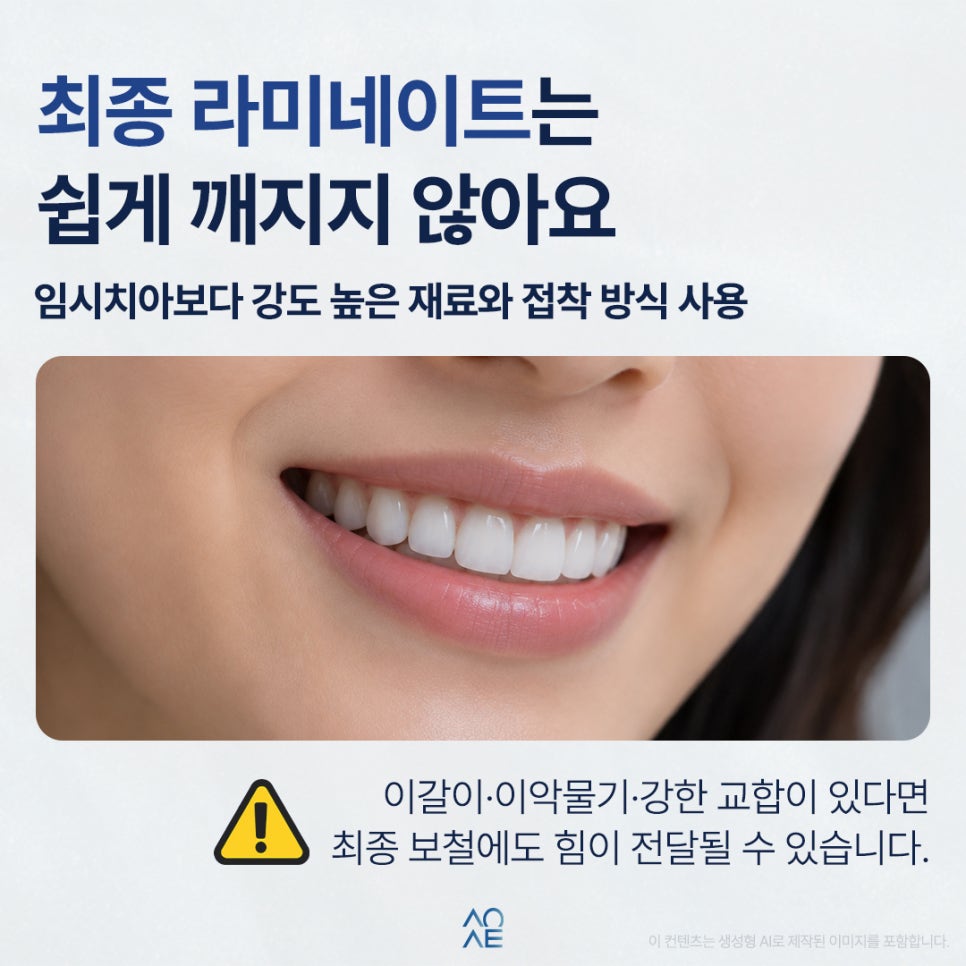
However, if the cause of repeated fractures is
severe tooth grinding, forceful clenching,
or a bite in which the front teeth collide excessively,
that force may also be transferred to the final restorations.
Before the final restorations are attached,
check why the laminate veneer temporary tooth broke,
and have the bite adjusted if necessary.
If strong force is applied to the teeth during sleep,
consideration should be given to using a mouthguard.
This may also be a good time
to check your own habits.
A temporary tooth can break once,
but if it happens two or more times within a short period,
check where the force is concentrated.
This may also help with the rest of the treatment.

Laminate veneer temporary teeth
are weaker than the final restorations,
so they should be used carefully.
However, there is no need to simply keep tolerating
repeated fractures.
Explain in detail to your treating clinician
when the breakage occurred and what was happening,
and have the bite and shape checked as well.
Do I need to visit a dental clinic if I already had a dental checkup at daycare?
Is it okay to get a dental implant in my 20s?