Is it okay if the miniscrew looks more exposed than it did at first?
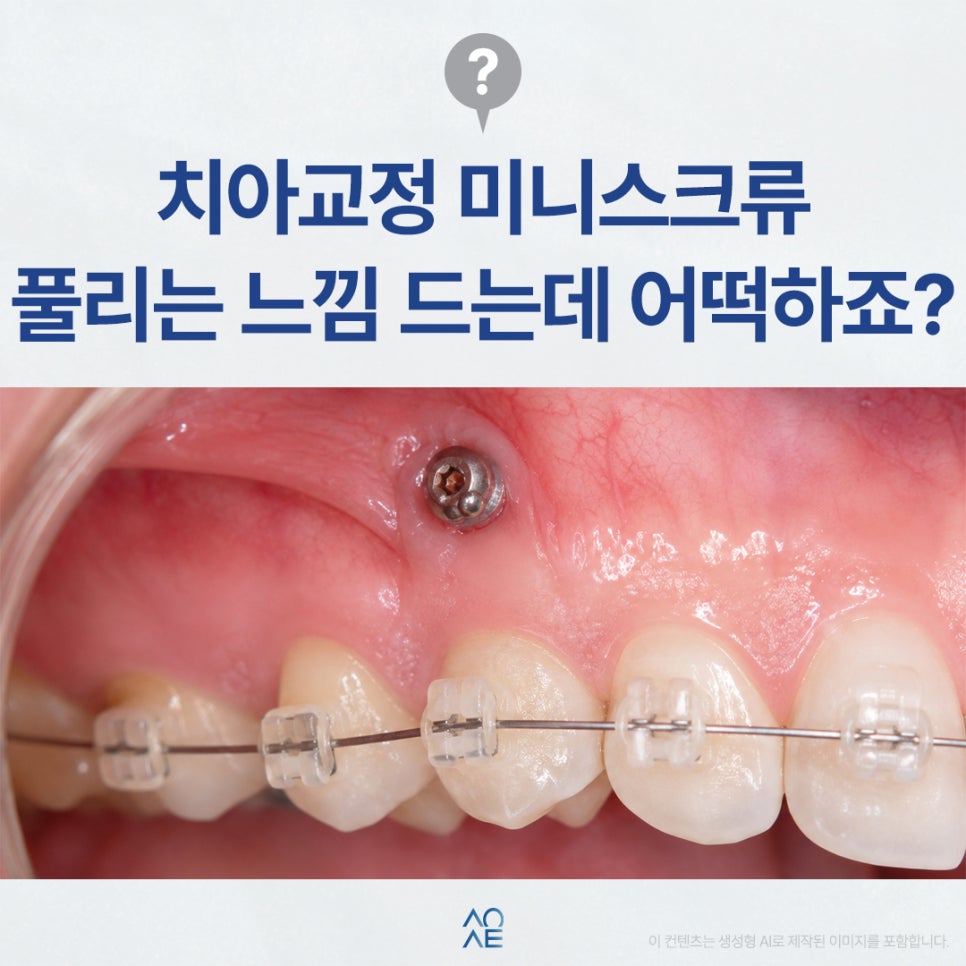
During orthodontic treatment, after a
miniscrew is placed in the gums,
there may be times when it looks different
from the beginning when you see it in the mirror.
Even though it has not been long since placement,
if the head of the screw seems
more exposed than before or appears to have changed angle,
you may want to know whether it is actually loosening.
Its appearance can vary depending on the condition
and location of the gums and bone,
and as gum swelling subsides during treatment,
it may sometimes look more exposed than it did initially.
However, it is difficult to determine whether it is normal
based on appearance alone.
If it seems that its position continues to change over time,
it is a good idea to have its condition checked.
What changes occur if it is actually loosening?
Orthodontic miniscrews are used as anchorage
to move teeth in the desired direction.
Elastic bands or coil springs are connected to them
to deliver a steady force.
If the miniscrew is staying in place without problems,
its position should change very little
when it is not touched by hand,
and it should remain securely fixed
even when an orthodontic appliance is connected to it.
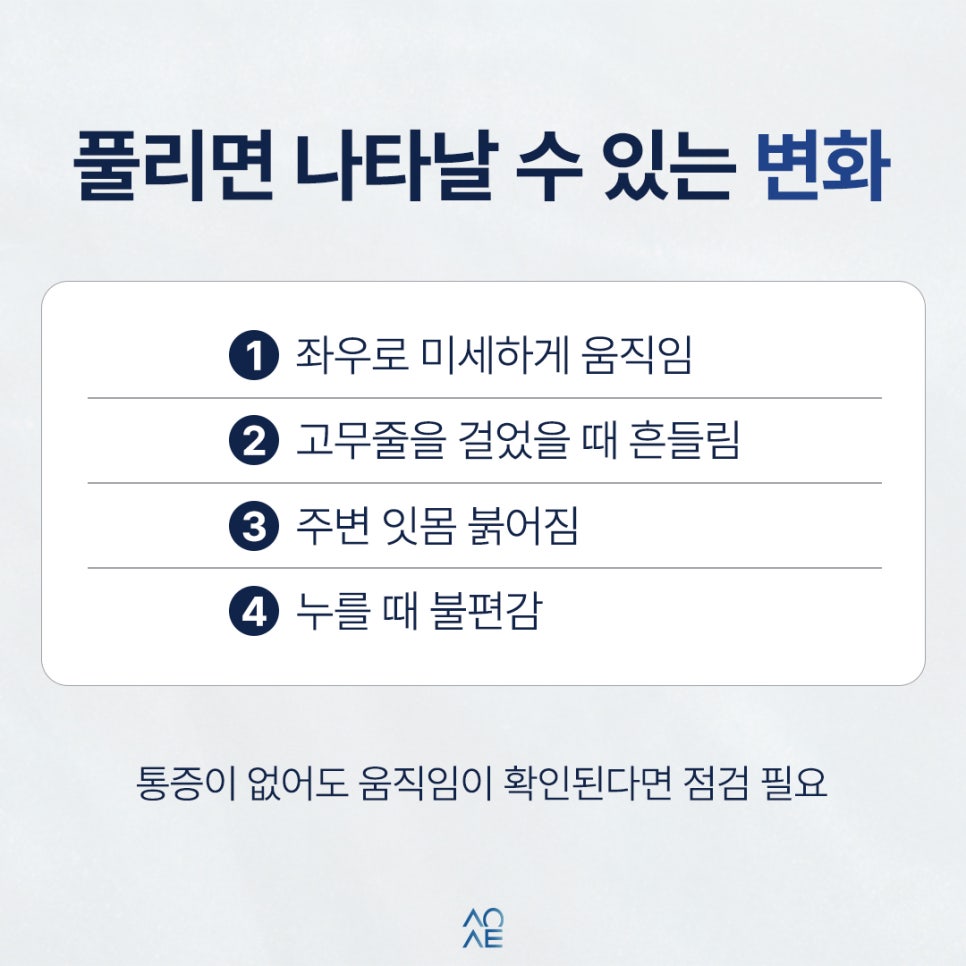
On the other hand, when its stability begins to decrease,
the screw may move slightly from side to side,
or you may see it move
when an elastic band is attached.
You may also notice movement different from before
when brushing your teeth or when your tongue touches it,
and in some cases, redness or tenderness
may appear in the surrounding gums.
Even without pain, if actual movement is confirmed,
it is best to have its condition checked
before continuing to apply force.
Can it loosen within just a few weeks of placement?
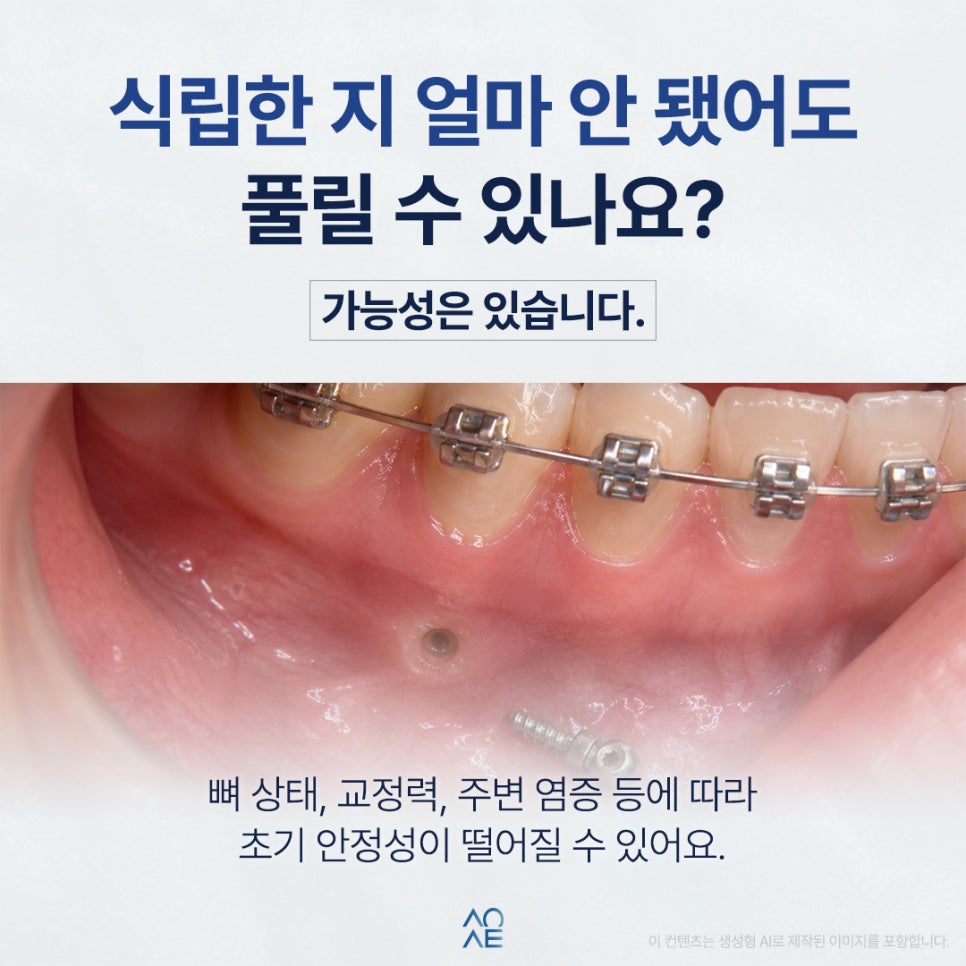
During the first few weeks,
the condition of the surrounding tissue
should be monitored carefully.
Stability may decrease if the bone condition is poor,
if greater anchorage force than expected is applied,
or if inflammation develops because food debris or plaque
accumulates around the miniscrew.
Placement too close to a tooth root,
resulting in continuous irritation,
may also have an effect.
It was placed at an angle from the beginning—is that not a problem?
Just because it does not look straight and vertical
does not mean it was placed incorrectly.
In some cases, a specific angle is used
to secure space between the tooth roots
and avoid the roots.
Since an appropriate direction may be selected,
it can appear slanted.
Depending on the area,
intentionally placing it at an angle
may actually be helpful.
If it has maintained the same angle from the beginning
and there is no pain or movement,
there is no need to suspect a problem
simply because it looks tilted.
The important question is, “Compared with the beginning,
are its angle or position changing?”
If the head of the orthodontic miniscrew
appears to be gradually moving outward
or its direction seems to be changing,
the dental clinic can evaluate its anchorage stability.
If it does not hurt or move, can I wait until my next appointment?
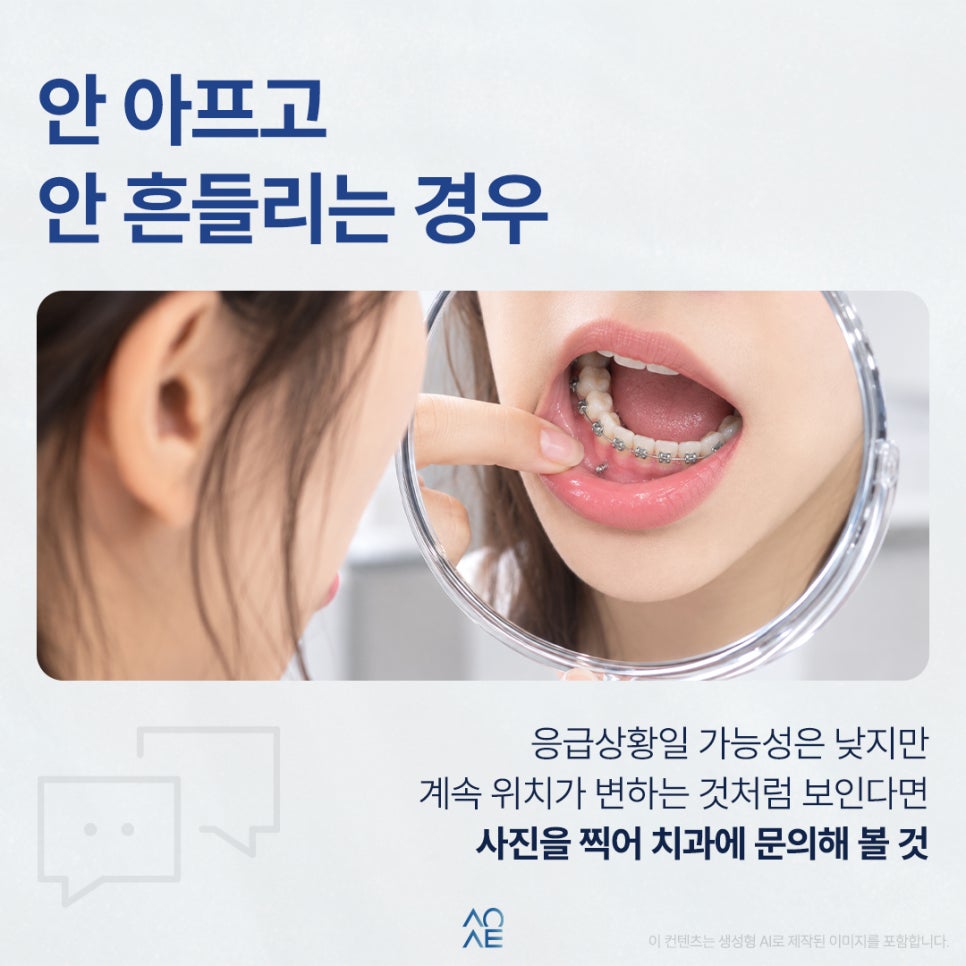
If there is no pain and you do not feel any movement
when it is not being touched,
it is unlikely to be a situation
requiring urgent treatment.
However, if it looks as though its position
has changed over just a few days in the mirror
and there is still time before your next regular checkup,
it would be best to contact the dental clinic.
However, when checking it yourself,
avoid pushing it with your finger or tongue.
Even if it is stable,
repeated external force may be applied,
which could irritate the surrounding gums.
It is better to record only the changes in photographs
and leave it to the dental professional
to determine whether it is actually moving.
I am worried that if the miniscrew is actually moving, it will need to be placed again.

A loss of anchorage stability does not necessarily mean
that it will be immediately placed again in the same location.
If there is very little movement and no surrounding inflammation,
force may be reduced temporarily,
or the condition may simply be observed.
If it is determined that stability is insufficient,
it may be removed and placed again in another location.
If there is inflammation in the gums,
the area may be kept clean first,
with the timing of replacement decided
after the tissue has stabilized.
Even if replacement becomes necessary,
it can be secured again by moving the location slightly
or changing the angle.
Therefore, there is no need to assume
that one loosened miniscrew will cause
a major problem with the entire orthodontic plan.
Orthodontic miniscrews are auxiliary devices
whose position may be changed
or which may be replaced as needed during treatment.
The next approach can be determined
according to the current stage of treatment.
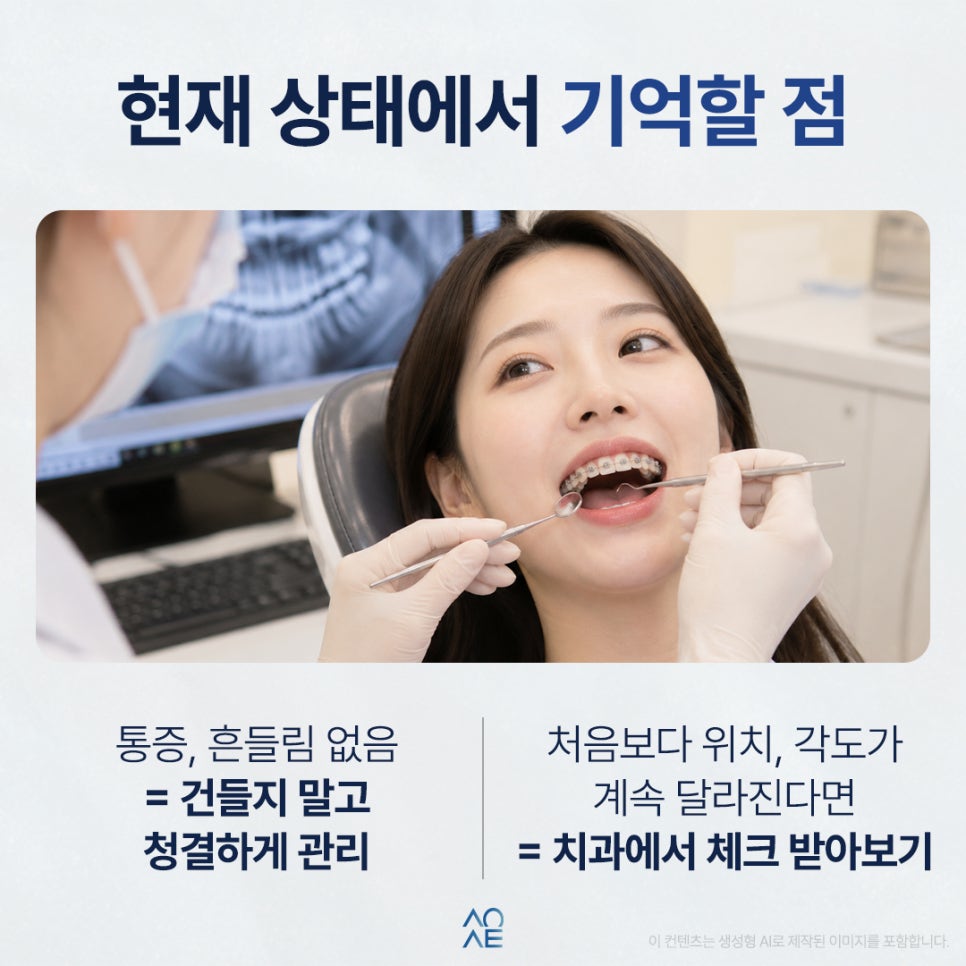
The fact that a placed orthodontic miniscrew
looked slanted from the beginning
may not be a significant problem by itself.
If there are no particular abnormalities,
it is best not to touch it
and to keep the surrounding area clean as usual
using an interdental brush and similar tools.
However, if compared with the initial photograph,
the screw head continues to appear more elevated
or seems to be changing angle,
contact the dental clinic for confirmation
rather than making your own judgment before the next appointment.
Even a brief check of its condition
can help distinguish whether it is actually loosening
or only appears that way because of changes in the gums.
Can temporary laminate veneers break several times?
If my child gets a dental checkup at daycare, do they still need to visit a dentist?