Can Clear Aligners Treat Overlapping Upper Teeth?
If you have crowded teeth that make your front teeth or canines look overlapped,
you may look into orthodontic treatment and search for a method with appliances that are not very noticeable.
If you feel self-conscious about visible appliances at school or work,
clear aligners may be suitable for you.
Recently, the range of conditions treatable with this method has become broader than before,
so clear aligners are being used not only for mild tooth irregularities
but also for various types of bite problems.
However, it is difficult to determine whether treatment is possible based only on the visible degree of crowding.
The amount by which the teeth overlap, the direction in which they need to move,
the way the upper and lower teeth come together,
and the relationship between the jaws all need to be examined
to determine the appropriate orthodontic method.
To What Extent Can Clear Aligners Be Considered for Crowded Teeth?
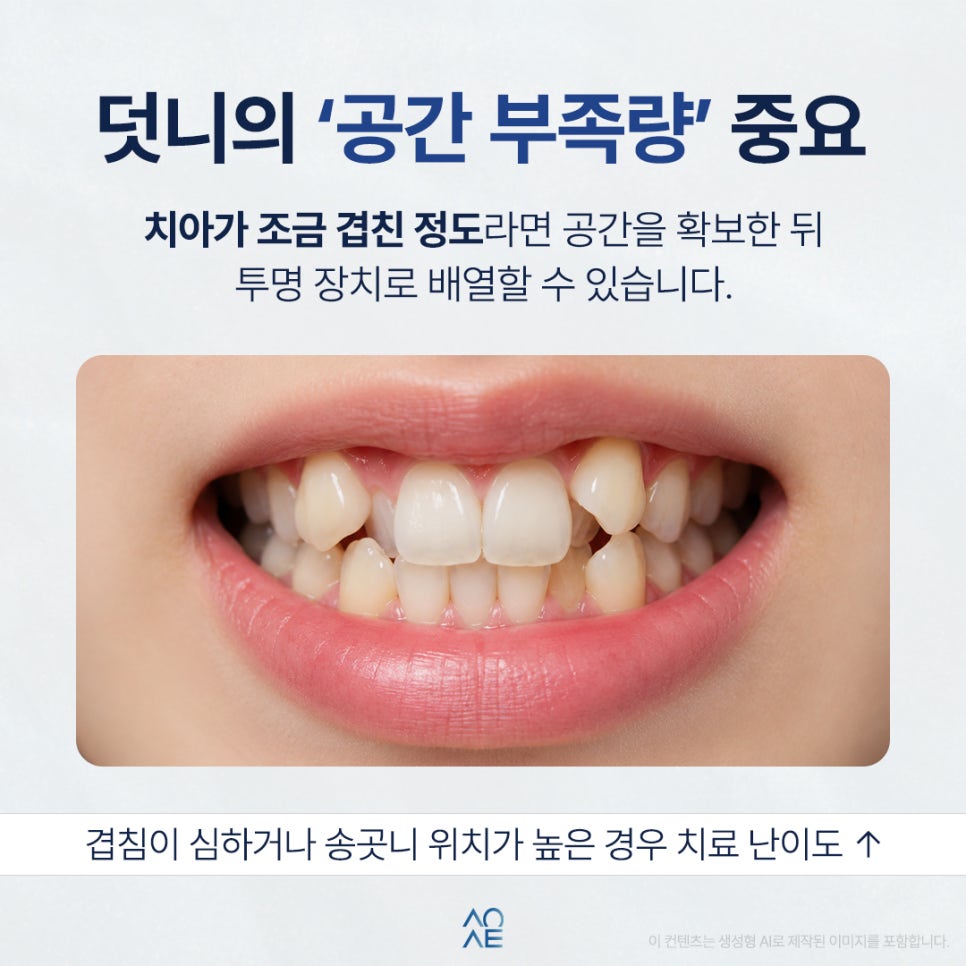
If the degree of overlapping is not severe
and the distance the teeth need to move is relatively short,
there is a good possibility that clear aligners can be used
to improve their alignment.
Methods may include creating space by slightly reshaping the areas between the teeth,
slightly widening the dental arch,
or moving the back teeth to make room for the crowded teeth.
Attachments may also be placed on the tooth surfaces
to help the appliance grip the teeth more precisely
and move or rotate them.
If the teeth are severely overlapped,
the canines are positioned high,
or multiple teeth need to be moved significantly,
the treatment may be more challenging.
Rather than the fact that crowded teeth are visible,
the amount of space needed in millimeters
and the direction in which each tooth needs to move
have a greater influence on determining the treatment method.
Can Malocclusion Also Be Corrected?
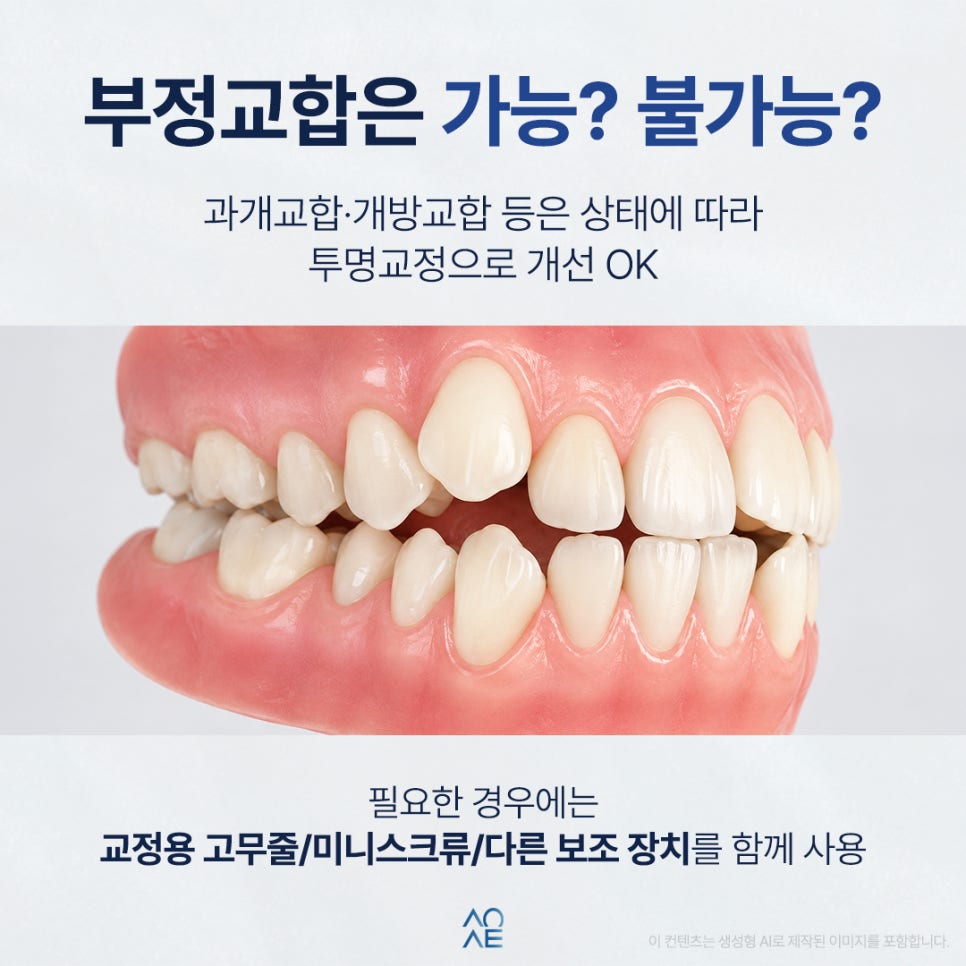
There are various forms of malocclusion, including a deep bite,
in which the upper and lower front teeth overlap deeply;
an open bite,
in which the front teeth do not touch;
and a reverse bite,
in which the lower jaw appears to project forward.
Treatment methods vary depending on the cause and severity.
If the primary cause is the position of the teeth
and the range of movement can be controlled,
clear aligner treatment may be considered.
In cases of skeletal malocclusion with significant front-to-back or side-to-side differences in the jawbones,
or when the amount of tooth movement required is considerable,
it may be difficult to achieve the desired result with clear appliances alone.
If necessary, auxiliary appliances such as elastics or miniscrews may be used,
or another appliance may be used in combination.
Please keep in mind that choosing clear aligners
does not necessarily mean that no other appliances will be used at any point during treatment.
Can Crowded Teeth That Require Extractions Also Be Treated?
If there is severe lack of space, as can occur with crowded teeth,
a treatment plan involving extraction of premolars or other teeth followed by orthodontic treatment may be possible.
The resulting space can be used
to move the front teeth and canines
and adjust the roots and angles.
The more extensive the tooth movement
and the more precisely the space needs to be closed,
the more difficult the treatment may become.
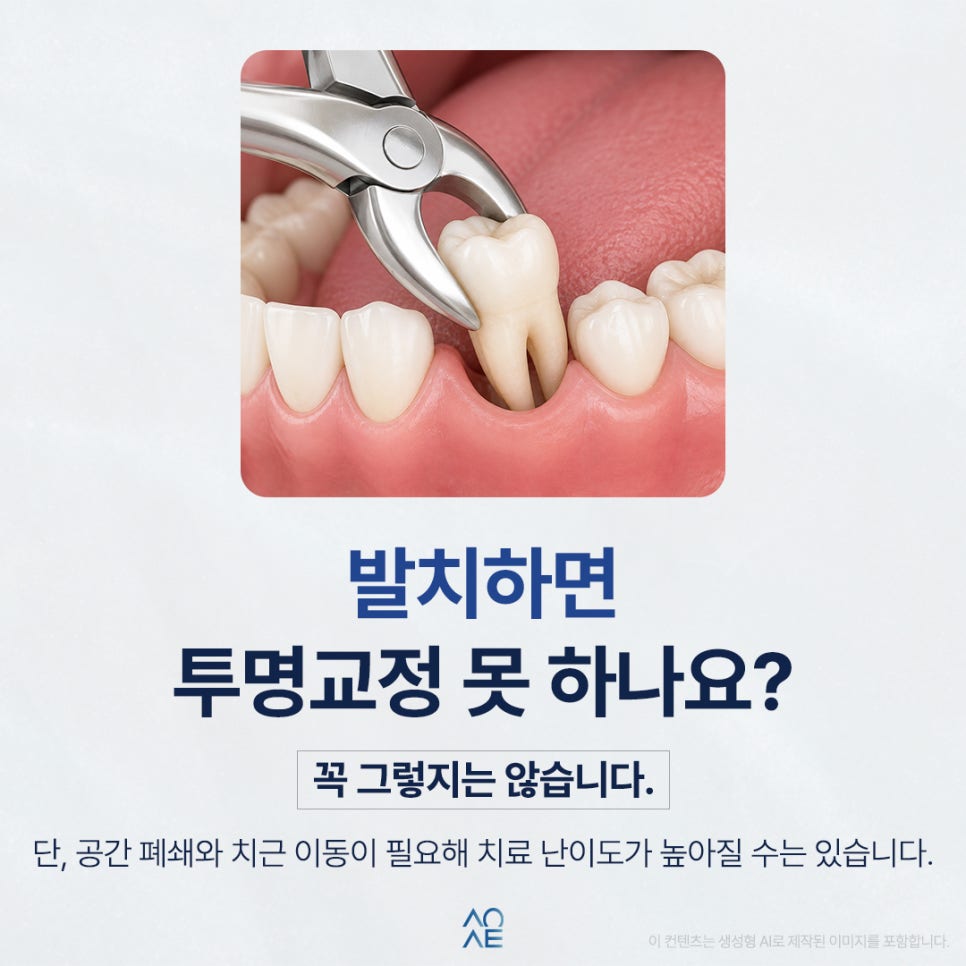
Whether extractions are needed is determined by analyzing the space available for the teeth, the degree of protrusion,
the lip profile, the width of the supporting jawbone,
the facial shape, and the bite together.
Even when extractions are needed,
clear aligner treatment may still be possible.
However, not every extraction case has the same level of difficulty,
so it is advisable to compare the options after a detailed examination.
Approximately How Long Does Treatment Take?
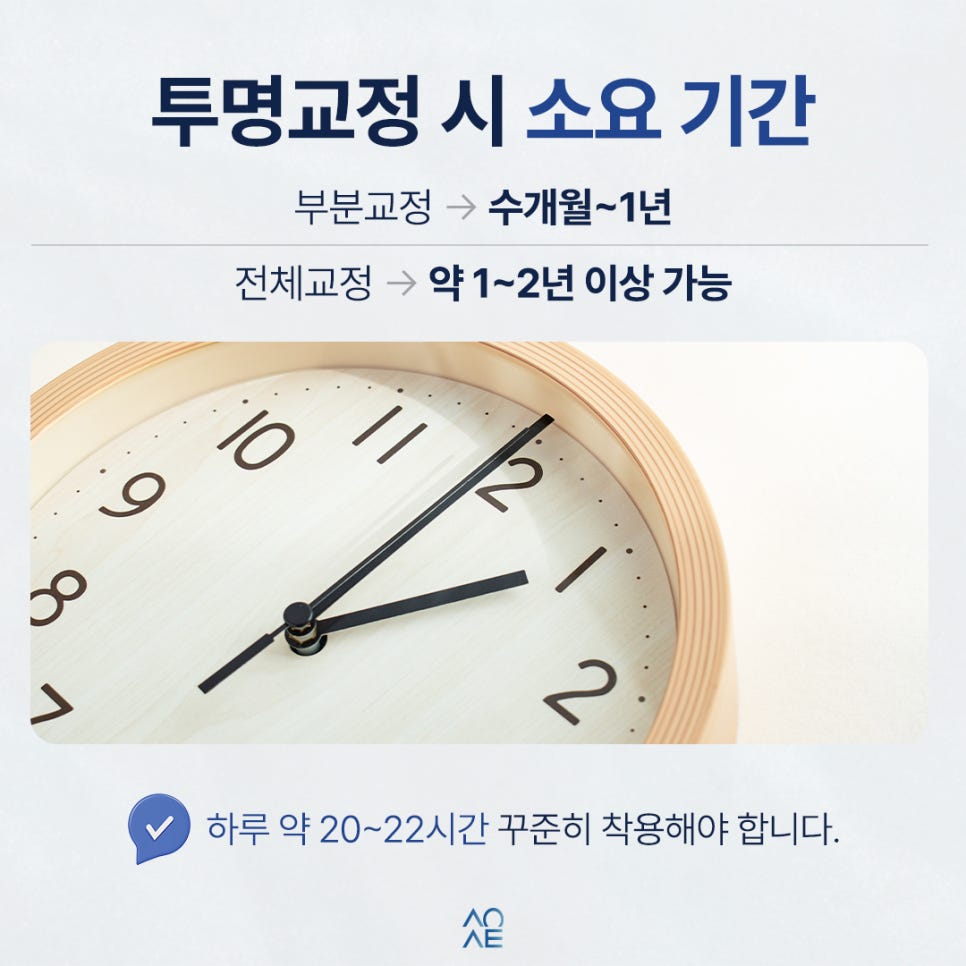
If only minor or partial alignment adjustments are needed,
treatment generally takes several months to about one year.
If the entire dentition needs to be moved,
or if crowded teeth and the bite are corrected together,
treatment may take about one to two years,
and in some cases even longer.
If additional appliances need to be made to readjust teeth that move differently from what was expected during treatment (refinement),
the treatment period may also become somewhat longer.
Wearing time also has a major impact.
If the aligners are not worn for 20 to 22 hours a day,
the alignment may not progress as planned.
In that sense, consistent compliance is important.
Please wear them both during the day and while sleeping,
except when eating and brushing your teeth.
I’d Also Like to Know the Cost of Clear Aligner Treatment.
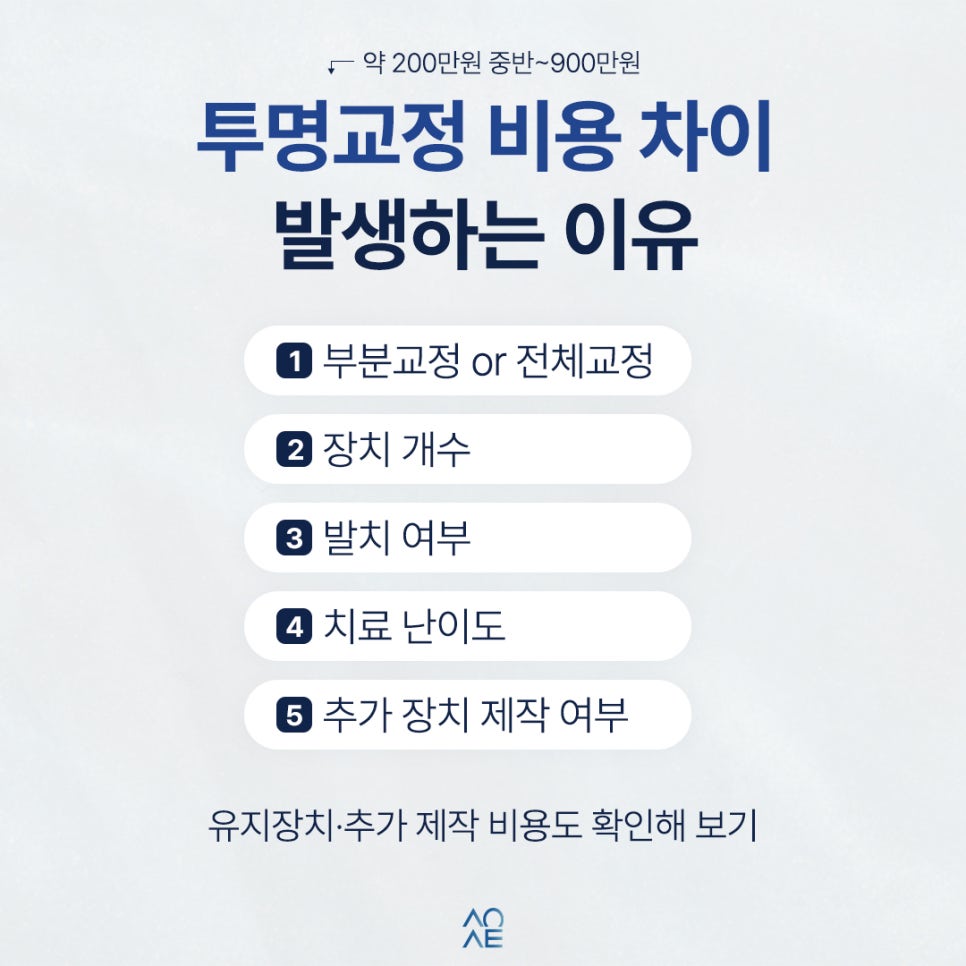
The cost of clear aligner treatment varies greatly depending on whether treatment is partial or comprehensive,
the appliance system used,
the number of appliances required,
whether extractions are needed,
and the level of difficulty.
The price range can be quite broad,
from approximately 2.5 million won to around 9 million won.
If treatment is performed only partially
and involves minor alignment adjustments,
the cost may be lower.
However, if comprehensive treatment is needed
and several auxiliary appliances must be used,
the cost may be higher.
It is also a good idea to ask in advance
whether the initial quoted amount includes the detailed examination fee,
the cost of making additional appliances,
retainers, and other fees.
Since the Appliances Are Not Visible, Will They Be More Comfortable?
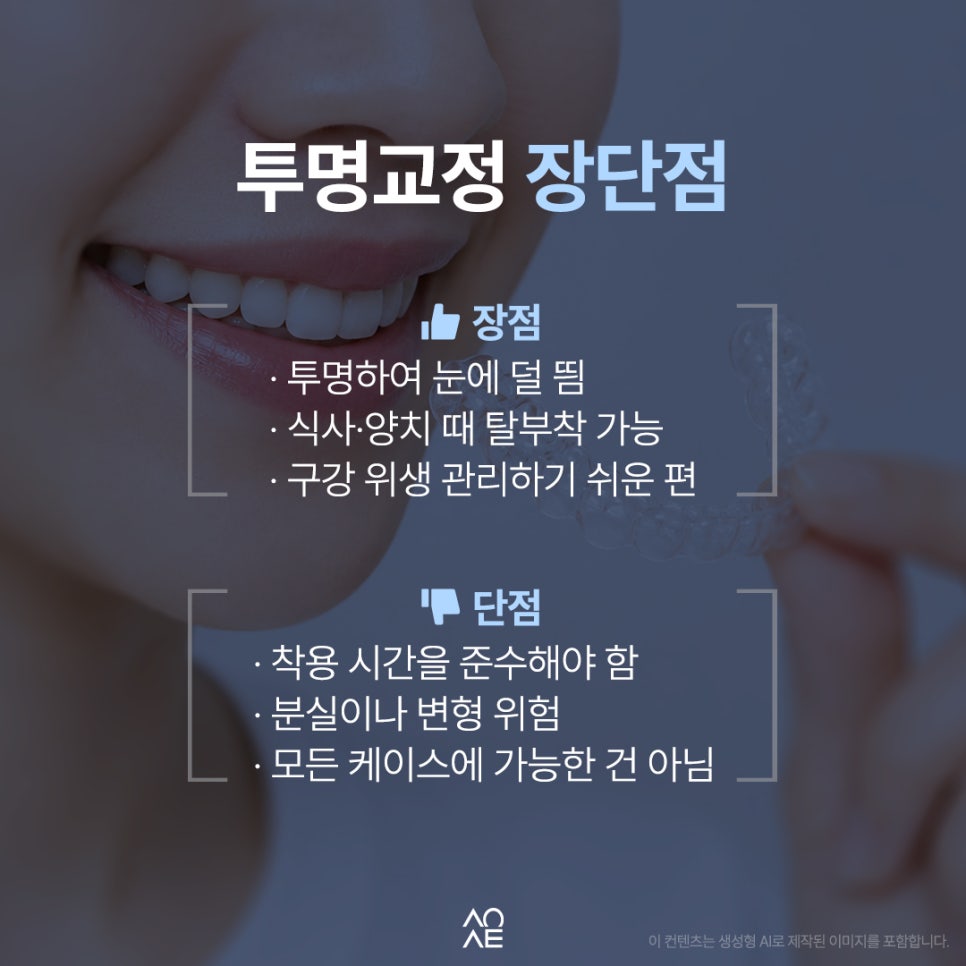
Because they are thin and transparent,
clear aligners are generally less noticeable than conventional appliances such as brackets.
They can be removed when eating or brushing your teeth,
which can make oral hygiene easier to manage.
However, if you do not comply with the required wearing time,
the effectiveness may decrease
and the treatment period may become longer.
After changing to the first new appliance,
you may experience pressure or soreness.
If attachments or elastics are added,
the appliances may be more noticeable than you expected.
Your speech may also sound awkward temporarily.
Rather than choosing clear aligners based only on their appearance,
consider your daily habits and whether you will be able to wear them for long hours every day.
Even if you have crowded upper teeth along with malocclusion,
there is no need to give up from the beginning,
nor is there a need to insist on clear appliances alone.
Teeth that look similarly crowded may reflect a minor lack of space in one person,
while another person may need extractions and substantial tooth movement.

After a detailed examination confirms the amount of movement required,
consider which method to choose.
This includes the cost and pros and cons of clear aligners,
as well as differences in treatment time when choosing a removable appliance such as Clippy C.
Rather than focusing on just one advantage,
we recommend considering various factors
and choosing the method that is appropriate for you.

Is Using a Dental Mouthpiece Better Than an Over-the-Counter One?
What Should I Do If My Orthodontic Miniscrew Seems to Be Coming Loose?