Hello,
This is Synyudo Station Dental Clinic.
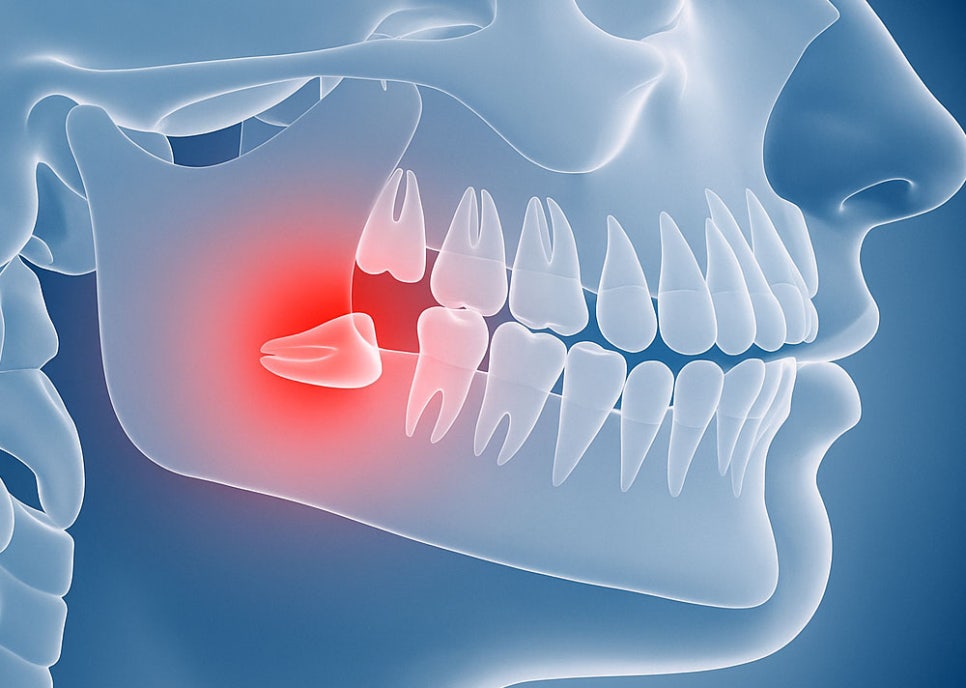
Many people have likely had a hard time because of wisdom teeth.
As with all medical procedures,
this can also lead to side effects or
complications during extraction.
However, with proper preparation before the procedure and aftercare,
these risks can be greatly reduced.
Today, let’s look into this together.
1️⃣ Pain and swelling
This is the most common symptom after wisdom tooth extraction,
and inflammation occurs because the gum tissue and
surrounding bone are irritated during the removal process.
This inflammatory response is part of the body’s healing process,
and swelling and pain may continue for 2–3 days.

In particular, when a lower wisdom tooth is extracted,
swelling is often more severe,
and one side of the face may become noticeably swollen.
The degree of pain varies from person to person,
but it usually begins to improve gradually from day 3 or 4.

At this time, applying a cold compress
can help reduce swelling,
and it is best to take the prescribed anti-inflammatory medication
as directed.
However, if it does not improve even after a week
and instead gets worse, Synyudo Station Dental Clinic
recommends being examined by medical staff.
2️⃣ Bleeding and hematoma
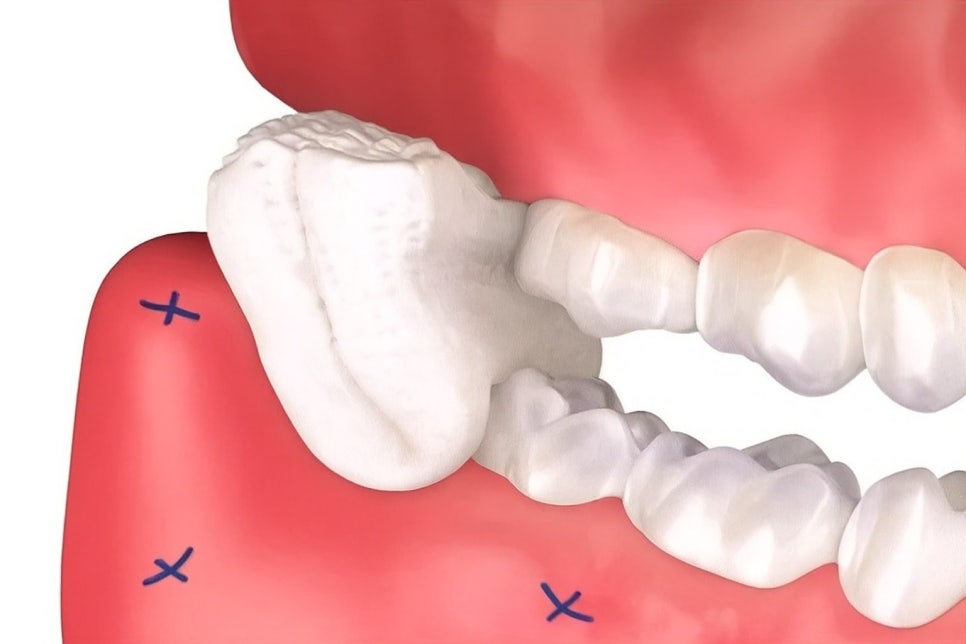
Right after the extraction, bleeding usually stops
if you bite down firmly on the gauze for about 2 hours.
At this time, it is better not to keep taking the gauze out to check,
and to keep biting down without spitting,
because spitting can increase pressure
and cause more bleeding,
so it is best to swallow if possible.
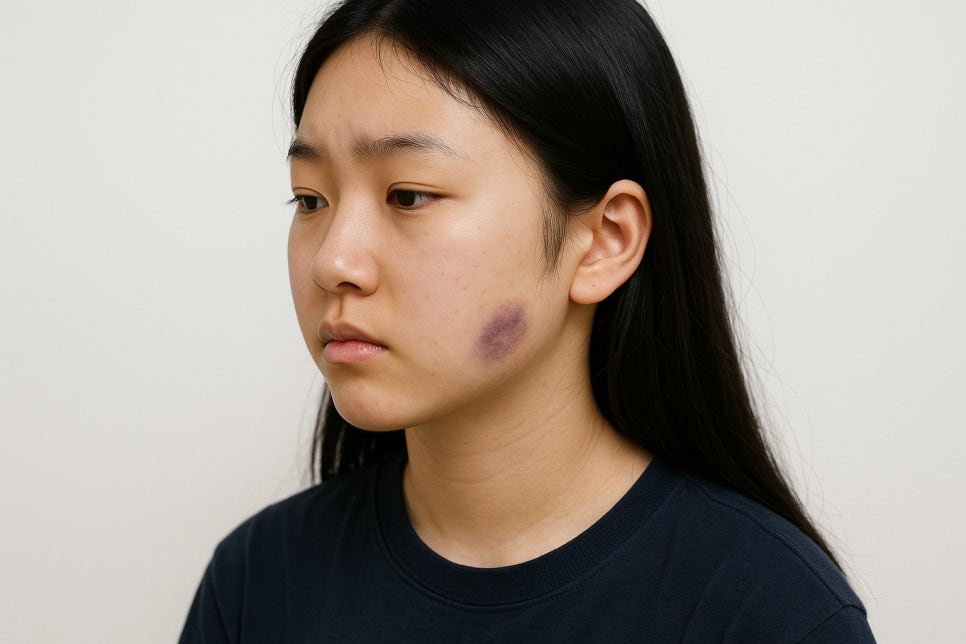
Some patients may also develop bruising on the face,
which happens when the mucosa, blood vessels, and muscles are irritated during surgery,
causing blood to collect in the tissue.
However, Synyudo Station Dental Clinic says that it usually turns yellow
and disappears within 1–2 weeks,
so there is no need to worry too much.
3️⃣ Dry socket
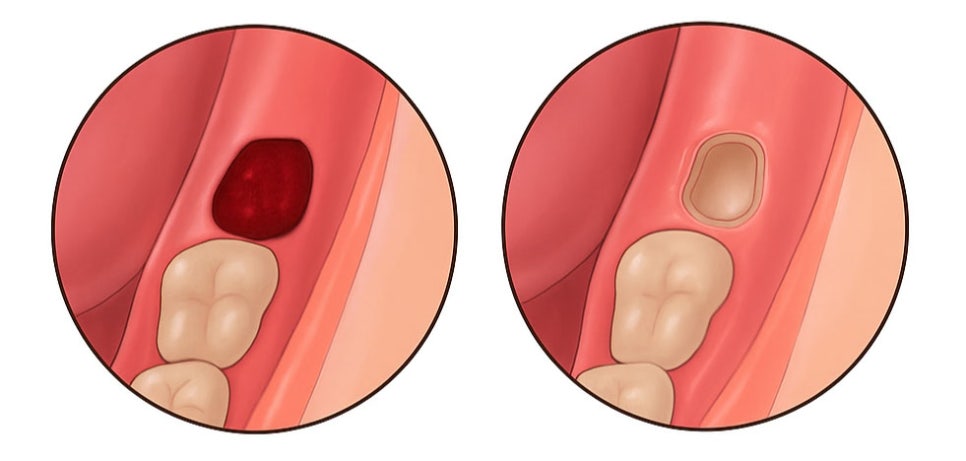
Dry socket is one of the complications that can occur after wisdom tooth extraction,
and medically it is called alveolar osteitis.
Normally, blood at the extraction site clots
to form a scab-like blood clot that protects the area,
but if the clot falls out for any reason,
the bone underneath becomes exposed as it is,
causing severe pain.
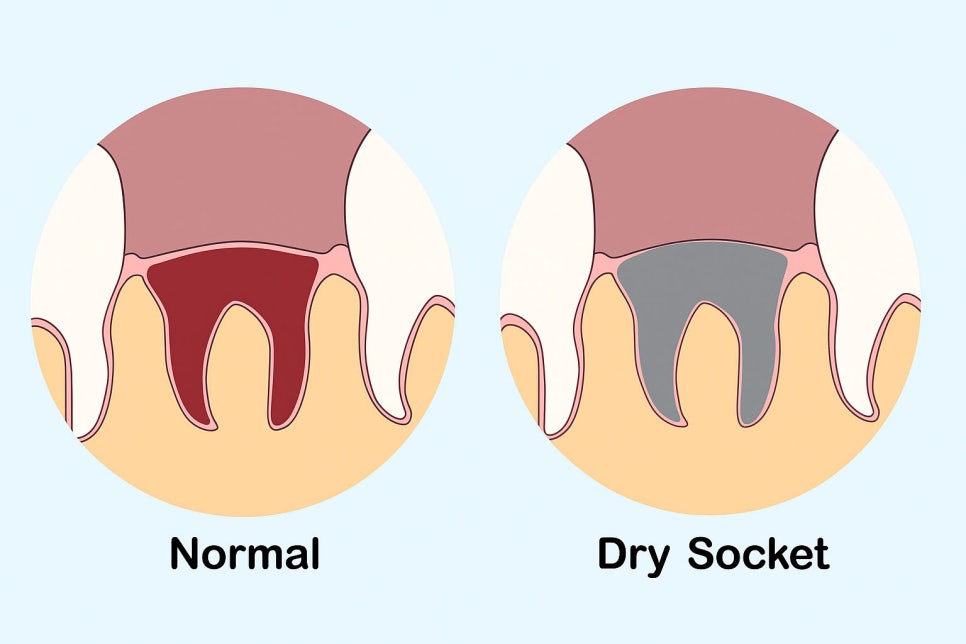
Dry socket usually appears 3–5 days after extraction,
and is characterized by pain that is
hard to control even with painkillers.
Common causes include
using a straw, smoking, vigorous brushing or rinsing,
and eating hot food.
In particular, smoking interferes with blood circulation,
makes clot formation difficult,
and greatly increases the risk of dry socket.
As explained by Synyudo Station Dental Clinic,
if you suspect your symptoms are due to dry socket,
please do not leave it untreated and instead visit a nearby medical facility immediately
for evaluation by medical staff.
4️⃣ Bacterial infection
The extraction site of a wisdom tooth is prone to food getting trapped,
so the risk of infection is high.
The mouth is an environment where numerous bacteria are always present,
so if care is neglected, bacteria can multiply quickly.
When an infection begins, the surrounding area becomes red and swollen,
pus starts to form,
and a distinct bad breath may occur.

Synyudo Station Dental Clinic notes that if the infection progresses further,
you may develop a fever and your overall condition may worsen,
and the lymph nodes in the neck area may also swell.
To prevent this, you must take the prescribed antibiotics
without missing any doses for the specified period,
and it is recommended to gently gargle with an antiseptic solution.
5️⃣ Nerve sensation
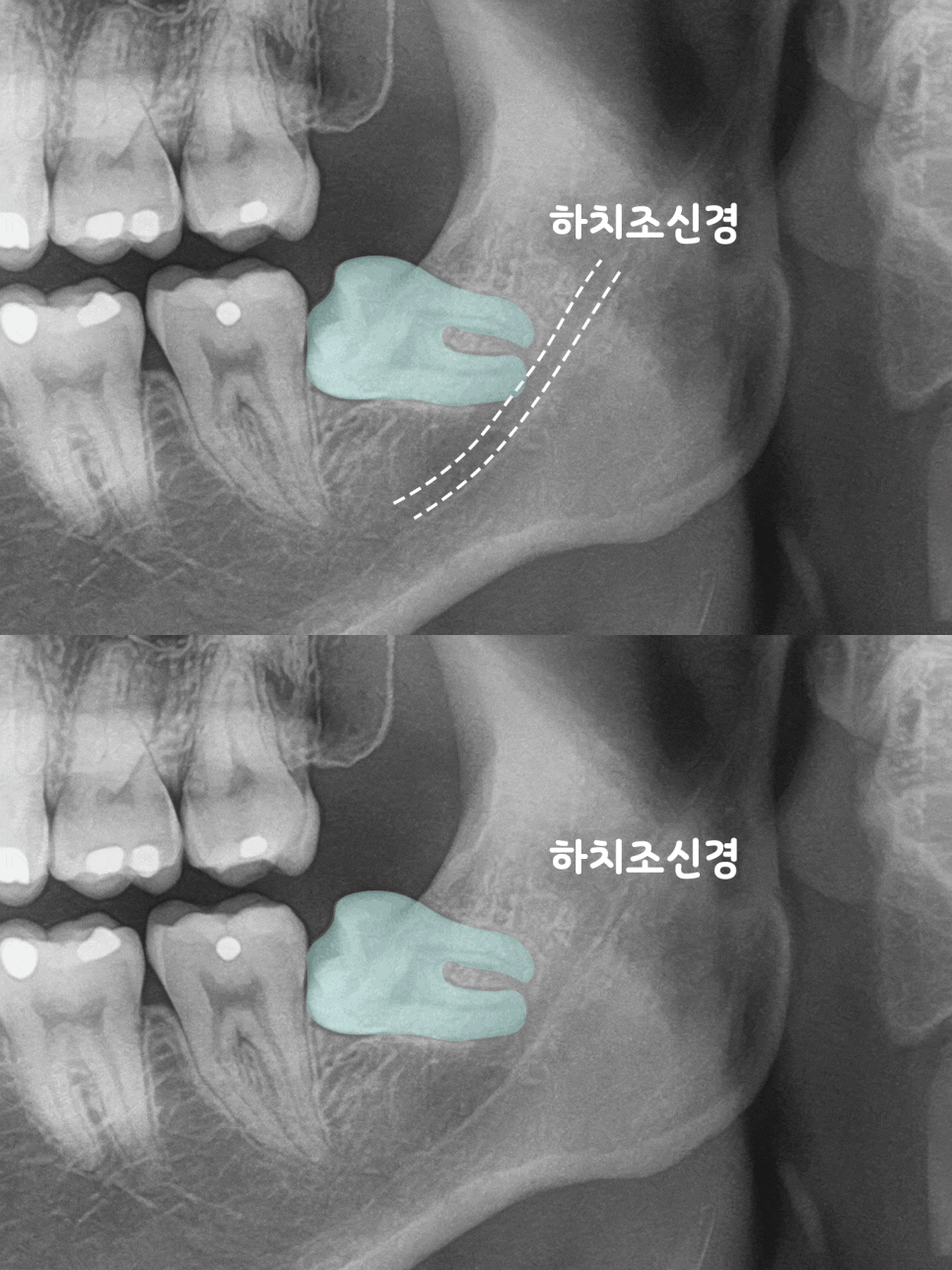
Lower wisdom teeth are often located close to an anatomical structure
called the inferior alveolar nerve.
This nerve is responsible for transmitting sensation
to the lower lip, jaw, and part of the tongue.
However, if this area is affected during extraction,
abnormal sensation may occur in the corresponding region.
It usually appears as tingling, numbness, or reduced sensation,
and sometimes there may be a burning sensation.
Recovery speed varies depending on the severity,
but it usually improves gradually over several weeks to several months.
However, in rare cases, full recovery may be difficult,
and permanent sensory changes may remain.
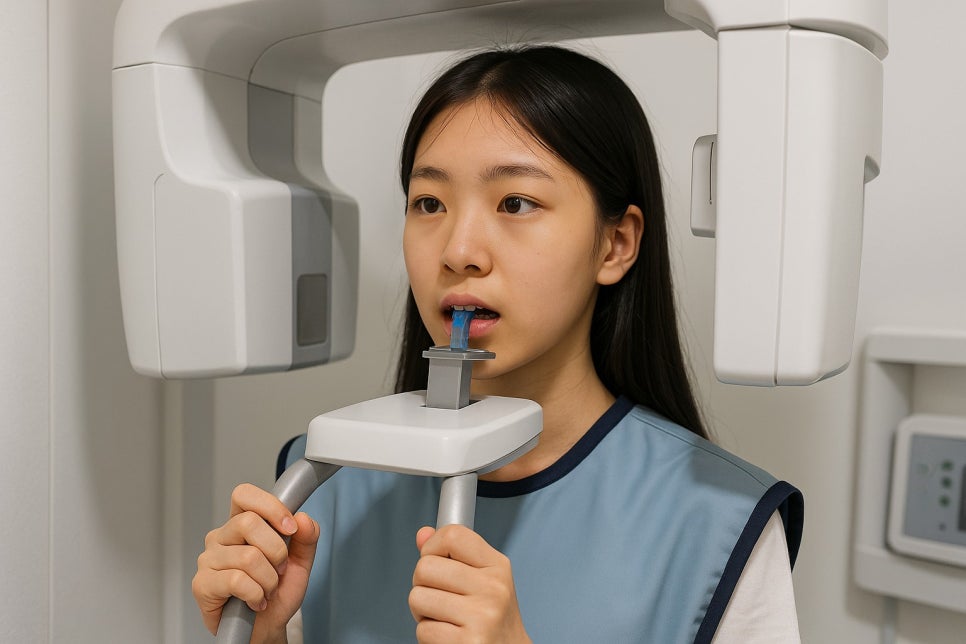
Synyudo Station Dental Clinic believes that to reduce this risk,
it is most important to identify the distance from the nerve
through preoperative X-rays and CT scans,
and to establish a surgical plan accordingly.
I hope today’s explanation was helpful to you all,
and I will end here for now.
This has been Synyudo Station Dental Clinic.
Thank you.