Hello, I’m Dr. Kim Min-young, a specialist in conservative dentistry.
For people who are taking a new route or have trouble finding their way,
navigation is essential.
I’m sure most of you use at least one related app.
It helps prevent you from going the wrong way
and shows a route that can get you to your destination in a short time,
so it is more efficient than relying on intuition.
This can also be applied inside the mouth.
We’ve prepared information about [navigation implants] at a dentist near Sunyudo Station.
Just from the name, you may wonder how navigation is used inside the mouth.
Using a key device called a “guide,”
you can see at a glance where and at what angle the implant screw should be placed,
almost as if a flashlight were shining on it.
I’ll explain how it is made and used according to the treatment steps,
matched to each person’s different environment.
- Initial consultation stage
First, we begin with a detailed examination.
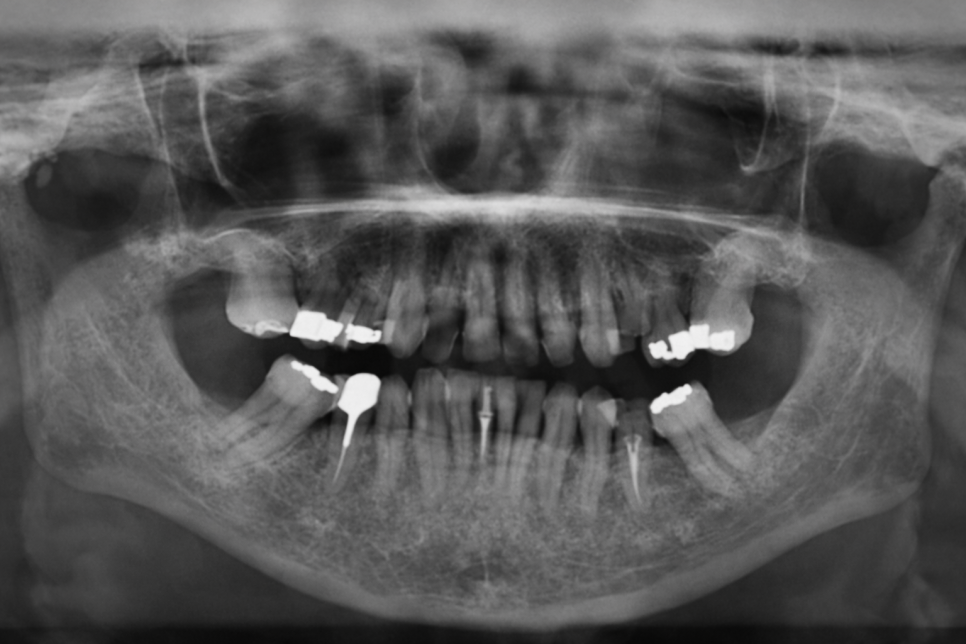
Through this, we identify what problems are present
and find the appropriate way to improve them.
If it is determined that a navigation implant is needed,
additional necessary items are obtained.
- Radiography
In addition to the Panorama taken earlier,
CBCT data is also needed.
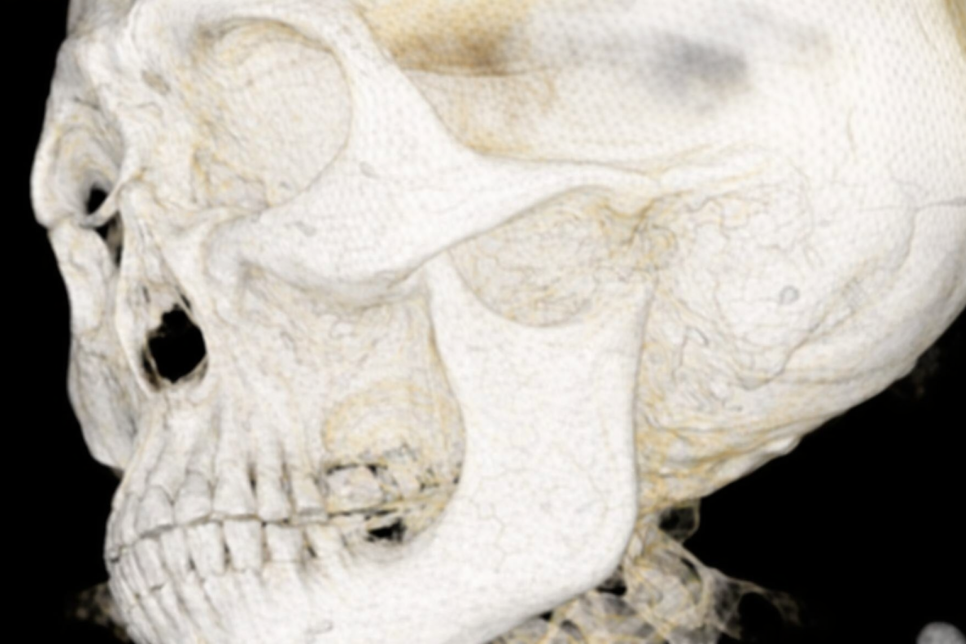
This material allows us to identify internal structures that are not visible to the eye,
such as the alveolar bone, maxillary sinus, and inferior alveolar nerve canal.
Radiographic images are not only used to check the internal structures,
but also serve as important data for planning surgery.
- Intraoral scan data
In addition, we take a precise impression of the oral environment.
The analog method uses a material called alginate to take a physical impression,
but that increases patient discomfort
and also raises the risk of distortion in the prosthetic model.
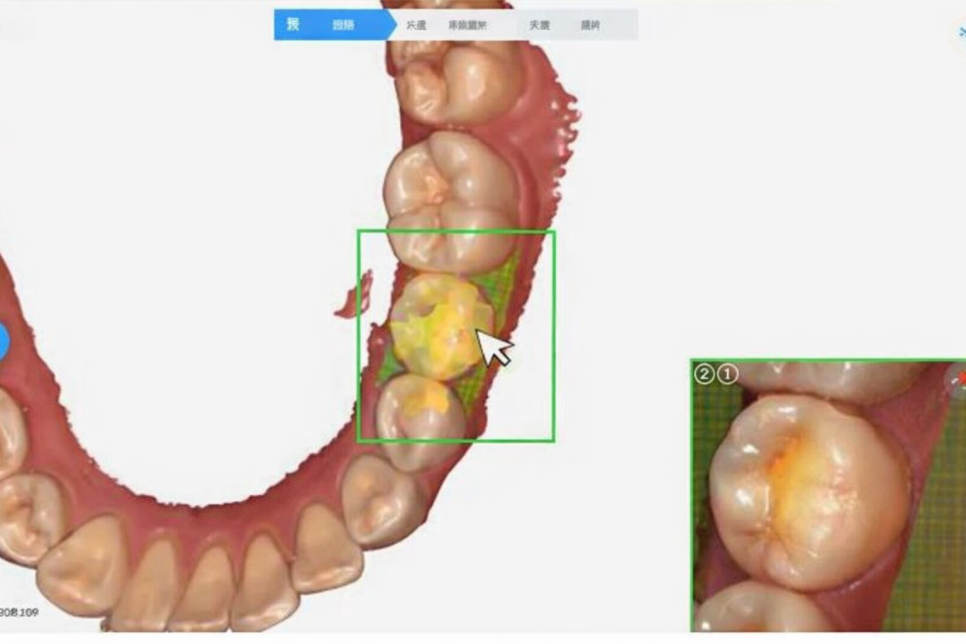
That is why digital equipment is used much more often these days.
Using an intraoral scanner, we can accurately capture the oral environment.
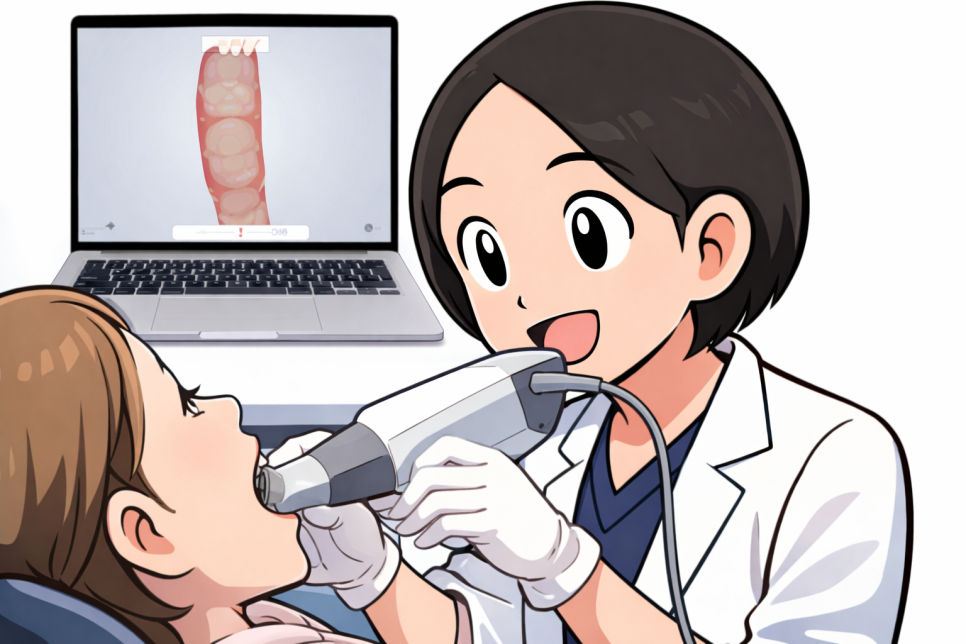
A small camera is placed inside the mouth and continuously captures images to create three-dimensional data.
When the Panorama and CBCT radiographs introduced earlier at the dentist near Sunyudo Station are merged with the intraoral scan data,
we can create a valuable set of data that allows us to understand the oral cavity and surrounding structures at once.
Now, based on the merged data,
we proceed with simulation.
- Surgical planning stage
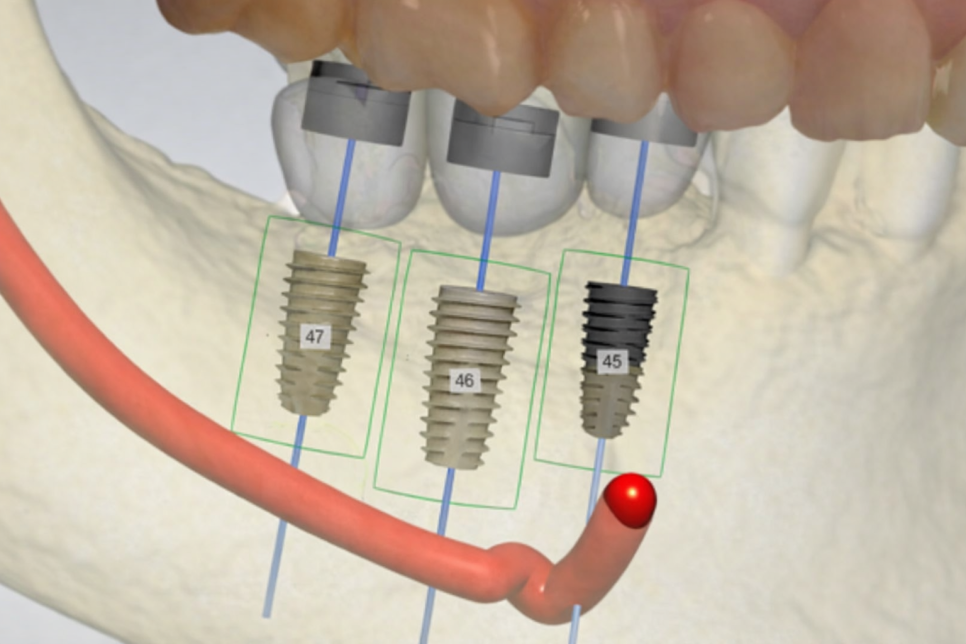
As in the example image from the dentist near Sunyudo Station,
you can see the intraoral environment and anatomical structures at a glance.
Based on this, we determine the appropriate position
for placing the fixture.
I’ll briefly explain the process.
First, we select the position where the crown will later be placed.
Then, it is ideal to place the fixture at the center of the prosthesis.
However, if the bone quality is too soft,
or if the remaining alveolar bone is insufficient,
shifting it slightly to a more favorable position can lead to better results.
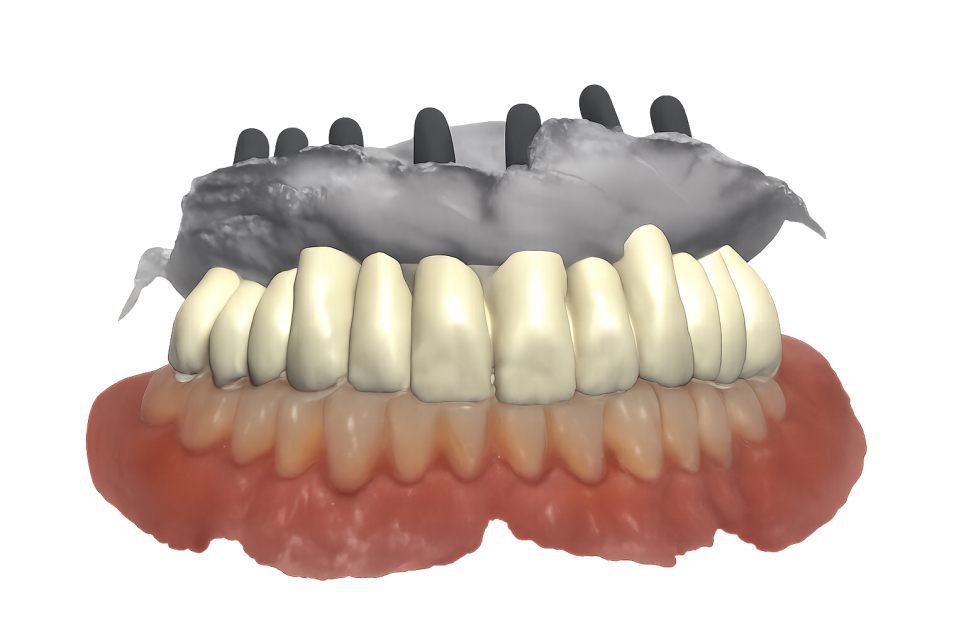
When placing a screw, many people usually think,
“If there is enough bone, it should be fine.”
However, there are more factors to consider than you might think.
For example, let me explain “bone quality.”
The softness or hardness of bone can be objectively classified as D1 to D4.
The smaller the number, the softer the bone;
the larger the number, the harder it is.
A suitable environment for screw placement is considered to be D2 to D3.
The reason is that if the bone is too soft, it is difficult to secure initial stability,
and if it is too hard, the screw is difficult to place,
so a moderate level of softness, around D2 to D3, is considered appropriate.
By combining the factors explained at the dentist near Sunyudo Station,
we set the fixture diameter, length, position, and angle
with very fine detail.
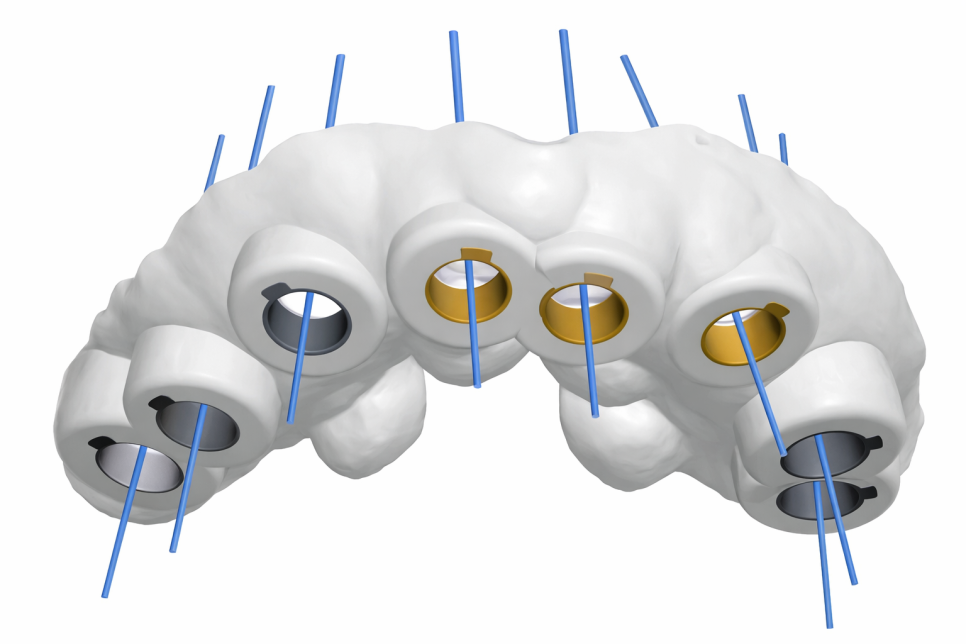
Then we design the guide.
The guide is designed by reflecting the various elements selected through the simulation process.
Let me explain in simple terms what the guide does.
It acts like a flashlight,
showing where the fixture should be placed inside the oral cavity.
- During surgery
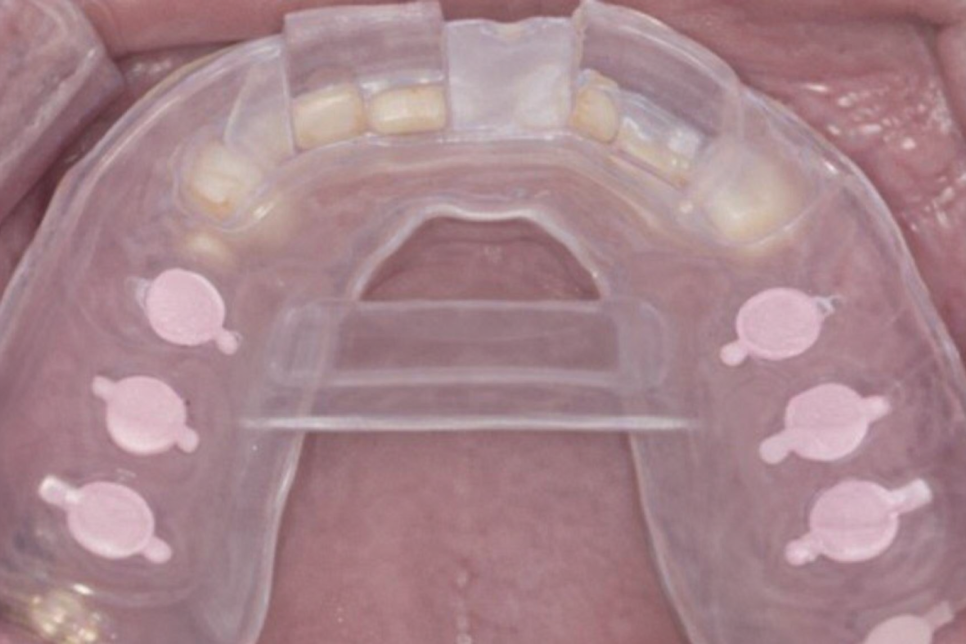
The fabricated guide is placed in the mouth.
If it fits well, as in the example image from the dentist near Sunyudo Station,
we proceed with surgery.
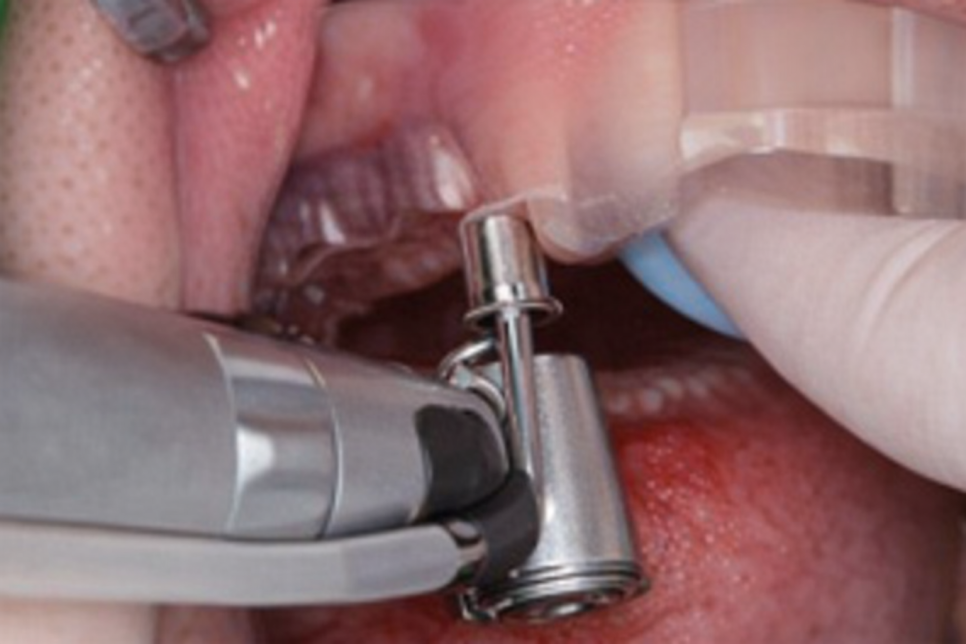
By drilling along the path formed in the guide,
implant placement can be performed precisely according to the previously selected position, angle, and other factors.
Unlike relying on the naked eye, navigation implants offer the advantage of improving the accuracy between the preoperative plan and the postoperative result.
By now, do you have a better understanding of the treatment process and how this method works?
Because navigation implants offer many advantages,
they are actively applied in various cases.
However, there are also points to keep in mind with this method.
"Navigation flapless implants... the skill of the medical team is important"
Korea Economic Daily
There is also the view that results vary depending on the skill of the medical team,
and I largely agree with the article prepared by the dentist near Sunyudo Station.
As with any treatment,
manual skill matters, so the prognosis can differ somewhat depending on the medical team’s level of experience.
Therefore, if there are relevant cases,
and if so, what the results were,
it would be a good idea to carefully check recent treatment cases.
In addition, there are cases where the analog method may be more advantageous.
Before a navigation implant,
please have a thorough consultation with the medical team
and check which method is suitable for you.
That’s all I prepared for today.
I’ll be back next time with more useful information.
This has been Dr. Kim Min-young,
a specialist in conservative dentistry at a dentist near Sunyudo Station.
Thank you.