Hello, this is Kim Min-young, a board-certified restorative dentistry specialist at a Dangsan-dong dental clinic.
Just a few years ago, implants were
somewhat unfamiliar treatment.
But now, many people are seeking them.
Although it seems simple and is a widely known treatment,
if you look closely at the actual process, it is very complex.
To replace the root of a natural tooth,
a screw called a fixture must be placed,
and during this stage, the surrounding structures
must not be harmed.
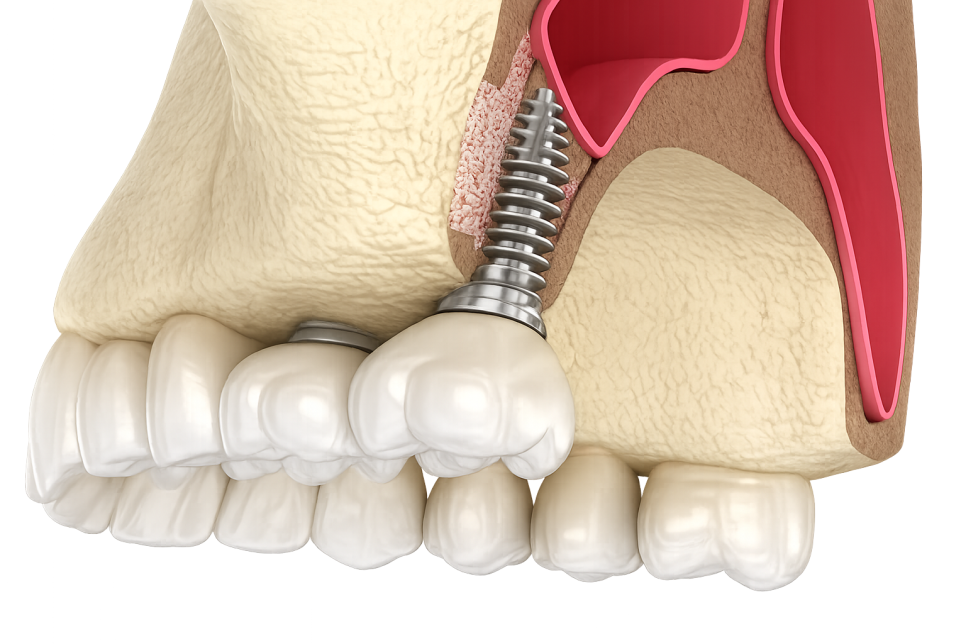
If, before surgery, the surrounding anatomical structures
are judged to be relatively close,
another method that can avoid them
must be carried out first.
Today, I’d like to talk about one such process:
[maxillary sinus lifting].
- What is the maxillary sinus?
First, let me explain what this structure is.
It is an empty space inside the nose that
helps regulate the humidity of inhaled air when breathing
and reduces the weight of the head.
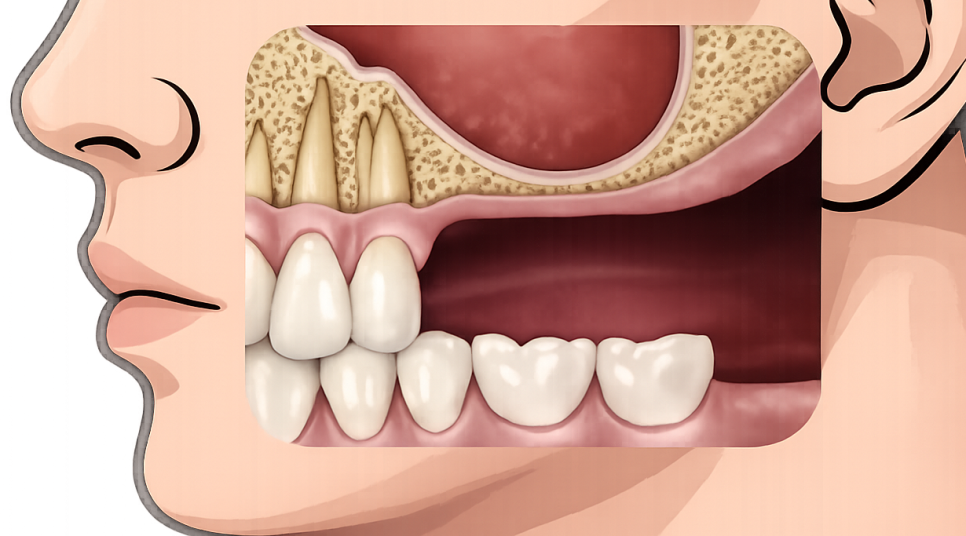
However, if inflammation develops here,
or if it becomes pneumatized and gradually descends,
it gets closer to the upper alveolar bone below.
If the jawbone has melted away due to inflammation,
the distance will likewise become closer.
In that case, before implant placement,
a sinus lift at the Dangsan-dong dental clinic may be necessary.
- In what cases is it needed?
To summarize in one short sentence
which cases need it,
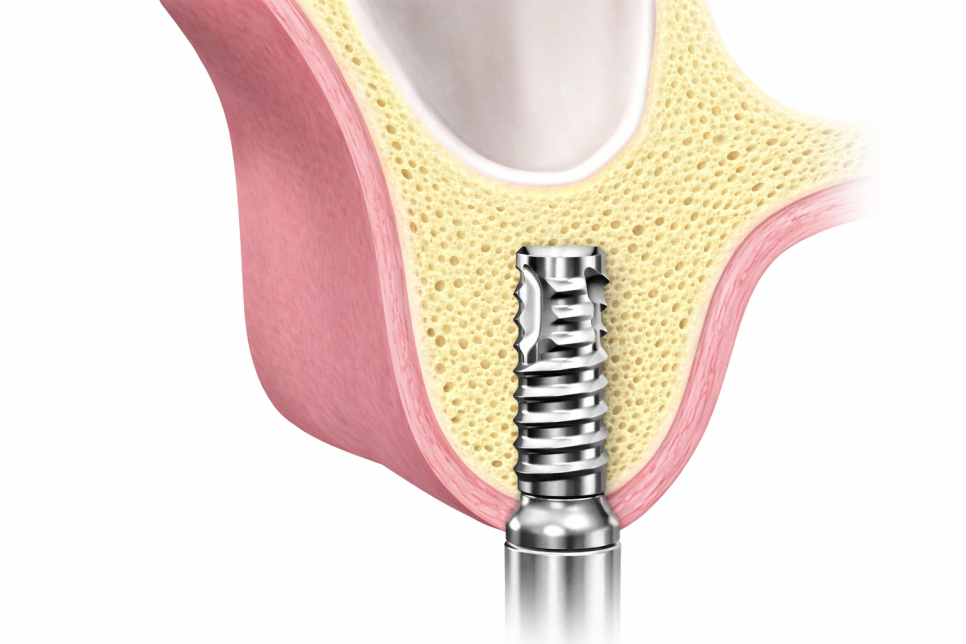
it is needed [when the area where the implant will be placed
is close to the maxillary sinus.]
To place a fixture,
you need space equal to the length and diameter of the screw,
and in addition, a certain amount of room around it must be secured
in order to achieve stable and sufficient fixation.
However, if enough space cannot be secured,
or if the distance is too close and placement is difficult,
the oral environment must be improved first.
That process is called [maxillary sinus lifting].
The membrane is slowly lifted to create space,
and bone graft material is added into that space,
enough room is secured for the screw called a fixture
to be placed.
- It can be classified according to the approach.
This procedure can be divided into two methods
depending on where it is performed.
I’ll explain each one in detail.
Dangsan-dong dental clinic medical information
Lateral approach
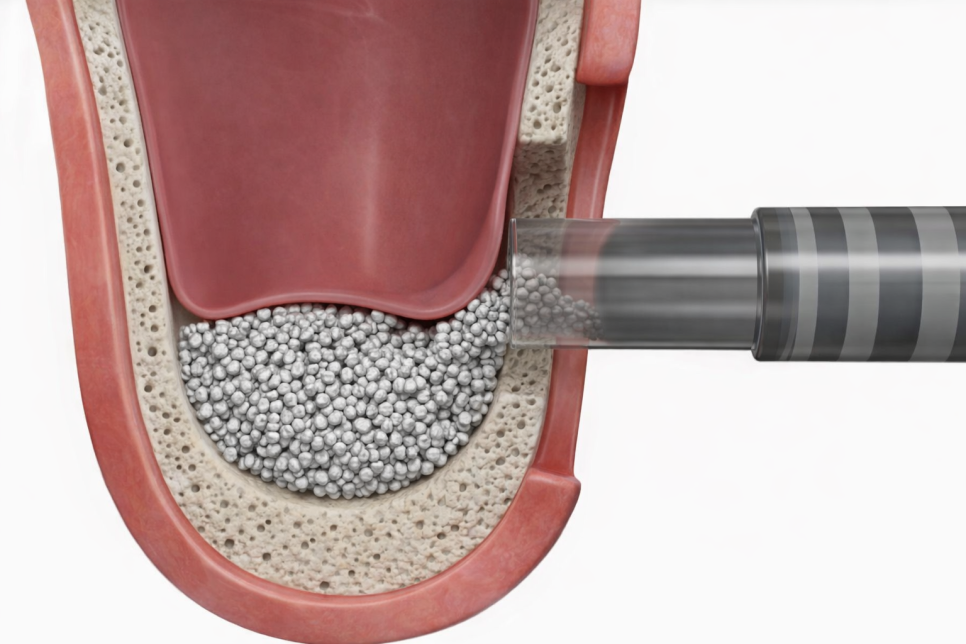
This is a method that enters from the lateral side
of the alveolar bone, that is, the jawbone,
and is mainly used when the remaining alveolar bone height
is less than 5 mm.
Because the procedure site is clearly visible when the side is incised,
it is relatively safe and allows extensive bone grafting.
It is suitable when a large amount of bone tissue has been lost
due to inflammation or when the anatomical structures are close.
Because this process is very complex,
its outcome can be affected by the clinician’s technical skill,
and the surgery may take somewhat longer,
with swelling and pain occurring.
Dangsan-dong dental clinic medical information
Crestal approach
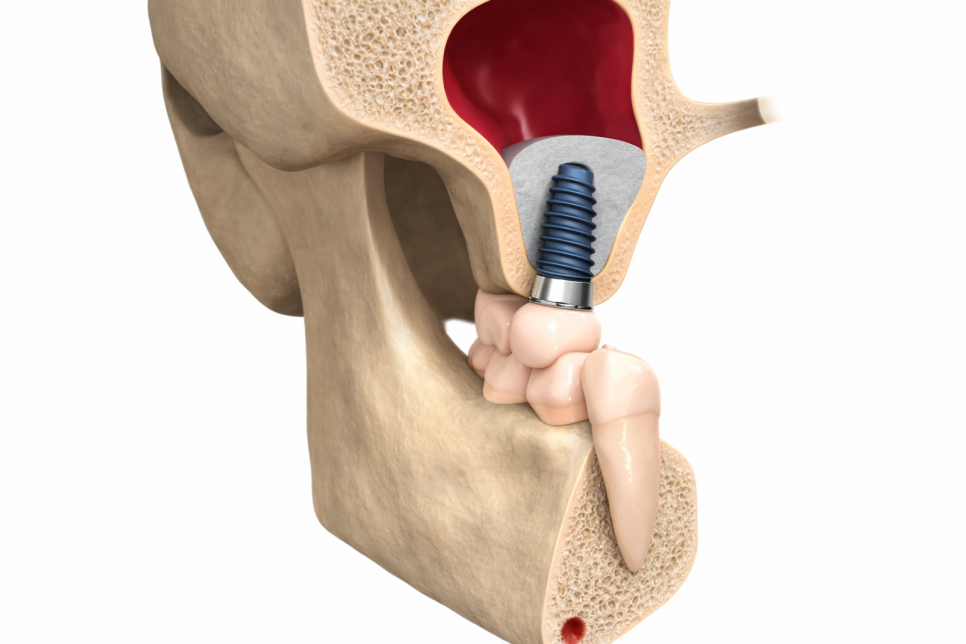
This is a method that enters from the top of the alveolar bone.
Unlike the lateral approach explained above,
it is suitable for cases where a certain amount
of remaining alveolar bone is secured.
Because the membrane is lifted and bone grafting is performed
by entering through the pathway created to place the implant screw,
the amount of incision is small, making a minimally invasive
procedure possible.
To minimize damage to structures while performing this process,
careful access is required, and technical skill must support it.
If the height of the bone is insufficient,
or if the membrane is thin and there is a risk of perforation,
the crestal approach can be somewhat risky and is not suitable
for such cases.
For those who are placing an implant for the first time,
or hearing about the maxillary sinus for the first time,
I hope my post has been helpful,
and I have included detailed related information.
I hope this Dangsan-dong dental clinic post was informative,
and I will prepare high-quality information again next time.
This has been Kim Min-young, thank you.