Hello, I’m Kim Min-young, a prosthodontics specialist at a dental clinic in Dangsan-dong.
Among diseases related to the oral cavity,
there are two conditions that often require
a lot of treatment or clinic visits.
These are known as the two major oral diseases.
These include cavities and gum disease.
Today, I’d like to talk about gum disease.
When oral hygiene is neglected, inflammation develops around the gums.
If it is limited to the early stage, the symptoms are not severe,
but
as the disease gradually progresses and becomes moderate or more severe,
it also affects the bone called the alveolar bone.
In such cases, I’d like to share information about gum treatments
called root planing and periodontal curettage.
- What is root planing?
- What is periodontal curettage?
Dangsan-dong Dental Clinic, Prosthodontics Specialist Kim Min-young
Root planing
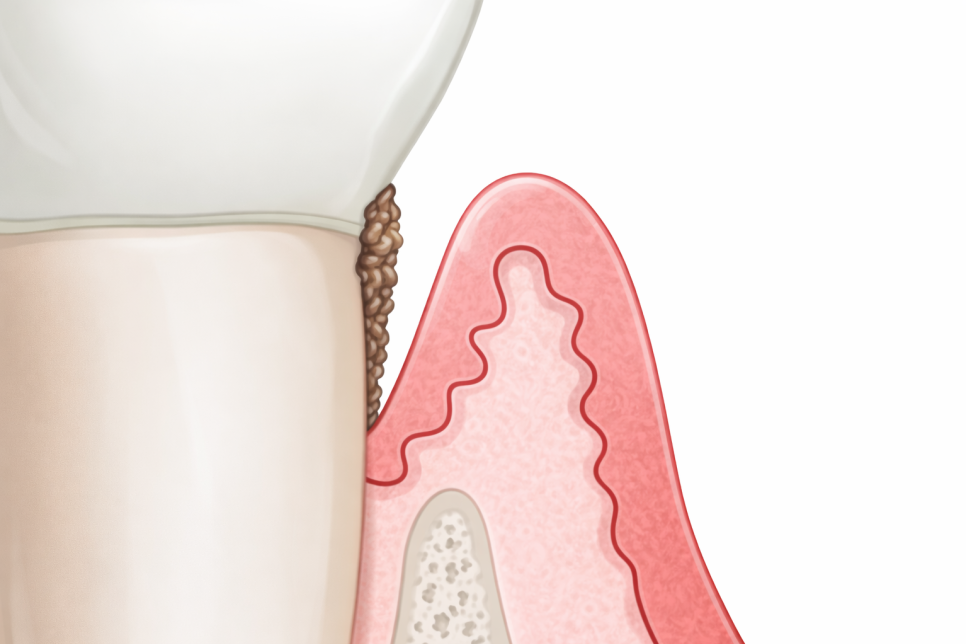
By removing deposits such as plaque or calculus
attached to the root,
the rough surface is smoothed out.
This can also remove contaminated areas containing endotoxin.
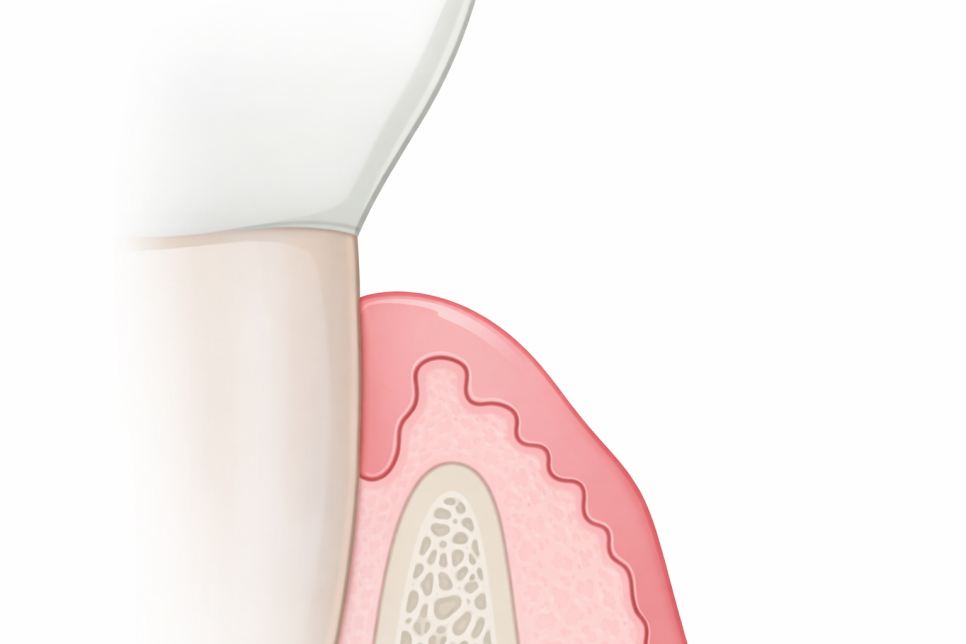
Plaque attached to cementum and
endotoxin, necrotic areas, or
infected granulation tissue can cause inflammation.
Because of that, all of these must be thoroughly removed
to make the root smooth so that the cause of inflammation
can be completely eliminated.
You may ask,
"Can the structure called cementum
be removed?"
I’d like to answer that question here as well,
from the perspective of the Dangsan-dong dental clinic.
Healthy cementum in a non-infected state
is regenerated to some extent on the surface of dentin.
Also, a membrane forms between the cementum and the alveolar bone.
Because cementum has relatively strong regenerative ability,
even if some is removed through root planing,
there is no clinical problem as long as plaque control is sufficient.
If it is left as is, endotoxin remains and can reach deeper areas through the cementoblast processes,
leading to severing, degeneration, and necrosis of Sharpey’s fibers.
Dangsan-dong Dental Clinic, Prosthodontics Specialist Kim Min-young
Periodontal Curettage
Periodontal curettage is one of the treatment procedures that smooths the area around the root by completely removing the inflammation inside the pocket.
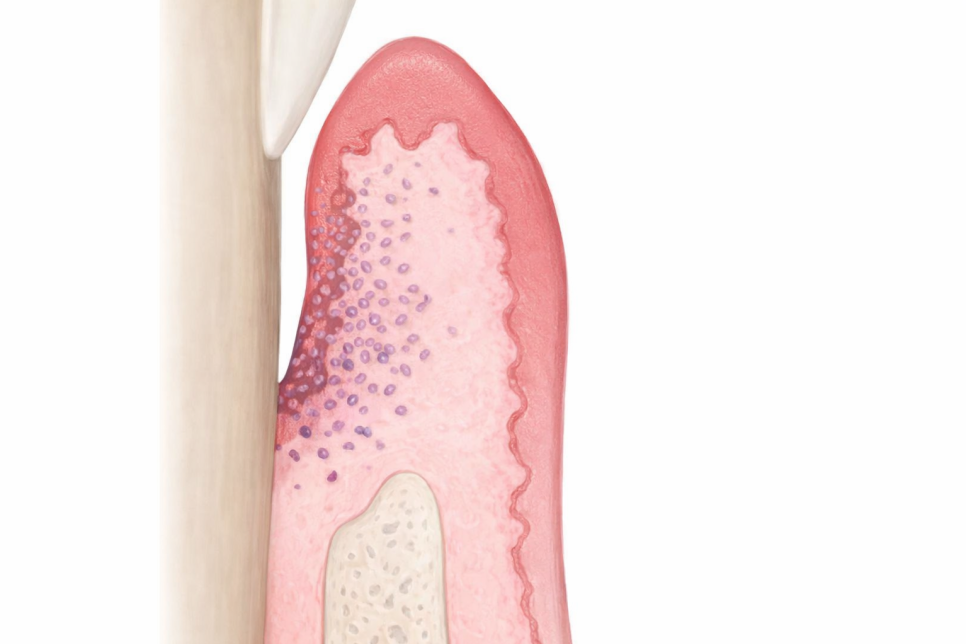
It removes part of the inflamed epithelium inside the pocket
along with some of the underlying connective tissue.
By removing the infected tissue between the tooth and the gingiva,
it can help improve the environment itself,
allowing gradual healing to be observed.
In other words, it can lead to a positive course of recovery.
This is a more advanced treatment than the root planing I explained earlier.
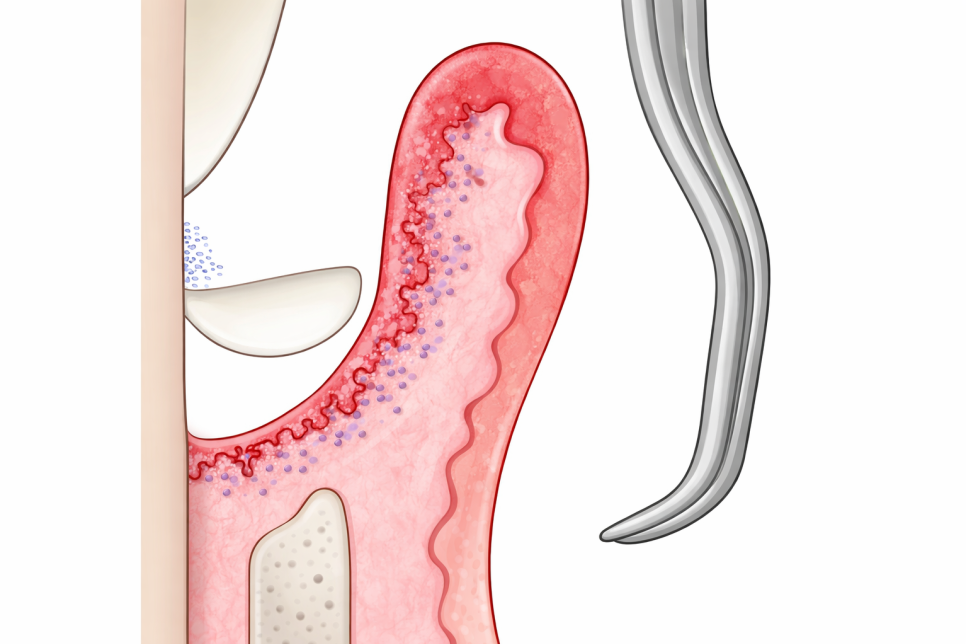
In the case of periodontal curettage, the infected granulation tissue
must be completely removed.
Generally, when the disease is moderate or more severe,
healing takes somewhat longer if treatment is limited to brushing and removing calculus without surgical incision.
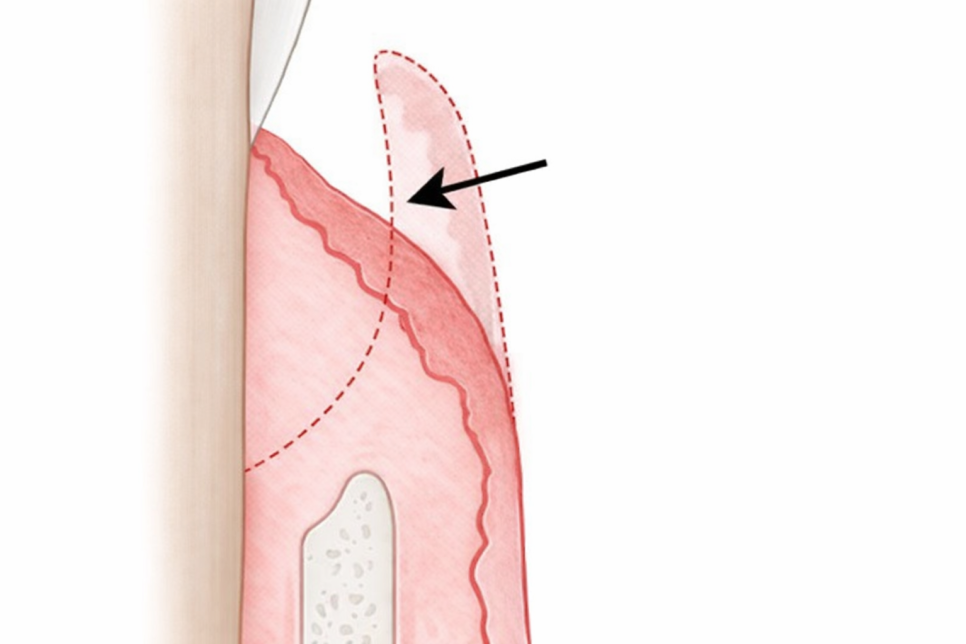
So in such cases, performing periodontal curettage to remove contaminated tissue
can help promote faster healing.
Both treatment methods
are different from the scaling most people know.
In simple terms, the area where the procedure is performed is different.
To understand the difference between the two,
I should first explain the concepts of supragingival and subgingival.
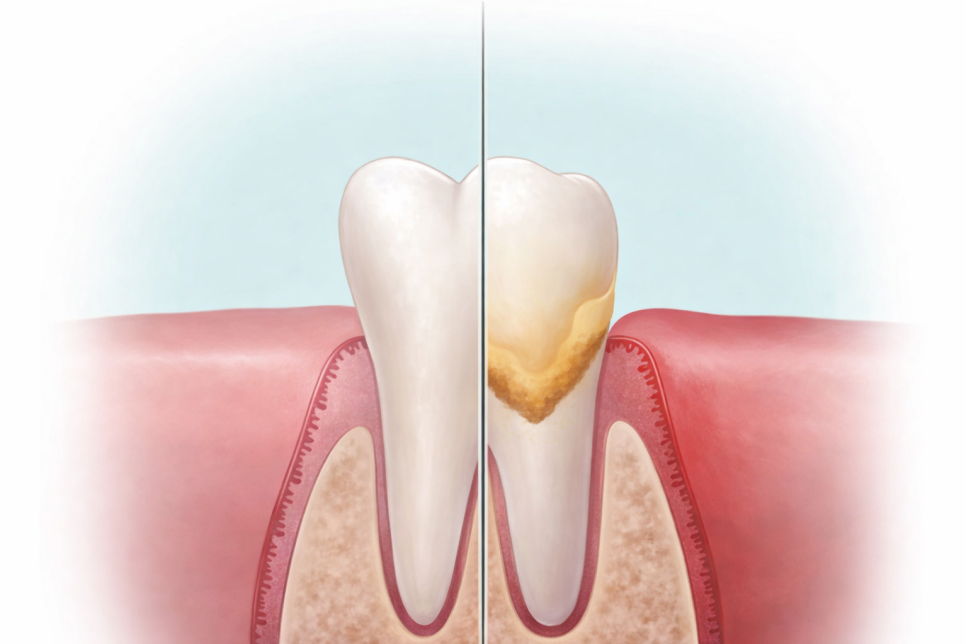
Supragingival simply means the visible area.
At the boundary between the gingiva and the tooth,
there is a pocket with some mobility.
This part is not firmly attached, but has a certain amount of movement.
Even if calculus builds up here, it can be removed relatively easily through scaling.
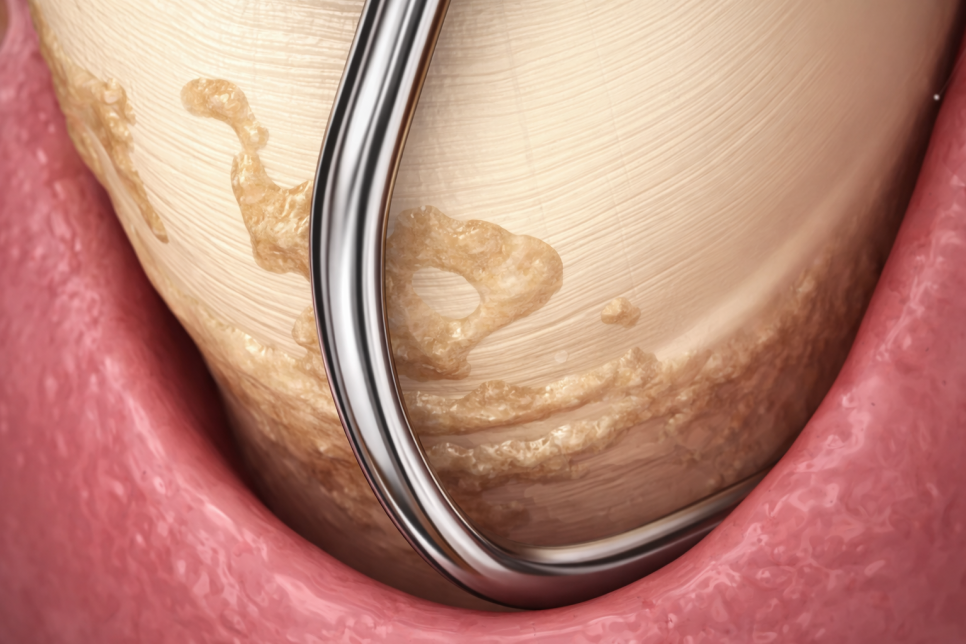
However, once it goes below that level,
the removal process becomes more difficult.
From the area marked in the Dangsan-dong dental clinic photo, which is not visible,
it is called subgingival.
Supragingival areas can be improved with scaling,
but from the subgingival area onward, the root planing or periodontal curettage I explained today
can be used to remove deposits or inflamed tissue.
Today, I explained gum disease treatment methods at a Dangsan-dong dental clinic.
I hope this was helpful to you,
and I’ll wrap up this post here.
This has been Kim Min-young, prosthodontics specialist.
Thank you for reading to the end.