Hello,
I am Kim Min-young, a board-certified specialist in conservative dentistry at a dental clinic in Yeongdeungpo.
After root canal treatment,
most patients feel relieved.
The throbbing toothache goes away,
and chewing function is restored,
so they feel reassured, thinking,
"Now it should be okay."
But what if, after a few months or even a few years,
you start to feel a heavy pain in the same tooth again,
or the gums repeatedly
become swollen?
"I clearly finished the root canal treatment,
so why does it hurt again?"
This feeling of confusion is not just a simple question;
it may be a sign of an inflammatory reaction
that is progressing again inside the tooth.
The root canal inside the tooth
is not just a single passage.
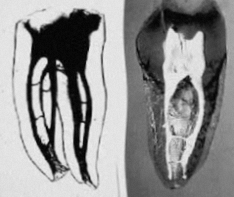
Like accessory canals that branch out
minutely from the main canal,
it has a complex anatomical structure
with many branches like tree roots.
Because of this,
some tiny canals may not be completely treated
during the initial root canal procedure.
Also, if the filling material shrinks
or deforms over time,
or if bacteria re-enter due to secondary decay
or crown fracture,
inflammation can form again around the root apex.
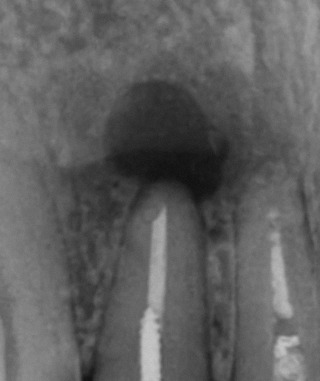
If that tooth hurts every time you eat,
or if a small fistula like a pimple appears on the gums,
this is the point at which you should seriously consider retreatment.
If left untreated, the periapical lesion can gradually expand,
eventually leading to extraction,
so even if the discomfort is not severe,
it is important to undergo a detailed examination early.
Today, at the Yeongdeungpo dental clinic,
I will explain the role of retreatment and the microscope.
Retreatment:
Why is it more difficult than the first treatment?
The reason retreatment is difficult is
because of the structural nature of having to reopen
a tooth that has already been treated and work inside it.
First, after local anesthesia,
the previously filled material must be
carefully removed,
but in the process of removing firmly set material,
there is a risk that the tooth walls may become thinner
or that perforation may occur.
If a fractured file remains inside the canal,
it must be removed or bypassed.
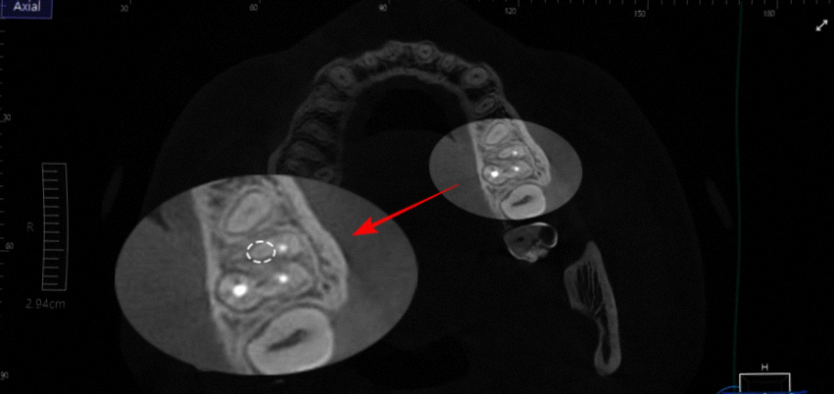
In addition, an undiscovered canal found during retreatment
often runs in a different direction
from the existing anatomical pathway,
so it is practically difficult to identify with the naked eye alone.
Retreatment is not simply a repeat procedure,
but a separate area of expertise that requires a higher level of diagnostic ability and technique.
Why a microscope is necessary for retreatment
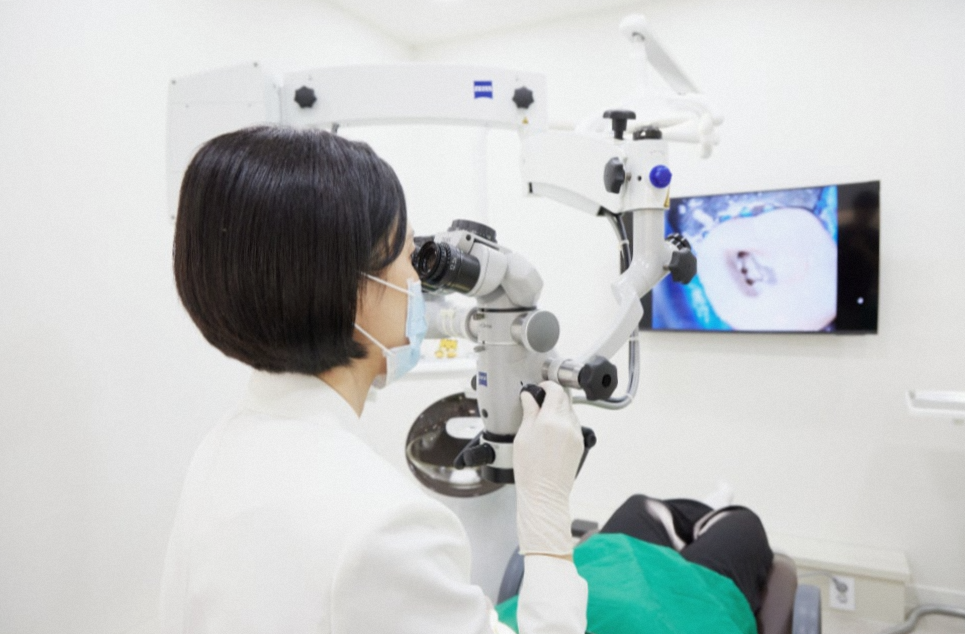
The key tool that solves all of these challenges
is the microscope.
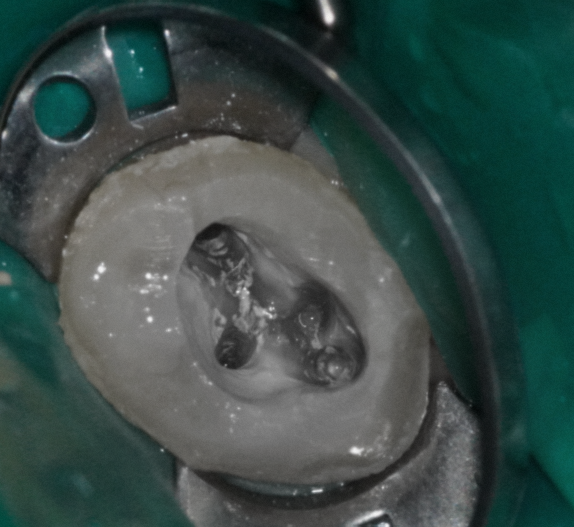
The microscope provides an enlarged field of view,
allowing the clinician to directly see and treat
the canal orifice, lateral branching points,
fractured instruments, perforation sites, and more.
Processes that would otherwise rely on sensation
with the naked eye or ordinary loupes
become visually verifiable under the microscope.
This means less unnecessary tooth reduction
and the ability to treat hidden canals as well,
which I believe leads to better treatment completeness
and improved long-term prognosis.
Yeongdeungpo microscopic retreatment
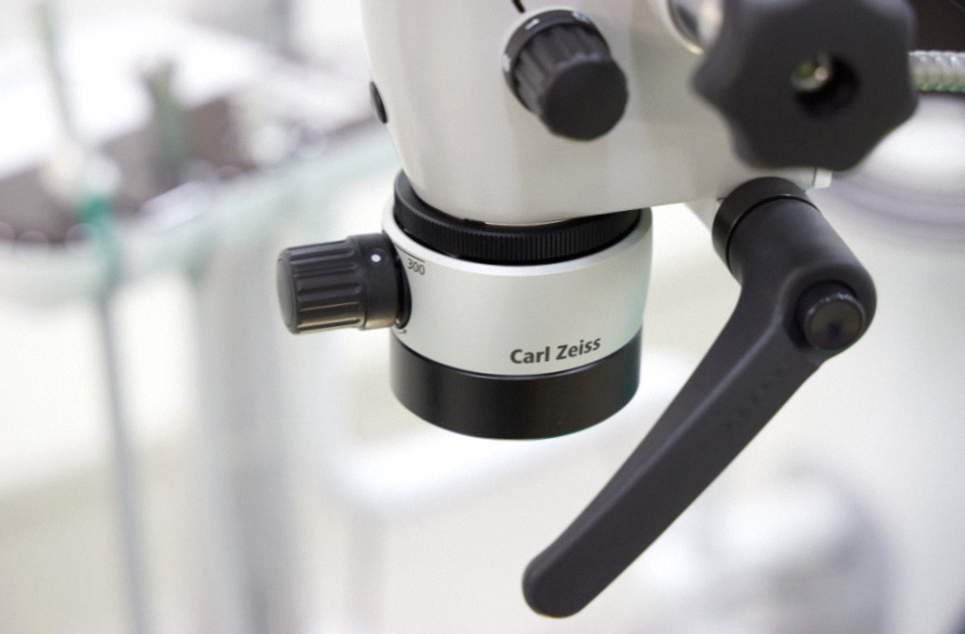
To use the microscope effectively in clinical practice,
sufficient experience and skilled technique
must absolutely support it.
At the Yeongdeungpo dental clinic,
the microscope is actively used throughout
the entire root canal treatment and retreatment process,
and we recommend receiving treatment at a medical institution
that has clinical experience handling highly difficult cases,
such as complex canal anatomy, fractured instruments,
and periapical lesions.
Based on precise diagnosis and a clear field of view,
we recommend receiving treatment at a place
that makes preserving the natural tooth as much as possible
its top treatment principle.
Things to check before retreatment
After treatment,
temporary discomfort may occur,
but since this is a natural reaction,
you do not need to worry too much.
In most cases, it subsides within 2 to 3 days,
and taking the prescribed pain reliever
can help control the pain.
For a certain period after treatment,
avoid foods that can place strong physical stress on the tooth,
such as hard nuts or ice,
and it is best to eat soft foods
and be careful not to chew on that side.
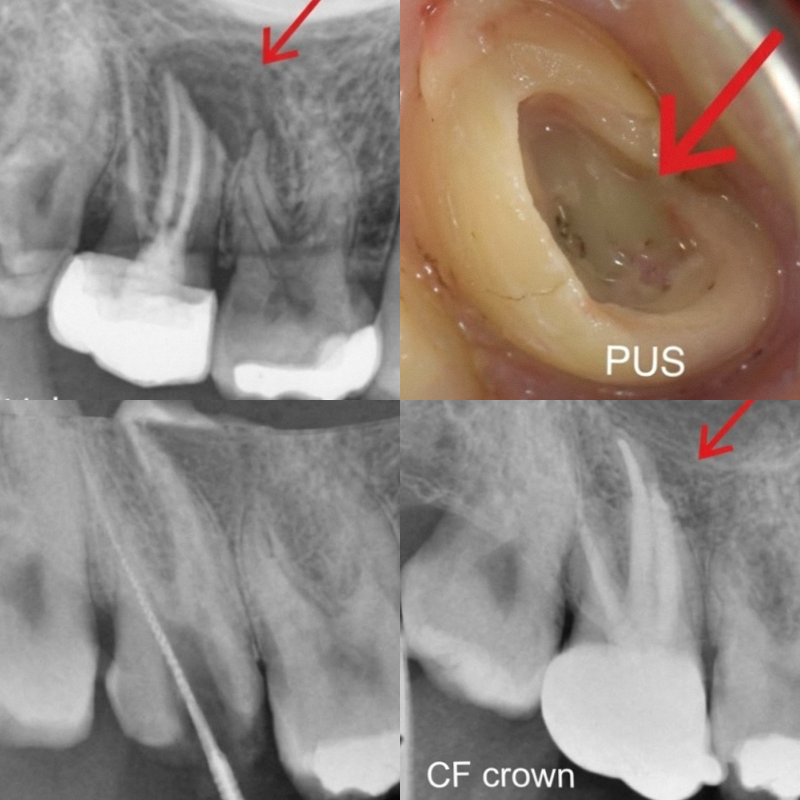
After retreatment,
the process that must definitely be completed
is the final crown restoration.
A tooth from which the pulp tissue has been removed
gradually weakens because its nutrient supply is cut off.
If a crown is not placed,
the tooth may fracture because it cannot withstand chewing force,
so the final prosthetic stage after retreatment
must also be completed
in order to ensure treatment completeness.
This has been Kim Min-young,
a conservative dentistry specialist at a dental clinic in Yeongdeungpo.
Thank you.