Hello,
I am Kim Min-young, the director and a restorative dentistry specialist at an Yeongdeungpo dental clinic.
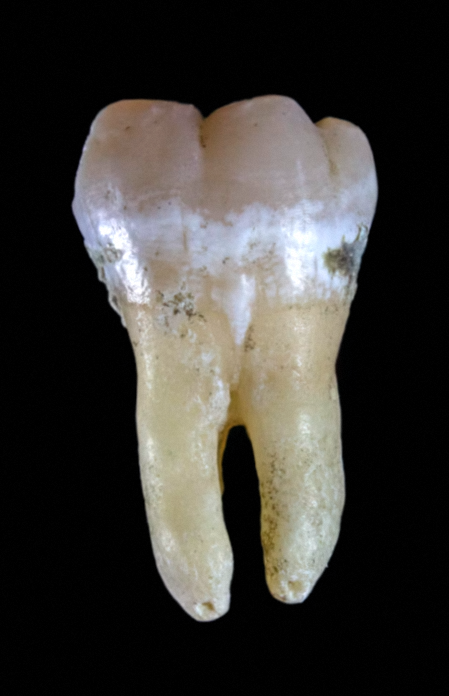
Source: Google
Today, we will compare the natural teeth we were born with and implants,
and look at what differences there are between them.
- Similar on the surface, but completely different structures!
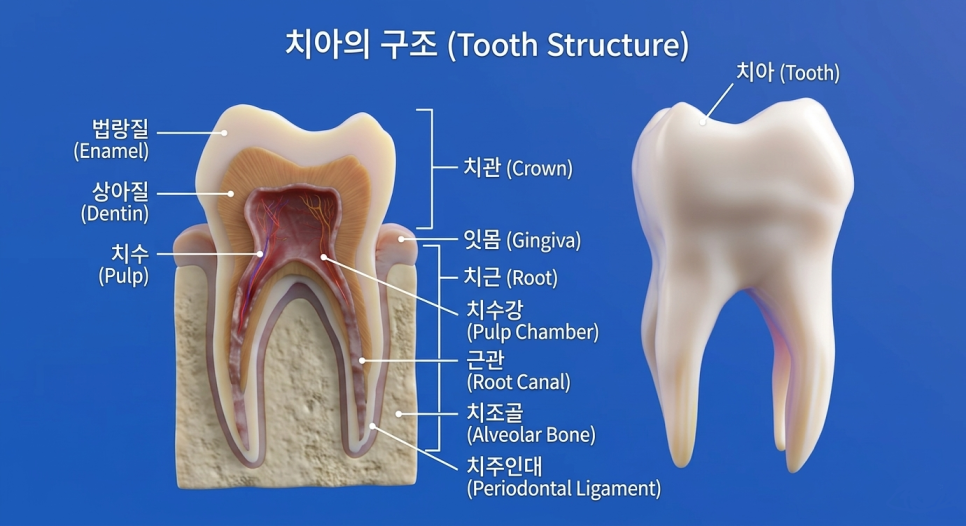
Source: Google
As implant technology has advanced,
it has become possible to achieve aesthetics and function
that are almost indistinguishable from natural teeth.
However, even if they look alike,
that does not mean the two teeth function in the same way.
There is a decisive difference
that cannot be seen from the outside
between a natural tooth and an artificial root.
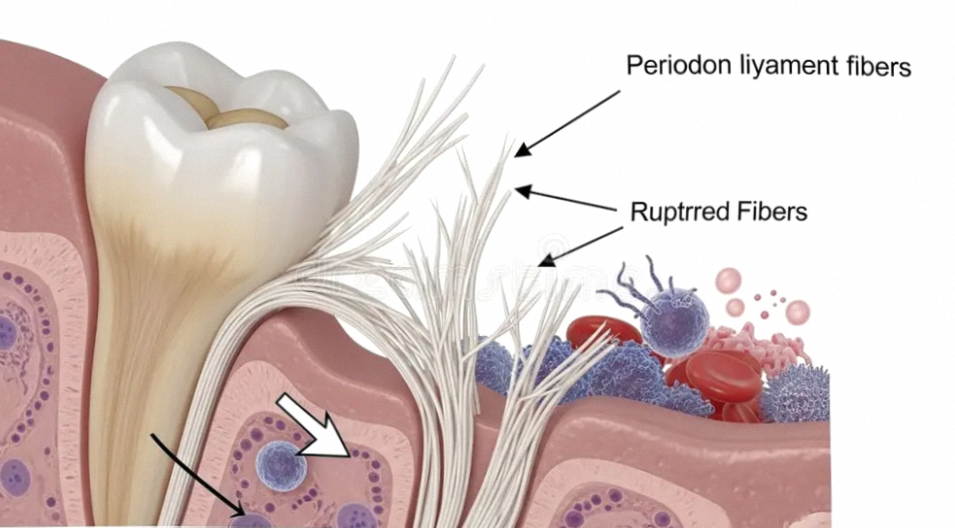
Source: Google
That difference is the presence or absence of the periodontal ligament
(Periodontal Ligament).
When explaining this at an Yeongdeungpo dental clinic,
Periodontal Ligament refers to a thin fibrous tissue that exists only in natural teeth,
and it does more than simply hold the root in place;
it is deeply involved in the sense of chewing and the function of controlling mastication.
- What is it?
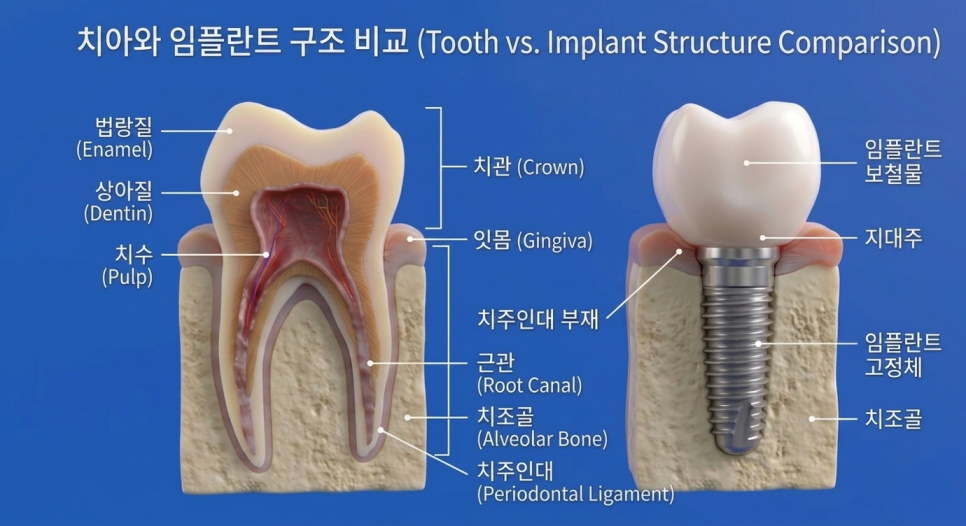
At an Yeongdeungpo dental clinic,
we will briefly explain what this is
before moving on.
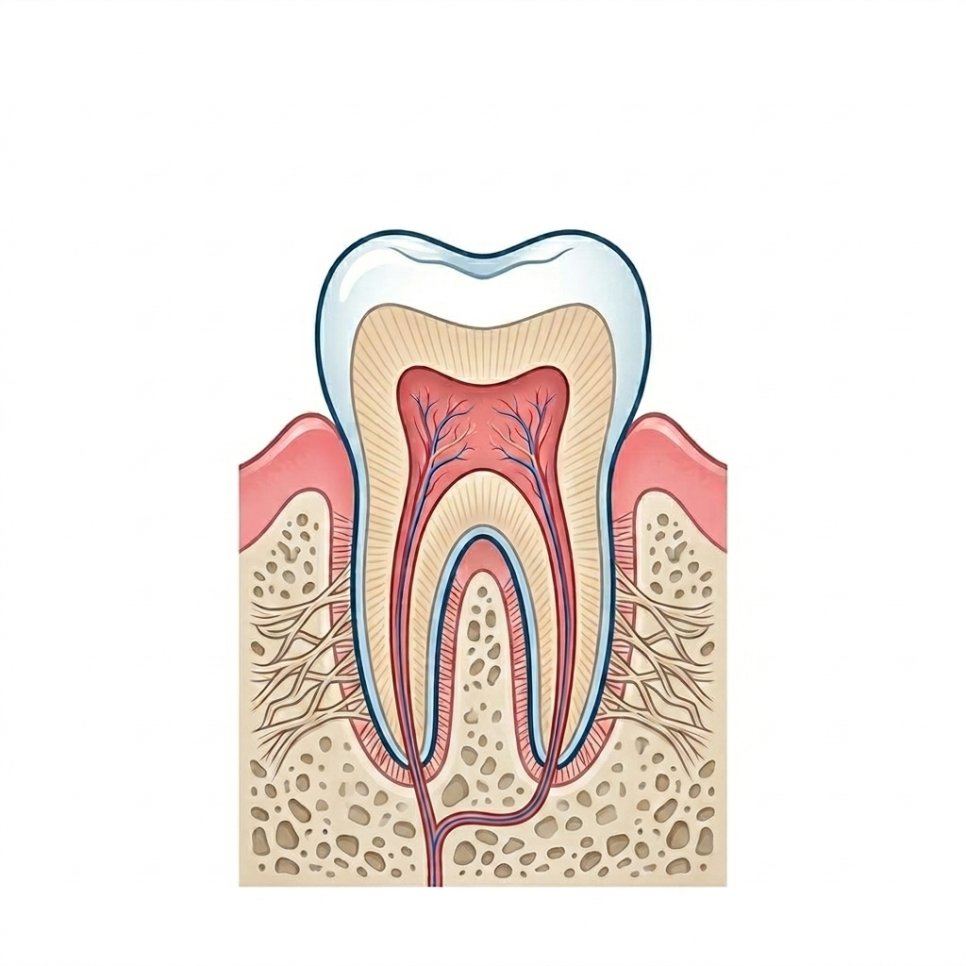
It is a fibrous tissue about 0.2 mm thick
located between the root of a natural tooth and the alveolar bone.
It is formed by numerous collagen fibers
that firmly suspend the tooth root from the alveolar bone.
In simple terms, it is a microscopic cushioning device
and signal-transmission network between the tooth and the bone.
Within this thin tissue,
blood vessels and nerves are densely distributed.
As a result, the moment food touches the tooth,
information such as pressure, direction, and hardness is immediately transmitted to the brain.
The unique sensation and delicacy felt when chewing
come from the action of this Periodontal Ligament.
- How is the fixture supported?
Source: Google
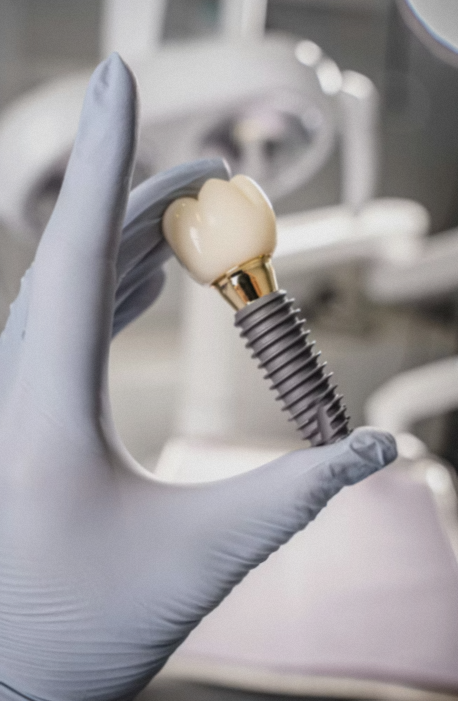
The fixture (artificial root, artificial tooth root)
is fixed by directly bonding it to the alveolar bone.
This is called osseointegration,
and the titanium surface and bone tissue interlock chemically
so that they adhere as one.
This bond is very strong,
allowing chewing force to be transmitted stably to the bone.
However, because there is no ligament in between to act as a cushion,
impact is transmitted directly to the alveolar bone.
This is the part that the Yeongdeungpo dental clinic wants to emphasize.
Also, because there are no nerves or pressure receptors,
it is difficult for the brain to finely perceive the strength of the force applied to the crown.
- Why does the chewing sensation differ?
People often say after an implant procedure,
"The chewing sensation feels different."
This is not simply a psychological difference,
but a phenomenon caused by differences in the actual sensory transmission pathway.
Natural teeth precisely detect the texture, hardness,
and temperature changes of food through nerve receptors in the root.

The sticky texture of cooked rice, the crispness of nuts,
and even the fibrous texture of greens can be distinguished as different sensations
thanks to these sensory organs.
In contrast, fixtures have limited sensory receptor function.
You can still chew food,
but because the circuit that transmits subtle food texture to the brain is simplified,
some of the sensory information that makes up taste is reduced,
which lowers meal satisfaction.
For this reason,
at the Yeongdeungpo dental clinic,
we always first think about how to preserve your natural teeth.
- Is there a difference in chewing control ability?
The periodontal ligament also serves as a control mechanism
that regulates chewing force on its own.
If excessive force is about to be applied to the crown,
the nerves in the dental pulp detect it
and reflexively send a signal to reduce the chewing force.
Thanks to this protective reflex,
the periodontium and jaw joint can be protected from overload.
This reflex mechanism does not operate in artificial roots.
So it is difficult to feel how much force you are actually applying,
and there are cases where people unconsciously apply excessive chewing force.
In the long term, this may cause prosthetic fracture
or resorption of the surrounding bone tissue,
so regular occlusion checks are necessary.
- If it can be preserved, preserve it first!
Source: Google
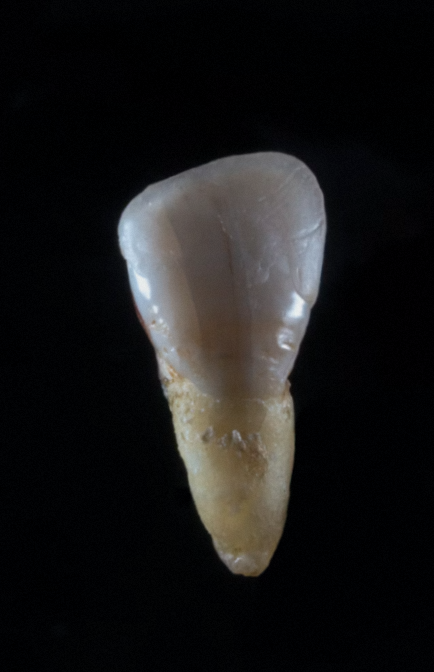
Implants are an excellent alternative for restoring lost teeth,
but there is still no technology that can perfectly replace them.
This is because the cushioning effect,
sensory information, and chewing control ability provided by the periodontal ligament
are difficult to reproduce with artificial structures.
Therefore, even if a tooth is loose or painful,
rather than deciding on extraction without hesitation,
it is important to first review the possibility of preservation.
Gum treatment in the early gingivitis stage,
root canal treatment, partial prosthetics,
and other options for saving natural teeth
are more varied than you might think.
- Finally, what I want to say at the Yeongdeungpo dental clinic
Natural teeth and implants may look similar on the surface,
but because of a single tissue called the periodontal ligament,
they create completely different sensations.

The ability to delicately feel the texture of food
and to regulate force on your own
is a unique function found only in natural teeth.
Therefore, when you feel something wrong with a tooth,
rather than hastily deciding on extraction and fixture placement,
it is advisable to first check whether there is a way to preserve it.
If a step-by-step treatment plan is established based on an accurate diagnosis,
it can help maintain healthy chewing function
and the original chewing sensation for a long time.
Thank you for reading this long post.
This was an Yeongdeungpo dental clinic.