Hello,
I’m Kim Min-young, a conservative dentistry specialist at a dental clinic near Seonyudo Station.
When you bite into a cold food
and feel a sharp jolt of pain,
or when you lie down to sleep and suddenly
find yourself losing sleep
because of a throbbing tooth,
have you ever had that experience?
Pain felt in a tooth is one of the clearest
warning signals our body sends.
However, even when we simply describe it as “pain,”
the meaning hidden within it can be completely different.

Source: Pinterest
Whether it is a brief, sharp sensitivity
or a dull, heavy discomfort
even when you are still,
the condition inside the tooth can be in
an entirely different situation.
Today, at the dental clinic near Seonyudo Station,
we would like to take a closer look at
the differences between reversible and irreversible pulpitis,
which many people confuse,
and how to read pain signals.
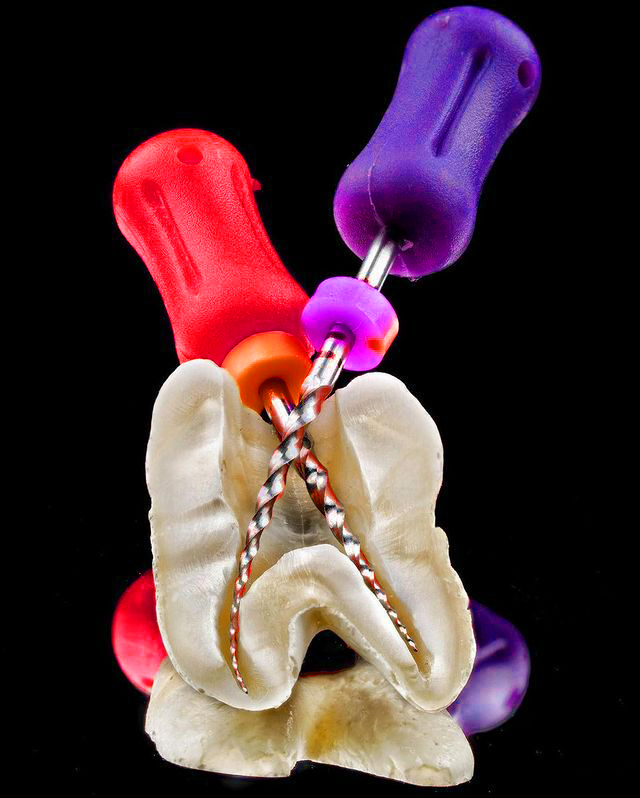
Source: Pinterest
- Deep inside the tooth, what is the pulp?
A tooth may look hard and
unchanging on the outside,
but inside, there is a living space
filled with nerves and blood vessels.
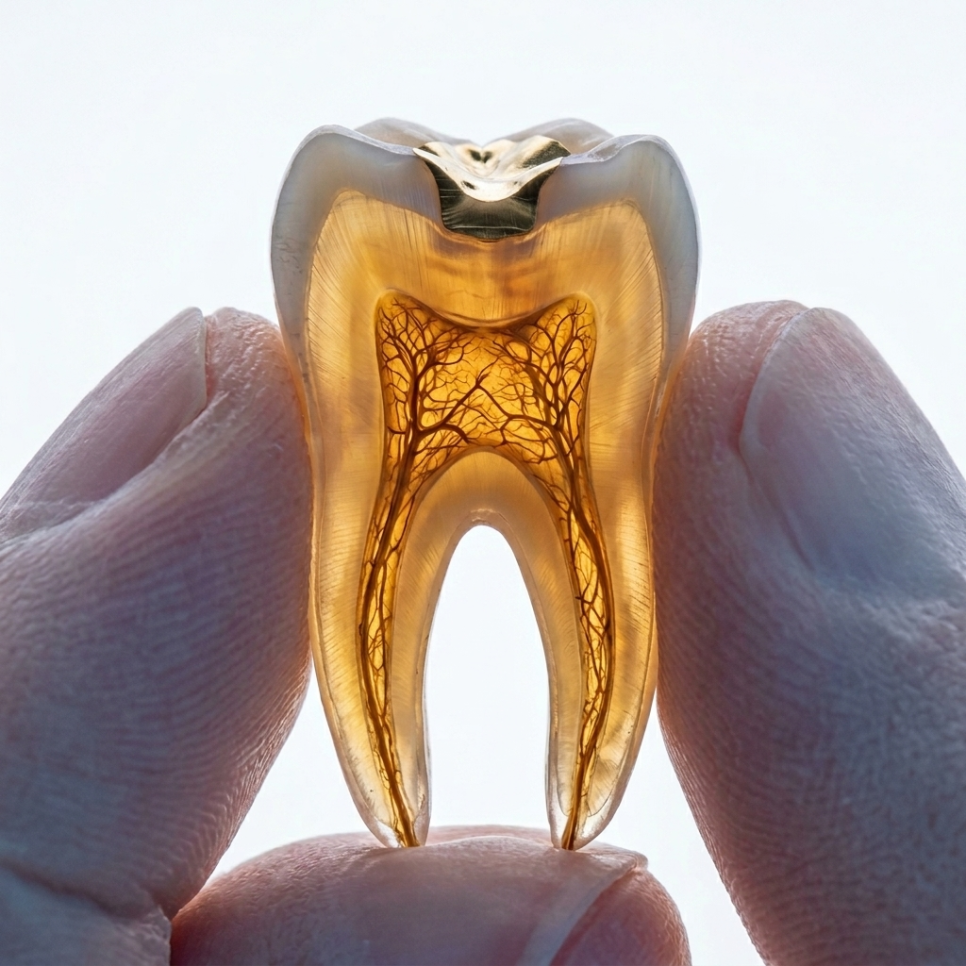
This space is called the pulp,
and deep inside a natural tooth,
it plays an important role in
supplying nourishment and detecting external stimuli.
When decay becomes deep or a tooth cracks,
bacteria can penetrate the nerves in the root canal,
and the inflammation that occurs at this time is called pulpitis.
- Symptom check by stage, confirmed with a dental clinic near Seonyudo Station
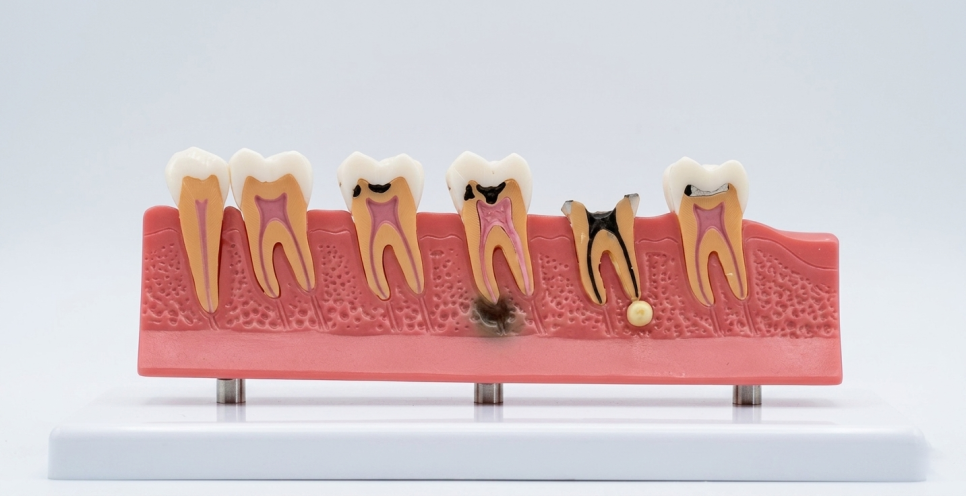
Source: Google
Unlike simple tooth sensitivity, inflammation in the root
changes depending on the degree of progression,
so the patient’s symptom pattern must be
observed very carefully.
Signs that recovery is possible
Reversible pulpitis is, as the name suggests,
inflammation that can return to a healthy state again
with appropriate treatment.
Its most noticeable feature is
a brief, sharp tingling sensation when drinking something cold
or eating something sweet,
and that the response also subsides within a few seconds
once the stimulus disappears.
There is usually no particular discomfort
when you are still or lying down at night,
and in many cases it does not
react strongly even to warm stimuli.
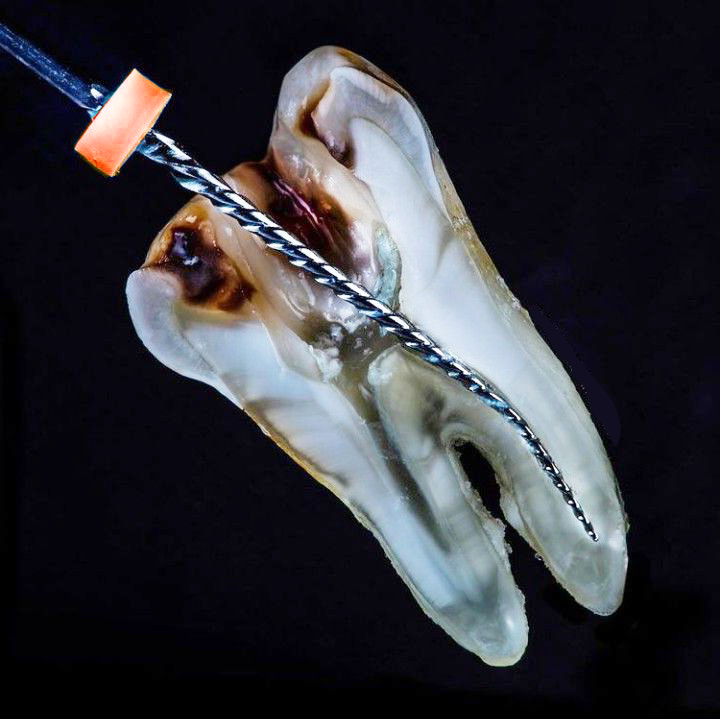
Source: Pinterest
At this stage, simply removing the cavity
and protecting the area close to the nerve
is often enough for the pulp to regain stability,
so it is most important to visit a medical institution
when the pain is still mild.
The stage that cannot be reversed
On the other hand, irreversible pulpitis means that
the inflammation has progressed deeply and extensively,
leaving the nerve itself difficult to recover.
At this stage, even without external stimuli,
sudden throbbing discomfort may occur,
and especially when lying down to sleep,
the symptom can become more severe
as blood rushes toward the head.
It may also respond more strongly to hot foods or drinks than to cold ones,
and it is common for the pain to spread so much
that it becomes difficult to pinpoint exactly which tooth hurts.
- Shall we look at the treatment direction in a table?
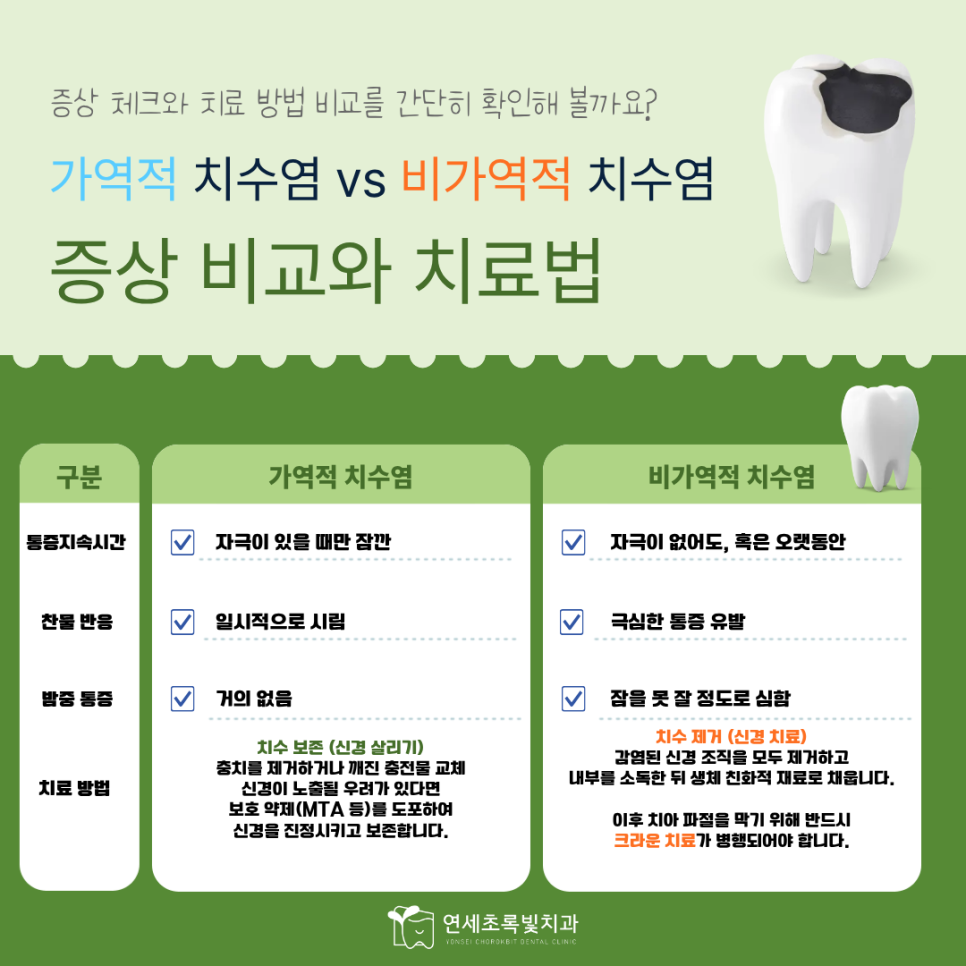
If discomfort that does not easily subside even with pain relievers
continues for several days,
it is time to consider root canal treatment,
and if left untreated, it may eventually lead to extraction,
so a quick decision is necessary.
The importance of accurate diagnosis and early response
It is often difficult to completely distinguish between these two types of inflammation
based on symptoms alone, so professional examination is essential.
As basic tests,
we comprehensively use several diagnostic tools such as
radiographic imaging, pulp vitality testing, and percussion response
to evaluate the condition of the pulp in detail.
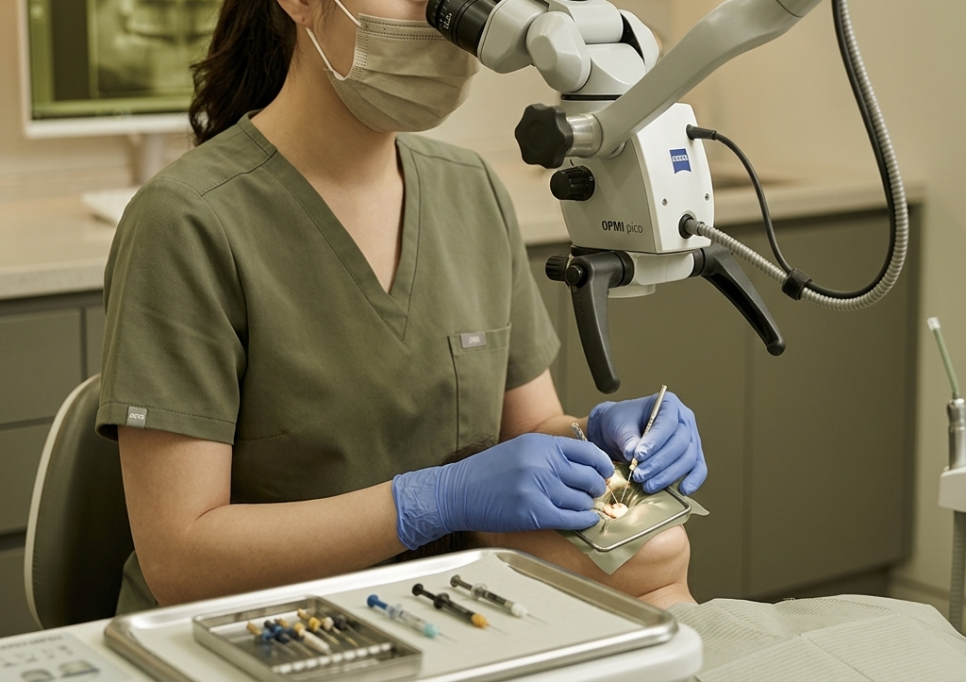
TIP from the dental clinic near Seonyudo Station!
Carefully examining tiny cracks or deep decay
that are difficult to see with the naked eye
through a microscope can be very helpful.
Even when the response is the same,
the cause can differ from patient to patient,
so rather than standardized treatment,
I believe personalized diagnosis for each individual
should come first.
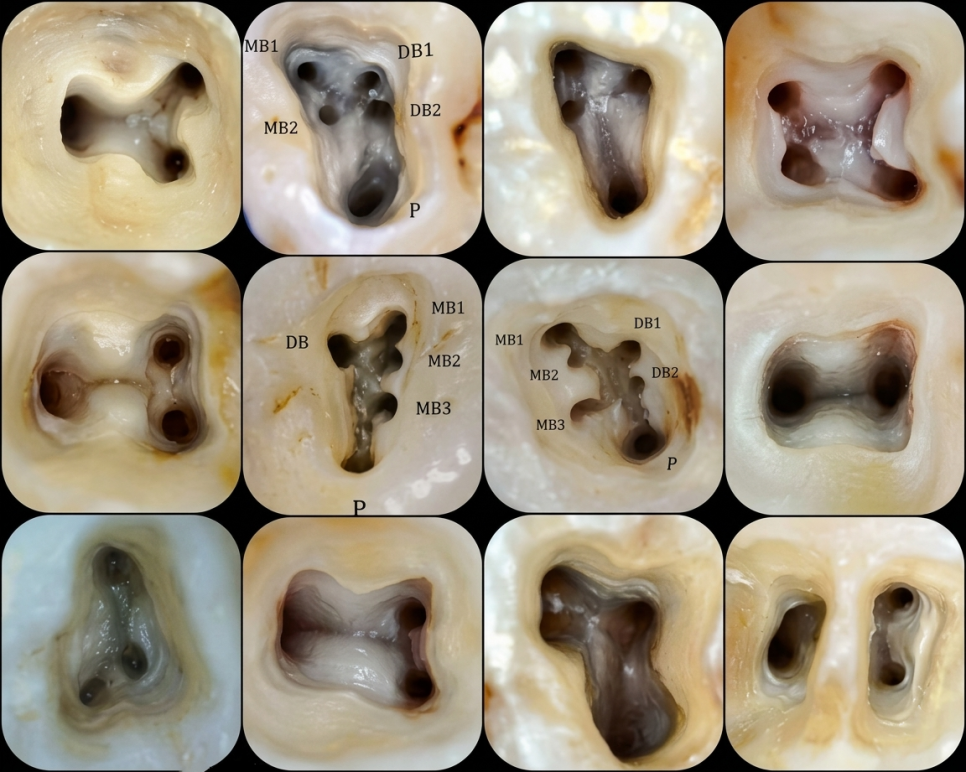
Source: Google
- A message from the dental clinic near Seonyudo Station
The habit of paying attention to small signals
Tooth pain is never a trivial signal.
Even brief sensitivity may contain
an important message from the pulp,
and if it is not addressed at the right time,
a reversible stage can quickly progress
to an irreversible one.
If small discomfort keeps recurring
or you feel something that is different from usual,
please do not delay and visit a medical institution
for an accurate diagnosis.
As natural teeth are precious assets
that cannot be restored to their original state once lost,
the small habit of listening to pain signals
will be the first step toward protecting a lifetime of healthy smiles.
This has been Kim Min-young,
a conservative dentistry specialist
at a dental clinic near Seonyudo Station.
Thank you.