Hello,
I am Kim Min-young, a specialist in conservative dentistry at Yeongdeungpo-gu Office Station Dental Clinic.
Even after completing root canal treatment,
have you ever experienced
throbbing around the tooth
or a small bump-like swelling
appearing on your gums?
Although the treatment was clearly completed,
you may wonder why this is still happening,
while also feeling overwhelmed
at the thought of needing
treatment again.
In situations like this,
simple root canal retreatment
may not be enough to resolve the problem,
and a surgical procedure called an apicoectomy
may need to be considered.
Today, at Yeongdeungpo-gu Office Station Dental Clinic,
we will take a step-by-step look at
what an apicoectomy is
and in which situations
this method may be necessary.
- What Is an Apicoectomy?
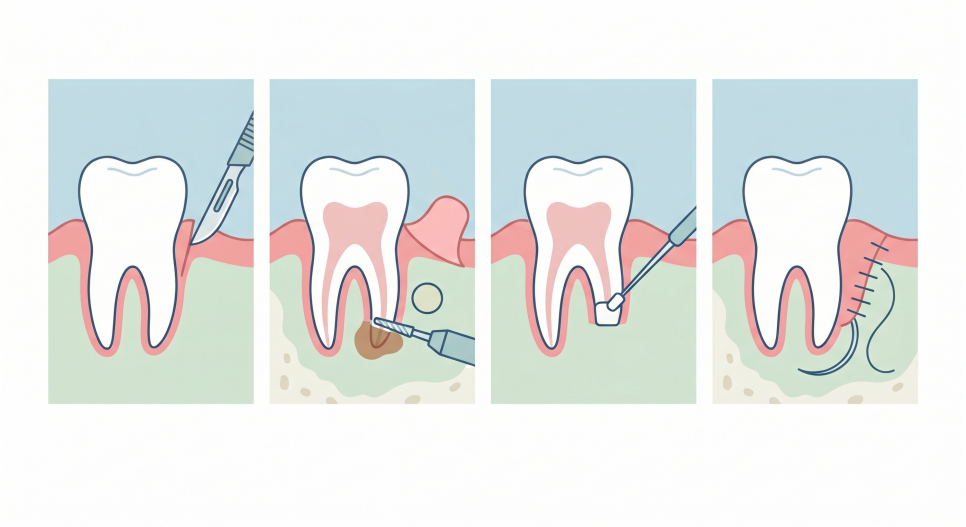
An apicoectomy is a method of
surgically removing an inflammatory lesion
that has developed at the end of the tooth root,
that is, in the apical region.
Even after root canal treatment,
bacteria or foreign material may remain
around the root apex and form a lesion.
However, because of the complex structure
at the end of the root,
there are cases in which
it is difficult to reach the area
with instruments from inside the root canal alone.
In such cases, the gum is incised,
and the root apex is accessed directly
through the bone tissue.
The infected tissue and part of the root tip
are then removed,
and the area is sealed from the opposite direction
to complete the procedure.
Because it can fundamentally address the cause
of the inflammation without extracting the tooth,
it has become established as
a conservative surgical procedure
for preserving natural teeth for as long as possible.
In particular, the greatest significance
of this procedure is that it can treat infections
in areas that are difficult to reach
with conventional root canal treatment alone.
- When Should an Apicoectomy
Be Considered?
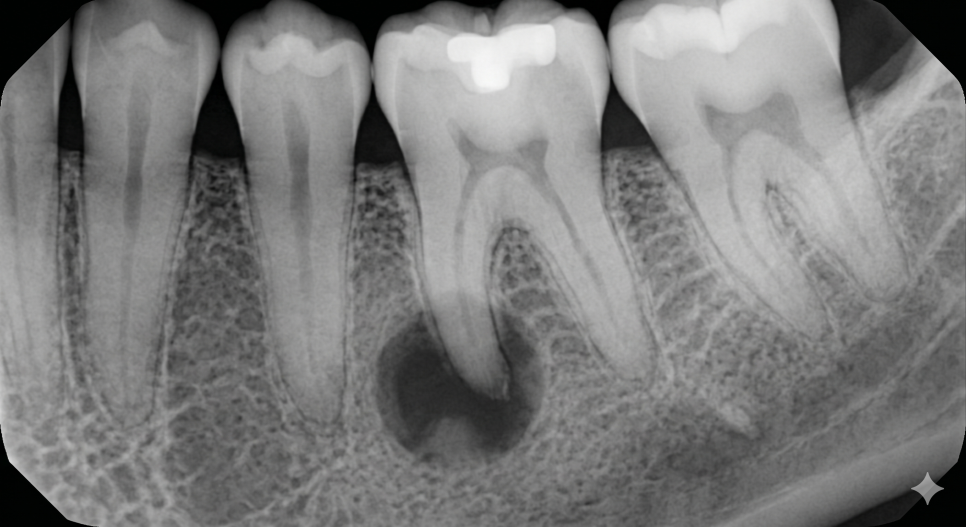
The most common situation is when
the periapical lesion persists
or even increases in size
despite undergoing root canal retreatment
after the initial root canal treatment.
A surgical approach may also be necessary
when the root is severely curved
or the inside has become calcified,
creating structural limitations
that make it difficult for instruments
to enter.
It may also be an option
when existing prosthetic restorations
or posts are difficult to remove,
and the lesion must be treated
while preserving the restoration.
A surgical approach and biopsy
can also be performed at the same time
when a lesion requiring tissue examination,
such as a cyst at the root tip,
is suspected.
At Yeongdeungpo-gu Office Station Dental Clinic,
we emphasize the importance of carefully reviewing
the possibility of preserving the tooth first,
rather than proceeding directly
to extraction in every case.
- Why Is a Dental Microscope Important
in an Apicoectomy?
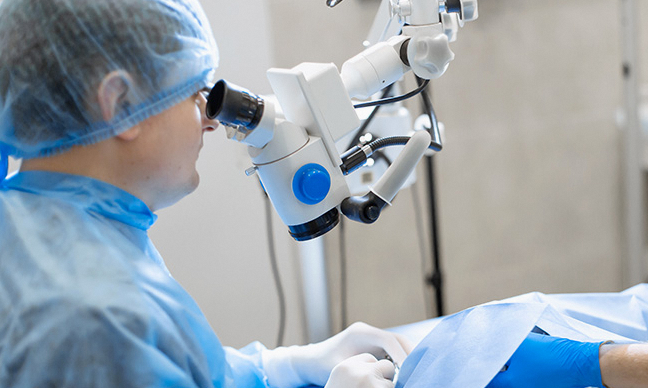
At Yeongdeungpo-gu Office Station Dental Clinic,
we explain that because an apicoectomy
deals with the very narrow and complex structure
at the end of the root,
precision has a major influence on the outcome.
Since it is difficult to accurately identify
the detailed structure of the root
with the naked eye,
using a dental microscope makes it possible
to assess the extent of the lesion much more clearly
and remove only the necessary areas
while minimizing the amount of tissue removed.
In addition, the process of finishing the procedure
by placing a retrograde filling at the root tip
must also be carried out under a microscopic view
to improve the quality and reliability
of the seal.
A microscope also helps identify
fine cracks and accessory canals
that are difficult to detect directly
without magnification.
Taking these structural variables into account
may also affect the long-term prognosis.
- Recovery and Precautions After Treatment
An apicoectomy is a surgical procedure,
so a certain period of rest and care
is needed after the surgery.
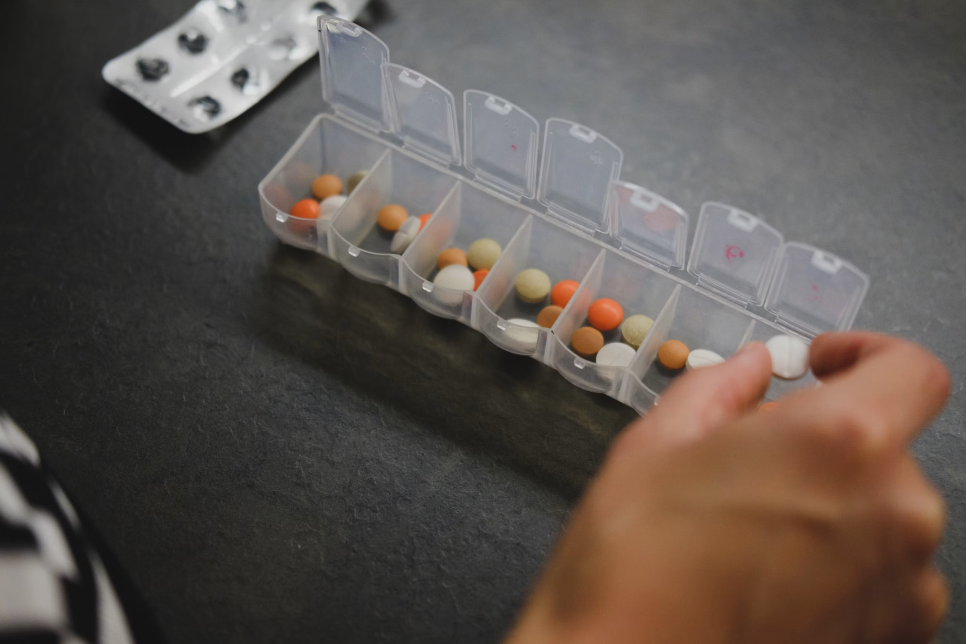
On the day of the procedure,
avoid applying strong stimulation
to the treated area,
and take all prescribed medications
as directed to support recovery.
Swelling or mild discomfort
at the surgical site usually subsides
within a few days,
and sutures are generally removed
one to two weeks after surgery.
Even afterward, regular follow-up
through radiographic examinations
is needed to monitor whether
the lesion is healing properly.
The course of recovery may vary
depending on the size and location
of the periapical lesion
and the overall condition of the tooth.
For this reason, Yeongdeungpo-gu Office Station Dental Clinic emphasizes
the importance of regular checkups.
- In Closing
Before asking,
“Does this tooth need to be extracted now?”
you do not have to give up hastily.
If you have pain that does not improve
even after root canal treatment
or recurring discomfort in the gum area,
we recommend first looking into
the option of an apicoectomy.
At Yeongdeungpo-gu Office Station Dental Clinic,
we emphasize the importance of preserving
natural teeth for as long as possible.
This has been Kim Min-young,
a specialist in conservative dentistry.
Thank you.