Hello,
I am Kim Min-young, an endodontic specialist at a Yeongdeungpo dental clinic.
Some of you may have experienced a tooth that had already undergone root canal treatment becoming sensitive again over time or feeling uncomfortable when chewing.
Completing root canal treatment does not necessarily mean that all problems have been resolved.
If a canal inside the tooth that was not discovered remains, or bacteria penetrate again through gaps between existing filling materials, the pain may return.
For these reasons, many people look for information about root canal retreatment and microscope-assisted treatment.
At the Yeongdeungpo dental clinic, we believe that accurately identifying the cause of recurring pain is the starting point for successful treatment.
- Reasons Root Canal Retreatment May Be Needed
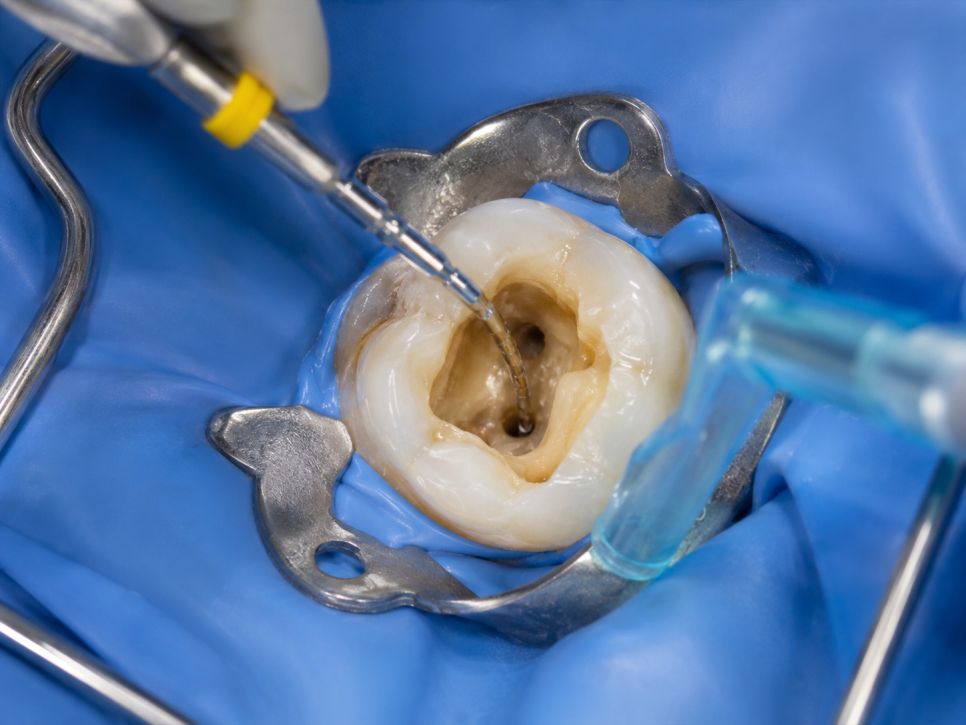
There are various reasons why symptoms may remain even after previous root canal treatment.
Typical examples include complex branches inside the root canal or tiny accessory canals that could not be completely treated during the initial procedure,
as well as secondary infections caused by bacteria penetrating through microscopic gaps between the restoration and the tooth.
In addition, if inflammation remains around the root tip, the lesion may appear later on radiographs.
In some cases, it may first become apparent as a dull pain when chewing or slight swelling around the gums.
At the Yeongdeungpo dental clinic, we believe that these causes should be examined comprehensively, requiring a fundamental approach aimed not merely at eliminating symptoms but also at preventing recurrence.
It is important to use precise diagnostic equipment to carefully identify the location and extent of the lesion.
- Why a Microscope Improves the Accuracy of Root Canal Retreatment
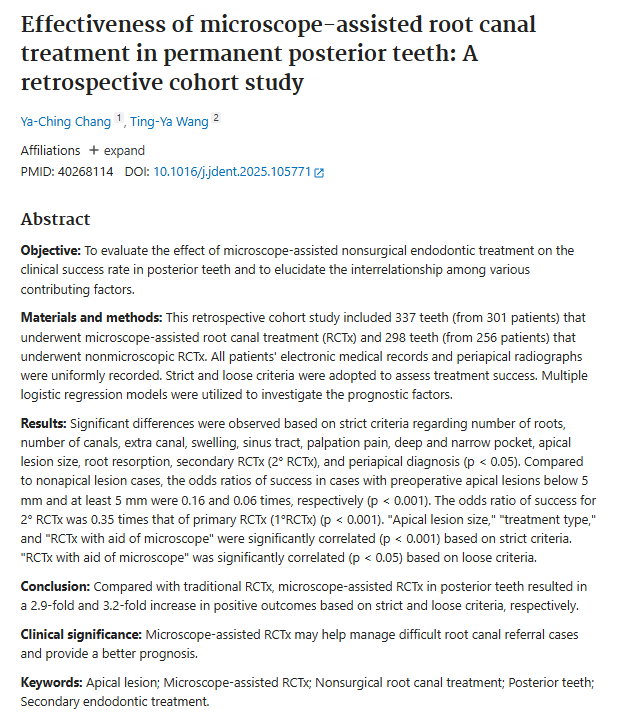
https://pubmed.ncbi.nlm.nih.gov/40268114/
A retrospective cohort study by Chang and Wang, published in the international journal Journal of Dentistry in 2025,
compared approximately 600 patients who had received root canal treatment on molars by dividing them into a group treated with a dental operating microscope and a group treated without one.
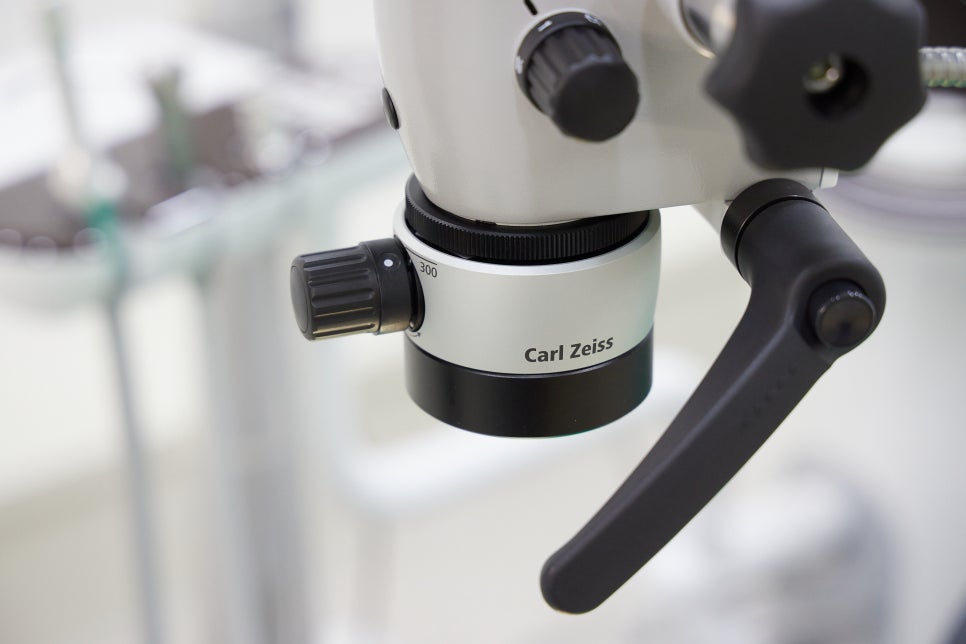
The study reported that the group treated with a microscope showed approximately 2.9 to 3.2 times higher rates of complete healing inside the root canals and recovery of tooth function,
with a statistically significant difference.
This indicates that a high-magnification microscope plays an important role in detecting narrow, curved canals that are difficult to identify with the naked eye or a standard magnifying glass, as well as accessory canals missed during previous treatment.
Based on these findings, the Yeongdeungpo dental clinic believes that when root canal retreatment is needed, precise diagnosis and treatment using a dental operating microscope should be considered as a priority.
- The Process of Microscope-Assisted Root Canal Retreatment
Root canal retreatment begins with safely removing the existing filling material and restoration.
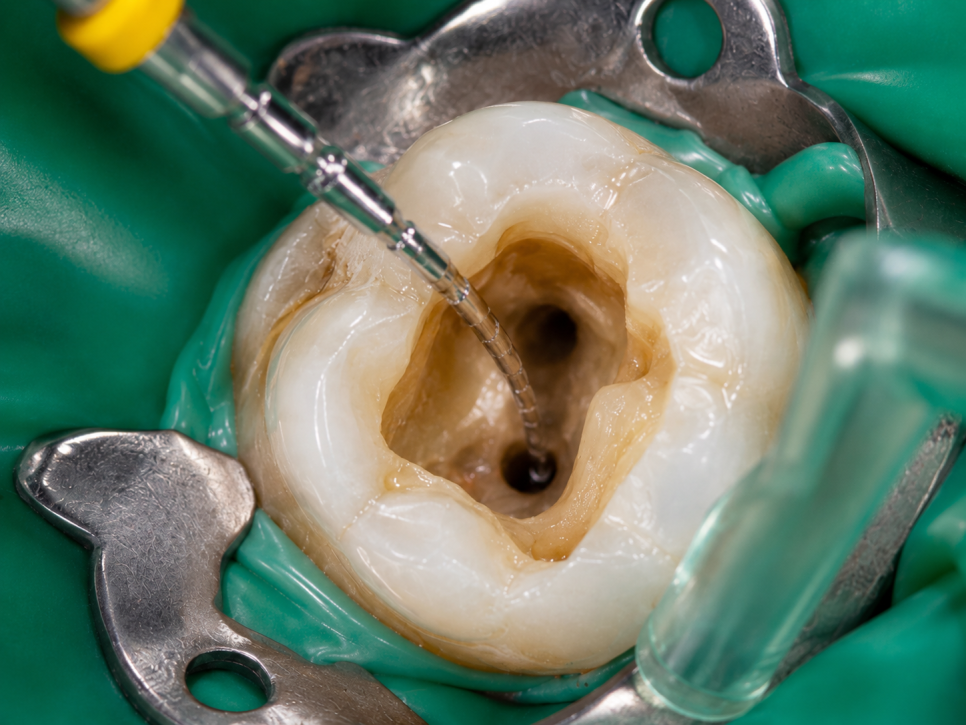
The inside of the root canal is then examined under high magnification using a dental operating microscope, allowing the dentist to carefully identify and remove missed accessory canals, microscopic cracks, and residual bacterial biofilm.
This process may take more time than treatment performed with the naked eye, but it can help reduce the likelihood of recurrence.
Ultrasonic instruments are used to carefully remove foreign material remaining on the canal walls.
After repeated cleaning and disinfection, the root canal is filled again and, when necessary, completed with a restoration.
At the Yeongdeungpo dental clinic, we believe that checking the shape and condition of the root canal at each stage throughout this process can help improve the success rate of retreatment.
- Post-Treatment Care and Prognosis
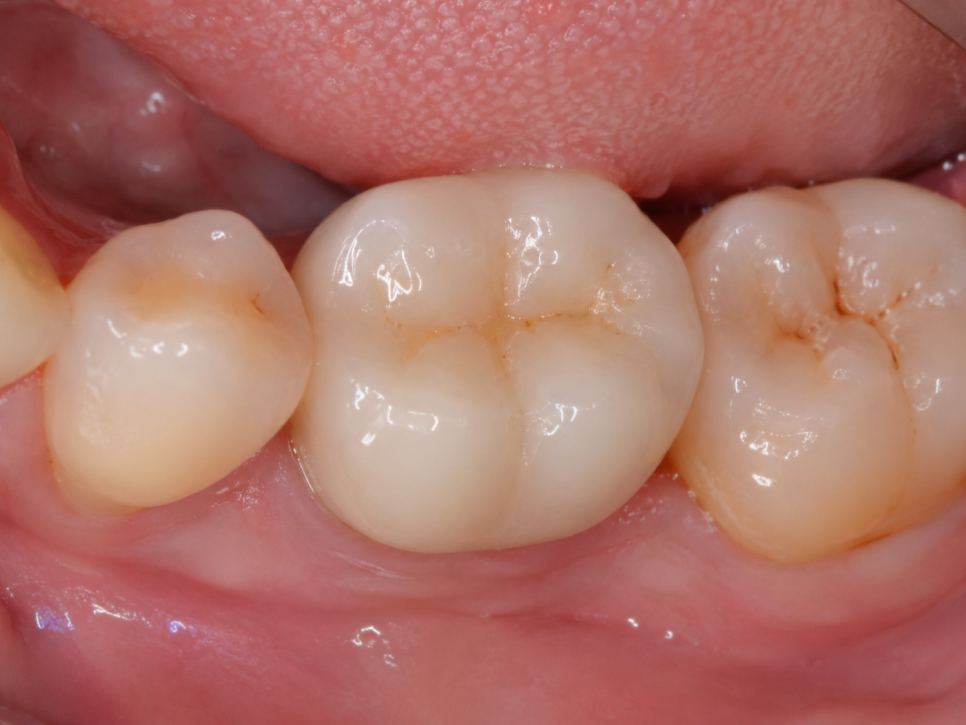
Even after root canal retreatment is completed, it is advisable to avoid placing excessive chewing force on the tooth for a certain period.
Some sensitivity or discomfort may remain immediately after treatment, but in many cases it gradually decreases naturally over time.
However, if the pain persists or worsens, an additional examination may be necessary.
It is also important to monitor the healing progress through regular radiographic examinations. During this process, careful observation is recommended to determine whether the lesion has completely disappeared.
We believe it is advisable to consider the entire retreatment process, including follow-up monitoring after treatment.
Even a tooth that has undergone root canal treatment may develop symptoms again over time.
In such cases, accurately identifying the cause and performing precise treatment can determine the success of retreatment.
Microscope-assisted root canal retreatment is meaningful because it allows areas that are difficult to see with the naked eye to be examined in detail.
At the Yeongdeungpo dental clinic, based on these principles of precise diagnosis and treatment, we believe it is advisable to continue providing practical information to people experiencing discomfort after root canal treatment.
This has been Kim Min-young, an endodontic specialist.
Thank you.