This is how it can turn out


Today, I’d like to write a slightly more candid story.
I currently help with a wide range of treatments, from laminate veneers to simple cavity treatment,
but whenever I see a patient returning due to side effects from laminate veneers, I feel quite uneasy.
Of course, I do my best to solve the problem,
but one thought always crosses my mind: “What if they had received a safe procedure from the start...?”
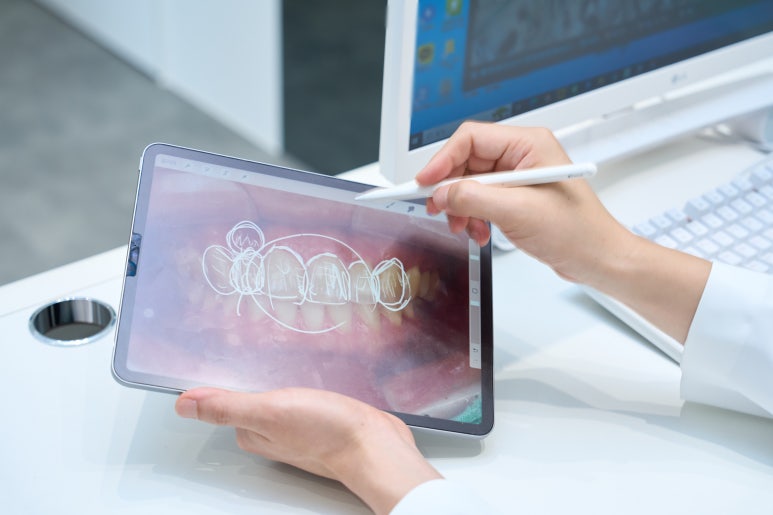
Laminate veneer side effects...
are mostly preventable problems.
So whenever possible, I want patients to receive treatment without side effects.
You could call it a kind of responsibility as a dentist.^^;
That’s why today’s post is meant to help those considering laminate veneers avoid side effects.
I’d like to share a few cases I have personally experienced.ㅎㅎ
Please focus for a moment.
- Laminate veneers: the single most common side effect
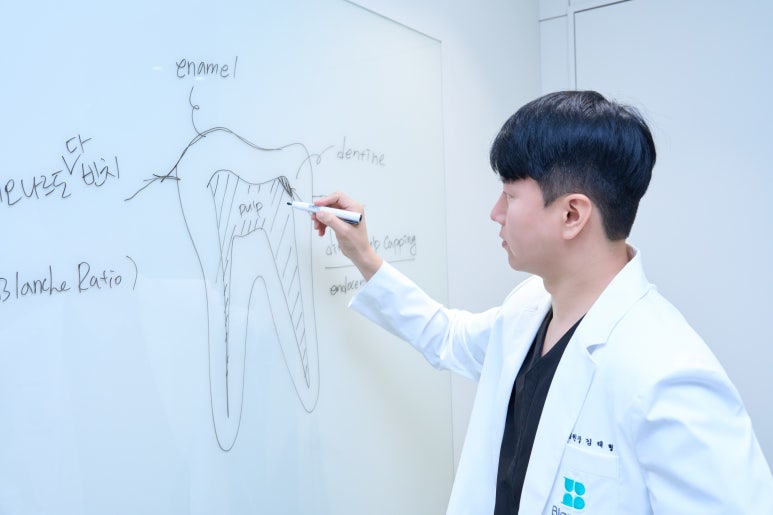
When talking about laminate veneer side effects, the most important issue is how much of the tooth is shaved down.
A typical laminate veneer removes about 0.5 mm to 1.0 mm of tooth structure.
If you think of enamel, the tooth’s protective layer, as being about 1.5 mm thick on average,
that means more than half of the total thickness is removed.
When that happens, the tooth is left exposed directly to outside stimulation.
That is why you feel sensitivity when drinking cold water.
At first, only cold things are sensitive,
but over time, even warm food can start to hurt.
In severe cases, a throbbing pain can occur even when you are just sitting still.
Eventually, there may be situations where root canal treatment is needed.ㅠㅠ
<Before-and-after photos>
- More can be found on the website.
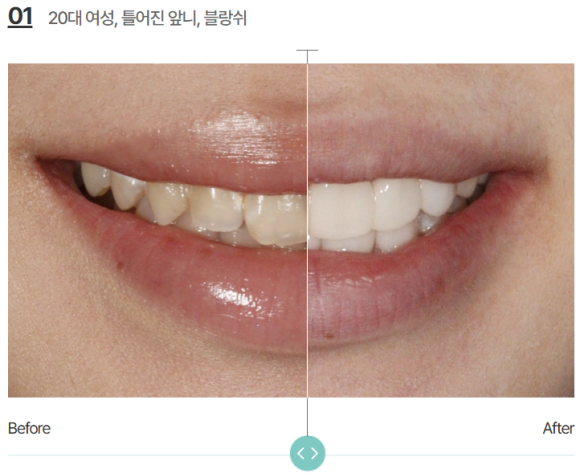
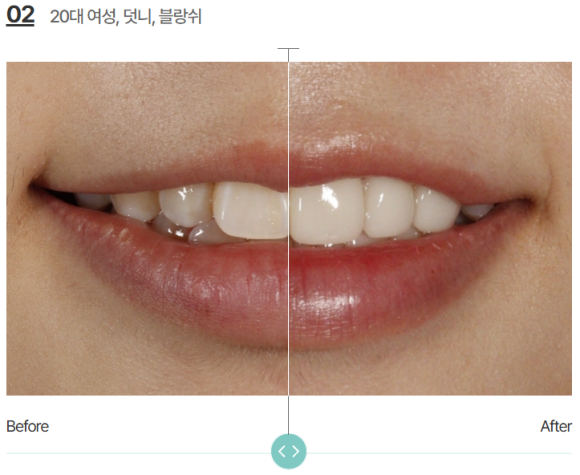
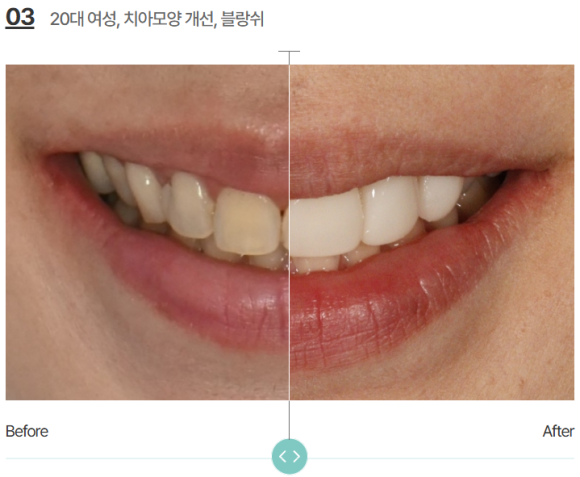
- No-prep laminate veneers? The gums can turn black.

If too much of the tooth is shaved down, it often reaches the gum line.
As the edge of the laminate veneer keeps irritating the gums, inflammation develops,
and the gums start to recede upward.
This is called gingival recession, and once the gums have receded, they do not go back down.
Then the teeth look longer...
and aesthetically, that is not ideal.
Even more serious is when the gums turn black.
This happens when the laminate veneer material or adhesive irritates the gums and causes pigmentation to settle in.
These changes are very difficult to reverse.
That is why it is important to get it done properly from the beginning.
<If you want to know more about no-prep laminate veneers, 'Blanche'>

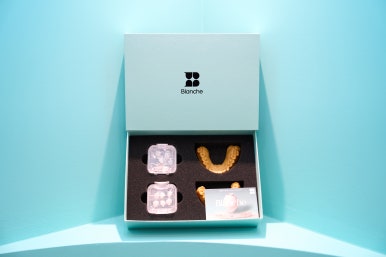

- Side effects of no-prep laminate veneers: check this
"The laminate veneer
suddenly fell off."
I see cases like this often.
If too much of the tooth is shaved down, there is not enough bonding surface.
In particular, if the enamel is completely removed and the dentin underneath is exposed, bonding strength drops significantly.
Also, when the tooth has become weakened, the laminate veneer can come off even from a minor impact.
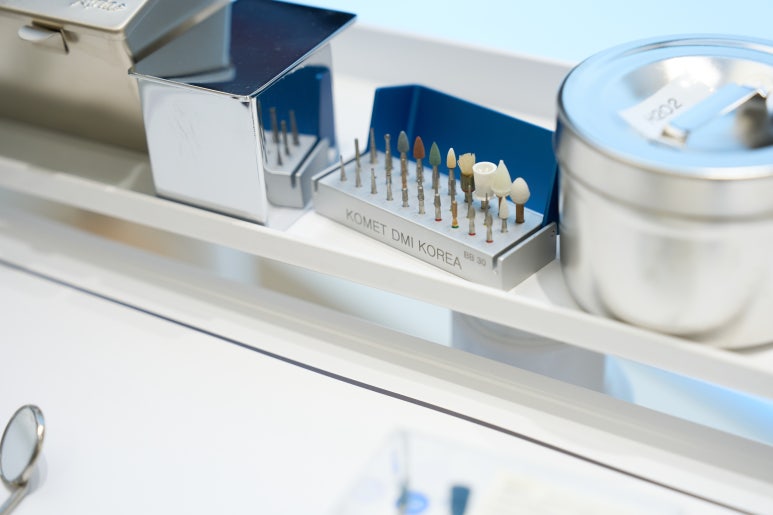
Once it falls off, it is difficult to reattach, and in many cases, retreatment is needed.
This is why minimizing tooth reduction is truly important.
It is something you must check before the procedure.
So please make sure to check how thick it will be made.
Today, as the chief director of Blanche Dental Clinic, I explained in detail the side effects of no-prep laminate veneers.
When you decide to get laminate veneers, you tend to focus only on the aesthetic side.
However, when getting a second set of laminate veneers,
people often think about side effects.
That is probably because there was something unsatisfactory about the first procedure.
I have seen so many patients like this.
So I hope that none of the readers of this post have to go through that.
If you have any questions, please feel free to contact us.
This has been Kim Tae-hyung, chief director of Blanche Dental Clinic.
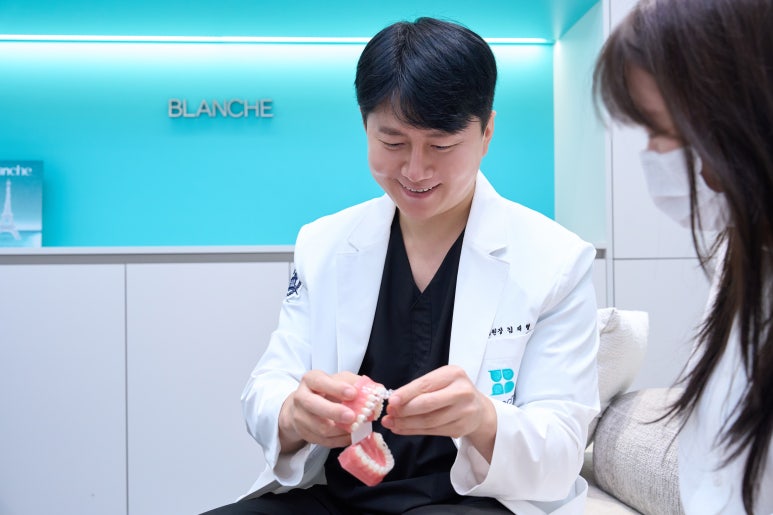
| Kim Tae-hyung, Chief Director of Blanche Dental Clinic |
|---|
| Ask your questions right away |
| Check available reservation dates in 1 second |
With the hope that you will shine brightly,
Sincerely,
Kim Tae-hyung
Chief Director of Blanche Dental Clinic