Hello.
This is Blanche Dental Clinic, where your smile becomes a work of art.
The beginning of dental health is proper brushing, and the most important tool that helps with brushing is toothpaste.
However, because there are so many types, people often end up choosing based only on advertisements.
Today, we are sharing the clear criteria for choosing toothpaste without making a mistake, as suggested by a dentist from Seoul National University.

Toothpaste is not a medicine, but like cosmetics or cleansing products, it should be chosen according to a person's oral condition.
Those who are prone to cavities, those whose teeth are sensitive, and those with weak gums each need different toothpaste.
Rather than simply choosing a popular product, it is important to first identify what concerns you have inside your mouth.
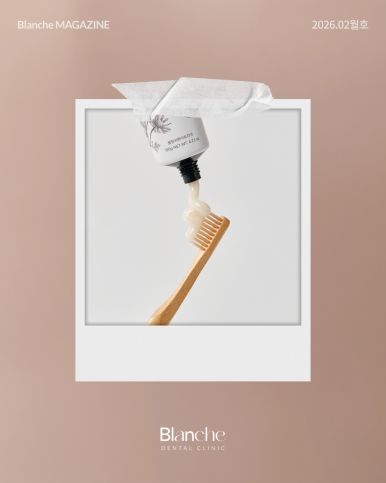
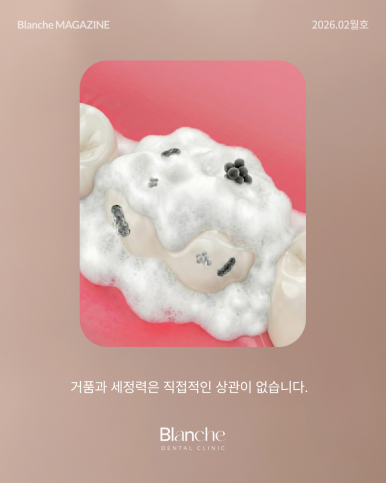
The minty taste and rich foam of toothpaste can make brushing more pleasant,
but they do not determine how well it prevents cavities.
In fact, excessive fragrance or surfactants can irritate the oral mucosa.
Now is the time to choose based on the ingredients on the back, not on how it feels.
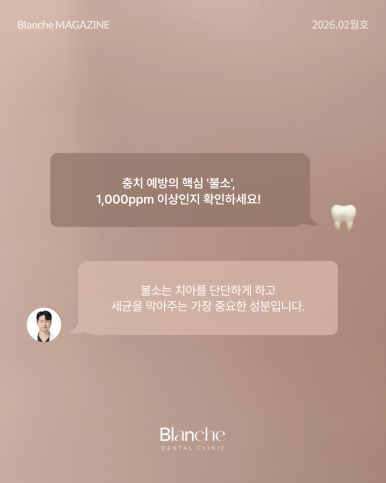
To see cavity-prevention effects, fluoride content is very important.
Some toothpaste products on the market contain little or no fluoride,
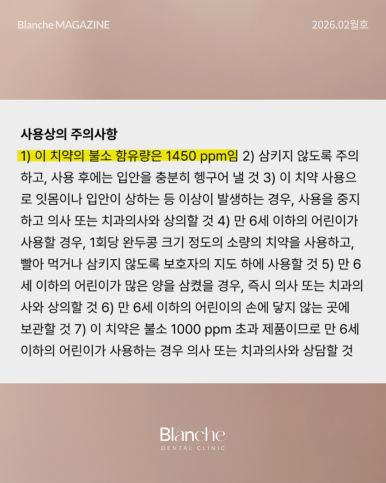
but for adults who want cavity prevention, it is medically recommended to choose toothpaste with at least 1,000 ppm,
and preferably high-fluoride toothpaste around 1,450 ppm.
The abrasive in toothpaste helps remove plaque,
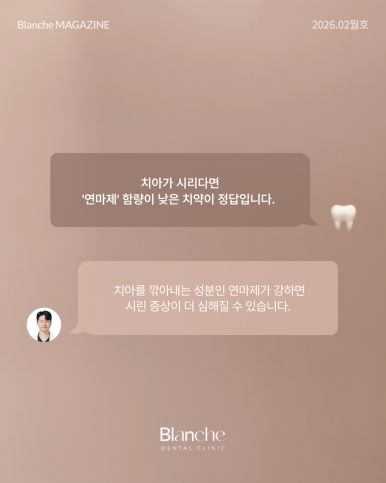
but if the particles are coarse and strong, they can wear down the tooth surface.
In particular, if your teeth often feel sensitive to cold water, it helps to choose toothpaste with a low abrasive level (RDA)
and ingredients for sensitive teeth such as 'tricalcium phosphate' or 'potassium nitrate.'
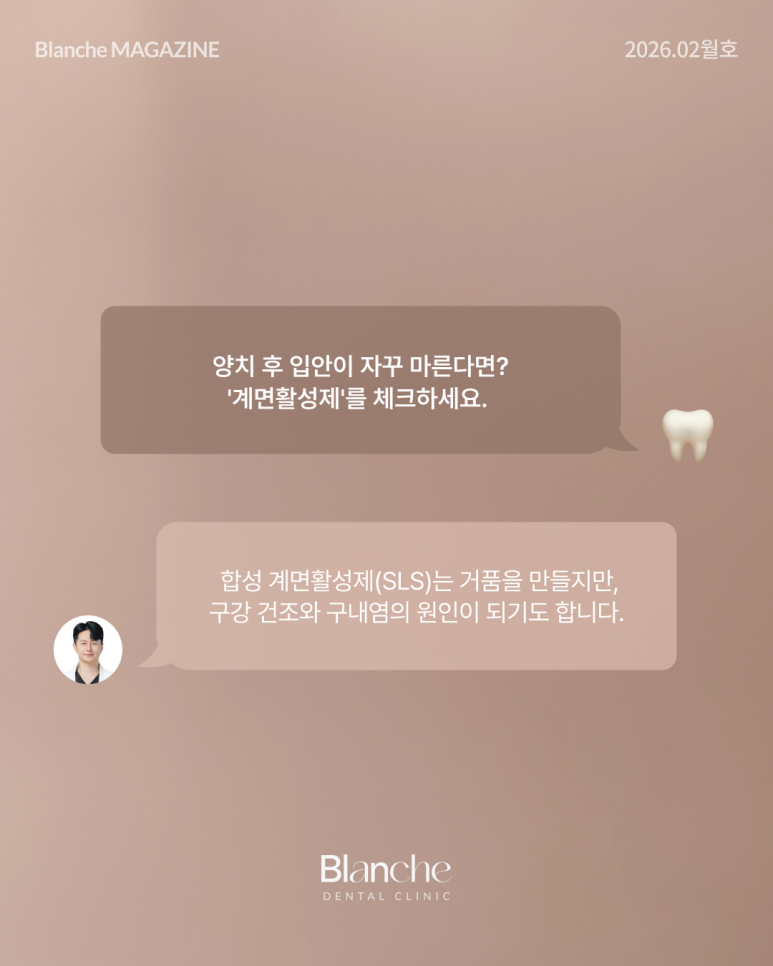
If your mouth feels unpleasant after brushing,
or if it feels dry again very quickly, check the surfactant ingredients in the toothpaste.
In particular, people who often get sores in the mouth or have frequent stomatitis will benefit from using
'low-irritation toothpaste' or products with 'naturally derived surfactants' that do not contain synthetic surfactants to improve the oral environment.
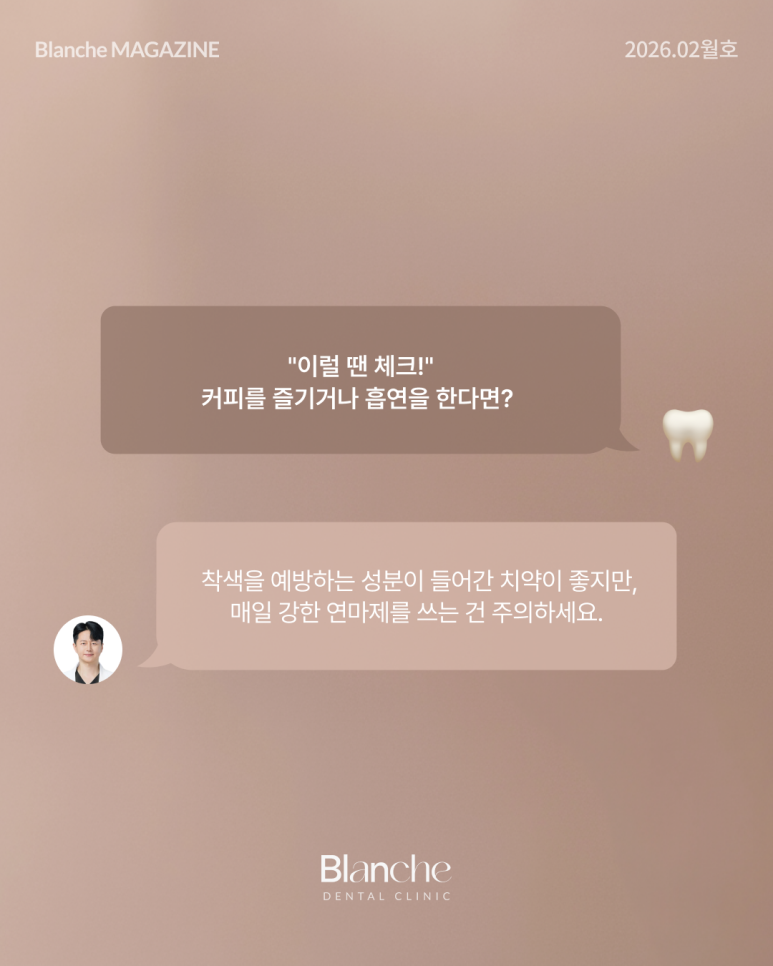
For those who drink coffee or tea often, tooth staining may be a concern.
Toothpaste containing whitening ingredients may provide temporary help, but overly strong abrasive ingredients can make teeth more sensitive. In such cases, it is safer to use whitening toothpaste occasionally or use it at an appropriate interval after consulting a professional.
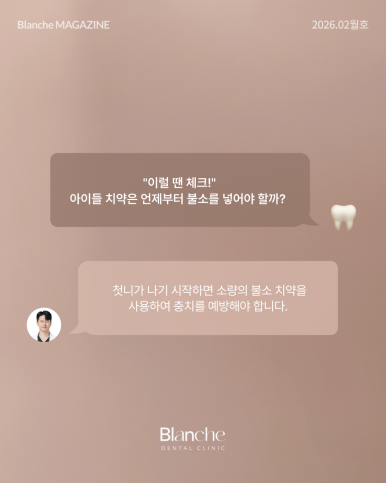
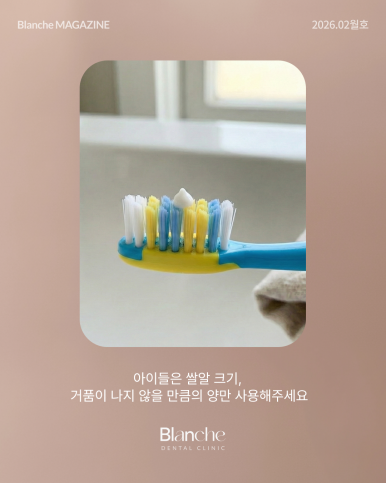
In the past, fluoride-free toothpaste was sometimes recommended for children because of concerns that they might swallow it,
but recent academic guidelines recommend using fluoride toothpaste with about 1,000 ppm
in very small amounts (the size of a grain of rice) once the first tooth appears.
Using fluoride at the right concentration from early childhood becomes the foundation for lifelong dental health.
Blanche Dental Clinic analyzes not only the patient's current oral condition, but also the strength of brushing,
eating habits, and more in a comprehensive way.
Rather than saying, "Use this toothpaste because it's famous,"
our treatment philosophy is to provide guidance based on scientific evidence, such as,
"Your gums are currently weakened, so it would be better to use toothpaste with these ingredients."
From today, when you buy new toothpaste, please check the ingredient list on the back once.
Just by knowing the fluoride content and whether surfactants are included, you can protect your teeth much better.
If you would like to know the dentist's more detailed toothpaste analysis from the video,
visit Blanche Dental Clinic's YouTube channel now!
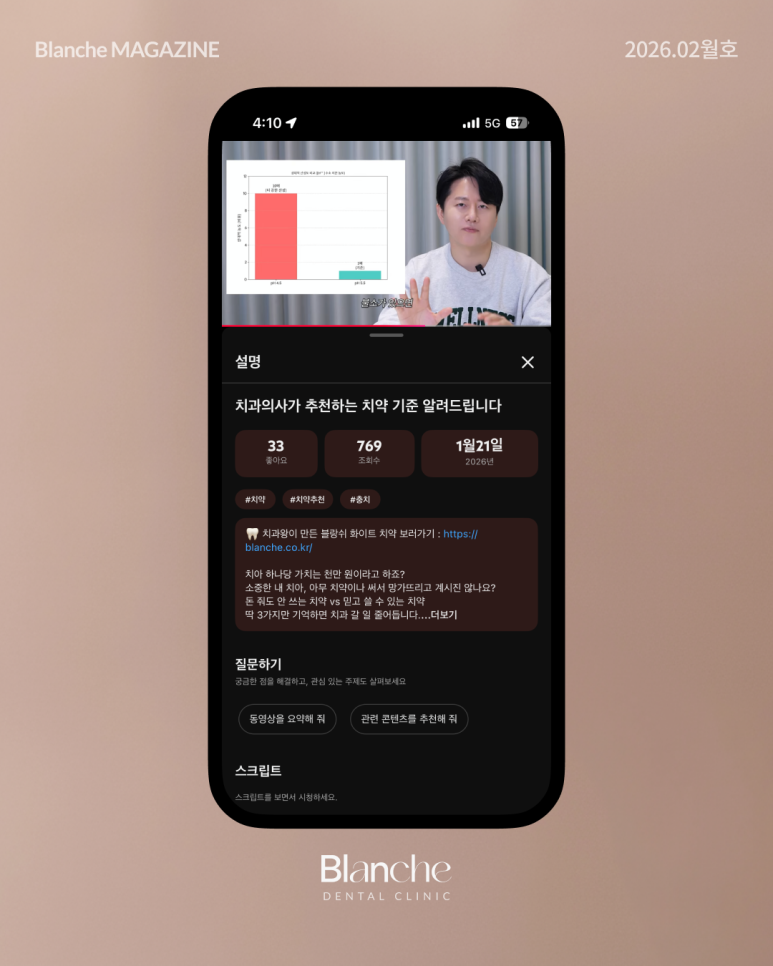
This article was compiled based on the content of a Blanche Dental Clinic YouTube video.