Hello, this is Gangnam Blanche Dental Clinic.
Warm spring weather is coming, when clothing becomes lighter.
It’s the perfect weather for going out with your loved ones, family, or partner face to face without masks, isn’t it?
But there are some people who are not entirely happy about this bright spring breeze.
"Dad, your breath smells like fart!"
"Honey... did you maybe forget to brush your teeth today?"
Have you ever experienced the cheerful fact bomb that comes from the person you love most in the world?
Around this time of year, more people than you might expect visit the dental clinic because they are worried about bad breath.
"No matter how hard I brush
and use mouthwash, the bad breath won’t go away."
"It feels like the smell is coming from inside my body,
so I went to internal medicine, but they said nothing was wrong."
"I was shocked after hearing from someone close to me or my family
that I had bad breath."

What causes bad breath?
Many people who have severe bad breath first visit internal medicine or an ear, nose, and throat clinic, wondering, "Do I have a stomach problem?" or "Is the smell coming from inside?"
Of course, in some cases, the cause can be a systemic disease such as reflux esophagitis, tonsil stones, or diabetes.
However, statistically, more than 90% of the causes of bad breath are related to problems in the mouth.
In other words, bacteria are growing and decomposing somewhere in the mouth, hiding the substances that produce the foul odor.
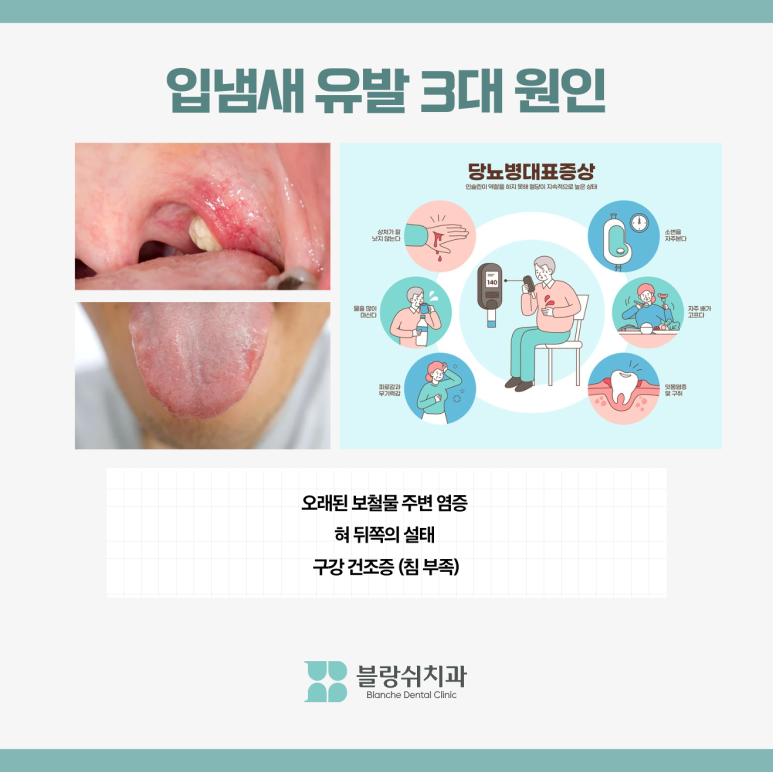
Three major oral causes of bad breath
So where in the mouth does this unpleasant smell actually come from?
① Inflammation around old prosthetics
Crowns, inlays, implants, and other prosthetics used in cavity treatment are not permanent.
Over time, the adhesive can dissolve, or tiny gaps can form between the prosthetic and the tooth.
If food gets trapped in these gaps, brushing alone will never remove it, and as it rots inside, it causes a strong foul odor.
Even if everything looks fine on the outside, there is a high chance that gum inflammation and periodontal disease are progressing underneath.
② Coating on the back of the tongue
If there are no prosthetics and no cavities, but there is still a smell, you should suspect the tongue.
The surface of the tongue has many bumpy projections (papillae), and especially in the folds deep at the back of the tongue, food debris and bacteria cling together to form a coating on the tongue.
As this coating decomposes, it creates a smell like rotten eggs.
③ Dry mouth (lack of saliva)
Saliva plays a very important role in washing away bacteria in the mouth and neutralizing odors.
However, as people get older, or due to stress, taking certain medications, and other reasons, saliva production decreases and the mouth becomes dry. Then bacteria multiply explosively, and bad breath becomes severe.

Getting rid of bad breath,
can gum medicine or candy solve it?
Before coming to the dental clinic, many patients take gum supplements like "Insadol" or "Igatan," or rely on bad-breath-removal candies and mouthwash.
Unfortunately, however, these methods cannot be a fundamental solution.
Taking medicine without physically removing the causative tartar, plaque, or faulty prosthetics is like spraying air freshener on top of a pile of garbage without cleaning it up.
The smell may be temporarily masked, but over time the foul odor will come back through.
Worse, you may miss the right time for treatment and end up causing a bigger problem, such as loss of the jawbone due to gum disease.
How dentists recommend
getting rid of bad breath for good
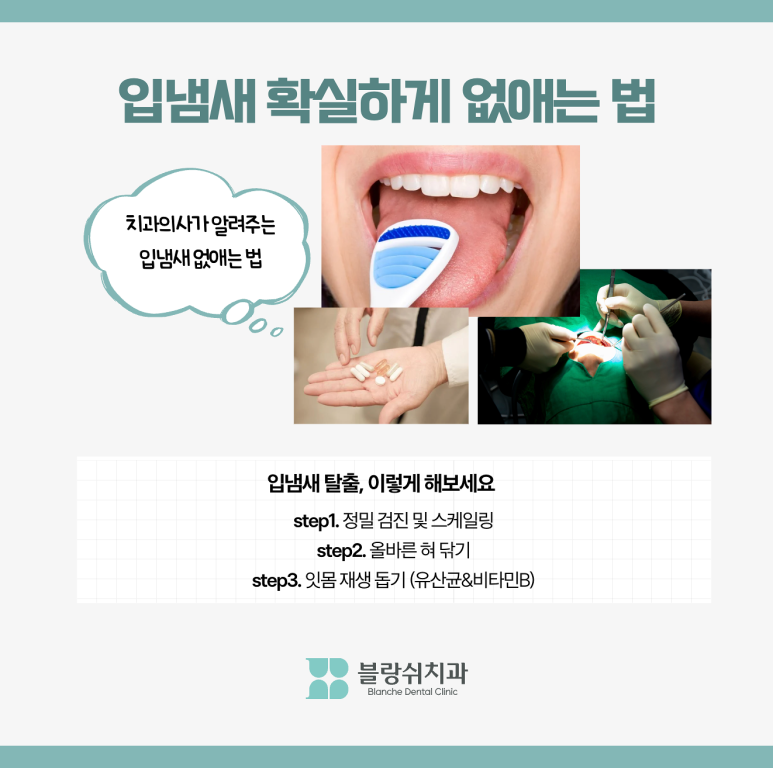
To escape bad breath, the first step is to find and remove the cause.
STEP 1. Precise examination and scaling
First, visit the dental clinic, get an X-ray, and check whether gaps have formed around old prosthetics or whether tartar has accumulated deep under the gums.
Problematic prosthetics should be replaced, and scaling and gum treatment should be performed to remove the bacterial buildup that is causing the odor.
STEP 2. Proper tongue cleaning
Many people brush only their teeth and stop there.
Using a toothbrush or tongue cleaner, you should thoroughly clean deep into the back of the tongue.
(However, if you brush too hard, it can cause injury, so please brush gently. I personally get too itchy if I brush even the roof of my mouth, so I mainly brush my tongue. ^^)
STEP 3. Help support gum recovery (probiotics & vitamin B)
Once the fundamental treatment (scaling, prosthetic replacement) is finished,
from this point on you can get help from supplements.
In particular, probiotics or vitamin B complexes suppress harmful bacteria in the mouth and help gum recovery, making them effective for preventing bad breath.
STEP 4. Drink enough water
Please drink water often so your mouth does not get dry.
When saliva dries up, bacteria throw a party..ㅎㅎ
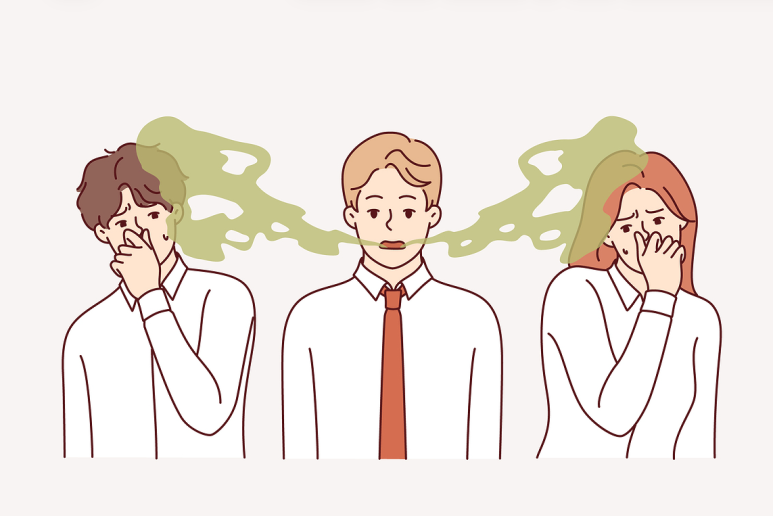
Don’t just leave it alone thinking, "I brush well, so I should be fine," and if you hear from someone close to you that you have bad breath, or if you notice it yourself, please be brave and visit the dental clinic.
I also honestly tell the people around me when they have bad breath.
That is because I believe it helps protect their health and social relationships.
Please don’t suffer alone; visit a nearby dental clinic and find the exact cause.
I hope today’s information was helpful, and if you have any questions, please leave a comment anytime.
This has been Gangnam Blanche Dental Clinic. Thank you.