“Doctor, have my front teeth always looked like this?”
This is one of the questions I hear most often when I see middle-aged and older patients in the clinic.
When they were younger, their teeth were clearly straight and even,
but one day they looked in the mirror and were shocked to see their lower teeth crowding and overlapping,
or a canine sticking out noticeably.
Many people think this happens simply because they did not take proper care of their teeth,
but it is actually due to the “silent great migration” that our teeth go through over a lifetime.
Hello.
This is Blanche Dental Clinic, where your smile becomes a work of art.
Today, I’ll personally explain the things patients are most curious about regarding front-teeth partial orthodontic treatment,
which is a major concern for people in their 50s and 60s:
whether extraction can be avoided and how the treatment works.
Why do teeth keep trying to move toward the center?
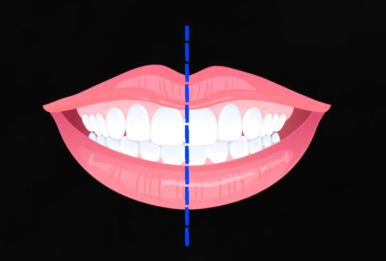
Our teeth are not like stakes fixed in place inside the jawbone.
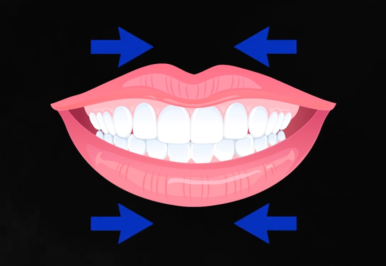
Over a lifetime, they have an instinct to move little by little toward the center of the face.
This is called mesial drift in professional terms.
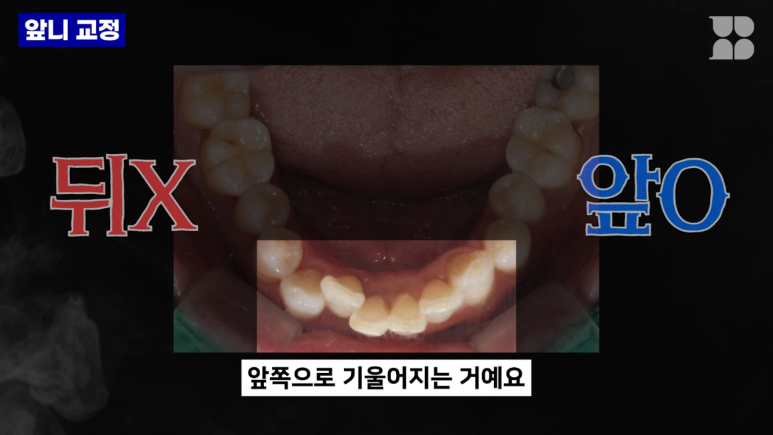


Because the force pushing from the molars in the back is so strong,
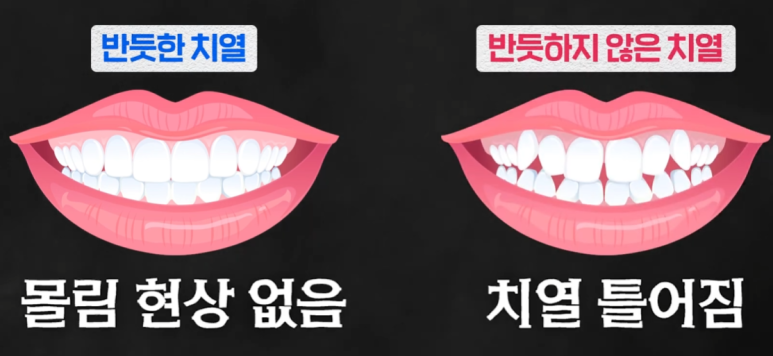
people whose alignment is even slightly off are more likely, over time, to see those gaps narrow,
leading to overlapping or protruding front teeth.
In simple terms, the teeth are spending their whole lives competing to take the “center seat.”
Think of it like a passenger being pushed out of a packed subway car
Imagine a packed subway train.
When passengers are standing shoulder to shoulder in a row,
they remain stable without pushing one another.
But what if just one person in that line
is sticking out slightly?
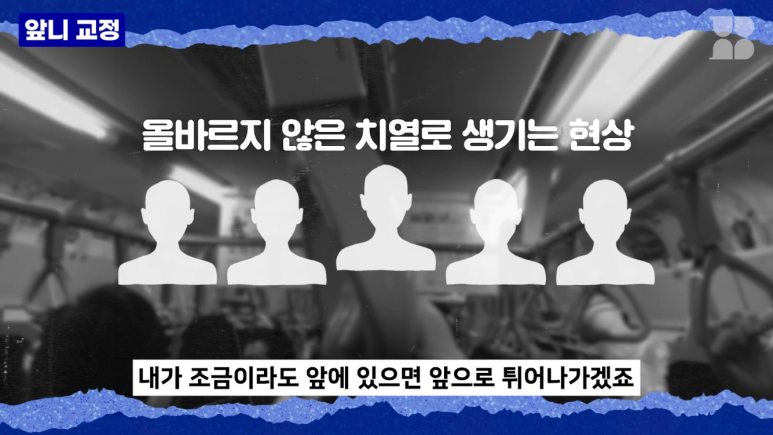
That person will eventually be pushed by the people next to them and either be forced out or shoved inward.
Our teeth work the same way.
That tiny point of misalignment can become the beginning of a domino effect
that accelerates the collapse of the entire dental arch.
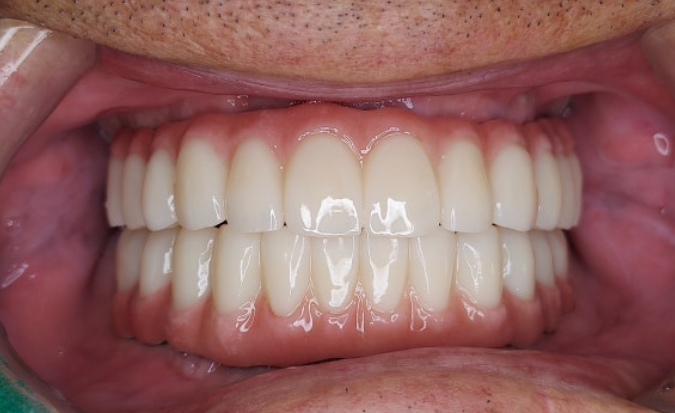
The bigger issue is not appearance, but gum health
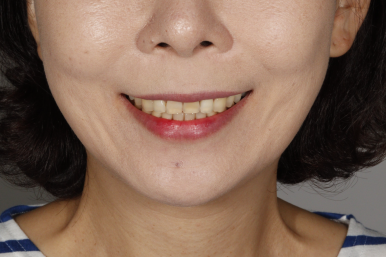
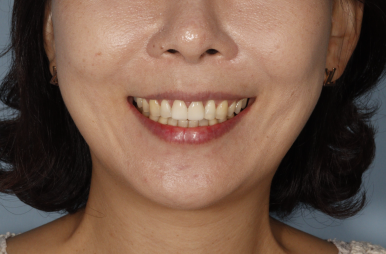
(Left) Photo before 08/21 / (Right) Photo after 09/24
These before-and-after photos were taken with the patient’s consent for marketing purposes.
Unauthorized copying, distribution, and use are prohibited.
Some people ask,
“Isn’t it okay for the teeth to be a little crooked at this age?”
But the real threat is not appearance—it is the gums.
When teeth overlap, there will always be blind spots that are hard to clean,
even with brushing or flossing.
Tartar that builds up in those areas can cause chronic periodontal disease,
which worsens the gum health supporting the entire front teeth and can lead to unfortunate outcomes.
That is why front-teeth partial orthodontic treatment is more than just a choice to look better;
it is largely a form of preventive care to protect your precious natural teeth for as long as possible.
An average investment of 3 to 6 months, with value beyond that
Fortunately, if the diagnosis shows that the molar bite is stable,
there is no need to spend a long time like with full orthodontic treatment.
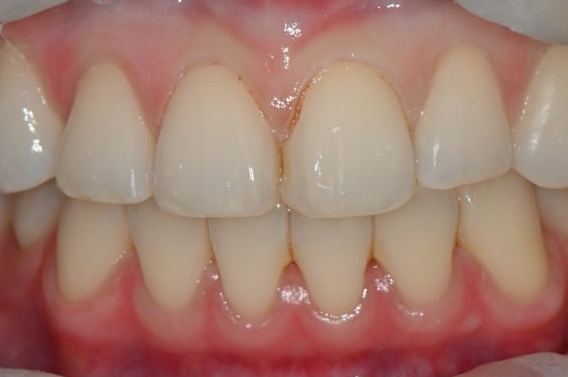 This shows minimal reduction before veneer attachment for a protruding tooth.
Treatment period:
Depending on the individual’s condition, improvement can usually be expected within a relatively short period of around 3 to 6 months.
Aesthetic appliances:
Using clear appliances such as Invisalign allows treatment to continue discreetly without interfering with daily life.
A reasonable choice:
Compared with full orthodontic treatment, the burden in terms of cost and foreign-body sensation is lighter, so it is often preferred by middle-aged and older adults.
An honest answer to “Do I really have to pull a healthy tooth?”
The biggest reason people hesitate to get orthodontic treatment is extraction.
As a practicing dentist, I can say that whether or not extraction is needed can vary greatly depending on the medical team’s diagnostic philosophy and experience.
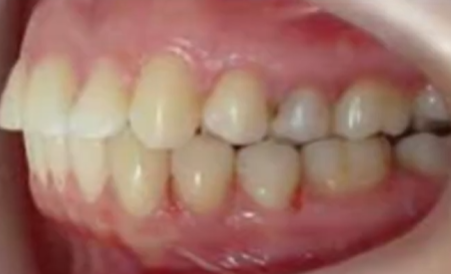
If space can be secured through detailed analysis,
then even without extraction, it is possible to create a beautiful alignment while preserving as many natural teeth as possible.
Of course, avoiding extraction is not always the answer.
If there is a serious lack of space and the teeth are forced into alignment, they may actually look more protruded.
What matters is finding a medical professional who listens carefully to the patient’s concerns and identifies the most appropriate balance for you between minimal reduction and non-extraction treatment.
In closing
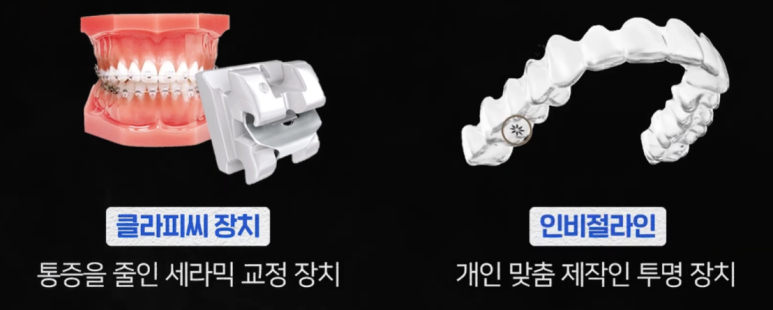
Wearing a retainer after orthodontic treatment may feel a little inconvenient.
But the health benefits of having straight teeth,
and the confidence that comes from being able to smile brightly again,
are life gifts greater than any inconvenience.
Your teeth are moving 조금씩, silently, even at this moment.
If you want to still enjoy meals as deliciously as you do now and smile with confidence 10 years from now,
please pay attention to the signals your teeth in the mirror are sending today.
You can put aside worries about overtreatment.
This has been Gangnam Blanche Dental Clinic, always providing honest answers from the patient’s point of view.
If you have any questions, feel free to ask in the comments anytime!
✅ Recommended reading
※ Because all orthodontic treatments may cause side effects such as root resorption and gingival recession depending on the individual, sufficient consultation with an orthodontic specialist is absolutely necessary.