"Doctor, do I really need to do it right away? It doesn’t hurt..."
This is something I hear very often in the clinic.
And I also know the thought that follows in your mind.
"I don’t know how much it will cost, and since it doesn’t hurt, I’ll just do it later."
Honestly, I understand. If it doesn’t hurt, it doesn’t feel urgent, and dental treatment can end up costing more than expected.
But as a dentist, let me be blunt.
With periodontitis, delaying treatment comes at a price. A fairly big one.

Not hurting is actually the problem
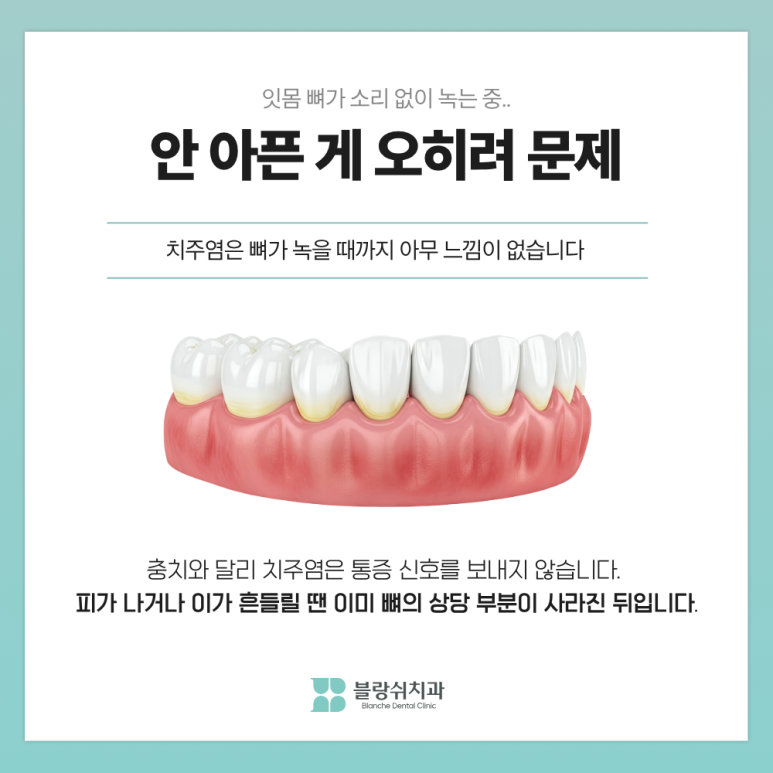
This is exactly why periodontitis is so scary.
Cavities hurt. They cause sensitivity, throbbing pain, and your body sends signals that something is wrong.
That’s why people go to the dentist.

Periodontitis is different.
While the bone supporting the gums is slowly being lost, most people feel nothing at all.
Even if there is some bleeding, people tend to brush it off as "just how it is," and even if the gums recede, they may think, "maybe it’s just age."
Then one day, the teeth start to loosen.
By the time that happens, a significant portion of the gum bone has already disappeared.
What happens if you treat it now?
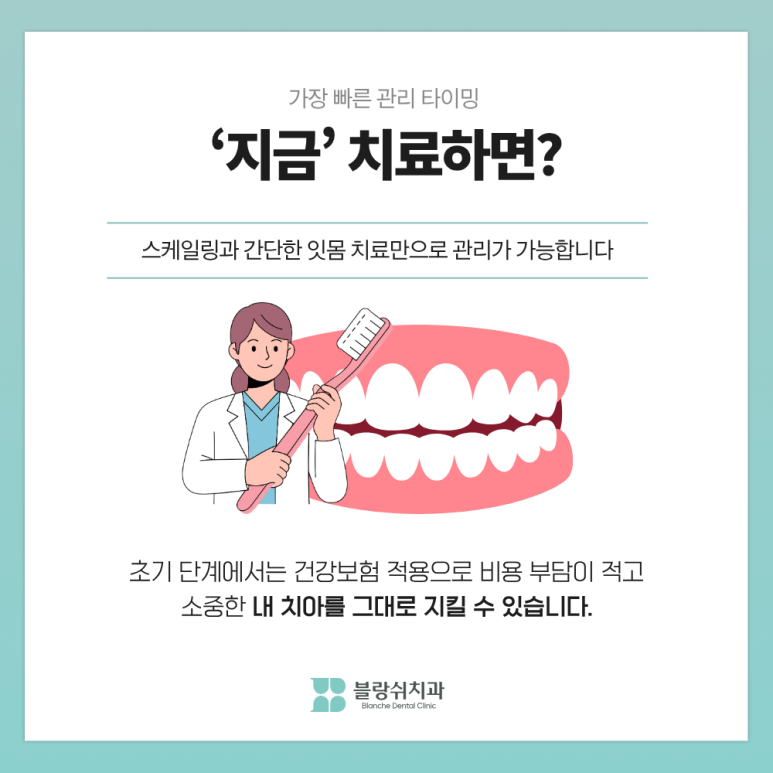
In the early stage of periodontitis, if the periodontal pocket (the space between the gums and teeth) is 4 mm or less, scaling and soft tissue treatment for the gums are usually enough to manage it.
The treatment period is short, and because health insurance may apply, the financial burden is relatively low.
Most importantly, if you catch it at this stage, you can keep the teeth you already have.
I often compare this to waterproofing a house. If you block a crack as soon as it starts, the repair cost is not very high.
But if water starts leaking, the wall gets wet, mold appears, and then you try to fix it, the story is already very different.
What happens if you treat it one year later?
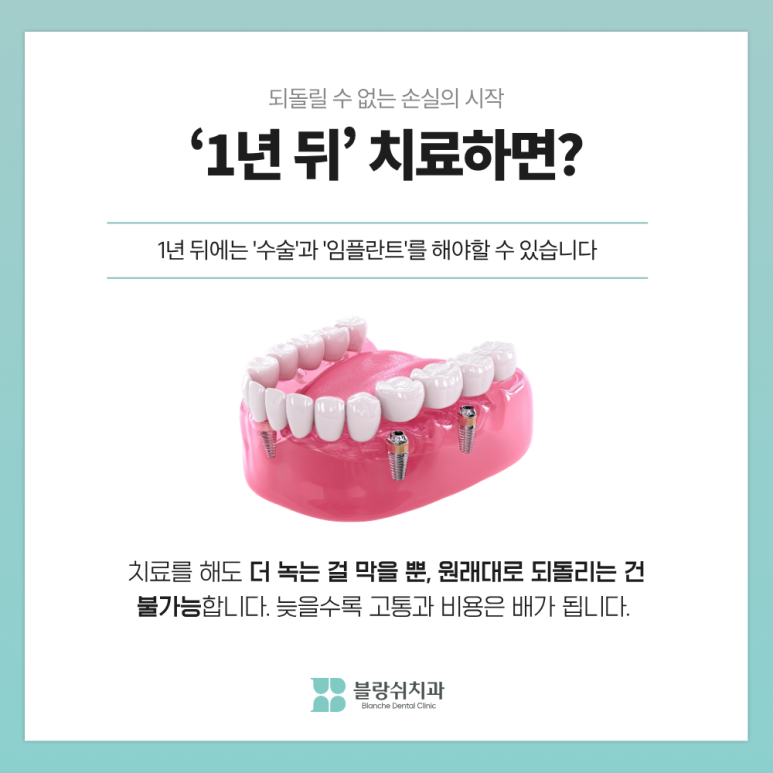
If the periodontal pocket depth goes beyond 5–6 mm, scaling alone is not enough.
Periodontal surgery, where the gums are directly incised to remove tartar, may become necessary.
Treatment takes longer, recovery is involved, and the cost goes up.
If it progresses further, the situation changes again.
When a lot of the gum bone has been lost, saving the tooth can become the more difficult option.
That is when you may need to consider an extraction followed by an implant.
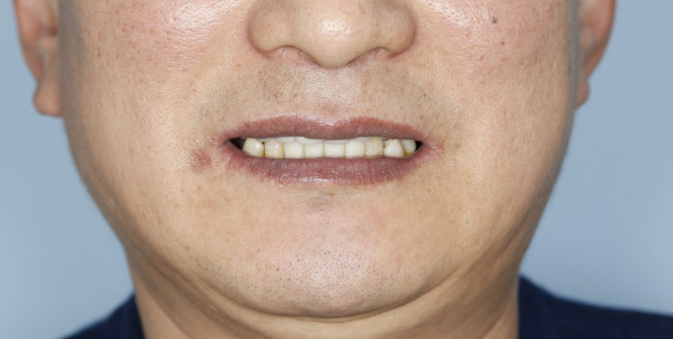
And one more thing. Once gum bone is lost, it does not grow back.
Treatment can stop it from getting worse, but it cannot restore it to how it was before.
That is the fundamental difference between periodontitis and cavities.
🏁 Comparison of periodontitis treatment costs and scope by stage
| Category | Early stage (periodontal pocket 4 mm or less) | Mid stage (periodontal pocket 5–6 mm) | Late stage (severe bone loss) |
|---|
| Main treatment | Scaling + root planing | Periodontal surgery (gum incision) | Extraction + implant |
| Health insurance | ✅ Covered in most cases | ⚠️ Partially covered | ❌ Implants are not covered |
| Estimated cost | Tens of thousands of won | Hundreds of thousands of won | Several million won |
| Treatment period | 1–2 visits | Several weeks to several months | Several months or more |
| Preservation of natural teeth | ✅ Possible | ⚠️ Depends on the case | ❌ High likelihood of extraction |
| Gum bone recovery | Progression can be stopped + maintained | Progression can be stopped (some loss remains) | No recovery, bone graft may be needed |
And one more thing. Once gum bone is lost, it does not grow back.
Isn’t brushing enough?
I get this question a lot as well.
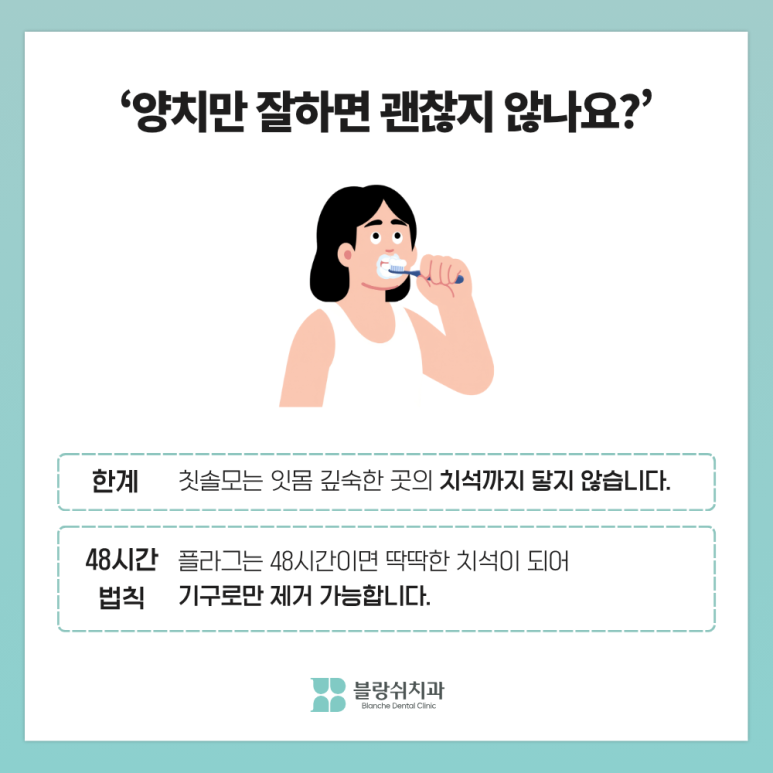
To be blunt, brushing alone has its limits.
A toothbrush can only reach the surface of the teeth.
Tartar lodged inside the gums and deep within periodontal pockets cannot be reached by toothbrush bristles, no matter how hard you try.
The same goes for dental floss or oral irrigators. They help, but they cannot remove tartar that has already hardened.
At first, tartar is soft plaque. At this stage, brushing can remove it.
But after 48 hours, it hardens. Once hardened, tartar can only be removed at a dental clinic with specialized instruments.
What you can do at home and what must be done at the clinic are different.
At home: slow down the rate at which new tartar builds up.
At the clinic: remove tartar that has already built up and check the condition of the gums.
These two have to go together for proper periodontitis management.
People who brush very well often think, "I’m taking good care of my teeth, so I should be fine," and end up coming in late.
They are indeed trying hard, but that cannot replace regular checkups.
So what stage am I in now?

In fact, this is the most important question.
You cannot tell periodontitis just by looking at it.
To know accurately, you need an X-ray to check the height of the gum bone and a direct measurement of periodontal pocket depth.
Not hurting does not mean everything is fine, and not bleeding does not mean it is not there.
This is why we recommend a checkup once a year.
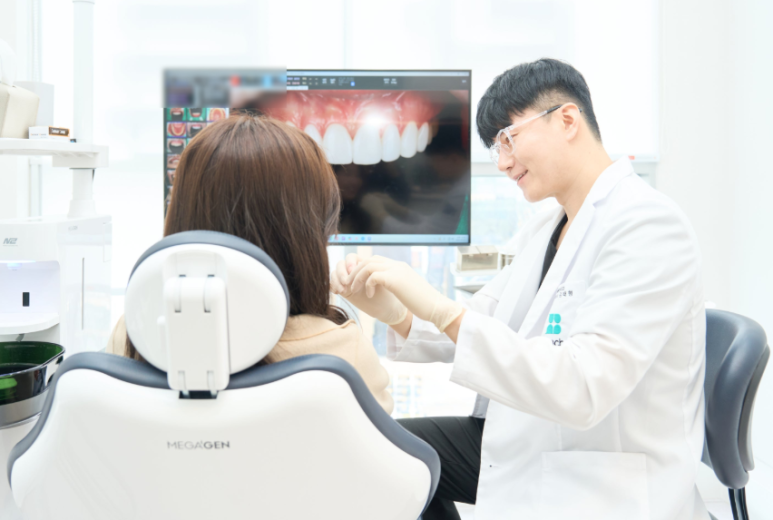
Checking once while there are no symptoms is the cheapest and fastest way to manage periodontitis.
If you come in only after you start feeling it, it is already too late.
Just check it when it doesn’t hurt. That’s all.
This was Gangnam Blanche Dental Clinic. Thank you.
✅ Other recommended reading