Sometimes, when you look in the mirror, you notice that one corner of your mouth sits lower than the other, or in photos your face seems noticeably tilted to one side.
Once you start paying attention to it, you keep noticing that part every time you look in the mirror.
If it is visible enough for you to notice on your own, it often means it has already progressed to some extent.
And there is almost always a common trait hidden in that progression that the person themselves does not realize.
Today, I’ll go through that common trait of facial asymmetry one by one.
Why facial asymmetry gets worse over time

Facial asymmetry itself exists to some degree in everyone. Very few faces are perfectly symmetrical on both sides.
The problem is when there is a habit of continuously stimulating only one side over time.
If the chewing muscle, called the masseter, is used repeatedly on only one side, that side becomes thicker and firmer.
The other side is used less, so the muscle atrophies and becomes thinner.
When this builds up over several years or more than ten years, the difference affects not only the muscles but also the development of the jawbone itself, progressing into skeletal asymmetry.
That is why the feeling of “I was a little asymmetrical to begin with, but it seems worse lately” is often actually correct.
It is the result of accumulated force from the muscles pushing and pulling on the skeleton.
The common traits leave traces inside the mouth

When patients come in for a facial asymmetry consultation, the first thing I look at is tooth wear.
That is because which side a patient mostly chews on, and whether they have a teeth-grinding habit, is recorded directly on the teeth.
| Common habit | Signs seen inside the mouth | Effect on the face |
|---|
| Unilateral chewing | Heavy wear on one side’s molars, with the other side wearing down less | Increased volume on the chewing side, sagging on the opposite side |
| Teeth grinding and clenching | Flat wear across the molars, tiny cracks in the teeth | Masseter hypertrophy creates a more angular face, widening of the jawline |
| Habit of resting the chin on one hand | Left-right differences in temporomandibular joint movement, altered opening path | Jaw shifts to one side, misalignment of the lower jaw line |
| Sleeping mostly on one side | Pressure on one side of the gums, asymmetric direction of tooth movement | Flattening of the cheekbone and cheek on the pressed side, differences in left-right swelling |
Unilateral chewing, meaning chewing on only one side, is the most common. If one side’s molars are unusually flat while the other side remains relatively sharp, it is usually unilateral chewing. Patients often are not aware of it at all and say, “Really? I thought I was chewing evenly on both sides.”
We also look at teeth grinding and clenching. Teeth grinding during sleep is something most people do not realize they have, but if the molar occlusal surfaces are worn flat overall, if there are tiny cracks in the teeth, or if the jaw feels stiff in the morning, it is worth suspecting.
In people who grind their teeth, the masseter muscles can become abnormally enlarged, making the face look more square. If one side develops especially strongly, it can directly lead to facial asymmetry.
Posture habits also add up
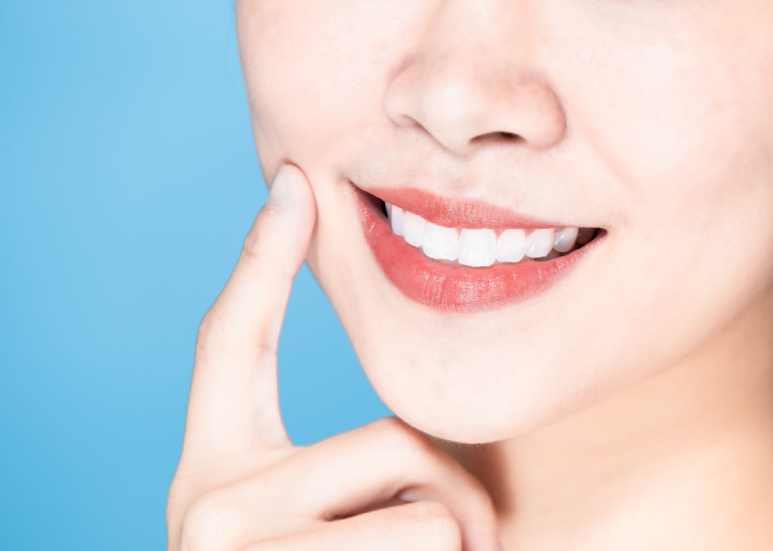
Beyond chewing, posture habits also have a major impact. These include resting your chin on one hand, sleeping on your stomach or only on one side, and even tilting your head to one side while looking at your smartphone.
These postures place asymmetric load on the temporomandibular joint and neck muscles throughout the day. Since sleeping posture lasts 7 to 8 hours, its influence is even greater.
When I ask in the clinic, “Which side do you sleep on?”, most people who say, “Well… I think I sleep more on my left side,” are able to confirm that the opposite side of the face is being compressed.
Why massage and meridian treatments have limits
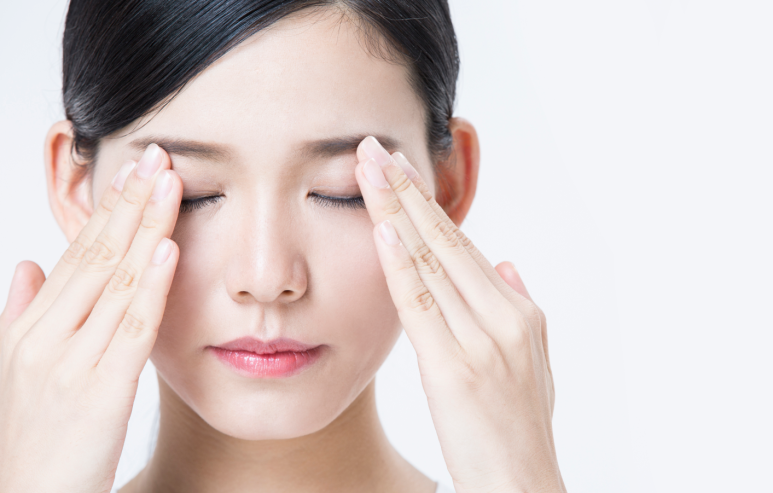
Many people come in saying they received massage or meridian treatments for months because of facial asymmetry, but it quickly returned to how it was before. The reason is simple. Even if the muscles are relaxed, if the underlying causes—unilateral chewing, teeth grinding, and occlusal imbalance—remain the same, the face will be pulled back to one side again.
To really address it, you first need to find out why one side’s muscles are being stimulated repeatedly. Only by checking the occlusion, jaw joint position, and tooth wear pattern in a three-dimensional way can you identify the cause, and that requires a panoramic X-ray and direct examination inside the mouth. That is why, in many cases, it is best to have facial asymmetry examined first at a dental clinic.
If you also have clicking sounds or pain in the jaw joint, please refer to this post as well.
→ 「Gangnam TMJ Dental Clinic, treatment available for sharp pain when chewing, etc.」
There is a reason facial asymmetry gets worse, and that reason is repeated every day without the person realizing it. Relaxing the muscles can help, but unless you first find the cause of the one-sided pulling, it will eventually return.
If you have any further questions, please feel free to leave a comment.
This was Banpo Blanche Dental Clinic. Thank you.
✅ Recommended related posts