"Doctor, my tooth was hurting so much for a few days,
but suddenly it got better yesterday. Is it a cavity?"
I’m Kim Tae-hyung, the chief dentist at Blanche Dental Clinic.
When treating cavities or nerve-related problems, I hear this several times a week.
Many people first think of cavities when they get a toothache. But if it’s a cavity, that’s actually the better outcome.
When we take an X-ray, it’s not uncommon to find that the inflammation has gone much deeper than the cavity itself and has reached the pulp.
The bigger problem is the part where they say, “It suddenly got better yesterday.”
That may not mean the pain is gone; it can be a sign that the nerve is no longer holding out and is dying.
As a dentist, to be blunt, a tooth that hurt and then stopped hurting is actually something you should get checked right away.
Today, I’ll organize the exact flow of what I use to decide, in the clinic, when I think, “This is too late.”
Pulpitis is the last warning signal sent by the nerve inside the tooth

The outside of a tooth is covered by hard enamel, but inside is a soft tissue called the pulp.
It’s where blood vessels and nerves gather; put simply, it’s like the heart of the tooth.
When a cavity is only on the surface, it doesn’t affect the pulp.
But if left alone, bacteria can break through the enamel, pass through the dentin, and invade the pulp.
When that happens, the pulp’s inflammatory response is called pulpitis.
In the clinic, when we take an X-ray, there are many cases where I think, “You should have come in much earlier than this...”
Most people just put up with it when it’s only a mild sensitivity.
That period of “it’s bearable” is actually the only time you can still save the tooth.
Reversible pulpitis vs. irreversible pulpitis: why this matters
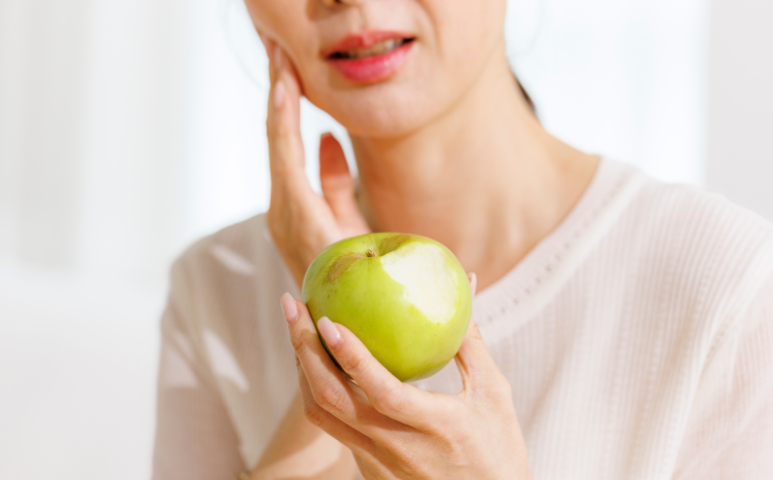
Pulpitis is broadly divided into two stages: reversible pulpitis and irreversible pulpitis.
Reversible pulpitis is the stage where you feel a sharp twinge when the tooth is exposed to cold water or sweet foods.
Once the stimulus is removed, the pain quickly goes away.
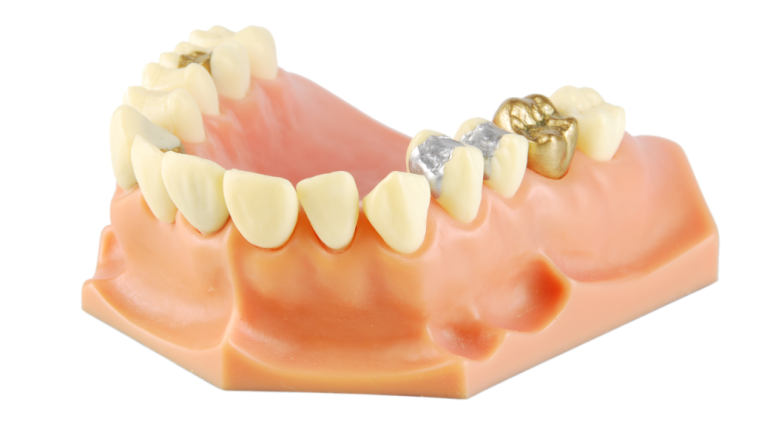
If you come in at this stage, we can remove only the cavity and restore it with a filling or an inlay, preserving the nerve.
For a posterior tooth filling, it’s around 100,000 KRW, and an inlay is around 350,000 KRW. Of course, this can vary depending on your oral condition.
Irreversible pulpitis is a completely different situation.
It throbs even when you haven’t eaten anything, gets worse when you lie down at night, and painkillers don’t work very well.
When you lie down, blood flows more toward the head, increasing pressure inside the pulp, which is why it becomes especially severe at night.
At this stage, the nerve has already suffered irreversible damage, so root canal treatment is necessary,
and after that, a crown must also be placed. A zirconia crown adds about 500,000 KRW.
From the perspective of seeing patients every day, the difference in treatment outcomes between these two stages is really significant.
| Category | Reversible pulpitis | Irreversible pulpitis |
|---|
| Pain pattern | Sharp sensitivity to cold water, sweet foods, etc. | Throbbing even without a trigger; worse at night |
| After the trigger is removed | Pain disappears immediately | Pain continues (minutes to hours) |
| Painkiller effect | Effective in most cases | Often not effective or only temporary |
| Nerve condition | Recoverable | Not recoverable (irreversible damage) |
| Treatment | Remove cavity + filling/inlay | Root canal treatment + crown |
| Estimated cost | Around 100,000–350,000 KRW | Root canal treatment + crown, 500,000 KRW or more |
Symptoms of acute pulpitis: “It hurt, then suddenly it didn’t” is the most dangerous sign
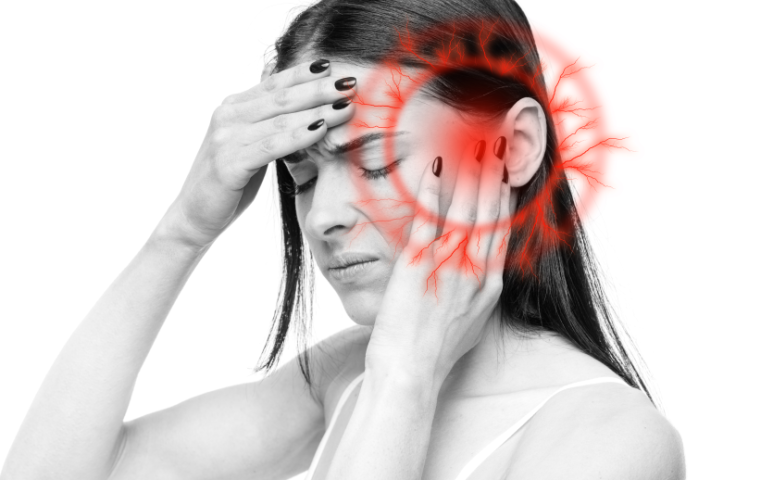
Acute pulpitis is when irreversible pulpitis progresses rapidly.
It hurts so much that you can’t sleep all night, and the pain can spread to the ear and temple so much that even you can’t tell exactly which tooth is causing it.
But sometimes this severe pain suddenly disappears.
Patients may feel relieved, but in reality the nerve has necrosed and can no longer send pain signals.
Think of it as a fire alarm ringing at home and then the alarm itself burning up. The fire is still burning.
If this condition is left untreated, inflammation can spread to the tip of the tooth root and develop into periodontitis or a periapical abscess,
and if it destroys the jawbone around the tooth, extraction becomes necessary.
The standard I use is visible on a single X-ray
If you say, “I don’t know whether it’s just sensitivity or whether I need root canal treatment,” I first look at an X-ray.
I need to check directly how close the cavity has come to the pulp and whether there are signs of inflammation at the root tip
before I can determine whether it is reversible or irreversible.
I also perform a simple test called a pulp vitality test.
It involves applying a cold stimulus to the tooth and checking the response.
If the pain disappears as soon as the stimulus is removed, it is likely reversible; if the pain continues even without the stimulus, it is likely irreversible.
It may seem complicated, but the diagnosis itself is over faster than you might think.

What matters is that it is almost impossible for patients to make this judgment on their own.
Whether cold sensitivity is just simple sensitivity, reversible pulpitis, or already beyond that is something you can only know by checking directly.
If you’re curious about how treatment changes once a cavity gets deep, please refer to this post as well.
→ 「Do cavities always need to be drilled and crowned?」
Pulpitis is not a condition that gets better just because you endure it.
If you have symptoms of pulpitis, simply holding out is not the answer.
If it’s confirmed at the reversible stage, the treatment may end with a filling; if it progresses to the irreversible stage, you may need root canal treatment and a crown.
If you have even one tooth that feels sensitive right now, the most important thing is to check what stage it is at.
A single X-ray can tell you, right then and there, what that bearable sensitivity actually means.
This was Blanche Dental Clinic in Gangnam. Thank you.
✅ Good additional reading