"Doctor, this is a bit unrelated, but...
Lately my tongue keeps stinging. Could it be because I’ve been brushing too hard when I brush my teeth?"
I’m Kim Tae-hyung, head dentist at Blanche Dental Clinic.
Many people bring up this question on the side when they come in for scaling or cavity treatment.
It could be from brushing. But when we actually look inside the mouth, there are often other causes that have nothing to do with brushing—such as an old restoration scratching the tongue, a sharp surface from tooth wear irritating it, or the mucosa becoming sensitive because of dry mouth.
As a dentist, I can tell you that the suspected cause of tongue pain changes depending on where it hurts.
Today, I’ll organize that 기준 in the same way I explain it in the clinic.

Why dentists look at tongue pain
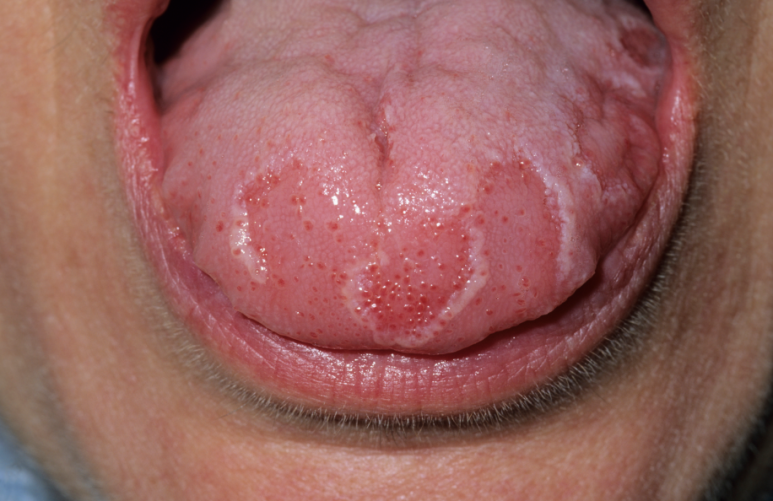
If your tongue hurts, it’s easy to think there must be a problem with the tongue itself.
But in the clinic, when we look directly into the mouths of people complaining of tongue pain, it’s surprisingly common for the tongue itself to show no abnormality.
Medically, this is called glossodynia. It refers to pain felt even though there is no visible abnormality in the tongue or oral cavity.
So what causes it? Common reasons include the edge of an old crown constantly scratching the tongue, a worn molar with a sharp area irritating the side of the tongue, or dry mouth making the mucosa more sensitive.
These causes can only be found in a dental clinic, where the teeth, restorations, and bite condition can be examined directly.
The suspected cause differs by location
When a patient says, "My tongue hurts," I first ask, "Where does it hurt?"
That’s because the direction of examination changes completely depending on which part of the tongue hurts.
| Pain location | Common causes | Typical symptoms | First department to visit |
|---|
| Tip of the tongue | Glossodynia, stomatitis, stress, dry mouth | Burning, tingling, taste changes | Dentistry |
| Side of the tongue | Friction from teeth/restorations, oral lichen planus | Recurrent pain in the same spot, ulceration | Dentistry |
| Root of the tongue | Glossopharyngeal neuralgia, inflammation around the tonsils | Sharp pain when swallowing, radiation to the ear | Dentistry + Otolaryngology |
| Under the tongue | Sialolithiasis (salivary stone), sublingual gland problems | Swelling and worsening pain during meals | Dentistry (oral surgery) |
To add a little more detail: if the tip of the tongue feels burning or tingling, I first consider glossodynia.
It often appears along with stress, dry mouth, and hormonal changes, and it is especially common in women in their 40s and 50s.
Many people go around hearing only, "It’s nothing serious," because tests show no visible abnormality.

On the other hand, if the side of the tongue repeatedly hurts, we can suspect physical irritation from teeth or restorations.
When we look inside the mouth, it is often the inner surface of a molar that has become sharply worn and keeps scratching the tongue, and most patients have no idea.
Pain at the root of the tongue is a little different. If there is a sharp sensation when swallowing, we should consider a problem involving the glossopharyngeal nerve, and because inflammation around the tonsils may also be involved, it may be better to see both dentistry and otolaryngology in such cases.
Simply put, if you do not know where to go, it is most efficient to first get checked at a dental clinic, and if it is judged not to be an oral cause, we can then refer you to another department.
When the cause is not the tongue itself, but the oral environment
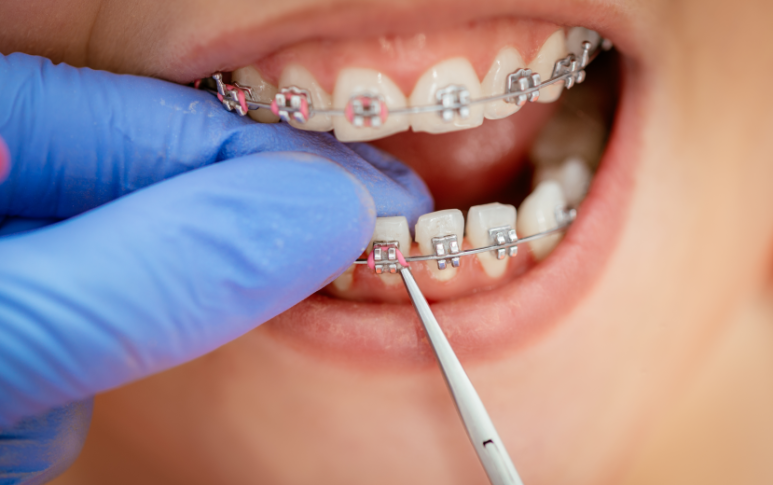
Among people who come in with tongue pain, cases where there is actually a lesion on the tongue are, in fact, the minority. In most cases, the cause is hidden somewhere in the oral environment.
The most common cause is irritation from restorations. The edge of an old crown or denture may have become rough, or the fit of the restoration may be poor, causing tiny injuries every time the tongue touches it, leading to chronic pain. The patient feels as though "the tongue hurts," but the real cause is the crown.
Dry mouth is also important. When saliva decreases, the entire oral mucosa becomes more sensitive, and the tongue tends to react most sensitively. Medication side effects from drugs such as antihypertensives and antihistamines often reduce saliva production, so during consultation we always check which medications the patient is currently taking.
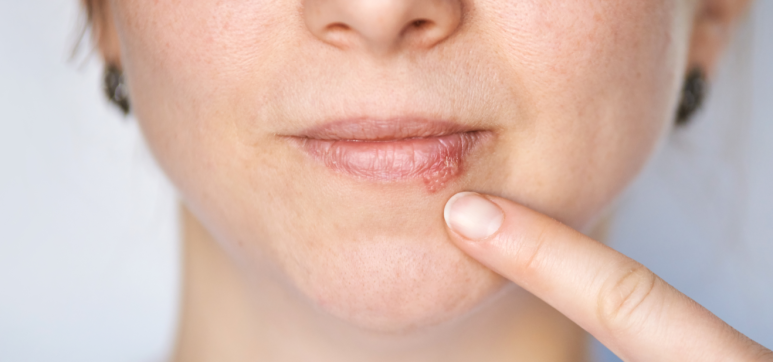
That is why, when evaluating tongue pain, we do not look only at the tongue. We also need to check the condition of the teeth, the fit of restorations, the bite, whether there is dry mouth, and what medications are being taken. This comprehensive examination is also why a dental clinic can assess it properly.
If you are concerned not only about glossodynia but also about symptoms involving the gums or oral mucosa, please refer to this post as well.
→ 「3 symptoms you should never ignore when your gums are swollen」
However, there is one thing I must emphasize.
If an ulcer on only one side of the tongue does not heal for more than two weeks, if a hard lump can be felt, or if there is abnormal sensation on only one side of the tongue, you must be examined at a place where a biopsy can be performed.
Although rare, early oral cancer can also begin with tongue pain.
Such changes are difficult to notice on your own. That is why regular dental visits are important.
If you check your tongue and oral mucosa along with scaling or cavity screening, you can catch changes early that you might otherwise overlook. In the clinic, abnormalities on the tongue are most often discovered during routine checkups.
Because tongue pain has so many possible causes, you need to look at where it hurts, when it started hurting, and the condition of the oral environment together in order to get an accurate answer.
This has been Gangnam Blanche Dental Clinic. Thank you.
✅ Helpful related posts