I’m Kim Tae-hyung, chief director of Banpo Blanche Dental Clinic.
One of the things people bring up carefully at the end of a visit when they come in for scaling or gum treatment is bad breath.
These days, many people think about it a lot—like when they hold their breath and check it before taking off a mask, or when they start paying attention to the other person’s expression when speaking up close.
A lot of people assume that this means they’ve neglected oral care, but in many cases, they’re brushing properly and even using mouthwash, yet still have bad breath.
Many people guess that it must be because of a weak stomach or because of food, but speaking honestly as a dentist, that guess is usually off the mark.

90% of the causes of bad breath are in the mouth, not the stomach
This is the most common misconception we correct at the dental clinic.
The idea that bad breath is caused by a weak stomach or poor digestion.
When I explain it medically, many people are surprised to learn that gas coming up from the stomach accounts for only about 5–10% of bad breath cases.
That’s because there is a sphincter between the esophagus and the stomach that is normally closed, so it is actually uncommon for gas from the stomach to rise all the way up to the mouth.

In fact, more than 90% of the rest is caused by volatile sulfur compounds (VSCs) produced in the mouth.
These are gases created when oral bacteria break down proteins,
and depending on where those gases are produced, the cause of bad breath differs.
So in the end, knowing what causes these gases to appear is important, and the three points I’ll cover today are exactly that.
First cause: coating on the back of the tongue

The most common and most overlooked cause is tongue coating.
When I look into the mouths of patients who complain of bad breath, seven or eight out of ten have a thick coating built up on the back of the tongue.
The surface of the tongue is covered with small bumps like a carpet, and food debris and bacteria get caught between them, producing sulfur compounds. In particular, the back one-third of the tongue is hard for a toothbrush to reach, and the self-cleansing action of saliva is weaker there, making it the main area where coating builds up. Even people who brush their tongue usually only clean the front part.
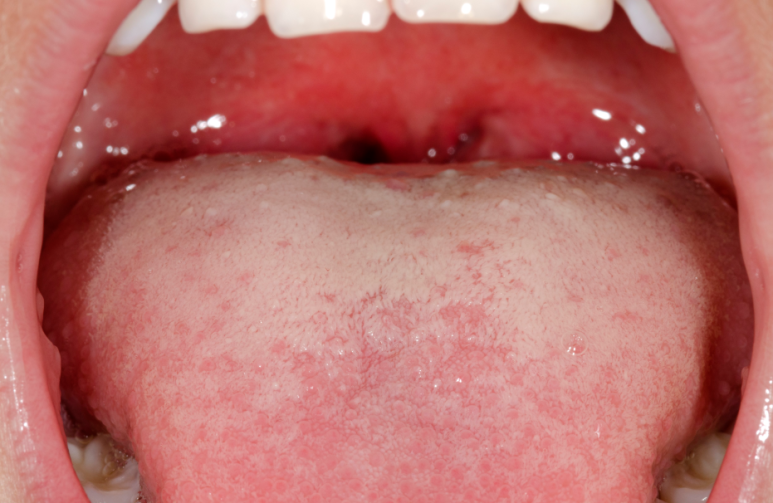
With a tongue cleaner (scraper), gently scraping from front to back just 3–4 times is enough for many people to notice an immediate reduction in bad breath. However, if you scrape too hard, you can damage the surface of the tongue and make it even more sensitive, so be careful.
Second cause: periodontitis developing between the gums

The second cause is a gum problem. If you have periodontitis, the periodontal pockets between the gums and teeth become deeper, creating an oxygen-poor environment inside them. The gas produced when anaerobic bacteria—bacteria that thrive in low-oxygen environments—break down proteins is the smell we recognize as bad breath.
Periodontitis-related bad breath has certain characteristics. It may feel fine for a short time right after brushing, but it comes back after one or two hours, and in many cases, the person doesn’t notice it themselves while a close family member notices first. If you see blood when brushing, your gums swell from time to time, or your teeth feel slightly loose, there is a high chance of periodontitis.
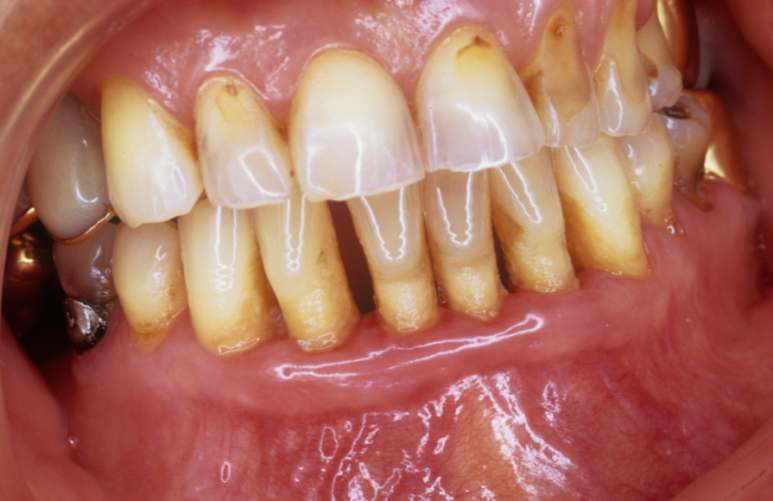
In this case, brushing your tongue and brushing diligently will not solve the problem. If the periodontal pocket depth exceeds 5 mm, that area is beyond the reach of a toothbrush, so the bad breath can only be controlled by cleaning it out through scaling and gum treatment. In fact, just one X-ray and a periodontal pocket measurement are often enough to tell whether your bad breath is caused by your gums or not.
Third cause: untreated cavities and old restorations

The third case is when a bacterial nest has formed somewhere in the mouth.
Deep cavities, teeth that were treated with root canal therapy but not properly maintained, or tiny gaps around crowns or restorations that are more than 10 years old are examples.
When food debris and bacteria settle in these spaces, no matter how diligently you brush, the toothbrush cannot reach inside them.
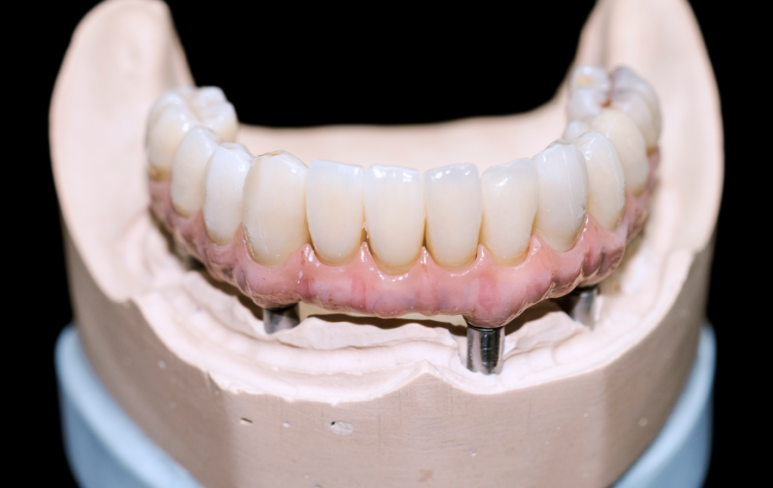
In particular, many patients in their 50s and older develop bad breath because older restorations wear out over time.
A tooth that the person thinks is perfectly fine may, on an X-ray, have decay progressing underneath the restoration.
In that case, the bad breath can only be controlled by finding the tooth causing the problem and treating it again.
Three at-home self-checks for bad breath

Here are a few simple tests that can help you estimate which of the three causes is closest to your own case.
First, the back-of-the-hand lick test.
Lick the back of your hand once with your tongue and let it dry for about 30 seconds, then smell it.
The smell there is the closest to your own breath.
Second, the floss smell test.
Insert floss between your teeth and pull it out, then smell the floss.
If a strong smell comes from floss used in a specific area, there is a high chance of decay or a gum problem there.
Third, check the color after using a tongue cleaner.
Brush your tongue once and look at the color left on the cleaner.
If a strong yellow or brown color comes off, that means tongue coating has built up.
You can get a rough idea of the cause of your bad breath by seeing which of these three gives the strongest signal.
If you’re more concerned about tongue coating itself, please also refer to this post.
In summary,
The cause of bad breath almost always starts in one of these three areas: the tongue, the gums, or the teeth/restorations.
Many people assume it is due to the stomach and take stomach medicine,
but in the meantime, the real cause often continues to progress.

Once you know the cause, how to manage it next is also important, right?
In the next post, I’ll organize in an easy-to-see way which toothpaste you should choose for daily use before visiting the dentist,
based on the ingredient standards I actually look at as a dentist, to help manage bad breath.
In fact, the cause of your bad breath is something a dentist who examines you directly can diagnose most simply.
So when you go for your next scaling appointment, I recommend asking about this lightly as well, and if you have any further questions, feel free to leave a comment and I’ll answer in detail.
This has been Banpo Blanche Dental Clinic, supporting your bright smile. Thank you.
✅ Good posts to read together