Causes of Gum Inflammation
3 Easily Overlooked Causes
Hello.
This is Kim Tae-hyung from Blanche Dental Clinic.
Today, I would like to talk about gums.
In fact, when I bring up gum health in the treatment room,
it is often because patients came in
for a reason unrelated to their gums,
and the subject comes up during the visit. ^^;
While discussing another treatment,
I often find myself saying first,
“By the way, what about this gum area...?”
Patients often tell me
that they knew their toothbrush sometimes had blood on it.
But most of them did not realize
that it had been happening in the same spot for several years.
Gum inflammation is not a condition that brings people in because it hurts;
it is a condition that brings them in late because it does not hurt.
This is what I find most unfortunate.
I often think that if they had come just a little earlier,
treatment could have been much simpler.
Today, I will explain three causes of gum inflammation
that patients often overlook,
and why that inflammation eventually leads to
the problem of receding gums.
I will do my best to help you avoid having to visit the dentist whenever possible. ㅎㅎ
- The First Cause of Gum Inflammation,
the Gumline That the Toothbrush Bristles Merely Brush Past
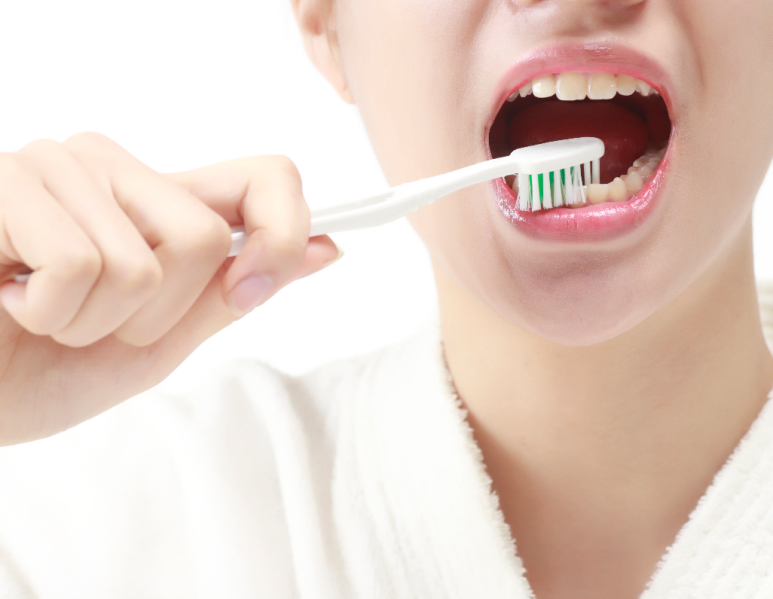
“I really do brush diligently!”
I hear this very often.
And in most cases, it is true. ㅎㅎ
The problem is not force, but positioning.
The tips of the toothbrush bristles do not easily reach
the 1–2 mm groove where the teeth and gums meet.
Plaque left in this groove
combines with minerals in saliva and hardens into tartar
within just a day or two.
Once tartar has hardened,
it will not come off no matter how diligently you brush,
and its rough surface becomes a place
where bacteria can attach more easily.
Tilt the toothbrush bristles 45 degrees toward the gums,
place them lightly along the groove,
and try cleaning with short vibrating motions rather than large movements.
- The Second Cause of Gum Inflammation,
the Habit of Avoiding Areas That Bleed
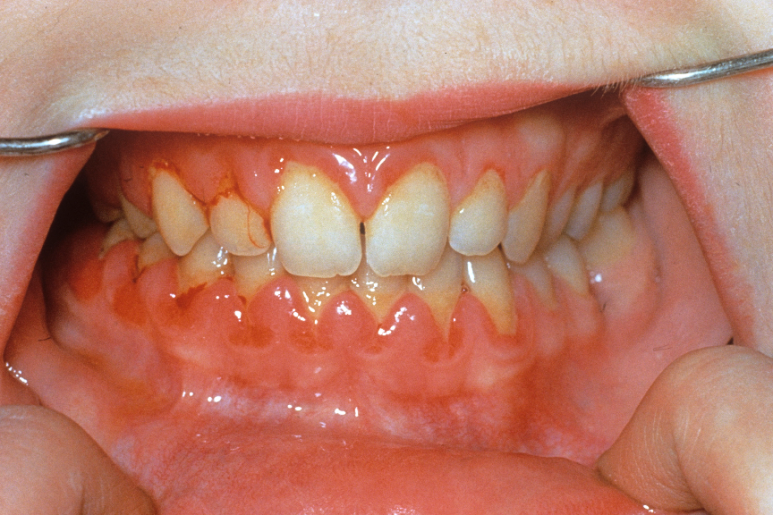
When an area bleeds, you may become nervous
and gently brush over that spot instead.
I probably would have done the same. ^^;
However, bleeding is not a sign that you have been injured;
it is a sign that inflammation is already present.
The inflammation can settle only when the bacterial film causing it is removed,
but if the area is continually avoided,
the inflammation continues to develop there.
The opposite can also happen.
Smoking constricts the blood vessels in the gums
and reduces the bleeding itself,
so the gums may not bleed easily even as inflammation progresses.
The absence of bleeding does not mean
that your gums are healthy.
- The Third Cause of Gum Inflammation,
Areas the Toothbrush Bristles Cannot Reach
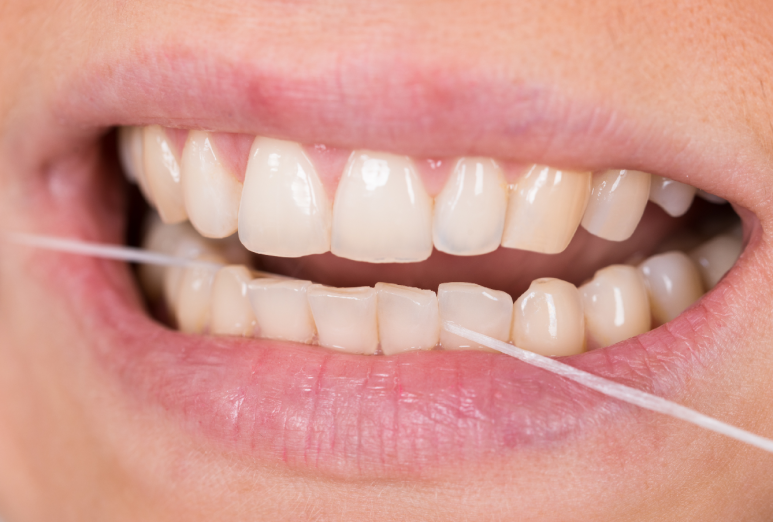
The space between teeth
is narrower than the thickness of a toothbrush bristle.
It is not an area that can be solved simply by brushing for longer.
Floss and interdental brushes are not optional;
they are tools for cleaning areas the toothbrush cannot reach.
The same applies around old dental restorations.
If plaque accumulates on tiny uneven areas that develop over time,
the gum around that particular tooth may become
especially swollen and prone to bleeding.
If gum inflammation repeatedly occurs around one specific tooth
rather than throughout the mouth,
you should examine the structure first rather than your habits.
- How Gum Inflammation
Leads to Gum Recession
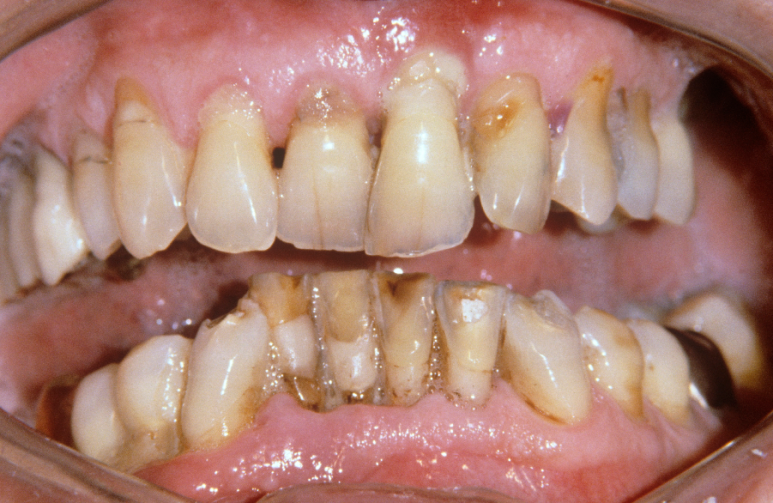
If the inflammation remains only on the surface of the gums,
at the gingivitis stage,
there may be a chance of recovery
when the cause is eliminated.
The problem begins when the inflammation moves deeper into the gums.
As toxins released by bacteria
and the body’s immune response to counter them
work together, the jawbone that supports the teeth
gradually becomes resorbed.
This is where many people misunderstand the situation.
Gums recede not because the gums themselves are weak,
but because the bone supporting them underneath has decreased.
As the area available to cover the teeth becomes lower,
the gums settle downward as well.
This can cause tooth sensitivity, make the teeth look longer,
or create black triangles between the teeth.
Once lost, the supporting bone is difficult
to naturally grow back.
Therefore, the goal of gum treatment
is not to restore what has already been lost,
but to protect the bone that remains
from further loss.
However, scaling is not the whole treatment.
Tartar attached deep beneath the gums
cannot be reached with surface scaling alone,
so treatment below the gumline may be necessary.
Sensitivity after scaling is also often
a temporary reaction caused by the roots,
which had been covered by tartar, becoming exposed,
rather than by the teeth being worn down.
- Signs to Check for Gum Inflammation Now

Bleeding repeatedly occurs in the same spot
Your mouth feels sticky in the morning and odor concerns you
Your teeth look longer or feel more sensitive than before
Bleeding continues for more than two weeks after scaling
If even one of these applies to you,
it is difficult to assess the situation by changing your habits alone.
The amount of supporting bone that remains
cannot be seen from the outside.
It does not have to be at Blanche Dental Clinic.
Please visit a nearby dental clinic and
have an X-ray taken to check the bone level at least once.
In Closing
The causes of gum inflammation
are not found in anything extraordinary.
The gumline the toothbrush brushes past,
the spot you avoided because it bled,
and the gaps the toothbrush cannot reach.
They are in the places you pass over every day.
If you have been putting it off,
please feel free to leave a comment
about which area concerns you.
I will look at it myself and respond.
This has been Gangnam Blanche Dental Clinic.
Thank you.
Frequently Asked Questions
Q. What is the most common cause
of gum inflammation?
A. The most common case is when plaque left
at the border where the gums and teeth meet
hardens into tartar and causes inflammation.
Q. Why does gum inflammation occur
even though I brush diligently?
A. In many cases, it is not a matter of force
but of positioning.
The toothbrush bristles have difficulty reaching
the gumline and the spaces between teeth.
Q. When my gums bleed,
should I avoid brushing that area?
A. No.
Bleeding is a sign of inflammation,
so the bacterial film causing it must be gently removed
for the inflammation to settle.
Q. If my gums do not bleed,
does that mean I do not have gum inflammation?
A. Not necessarily.
When the blood vessels constrict due to smoking or other factors,
bleeding may not occur easily even when inflammation is present.
Q. Why do the gums recede
if gum inflammation is left untreated?
A. As the inflammation deepens,
the supporting bone around the teeth is resorbed.
The gums settle downward along with the decrease in bone height.
Q. Will receded gums grow back?
A. Lost supporting bone is difficult
to recover naturally.
Protecting the bone that remains should be the priority.
Q. Can gum inflammation be resolved
with scaling alone?
A. Surface tartar can be removed,
but tartar deep beneath the gums may require separate gum treatment.
This should be determined after an examination.