Impacted, Horizontally Positioned Wisdom Tooth Extraction,
Cases Where Extraction May Not Be Necessary
Hello.
I am Kim Tae-hyung,
Director of Banpo Blanche Dental Clinic.
When looking at a panoramic X-ray, if you hear,
“Your wisdom tooth is lying sideways,”
you immediately start thinking,
“I guess I have to get it extracted.”
Many people who come in for a wisdom tooth extraction consultation
have already been told elsewhere that it should be removed.
But I often say this in the examination room:
“ You don’t need to have this extracted right now. ^^ ”
Today, I would like to explain directly
which cases require impacted wisdom tooth extraction
and which cases do not. ^^

- A Wisdom Tooth Being Lying Down
Does Not Automatically Mean
It Requires Extraction
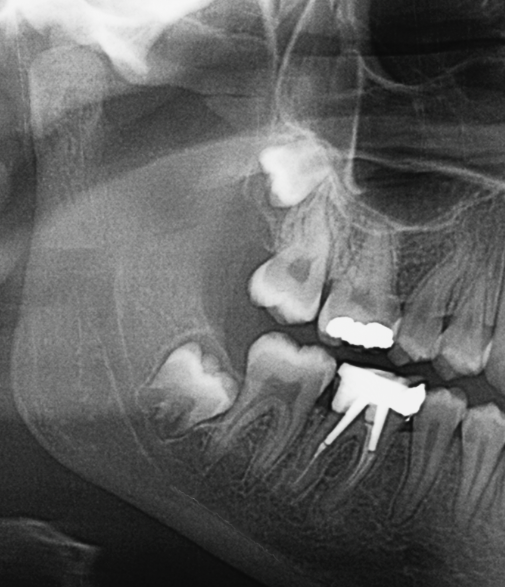
Let me start with the conclusion.
Wisdom tooth extraction is determined not by the angle at which the tooth is lying,
but by whether it is touching the adjacent tooth.
The wisdom tooth itself
has actually done nothing wrong.
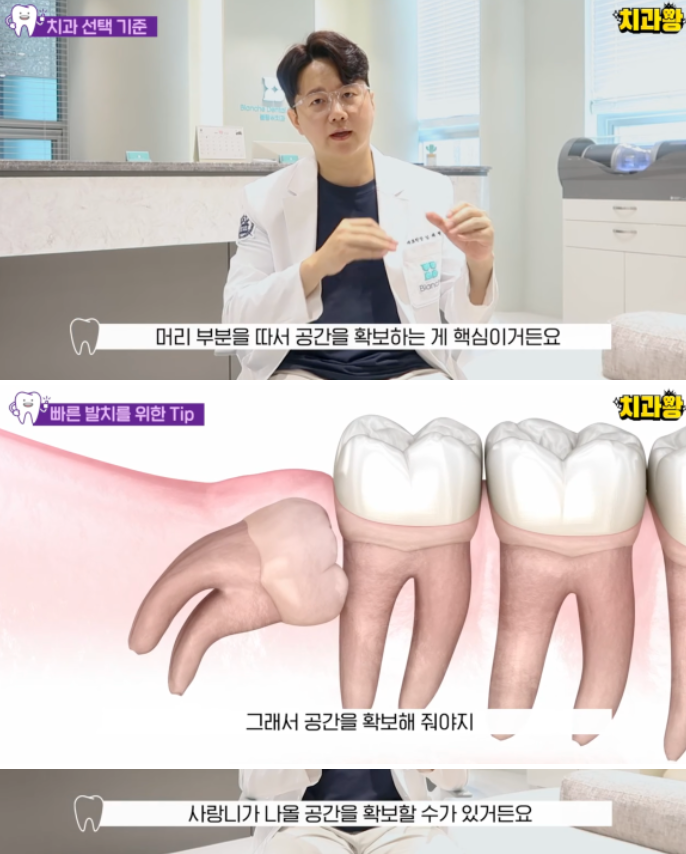
The problem always begins
when a space that a toothbrush cannot reach forms
between the wisdom tooth and the molar in front of it,
and food becomes trapped in that space.
Once that space forms,
the valuable molar in front is often damaged first.
Conversely, if there is no such space,
there is no immediate reason for concern even if the wisdom tooth is lying sideways.
- Three Cases Where Wisdom Tooth Extraction
May Not Be Necessary
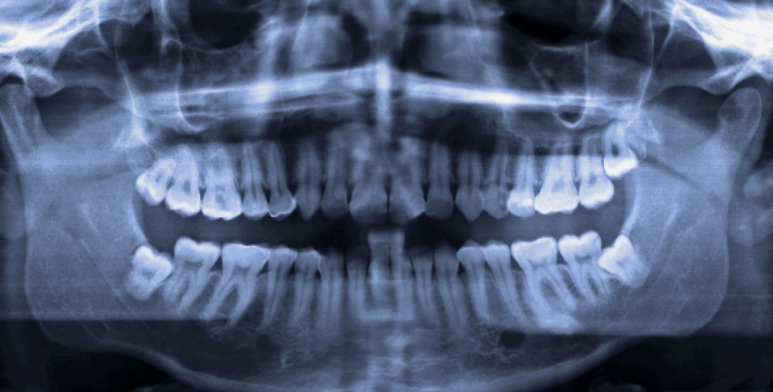
First, when the wisdom tooth is completely buried within the jawbone.
If it has not emerged into the mouth at all
and is not touching the adjacent tooth,
there is no space for bacteria to remain.
With this type of wisdom tooth,
the process of removing it may actually disturb more of the jawbone.
Second, when the wisdom tooth has grown straight
and the upper and lower teeth meet properly.
If a toothbrush can reach behind the wisdom tooth easily
and it is properly used for chewing,
it may be better to keep using it
while caring for it like a regular molar.
Third, when the wisdom tooth’s roots are close to the nerve canal
but there is no pain or inflammation.
When the roots are close to the nerve canal in the lower jaw,
the possibility of altered sensation around the lips or chin during extraction
also needs to be considered.
In such cases, the benefits of extraction
are weighed against the expected burden,
and the tooth may be monitored regularly.
However, none of these three situations
can be determined simply by looking inside the mouth.
Wisdom teeth that are only slightly covered by the gums
are often found on X-rays to be pushing against the front molar. ^^;
- If You Notice These Signs,
Do Not Put Off Wisdom Tooth Extraction
Look inside your mouth in the mirror
or check the area around the wisdom tooth with your tongue.
Food gets trapped in the same spot between the wisdom tooth
and the molar in front of it every time.
The area covered by the gums
repeatedly swells and then subsides.
If that area is unusually sensitive
or feels sore when you open your mouth wide,
it is a good idea to get it examined.
If even one of these applies to you,
extraction should be considered to protect the molar in front,
rather than because of the wisdom tooth itself.
The front molar plays an important role
when chewing food.
If a cavity develops where it touches the wisdom tooth,
it may not be easy to see, so detection can be delayed,
and the situation may progress to one requiring treatment
not only for the wisdom tooth but also for the front molar. :(
- Initial Steps Before Wisdom Tooth Extraction

At home, you can check for outward symptoms
such as pain, swelling, or food getting trapped.
The rest can be confirmed through imaging. ^^;
First, a panoramic X-ray is taken
to examine the angle of the wisdom tooth
and its effect on the adjacent teeth.
If the roots appear to be close to the nerve canal in the lower jaw,
a CT scan is used
to examine the positional relationship with the nerve in three dimensions.
Only after this process can we determine
whether it is better to extract the tooth now
or whether it can be monitored for a while longer.
However, deciding not to extract it
does not mean that it can simply be left unchecked.
If you decide to keep the wisdom tooth,
you should have its condition checked regularly
rather than leaving it completely unattended. haha
Take images every six months to one year
to compare changes in its position
or in the surrounding teeth,
and carefully clean around the wisdom tooth
with an interdental brush or similar tool
so that food does not remain there. ^^
In Closing
Did you know that you only have four wisdom teeth in your lifetime? ^^
Once a tooth is extracted,
it cannot be put back,
so I try not to casually say,
“Let’s just extract it for now.” haha
It is understandable to worry first about extraction pain
or swelling when it comes to wisdom teeth. ^^
Extracting a wisdom tooth that does not need to be removed,
or continuing to leave one that should be extracted,
is not a good choice either.
What matters is confirming through imaging
whether the wisdom tooth is currently affecting the surrounding teeth,
and how significant the burden would be if it were extracted.
If you are wondering whether you need to have your wisdom tooth extracted now,
I hope you make your decision
after fully hearing the reasons for extracting it
and the reasons it may be appropriate to monitor it. ^^
Wishing you a bright and radiant smile,
Blanche Dental Clinic
Director Kim Tae-hyung
Frequently Asked Questions
Q. Does a wisdom tooth that is lying sideways always need to be extracted?
A. No. Whether it is touching the front molar, rather than the angle at which it is lying,
is the basis for determining whether wisdom tooth extraction is needed.
Q. Is a completely buried impacted wisdom tooth also dangerous?
A. If it is not exposed in the mouth and causes no symptoms,
it is often monitored through regular checkups.
Q. What happens if I postpone wisdom tooth extraction?
A. If food keeps getting trapped between the wisdom tooth and the front molar,
the molar may develop a cavity or gum inflammation.
Q. Is a CT scan always necessary before wisdom tooth extraction?
A. When the roots are close to the nerve canal in the lower jaw,
imaging is performed to view the distance in three dimensions.
Q. If I decide to monitor it, how often should it be checked?
A. Usually, images are taken every six months to one year
from the same angle to compare changes.
Q. How should I care for the wisdom tooth area?
A. Since dental floss does not fit easily into this area,
it is better to use an interdental brush as well.
Q. Is wisdom tooth extraction necessary even when there are no symptoms?
A. Even without symptoms, extraction may be recommended
if the front molar appears damaged on imaging.
※ The condition of wisdom teeth varies greatly from person to person, and whether extraction is actually needed
is determined after X-rays and an examination by a dentist.