Facial contouring surgery is a procedure that reshapes the facial bones to pursue changes in face shape.
As explained in a previous post, face shape is not determined only by the 'facial bones'; it is also greatly influenced by the conditions and state of the 'soft tissues' covering the facial bones.
Therefore, after facial contouring surgery, a period of "downtime" is needed before you can experience actual changes in appearance.
The reason is that the outward contour of the face is determined by the skin covering the very outer layer.
Even if the shape of the facial bones changes through surgery, the form and condition of the soft tissues that have long been surrounding the bones do not change quickly.
In this post, we will analyze the change in bone shape and the change in soft tissue condition together after facial contouring surgery, and expand our understanding of downtime after facial contouring surgery.


Among surgeries that change appearance and shape, augmentation surgeries—such as procedures that insert implants into the nose, forehead, chin tip, or breasts—show visible changes immediately after surgery,
but surgeries that reduce facial bones to change contour may require quite a long time for the soft tissues surrounding the bones to settle into the altered bone shape.

Let’s compare the changes in bone appearance and the degree of contour change visible through the skin by looking at an actual surgical case before surgery and two weeks after surgery.
Before starting the detailed case analysis, I will first introduce the changes in the cheekbone state shown in the 3DCT images before and after surgery.
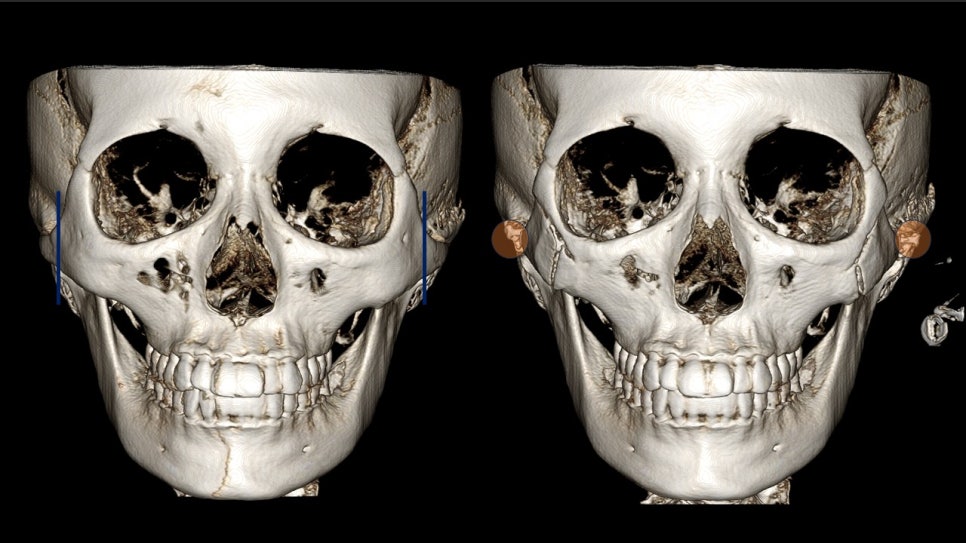
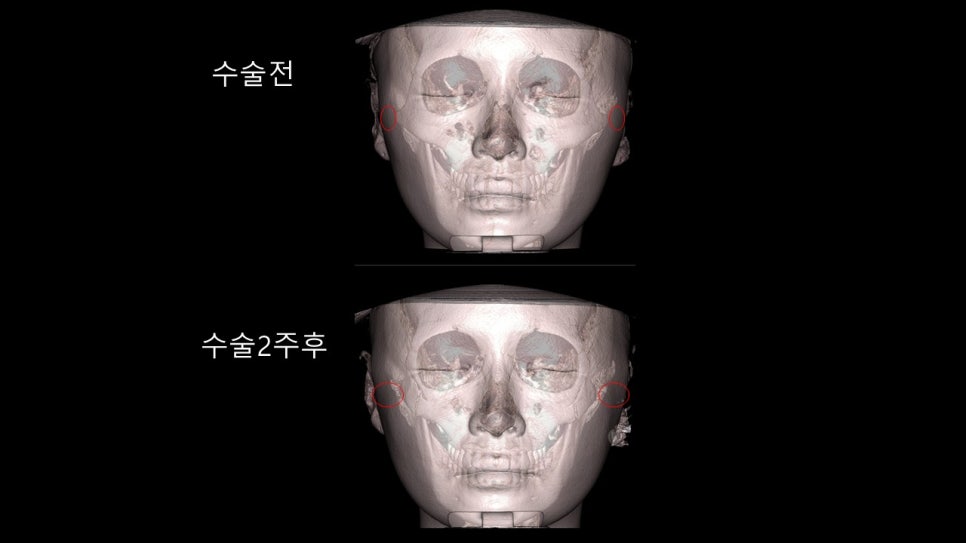
The straight line on the left preoperative cheekbone is the pivot point for reducing the cheekbone, and as seen on the right postoperative side, the cheekbone has been reduced inward toward the orbital bone.
Analysis of the preoperative condition
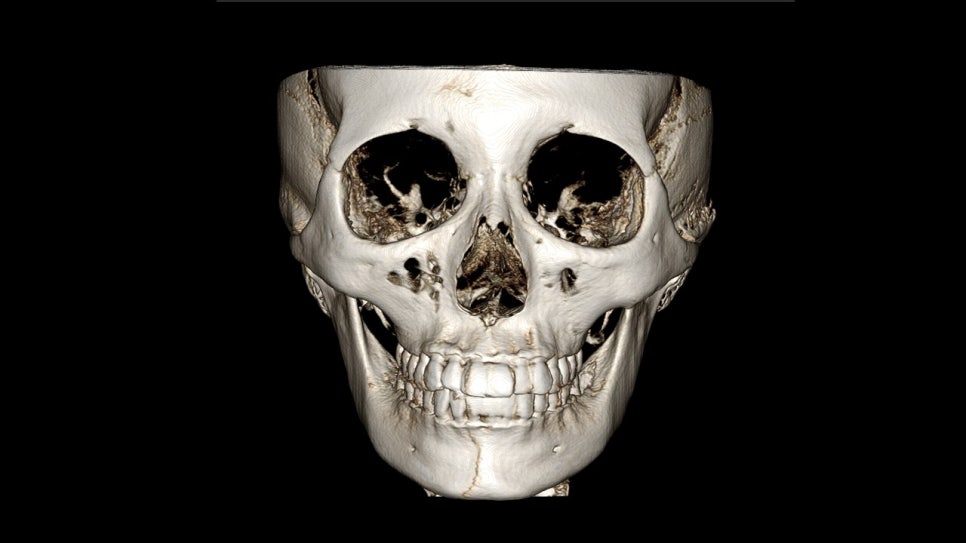
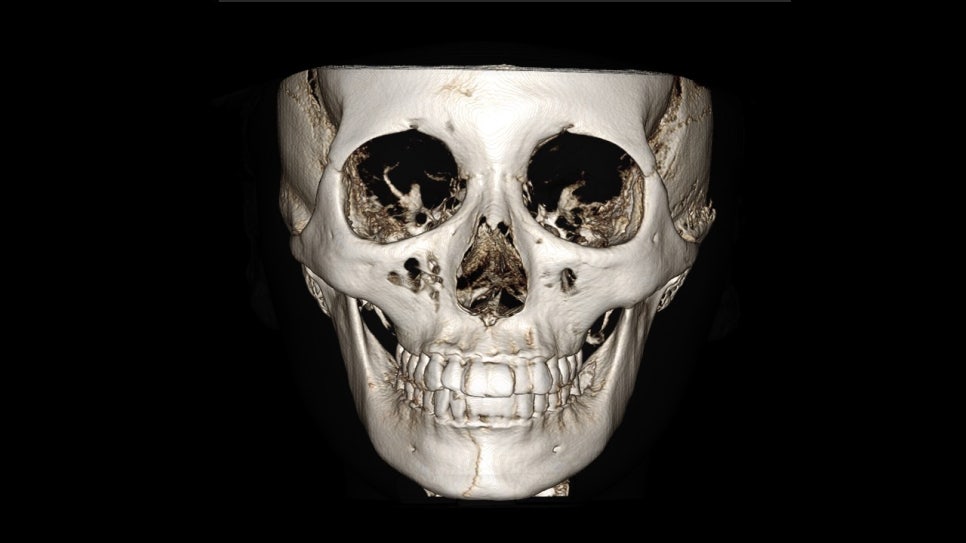
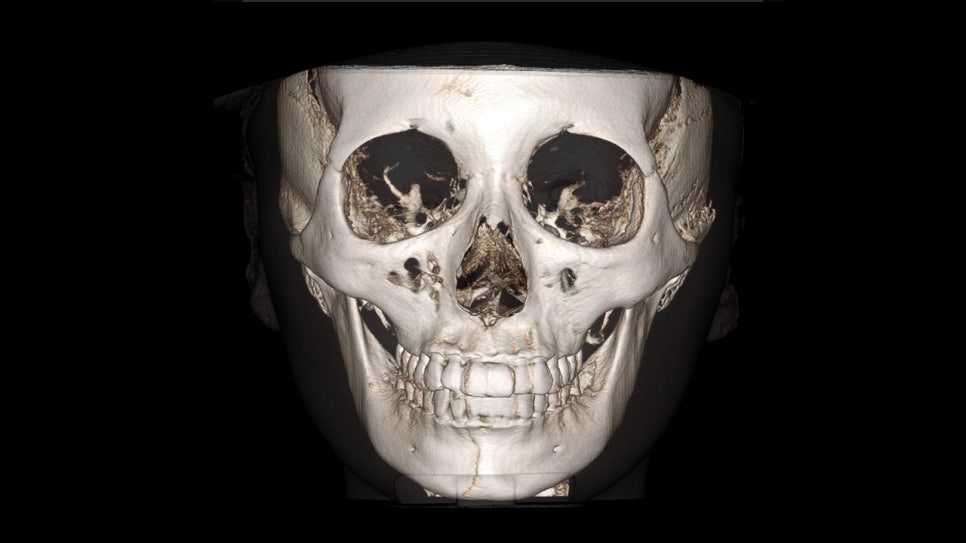
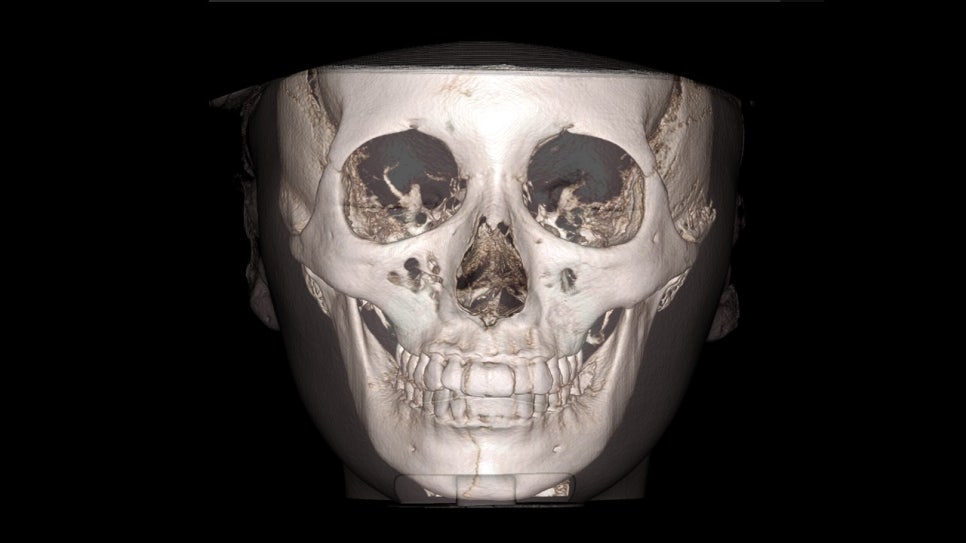
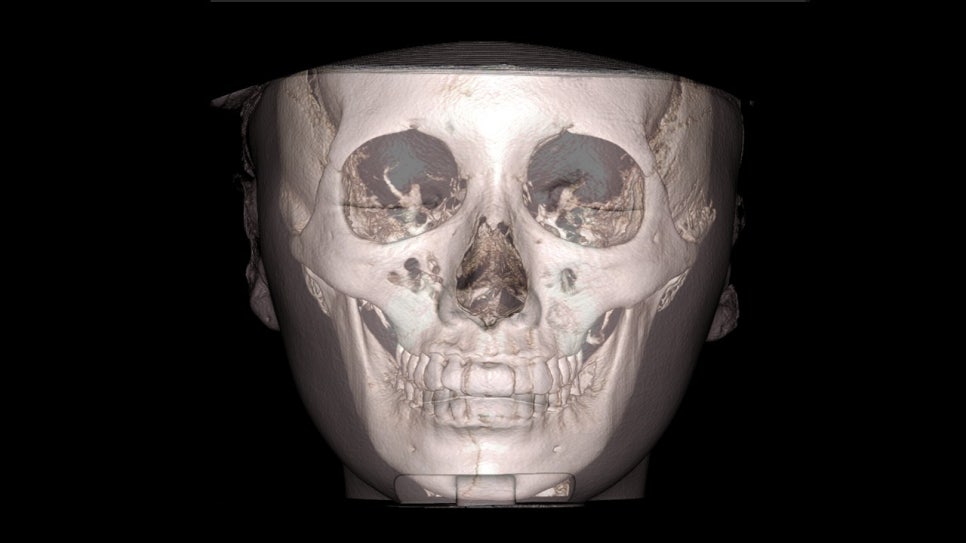
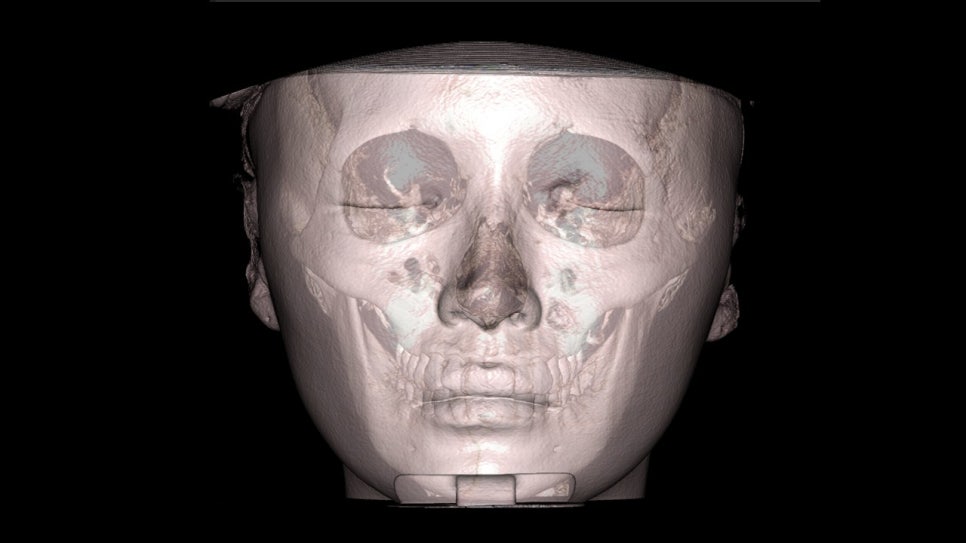
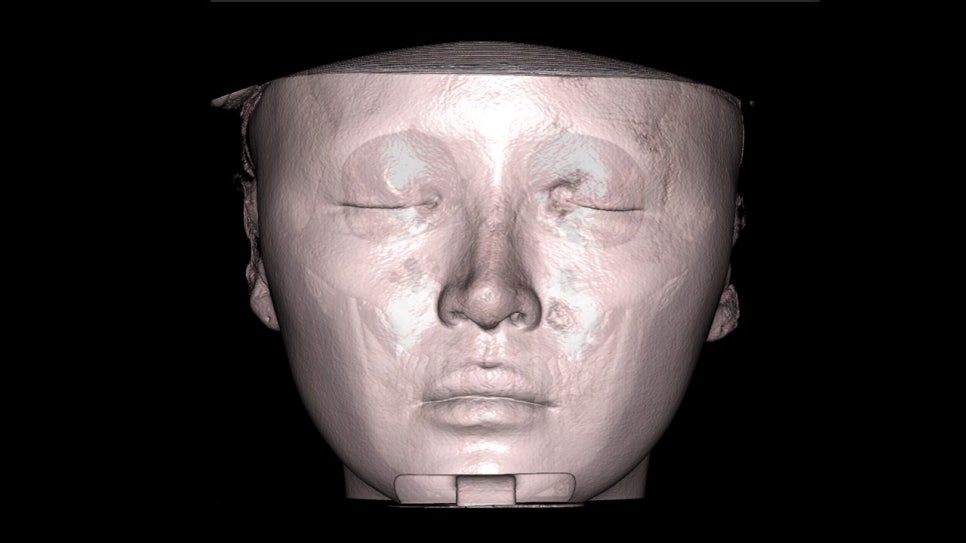
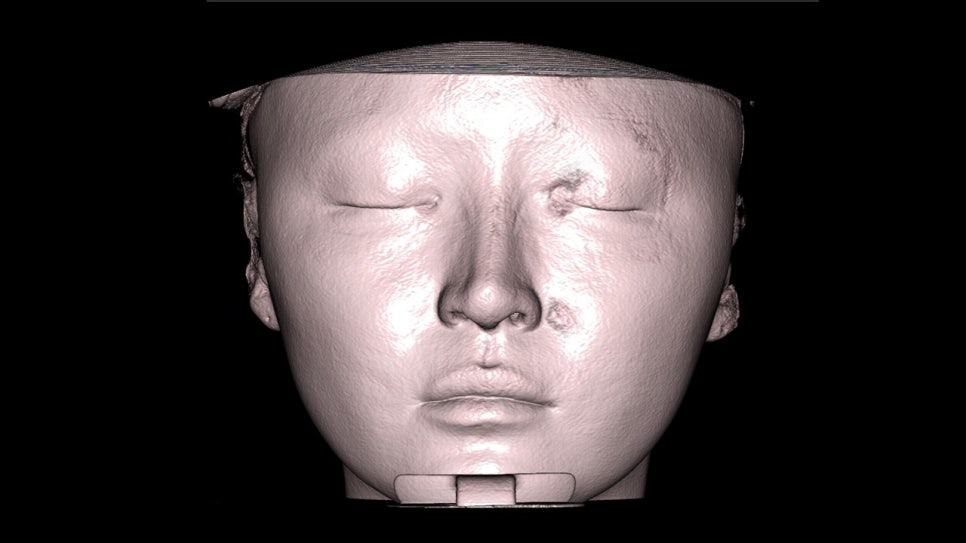
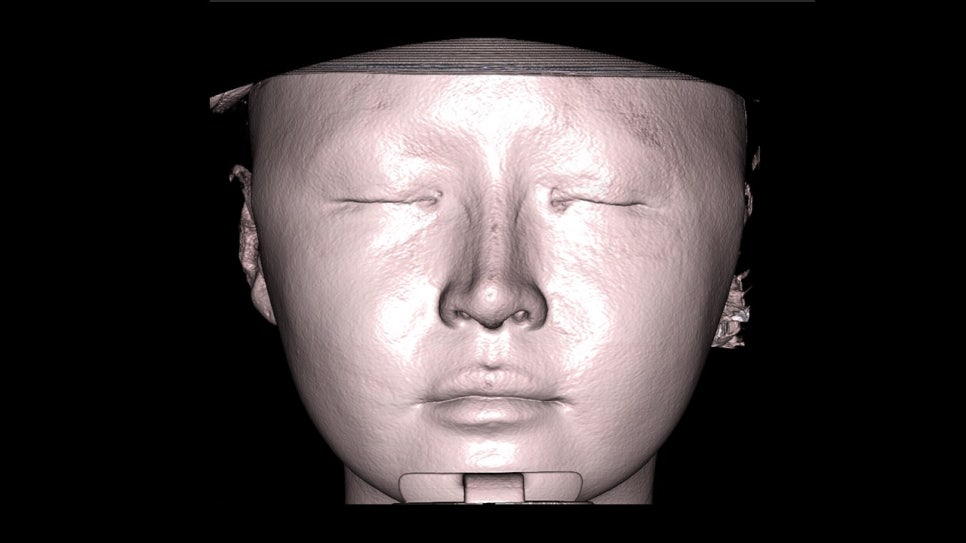
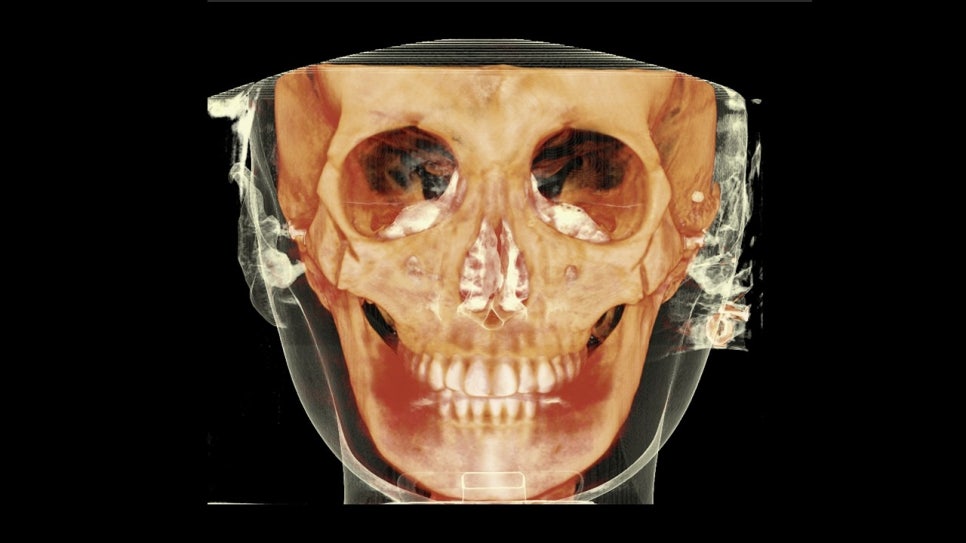
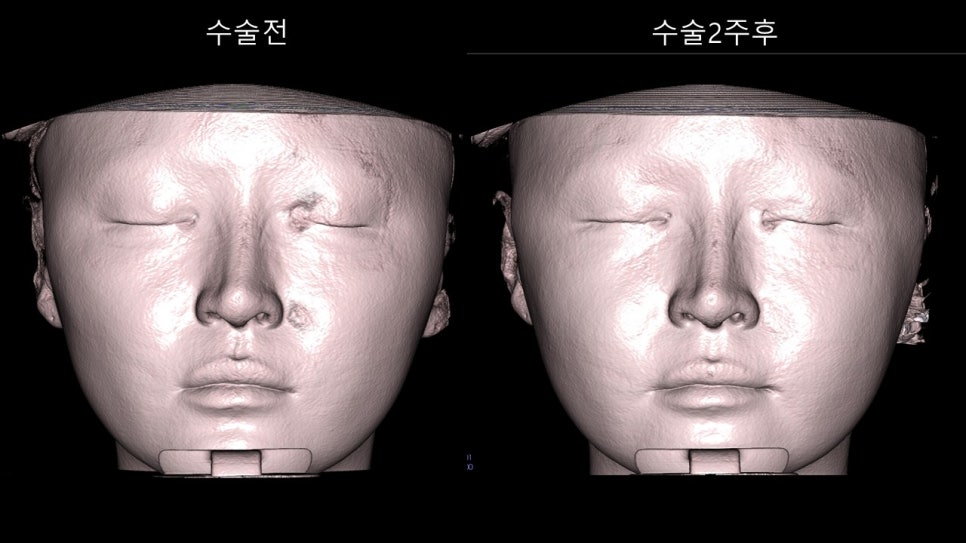
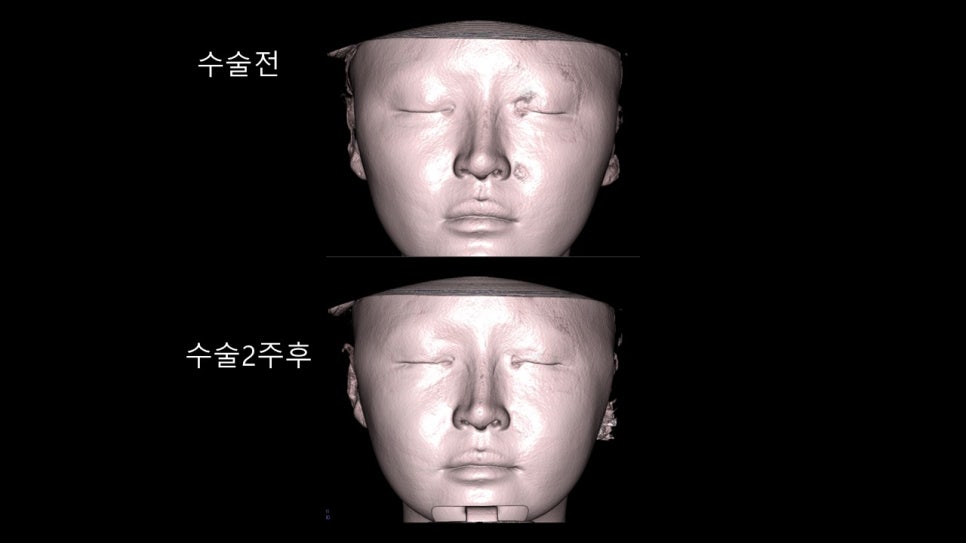
First, let’s look at the state of the facial bones in the preoperative 3DCT of the person who underwent zygoma reduction surgery, and the difference from the facial skin that is finally visible.

The 3DCT images below show the difference between the preoperative bone appearance and the overall contour that is visible through the skin in a patient on whom I actually performed zygoma reduction surgery.
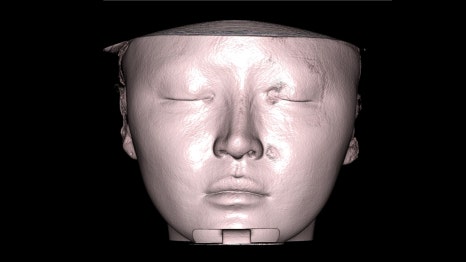
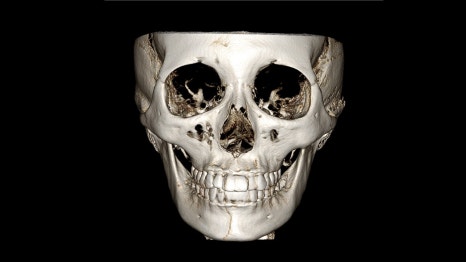
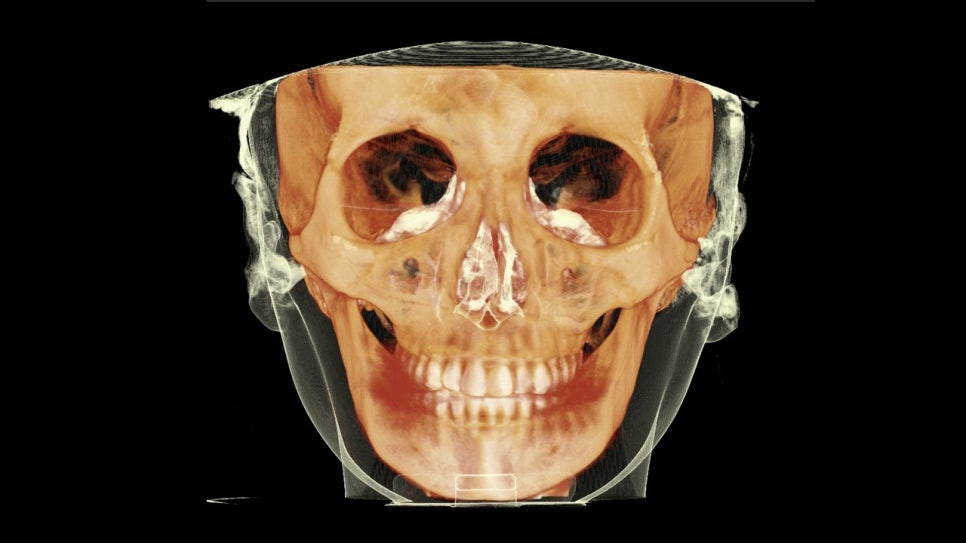
Difference between the shape of the facial bones and the contour of the skin visible from the outside
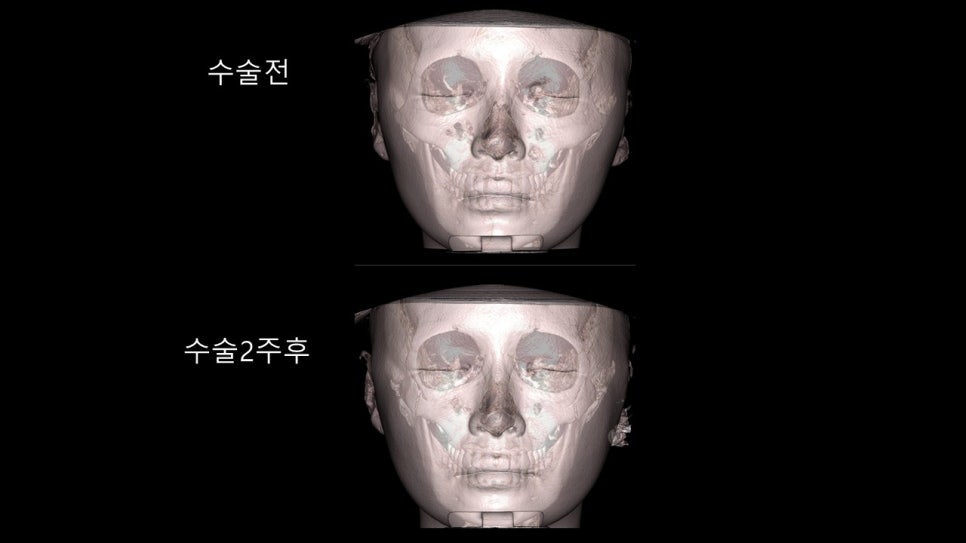
The images below progressively show the facial bones and soft tissues with varying transparency, allowing us to see the difference between the contour of the cheekbones and the actual contour of the midface.
Analysis of the postoperative condition - two weeks after surgery
Let’s analyze the 3DCT images taken two weeks after zygoma reduction surgery in the same patient.

As you can see from the 3D reconstructed image of the CT taken two weeks after surgery, not only does the change in the facial contour visible through the skin appear minimal, but it also seems to have become somewhat wider than before surgery.
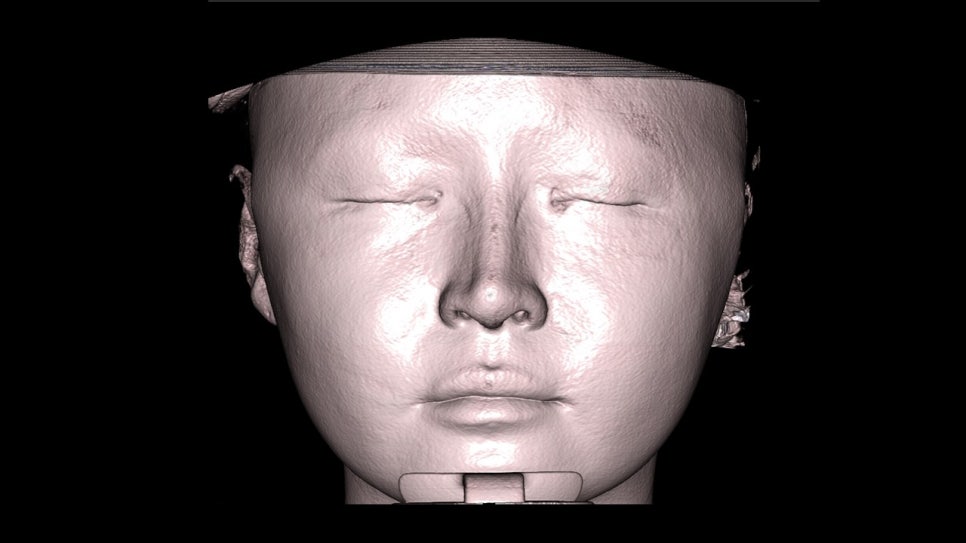
As shown in the images below, the postoperative state of the cheekbones can clearly be seen to have been reduced compared with before surgery.
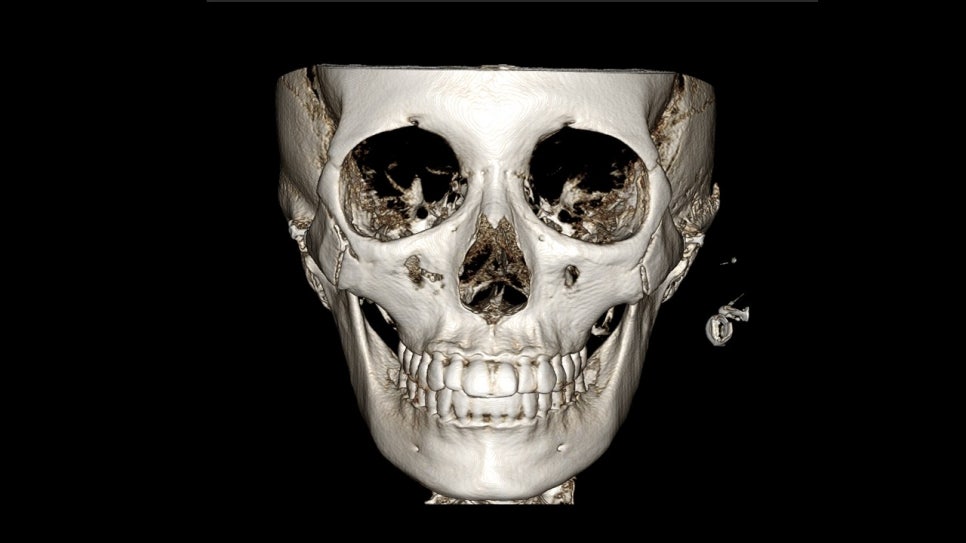
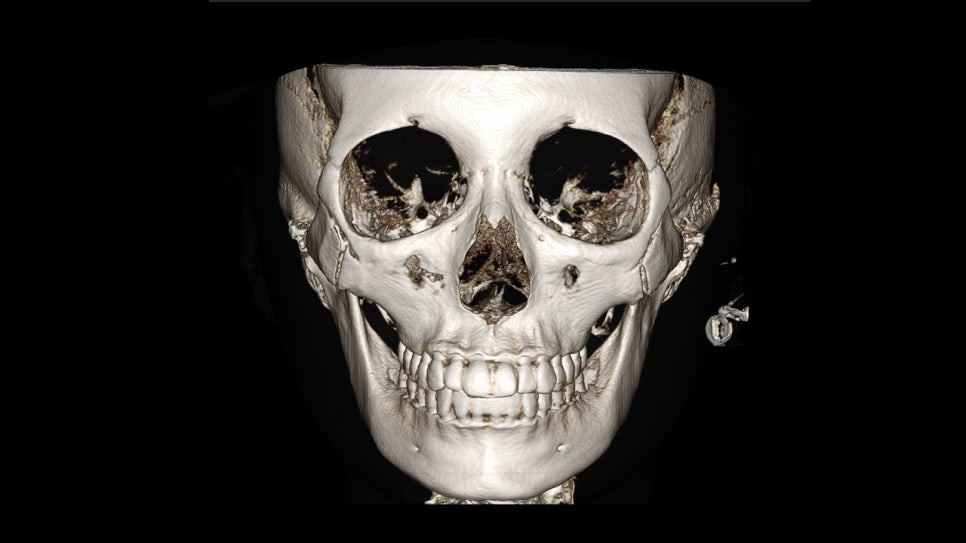
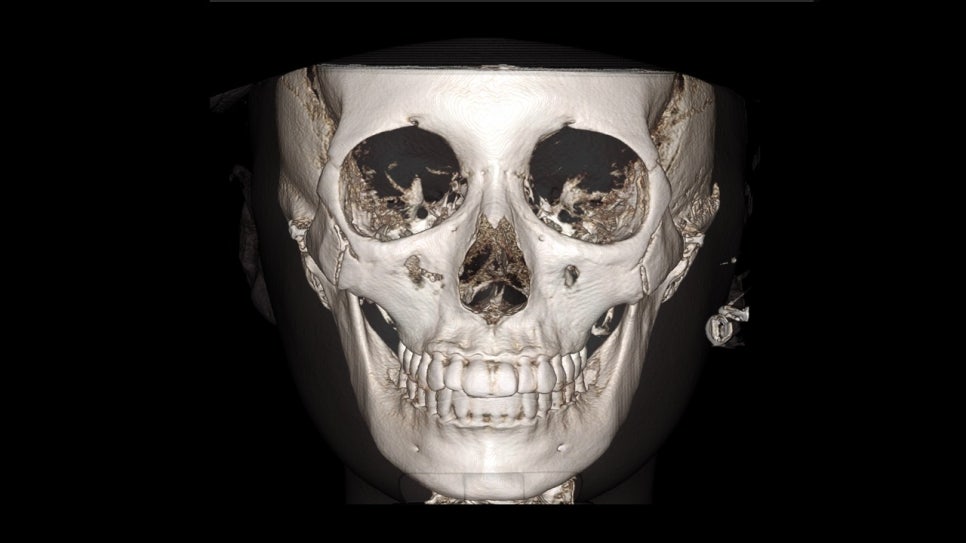
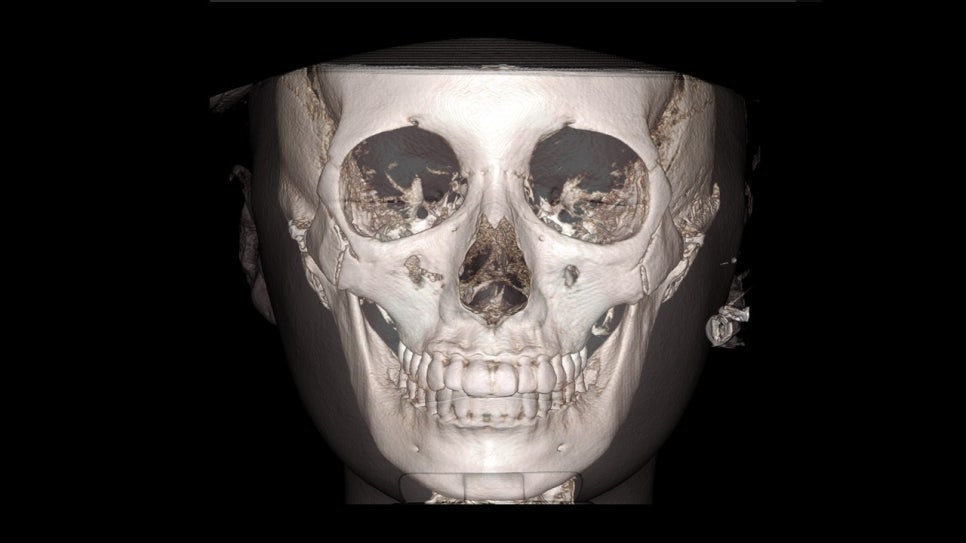
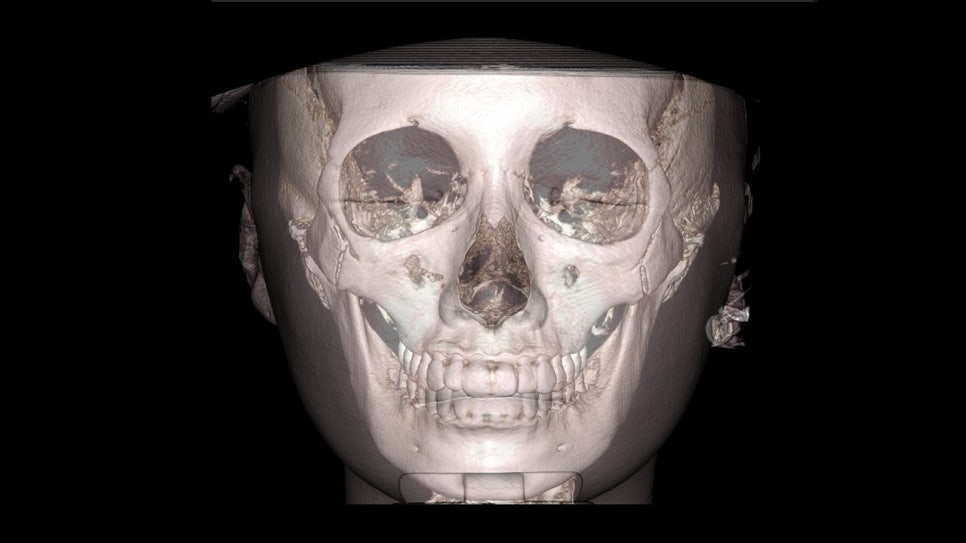
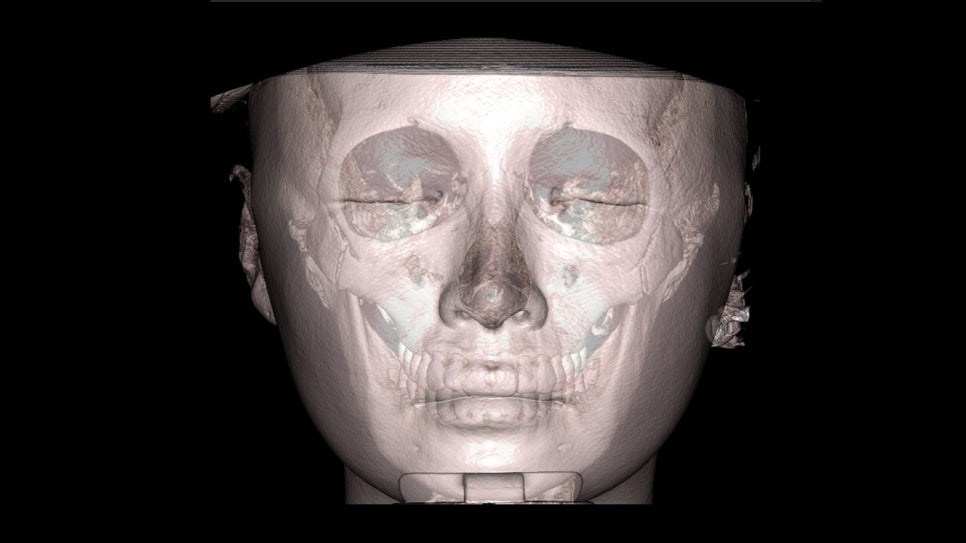
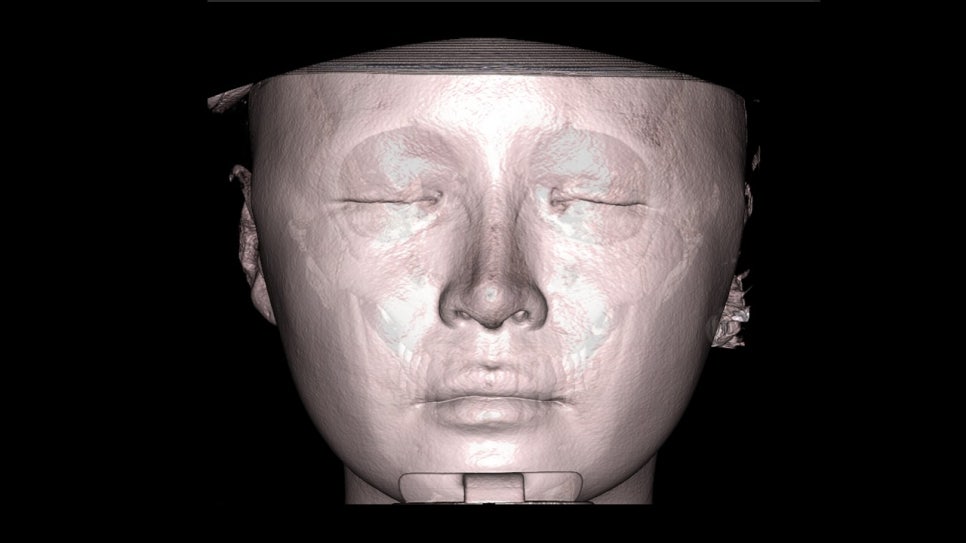
However, the facial contour ultimately visible through the skin shows little change, or may even appear slightly larger.
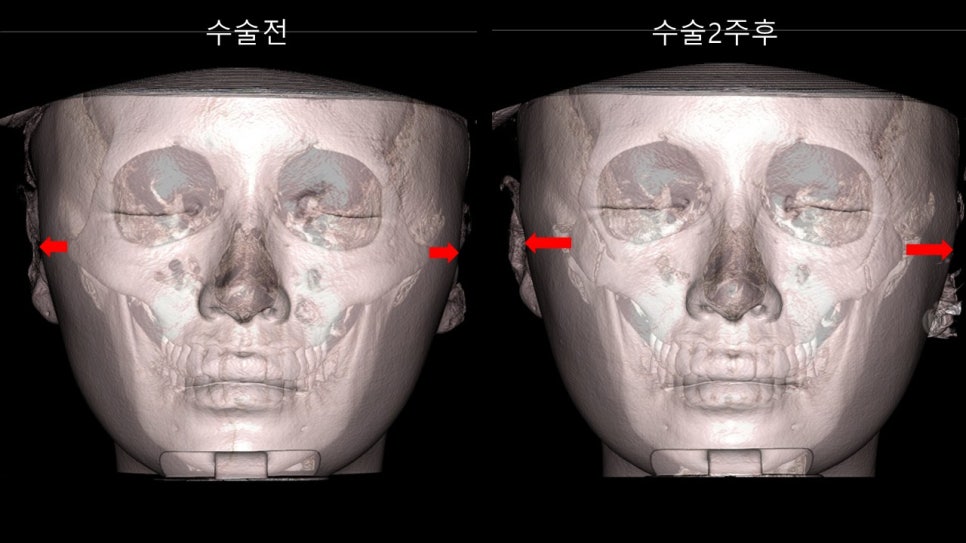
The reason is postoperative swelling between the cheekbones and the skin.
Comparison before surgery and two weeks after surgery


As you can see in the images below, the state of the cheekbones before and after surgery is clearly different.
On the preoperative CT, the cheekbone that was broadly spread below the orbital bone (the outer bone protecting the eye) is clearly seen to have moved inward on the CT taken two weeks after surgery.
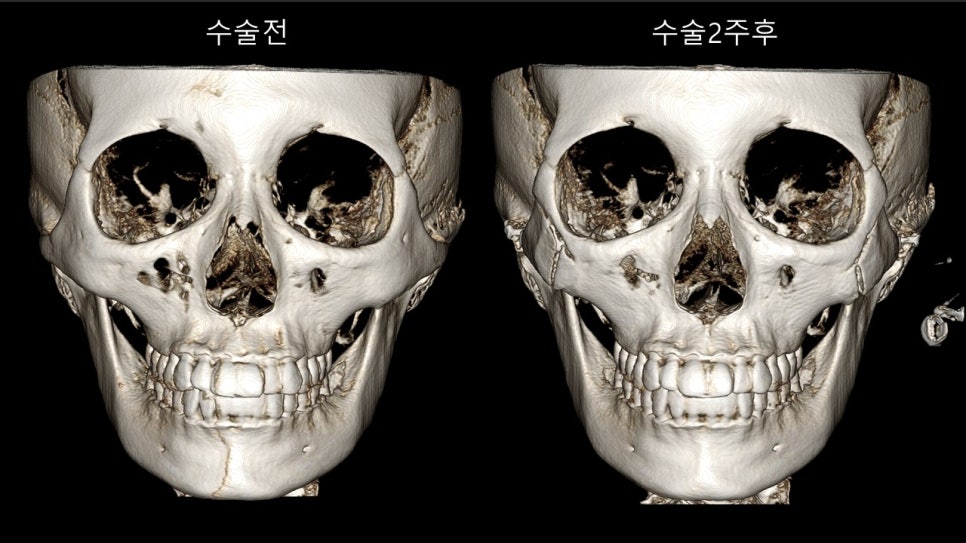
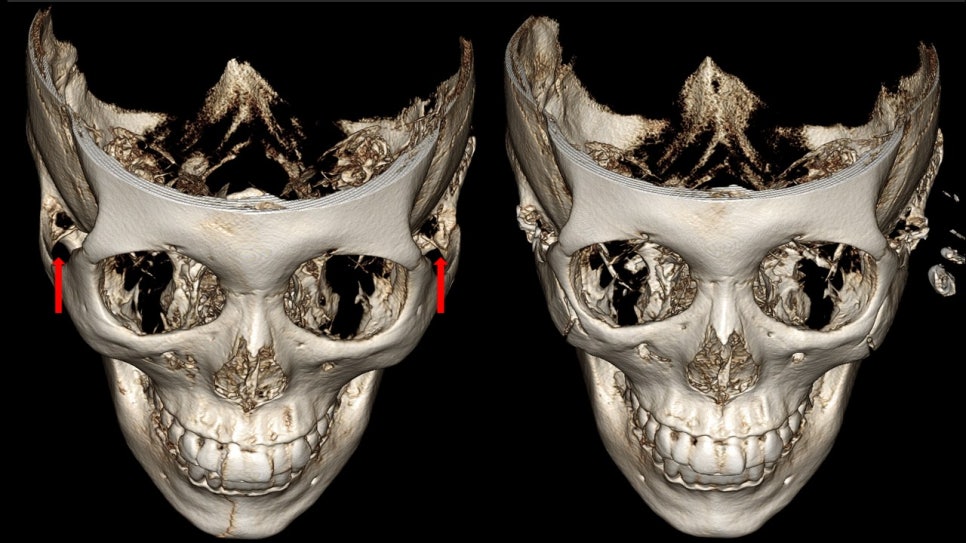
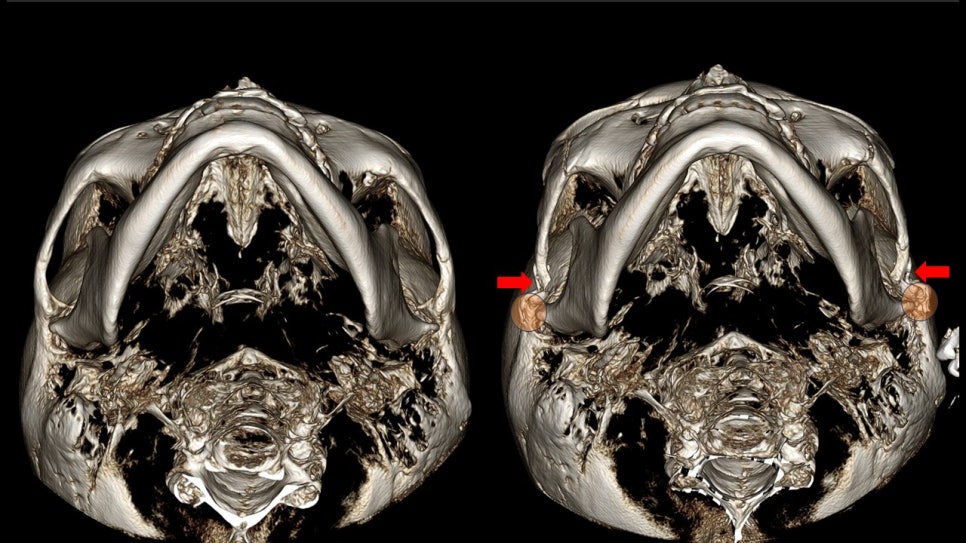
However, the contour visible through the skin before surgery and two weeks after surgery shows little change, or the appearance at two weeks after surgery may even look larger.
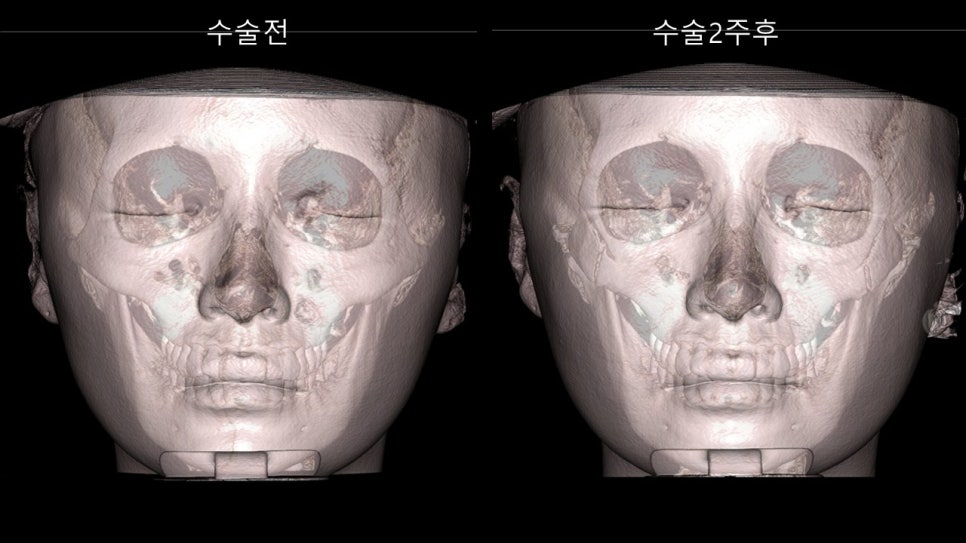
As you can see in the comparison images before surgery and two weeks after surgery below, the gap between the bone and the skin is clearly larger at two weeks after surgery than before surgery.
Downtime and care methods
Then let’s look at what kind of care after surgery for procedures that reduce facial bone contours, such as zygoma reduction surgery or square jaw surgery, is actually meaningfully helpful.
I have been performing facial contouring surgery for more than 25 years, and to shorten postoperative recovery, I have tried all kinds of methods, from folk remedies to many others. However, based on my experience, the parts that were practically helpful were extremely limited.
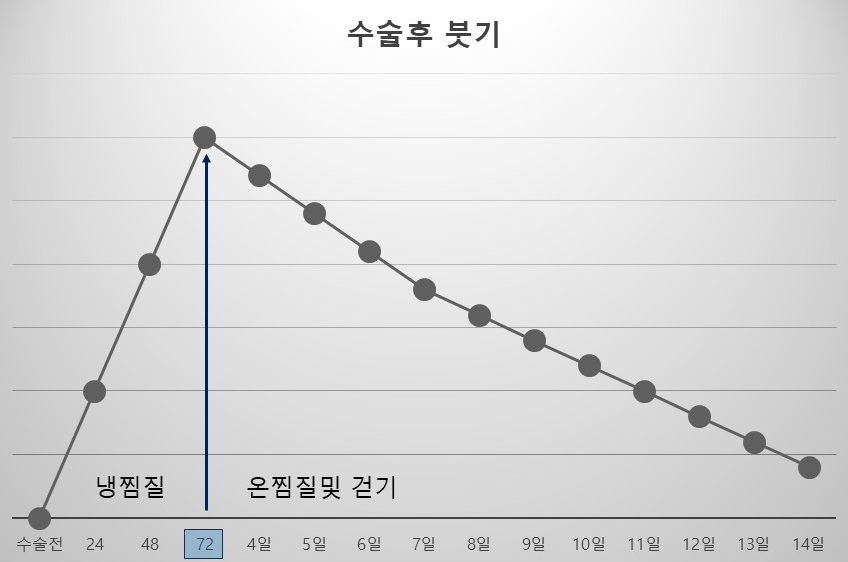
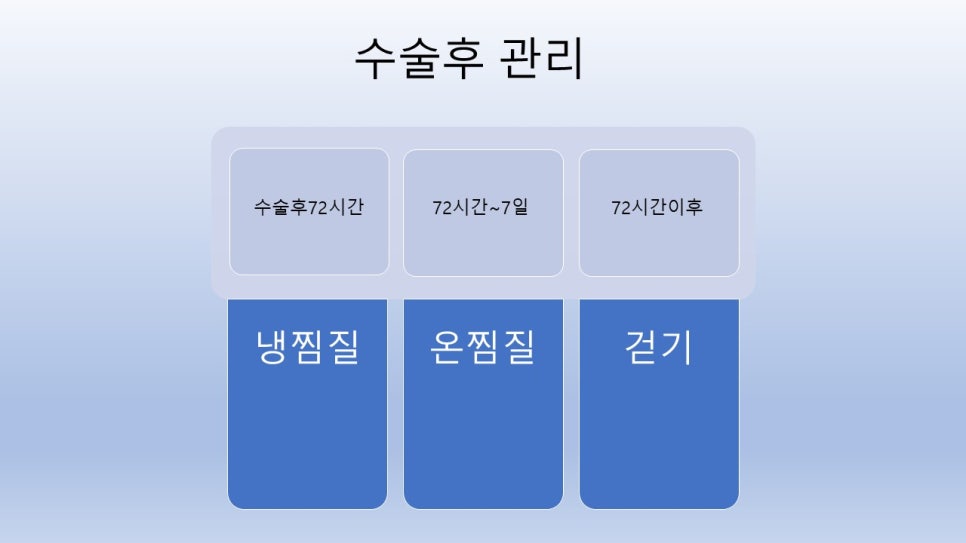
- From immediately after surgery to 48–72 hours after surgery: this is the period when swelling at the surgical site gradually increases.
Applying a "cold compress" to the facial surgical area may be helpful. In the early stage after surgery, cold compresses constrict blood vessels, lymphatic vessels, and other glands, helping prevent swelling from increasing.
However, because sensation in the surgical area is reduced in the early postoperative period, excessive cold compress use may pose a risk of facial nerve paralysis or frostbite, so it must be done carefully.
- Around 72 hours after surgery, facial swelling reaches its peak, and after that it begins to subside.
From this point on, a "warm compress" is more helpful. After swelling at the surgical site reaches its peak, it is necessary to improve circulation so that facial swelling can be drained through various pathways. Therefore, applying warm compresses to improve circulation in blood vessels and lymphatic vessels, etc., and expand these channels, is helpful.
In addition, the thing that helps most in reducing major early swelling is to "take walks or walk" a lot from this point on. In fact, when I have followed postoperative progress, there have often been cases where, despite very severe early swelling after surgery, the swelling had dramatically subsided by two weeks after surgery because the person walked four hours a day. I think the reason walking helps is that lymphatic circulation is very important for postoperative facial swelling to be drained to other areas.
Walking, including half-body baths, may also be helpful.
- About two weeks after surgery, the major swelling has subsided to some extent, and the facial contour becomes similar to before surgery.
If bruising has occurred at the surgical site, it may take more than a month after surgery for the bruising to fade and disappear.
In general, bruising takes more time to resolve than major swelling.
In this post, based on 3DCT images of a person who actually underwent zygoma reduction surgery, I introduced the process by which the appearance of the face changes. In the future, I will continue to update materials analyzing the recovery course and introduce long-term changes.
More specific details—such as each contour surgery method, the areas where changes can be expected, and contour injection procedures—will be covered in separate posts as individual topics.