Surgery is a process that inevitably causes irreversible changes.
In the course of treating patients for facial contouring, I frequently see people seeking consultations for revision surgery after having undergone various surgical methods.
When I examine the condition of the cheekbones of those who come to me because of disappointing results after zygomatic surgery,
there are cases in which sufficiently satisfactory changes can be expected through revision surgery if the initial procedure was performed using a reasonably acceptable method.
However, when I see cases in which the condition has been made so severe that there is virtually nothing that can be done, I become extremely angry.
For example, this is the case when an important part of the bone has been completely removed during the previous surgery.
I believe that certain doctors who perform surgery using methods that are completely incomprehensible from my perspective may continue making such errors because they themselves do not fully understand the unfortunate outcomes that can follow when using those methods.
Therefore, I understand that what I am about to explain may be difficult for the general public to understand.
Nevertheless, because I hope that many people will gain a basic understanding and knowledge before more cases of harm occur, I will explain the mechanisms and principles in detail, while making the content as easy to understand as possible even if it may be somewhat difficult.
Brief Overview — Clarifying the Concepts
What is the facial contour we see?
The main reason people consider facial contouring surgery is the improved change in their facial appearance that they hope to achieve through the procedure.
Therefore, more important than the appearance of the facial bones is understanding that the line of the facial skin, which ultimately reveals the shape of our face, is what truly matters.
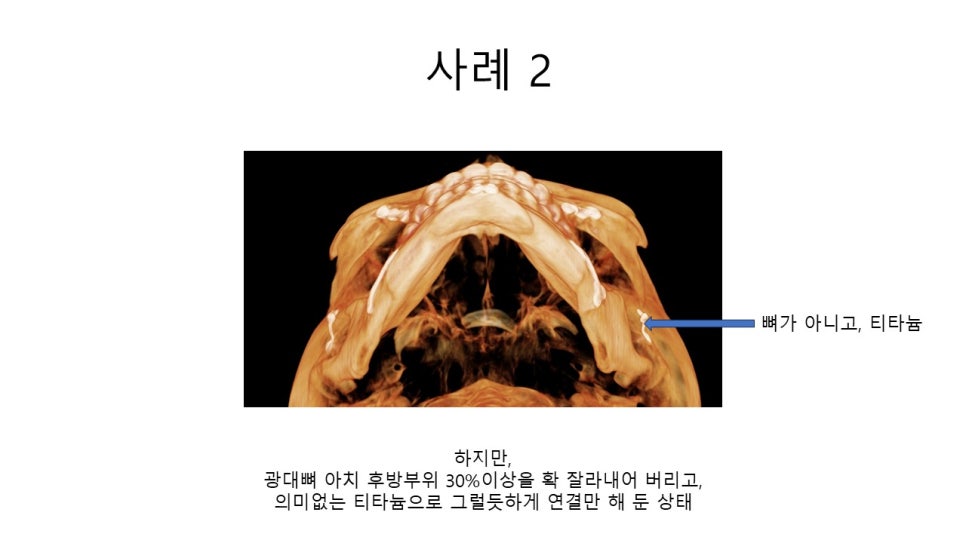
Moreover, if a titanium rod that has been cleverly disguised to look like a facial bone appears on the postoperative CT shown by the surgeon, while the actual important bone is absent...
I will briefly explain the factors that determine facial contour.
Facial contour is formed as follows:
Basically, the facial bones, which provide the foundation of the face, form its basic framework,
and soft tissue—facial tissue consisting of muscles, fat, and skin—covers that framework.
Depending on the circumstances, the facial tissue may play a more important role than the shape of the facial bones in determining the shape of the face.
For example, consider a case in which the facial bones are small but the face has a considerable amount of muscle or soft tissue.
If the bone is absent, will the face necessarily look smaller?
This is where the misguided errors begin—both among doctors who perform surgery without a professional knowledge base grounded in accurate long-term follow-up results and among members of the public considering surgery.
Simply cutting away facial bone does not, by itself, make the face smaller.
The surgical process for making the facial contour smaller and smoother is important because it involves moving the bone while preserving its basic structure.
The muscles that had covered the facial bones are then repositioned over the bones after they have been moved,
allowing one to ultimately expect an improved change in the contour revealed by the skin.
Of course, this process necessarily requires waiting patiently through the postoperative downtime.
But what if part of the bone has been completely removed through an uninformed surgical approach...?
Even after waiting indefinitely for the postoperative downtime to pass, the appearance of the face may not improve at all.
In some cases, the soft tissue that had been situated over the area where the bone disappeared may produce excessive granulation tissue and fibrotic tissue to compensate for the missing bone, resulting in the exact opposite outcome: the area may appear even more prominent.
The reason is as follows.
Theoretical Background and the Mechanism of Postoperative Contour Changes
First, to summarize the key point,
it is necessary to understand how the final facial shape appears according to the relationship among the facial bone, periosteum, and soft tissue—muscle, fat, and skin.
-
The bone must be moved while maintaining and preserving its complete continuity. The periosteum then attaches to the bone and draws in the soft tissue connected to it.
-
However, if the bone is absent, the periosteum cannot attach to inadequate titanium. Instead, granulation tissue and fibrotic scar tissue undergo hyperplasia in the area where the bone has been replaced by titanium.
Let us try to understand this by looking at the diagram below.
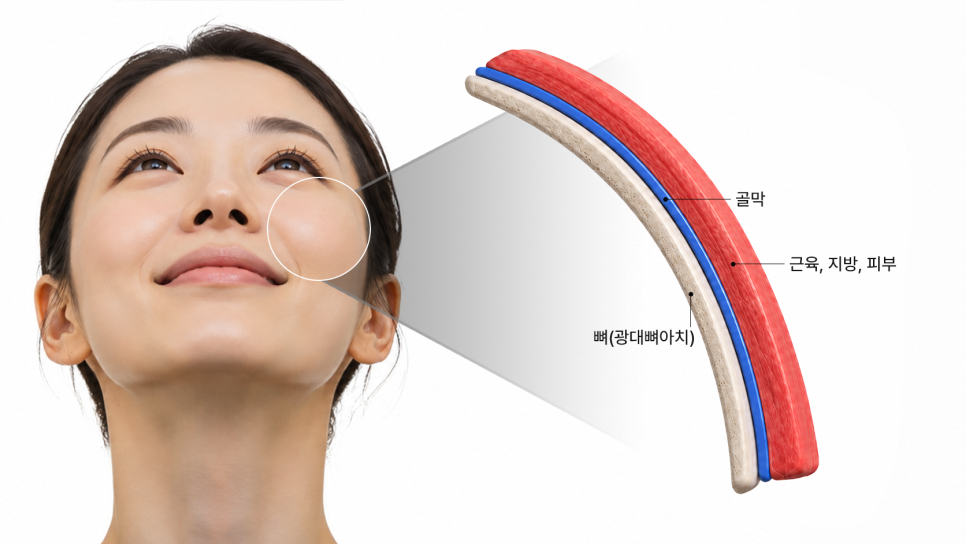
As you can see in the illustration and schematic above, the facial bones are covered by the periosteum and soft tissue consisting of muscle, fat, and skin.
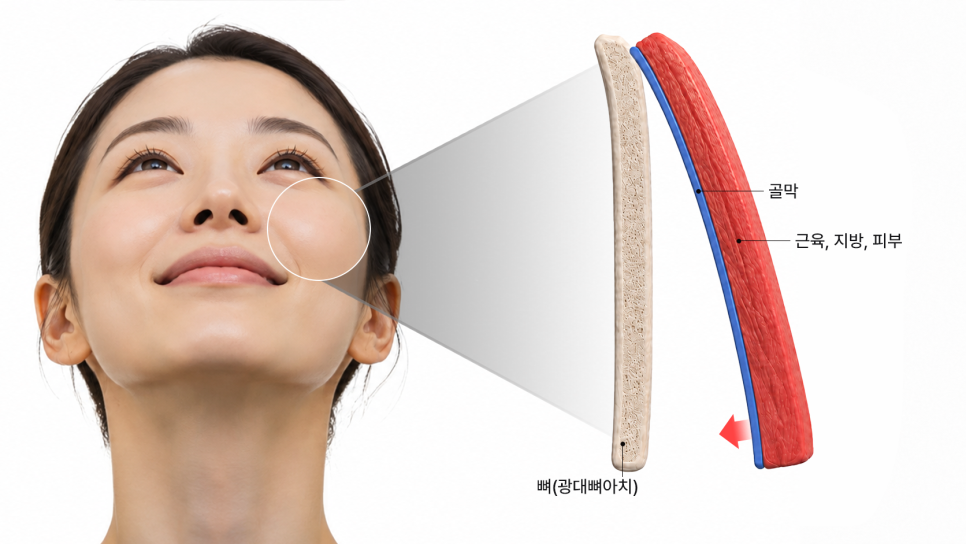
Surgery to refine the contour of the facial bones is performed by cleanly separating the periosteum from the bone, refining the bone’s contour, and then moving it into a new position.
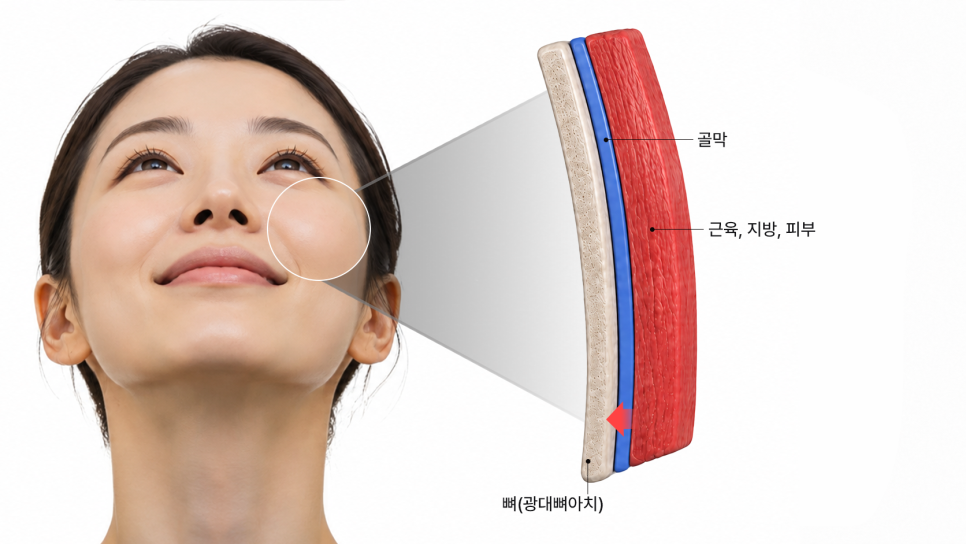
As the postoperative swelling subsides, the periosteum attaches to the moved bone, and the connected soft tissue contracts and settles into place.
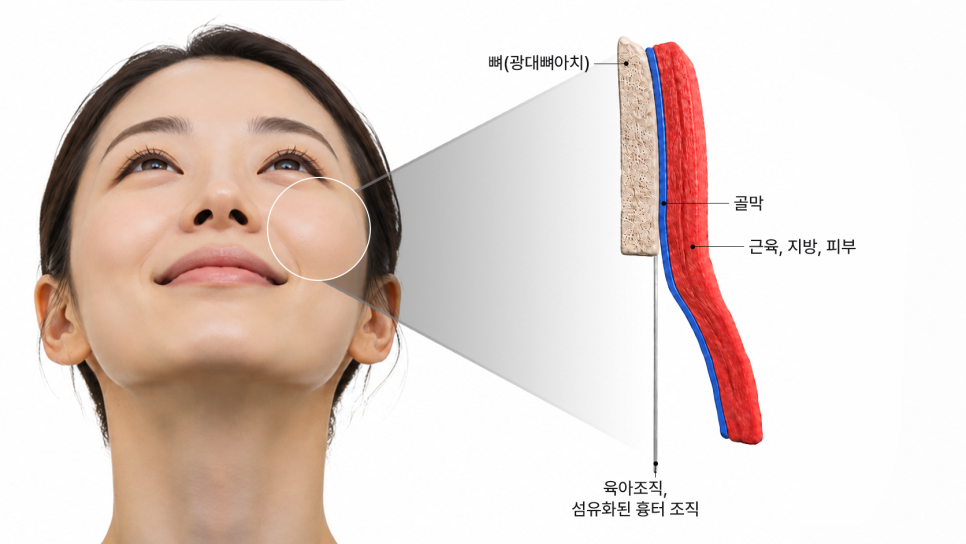
But what happens if the posterior portion of the zygomatic arch has no bone and is connected only by inadequate titanium rods?
The periosteum cannot attach, and the empty space inside becomes filled with excessive granulation tissue and fibrotic scar tissue, settling in at a much greater thickness than the original structure.
Actual Cases
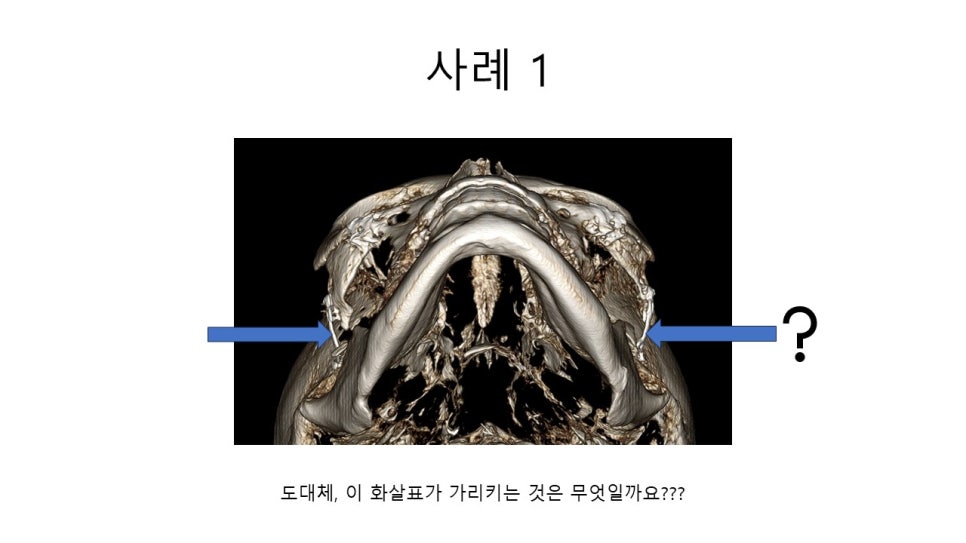
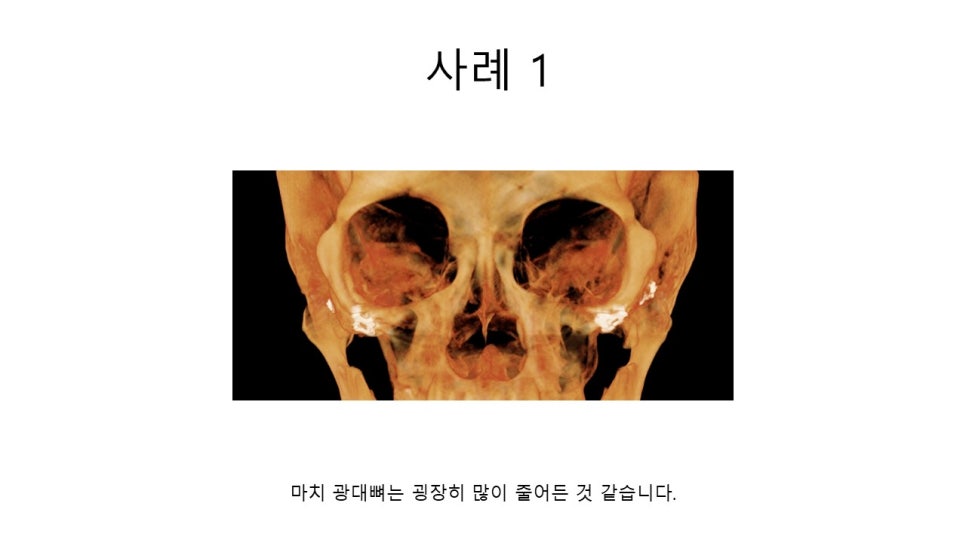
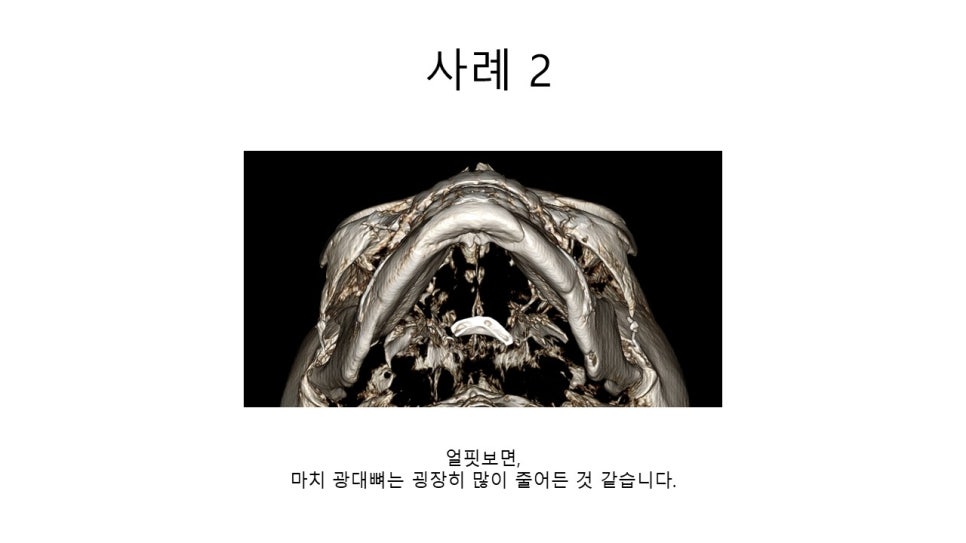
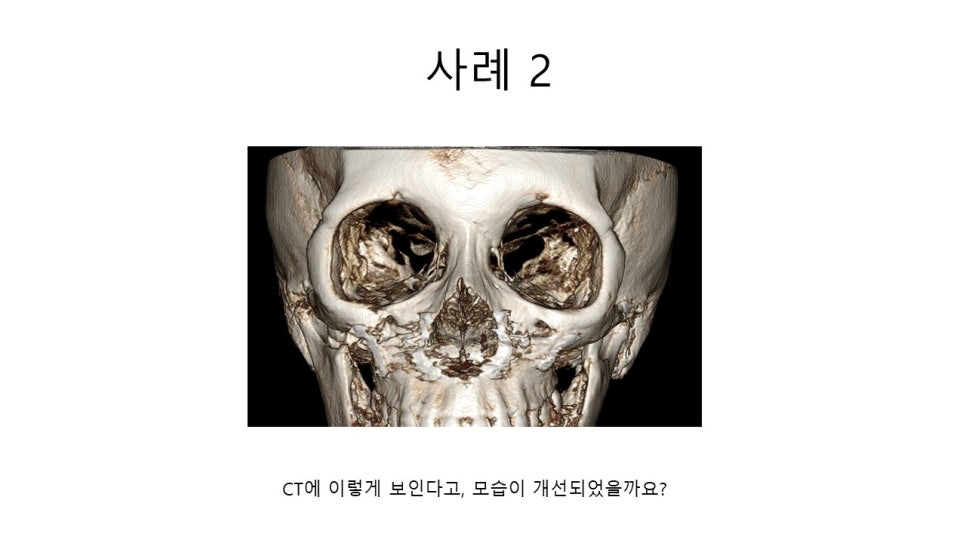
At first glance, the CT scan above, taken after zygomatic surgery, may look plausible. However, once the actual situation is understood, it becomes clear that the surgery was performed using an absurd approach.
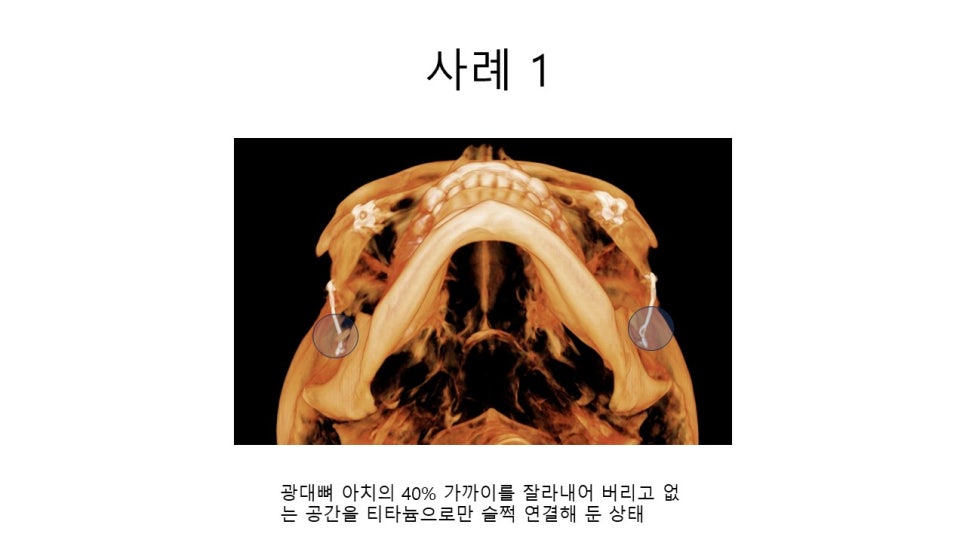
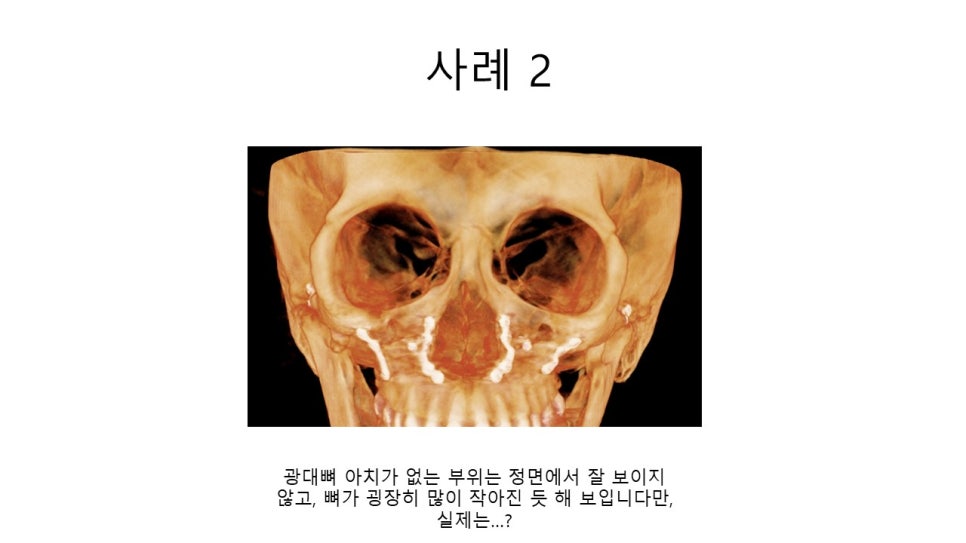
Approximately 30%40 of the posterior portion of the zygomatic arch was cut away and then discreetly connected with titanium of little significance so that it would appear plausible.
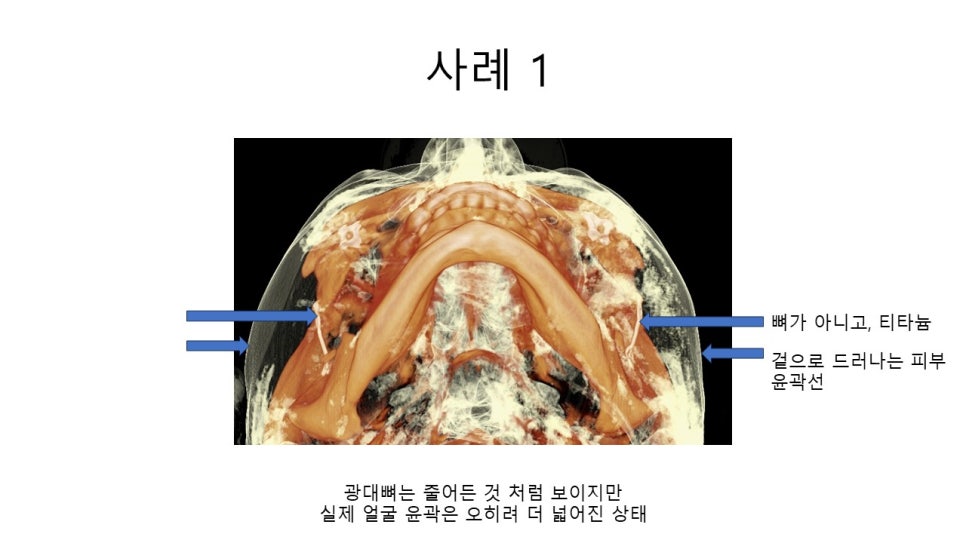
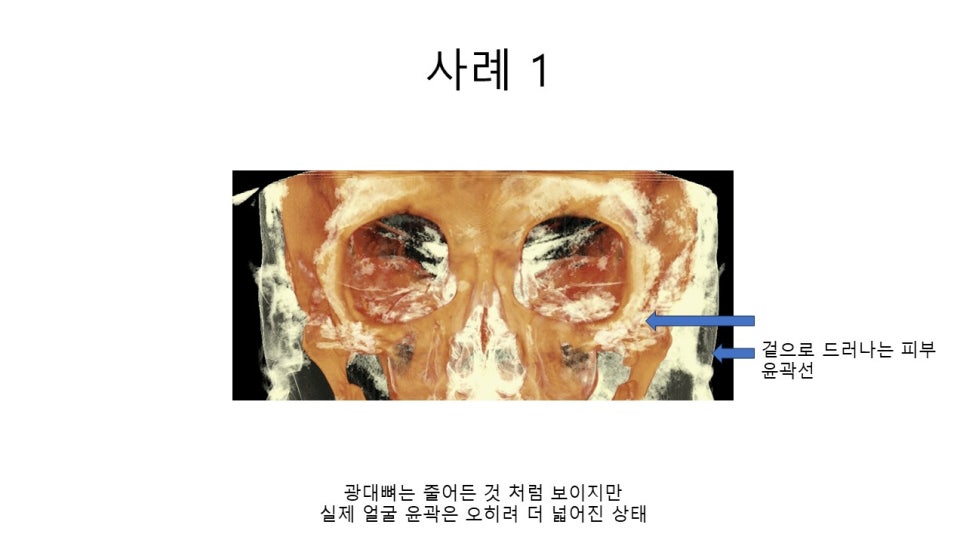
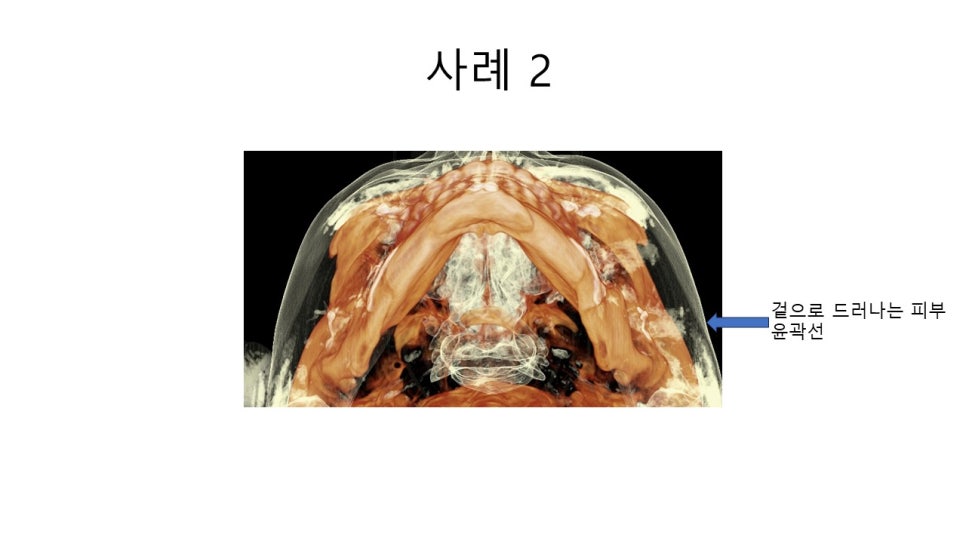
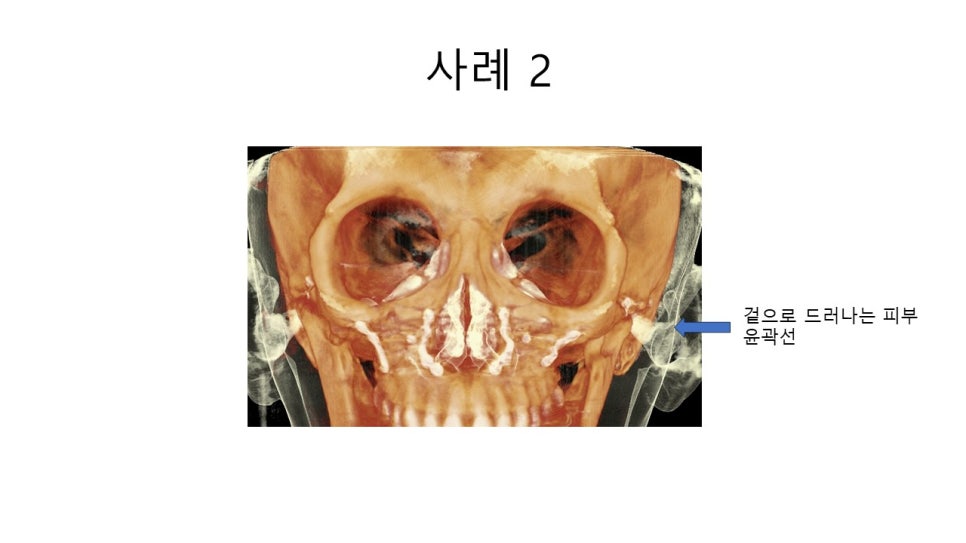
In this condition, the bone and soft tissue—the facial tissue—function separately.
You can see that there is an enormous difference between the actual contour line of the skin and the zygomatic bone, which appears to have been substantially reduced in a seemingly convincing way after surgery.
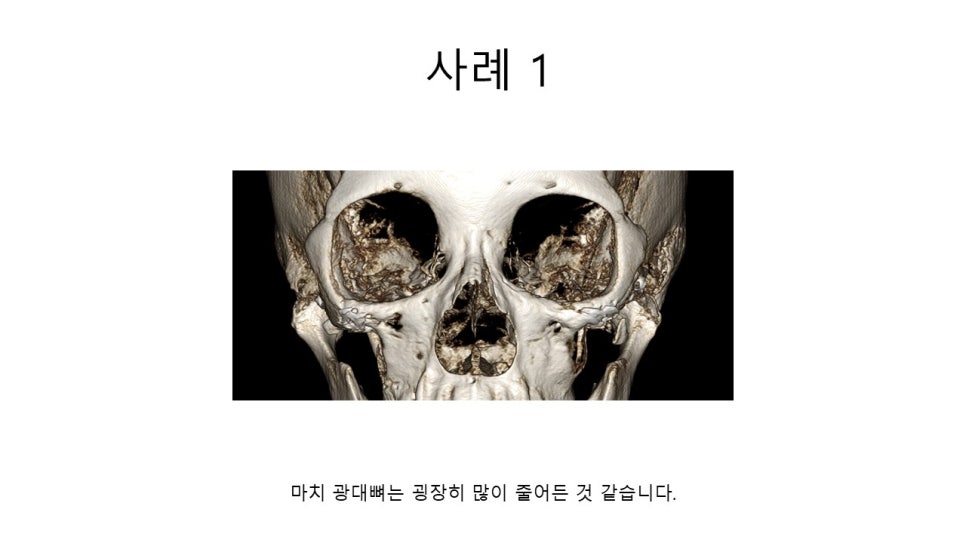
Surgery inevitably causes irreversible changes.
If surgery is performed in this way, the situation is virtually impossible to rectify.
What about square-jaw surgery?
This is related to the mechanism by which the muscles are repositioned.
If square-jaw surgery involves cutting away the angular portion of the bone, how does the skin avoid sagging and contract to fit the shape of the smaller bone?
The reason is as follows.
In square-jaw surgery, the bone is not completely severed so that its continuity is lost. Instead, excess bone is removed while continuity is maintained.
Therefore, the masseter muscle that was attached to and acted on the angular area before surgery becomes attached to the reduced bone. As the length of the muscle fibers shortens, the soft tissue covering the muscle is also repositioned and contracts.
What if the original form of the bone that should have been fully preserved has been lost?
If surgery has already been performed in the manner described above, what methods of improvement are available?
Would reconstruction be meaningful?
In my view, I do not recommend methods such as grafting the patient’s own bone because the take rate of the grafted bone cannot be expected with confidence.
Moreover, I believe that reconstruction using other implants or materials would also have very little meaning.
If I had to consider an option, one possibility would be to perform a facelift through a facelift incision alone, removing the excess skin and also reducing the fibrotic scar tissue beneath the skin.
However, most of the people who come to me for revision consultations with serious concerns after undergoing surgery in the manner described above are in their twenties. I believe that considering a facelift at that age would be excessive.
Therefore, as a last resort, I recommend continuing to manage the condition with minimally invasive methods whenever possible, such as contour injections.
Midface reduction???
Does sharply cutting away the zygomatic body—the anterior cheekbone area—really constitute midface reduction?
I believe that the term “midface reduction” resonates particularly strongly with people who are concerned that their midface is too long.
The most important area determining the length of the midface is the length of the maxilla.
Therefore, to shorten the midface, the most appropriate approach is orthognathic surgery, which reduces the length by removing part of the maxilla while also rotating the maxilla to create a more three-dimensional midface contour.
However, if the body of the zygoma alone is removed while the position and shape of the maxilla remain unchanged, the flat contour of the maxilla below the cheekbone will appear even more extended.
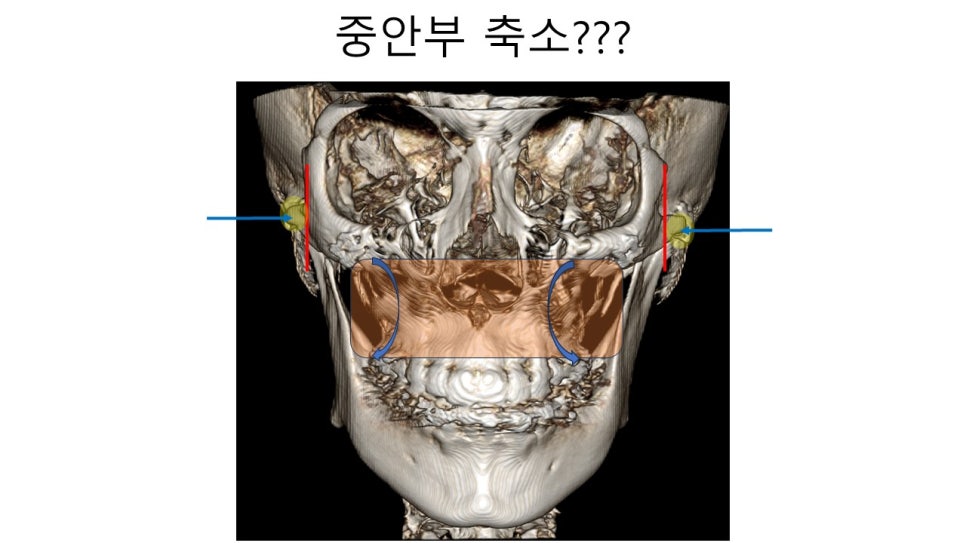
As a result, the soft tissue of the midface sags, producing the unfortunate outcome of making the midface appear even longer.
Thinking of the facial shape of a chimpanzee with a long midface may help make this easier to understand.
Therefore, for people who are concerned about a long midface but cannot bring themselves to consider orthognathic surgery, I recommend, as a second-best option for camouflage, adding volume through autologous fat grafting to the area above the nasolabial folds—the midface.
When volume and curvature are created rather than leaving the midface flat, the midface appears visually less long.
However, if only the body of the zygoma is removed,
the three-dimensionality of the cheekbone area disappears, the length of the flat and featureless contour extending from below the eyes to the lips becomes even more pronounced,
and an unfortunate result occurs in which only the area around the nasolabial folds becomes prominent.
What is even more absurd is this:
What deeply upsets and angers me is that among those who undergo surgery in the manner described above and later return to my office,
there are people who first underwent zygomatic surgery elsewhere and came to me for a revision consultation, but who, despite my advice against zygomatic revision surgery, later came to me in an even more irreversible condition after having surgery at a clinic that uses the method described above.
There are also many people who came to me for a consultation, were misled by wordplay suggesting that another clinic would produce a more certain and dramatic result, underwent surgery using the method described above, and then returned to my office.
But what is even more absurd is that
there are doctors who target people struggling with this condition and try to make them victims once again by enticing them to undergo skull shaving and temporal reduction.
Epilogue
I understand that the content may be somewhat difficult to understand,
but I have organized it as carefully as possible in order to prevent more irreversible cases of harm in the future.
People who trust experienced specialists and come to our offices for treatment
must not become test subjects or victims of a surgeon’s immature and unverified ideas about surgical methods.
Surgery causes irreversible, permanent changes.
I sincerely ask that the doctors who have attempted surgery in this manner also read this article carefully and acknowledge, even in part, the regret and guilt associated with the long-term follow-up results of the people they operated on.