Hello, I am Jae-young Jung, a board-certified plastic surgeon.
Today, I would like to introduce a somewhat unique cheekbone revision case that required careful consideration and a cautious approach, even from a doctor’s perspective.
- Discovering 30-Year-Old Surgical Traces During a Facelift
About four years ago, a patient visited me seeking improvement for severe sagging and facial contours. During the facelift, I discovered in the course of dissection that the cheekbone had significantly dropped below its original position, a condition known as inferior displacement.
After completing the surgery, I asked the patient whether they had ever undergone facial contouring surgery. The patient told me, “I had cheekbone reduction surgery about 30 years ago.”
Immediately after the surgery, we obtained a 3D CT scan and examined the condition of the bones together.
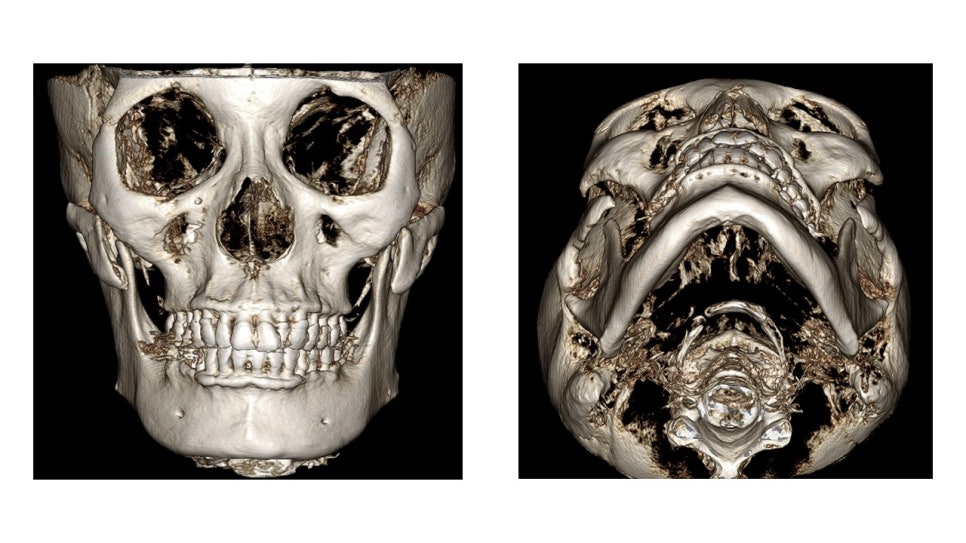
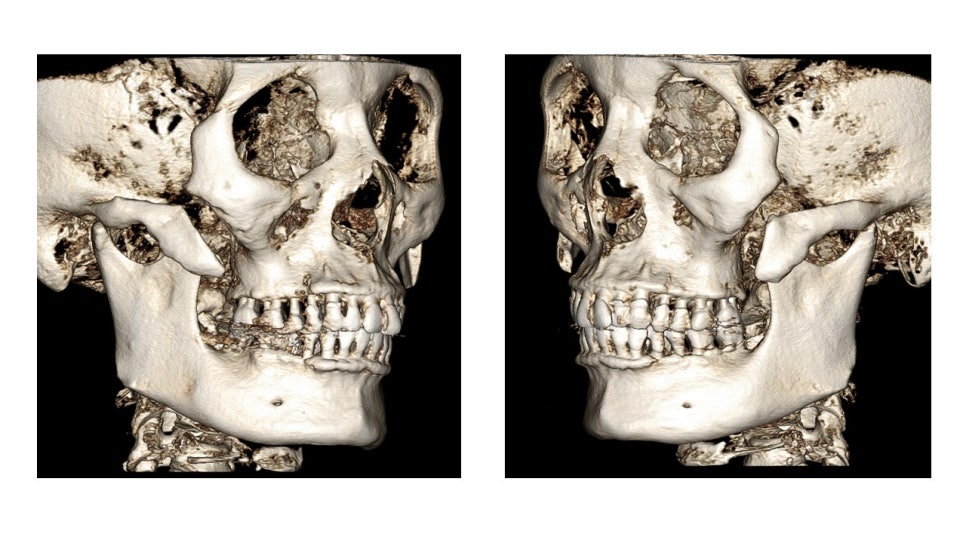
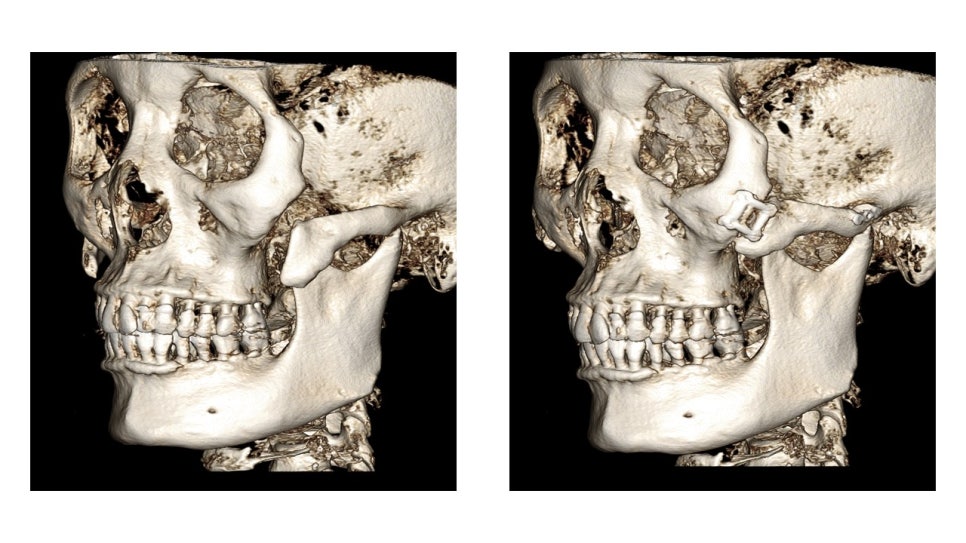
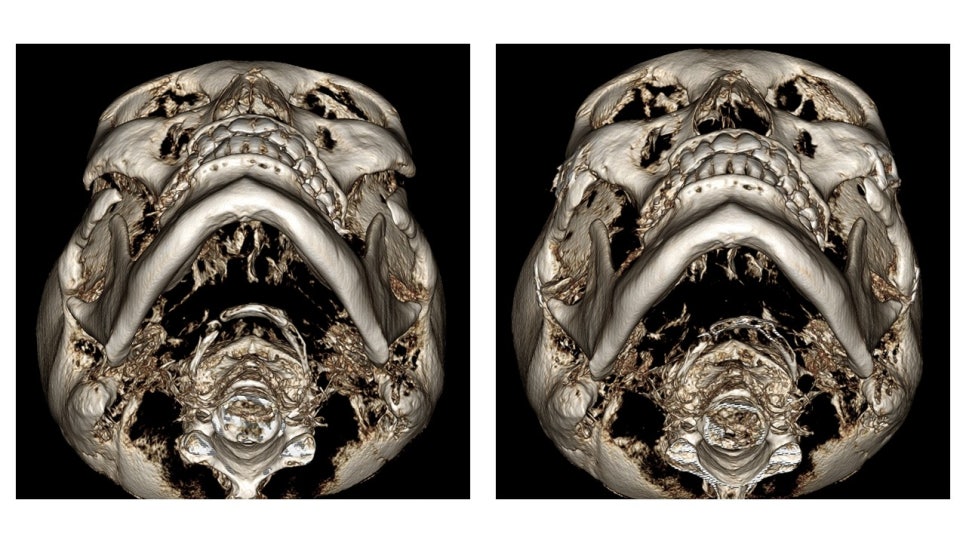
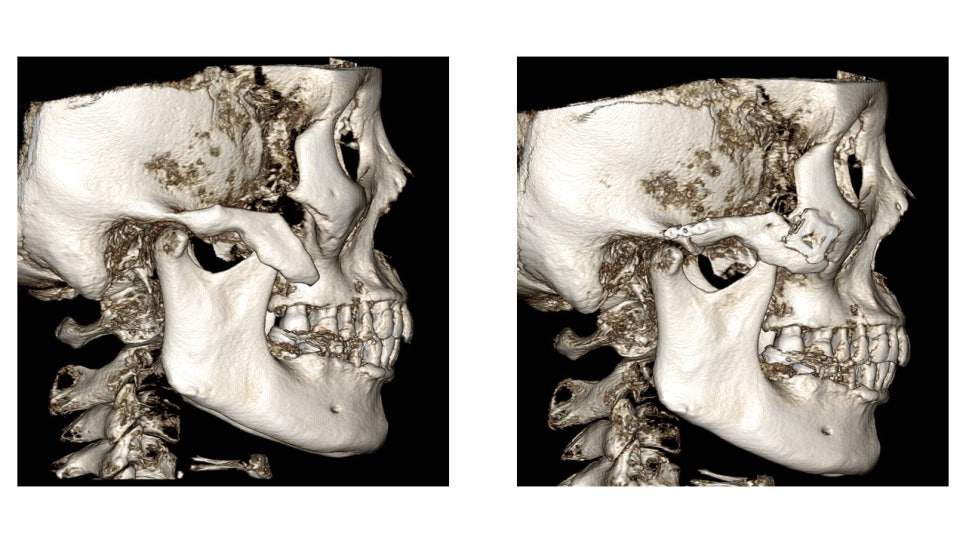
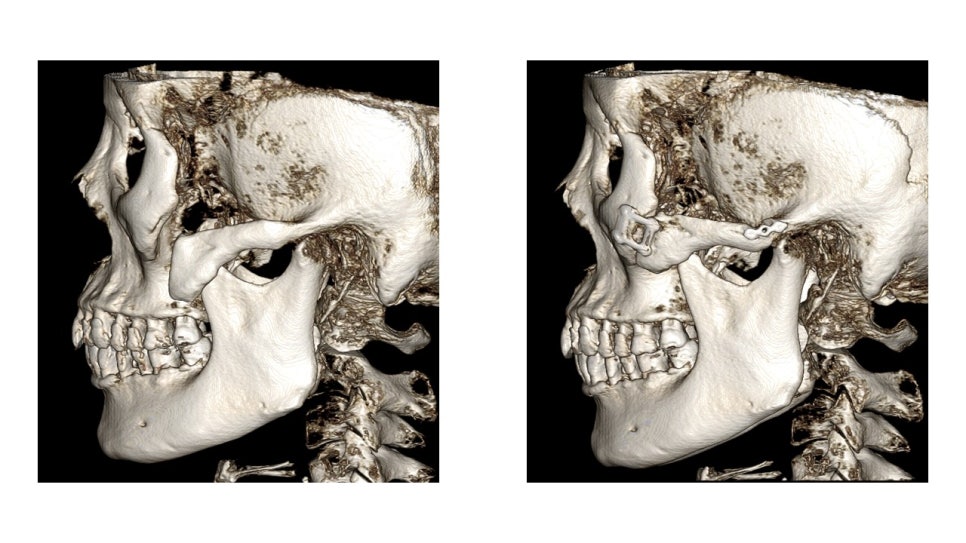
The CT scan showed that, as a result of the surgery performed 30 years earlier, the gap in the body of the cheekbone had become considerably widened. The bone had descended without being properly fixed in place.
- Satisfaction with the Facelift, but Ongoing Concern About the Cheekbone
Fortunately, the patient was very satisfied with the results of the facelift. Even though the bone had descended, the visible sagging had improved significantly because the soft tissue had been properly lifted and secured.
However, after seeing the condition of the bone directly on the 3D CT scan, the patient continued to feel troubled.
“My face seems to keep looking saggy because of this displaced cheekbone…”
“My facial shape also seems unusual, and I am so concerned about it that I cannot sleep.”
The patient earnestly wanted revision facial contouring surgery.
- Why I Had No Choice but to Discourage Revision Surgery
At the time, however, my honest diagnosis was “revision surgery not recommended/high risk.”
-
The gap was too large. Because the bone loss and the separation between the bones were severe, bringing the bones back together and fixing them was technically very challenging.
-
Over the course of 30 years, the tissues surrounding the bone and the blood-circulation environment had changed, making it uncertain whether proper union, meaning the bones joining together, would occur.
Because attempting the procedure incorrectly could result in nonunion or secondary deformity, I fully explained the risks of revision surgery to the patient and discouraged the procedure several times.
- The Patient’s Earnest Request, Decision, and Surgery
However, over the course of four years, the patient continued to express distress and remained extremely determined to properly correct the cheekbone.
As I watched the patient’s earnestness and deep concerns, I ultimately decided to perform the surgery, developing the “safest and most reliable reconstruction plan” based on my extensive clinical experience and expertise in facial contouring and revision surgery.
A highly complex revision procedure was performed in which the widened gap was carefully prepared and the bone was repositioned before being firmly and accurately fixed in place.
- Surgical Results: Before-and-After 3D CT Comparison
The results were very successful.
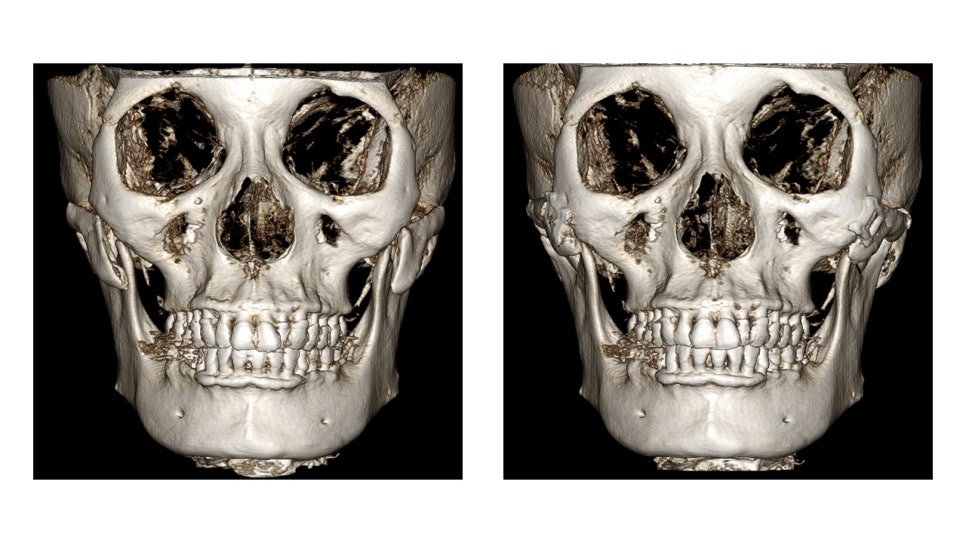
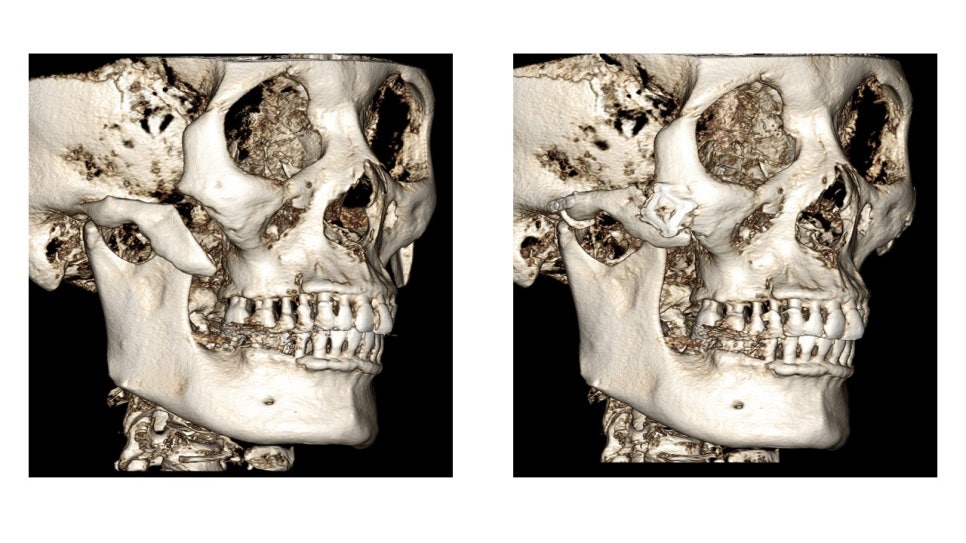
-
Before surgery: The body of the cheekbone was widely separated and had descended.
-
After surgery: The widened gap was neatly closed, the bone was accurately repositioned upward, and it was firmly secured with plates.
After being displaced for 30 years, the cheekbone finally returned to its proper position, and an excellent foundation for bone union was established. The patient was also very happy, saying that they were finally able to let go of the emotional burden they had carried for years.
As a plastic surgeon, the most important considerations when performing surgery are “safety” and “an accurate structural understanding.”
Even when nonunion, inferior displacement, or bone defects have occurred as a result of facial contouring surgery performed long ago, complex revision surgery can be successfully addressed when it is supported by accurate 3D analysis of the patient’s condition and refined surgical techniques.
If you are experiencing ongoing discomfort, sagging, or nonunion after previous facial contouring surgery, I recommend that you not worry about it alone and undergo an accurate 3D CT examination.