Among facial contouring surgeries, zygomatic reduction surgery, which narrows the width of the face, can be said to be somewhat more complicated in process than square jaw surgery.
The cheekbones can be thought of as being divided into the side cheekbones, which determine the width of the middle part of the face (the area directly below the eyes), and the front cheekbones (the 45-degree cheekbones), which determine the contour that projects forward.
The cheekbones are three-dimensional in shape and are connected through the zygomatic arch, which resembles a bridge support, starting from the body of the cheekbone that shapes the contour of the front cheek and extending to the area in front of the ear.
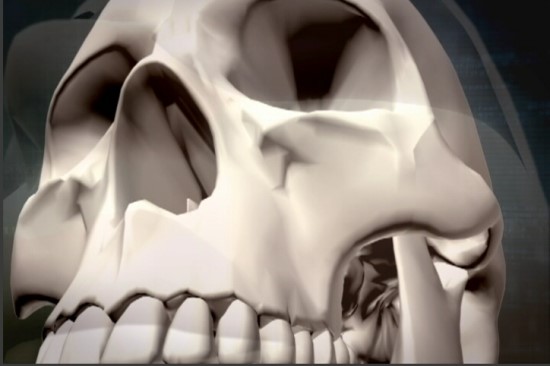
Therefore, the purposes of cheekbone surgery can broadly be thought of as the following two things.
First, to narrow the width of the face by reducing the contour of the laterally protruding side cheekbones.
Second, to make the protruding contour of the front cheekbones (45-degree cheekbones) softer.
In this kind of cheekbone contouring surgery, there is a lot of incorrect information and technical error, so I would like to point them out.
- After cheekbone surgery, sagging cheeks occur.
In zygomatic reduction surgery, if the contour of the side cheekbones is properly reduced, the soft tissue moves toward the area in the middle of the face where the amount of bone movement is greatest, so the direction of movement of the soft tissue surrounding the bone (skin, fat, muscles, etc.) shifts posterosuperiorly.
In fact, if you analyze cases showing sagging cheeks after cheekbone surgery using various methods, there are many cases in which the osteotomized cheekbone itself is fixed in a lowered position or is not properly fixed and therefore fails to unite (the bone does not properly join).
After cheekbone surgery, once the period of about 3 to 6 months has passed, during which swelling in the front cheek area gathers downward, the result should be one that makes the face look younger.
- After cheekbone surgery, you should press on the operated cheekbones with your hands.
In the course of cheekbone surgery, if the bone is osteotomized at the correct position and fixed accurately and securely in the new position, it takes about 4 to 6 weeks for union of the cheekbone (the bones joining together) to occur at the new position.
Of course, even during this period, if it is properly fixed, the bone will not move even with a certain amount of impact.
However, telling someone to press on the bone after surgery is absurd.
If the surgery was done so incompletely that the bone can be moved by pressing it with your hand, then the bone is highly likely to fail to unite or to sag downward after surgery.
- After cheekbone surgery, you should not open your mouth for a month.
If any joint in the human body is not used, it becomes stiff.
In cases where I have actually performed surgery myself, I sometimes see patients who, if they do not diligently do temporomandibular joint exercises (practice opening the mouth) starting from two weeks after surgery, end up suffering for 2 to 3 months because the jaw joint has stiffened.
In other words, if the surgery has been performed accurately and stably, it is important to start mouth-opening exercises early.
- Non-fixation cheekbone surgery method
The cheekbones are an area pulled downward by the muscles of mastication (masseter muscle), so if the bone is cut in a state where it is moved enough to change the position of the cheekbones but not fixed, it will inevitably sag downward.
Therefore, I dare to say that there are two possible outcomes after non-fixation cheekbone surgery.
First, the osteotomy was not done properly.
- In this case, there is almost no side-cheekbone reduction effect after surgery (because the bone did not move).
Second, the osteotomy was done properly.
- If the bone was properly cut but not fixed, the problem is much more serious. It can cause the cheekbones to sag downward and unite in the wrong position, or lead to nonunion (a case in which the bones do not properly join).