Square jaw revision surgery can be broadly considered in three cases.
1. When square jaw surgery was performed, but the result was unsatisfactory
2. When, after square jaw surgery, the back part of the lower jaw appears excessively hollow
3. When, after square jaw surgery, the jawline is not smooth and looks uneven
4. When, after square jaw surgery, there is a large difference in contour between the left and right jawlines
1. When square jaw surgery was performed, but the result was unsatisfactory
This is a relatively easy case to revise.
Through an intraoral incision, the under-contoured bone can be reshaped again, and a satisfactory result can be expected.
2. When, after square jaw surgery, the back part of the lower jaw appears excessively hollow
This is what ordinary people refer to as a so-called “dog jaw.”
If, during square jaw surgery, the angled posterior part of the lower jaw bone is cut too steeply, the facial contour can look very unnatural.
In such cases, bone grafting or artificial bone insertion may also be considered for the hollow posterior area, but it is difficult to expect cosmetically satisfactory results with such methods.
3. When, after square jaw surgery, the jawline is not smooth and looks uneven
In cases where the jawline is not smooth and appears uneven after square jaw surgery, it is mostly caused by overcorrection of the angled posterior part of the lower jaw and inadequate reshaping of the front part.
In such cases, further refinement of the front contour can lead to a much improved facial contour.
4. When, after square jaw surgery, there is a large difference in contour between the left and right jawlines
In facial contours, it is rare for both sides to be exactly the same. Therefore, expecting facial contour surgery to make both sides of the face identical is somewhat unrealistic.
However, if the difference between both sides becomes more severe after surgery than it was before surgery, that is clearly a surgical error and is sufficient reason to consider revision surgery.
Let’s look at actual revision surgery cases for unsatisfactory results after square jaw surgery
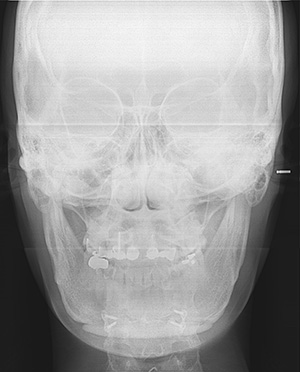
Unsatisfactory result after square jaw surgery
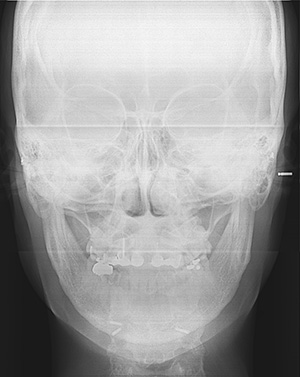
After square jaw revision surgery
Looking at the X-ray images above, you can see that after square jaw surgery, the jawline contour was not natural, and after revision surgery, the lower jaw contour became slimmer.
The reason for this is that the posterior angled area was sharply trimmed without considering the contour of the chin in front, and only the length of the front chin was reduced.
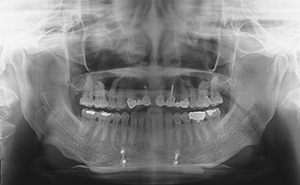
Unsatisfactory result after square jaw surgery
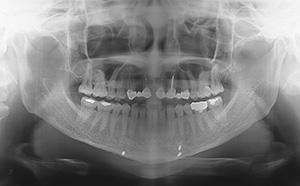
After square jaw revision surgery
This is the panoramic view of the same person.
It is easier to understand from the panoramic view.
The side line was shaved too steeply, and the front chin was only shortened in length, causing the overall contour line not to connect smoothly toward the front and resulting in an unbalanced outcome.
In the panoramic view after revision surgery, you can see that the overall contour line connects smoothly.
Let’s look at another case
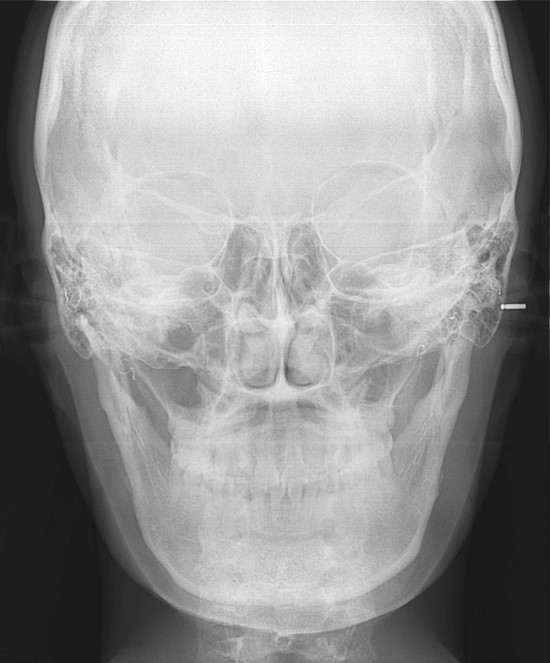
This is a typical case of a dog jaw, where only the posterior angled area was shaved too steeply.
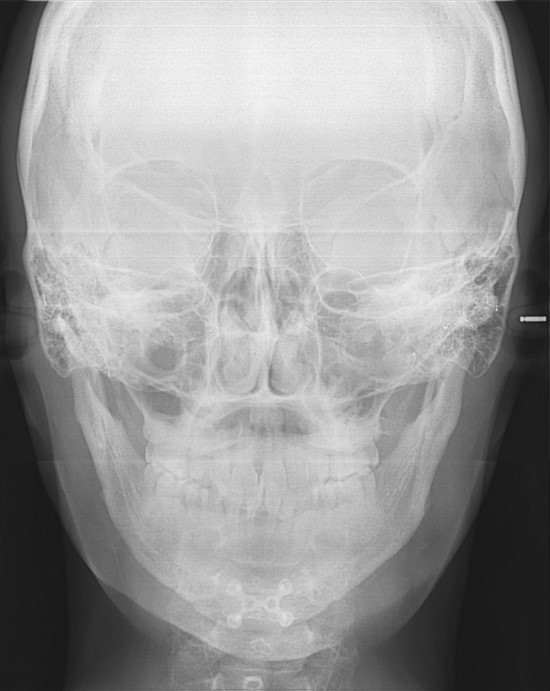
While extending the length of the front chin, the surrounding area was refined so that the contour connected naturally.
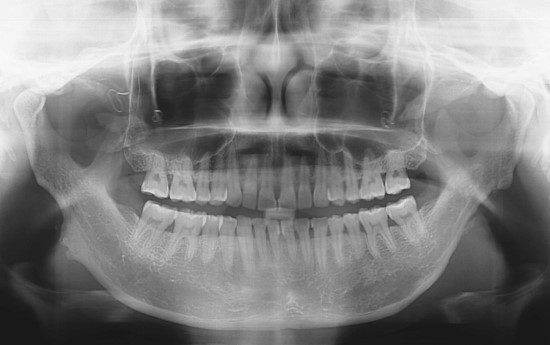
In the panoramic view, you can see that the angled area was shaved away too much.
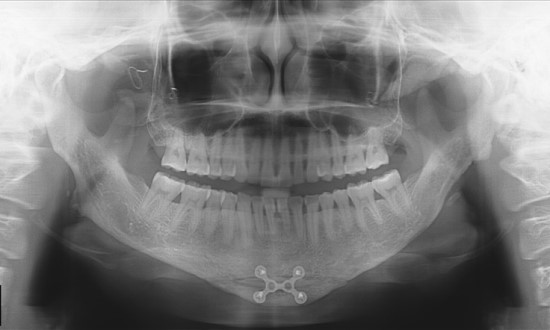
The area that was excessively shaved in the previous surgery cannot be restored, so the forward-connected area was refined, and the front chin was lengthened to correct the overall lower jawline into a V-line.