The desire for monopoly is the greatest motive for companies to create innovation,
and it is through that selfishness that technology advances and humanity is able to prosper.
It is always monopoly companies that create new options for consumers that did not exist in the world before.
In other words, monopoly is a good thing.
Zero to One
Peter Thiel, 2014, Hankyung Publishing
In free-market economic theory, a "perfectly competitive market" is
a market assumed to be ideal, where no excess profit exists anymore.
But why compete when there is no profit?
It is extremely painful and foolish.
Companies always move to "monopolize" the market,
and if they fail to monopolize even some part of it, they eventually decline.
Beyond implant prices lower than insurance reimbursement rates,
non-covered implants have appeared at the level of out-of-pocket payments for insured treatment,
and now the dental care market, where non-covered implants are appearing below out-of-pocket costs,
feels like it has entered a state of perfect competition.
Among dentists, people jokingly say that it may soon come to the point where a clinic offers,
"Subsidies for placing insurance-covered implants," but it is not something to simply laugh off,
because it feels like something that could very well be happening somewhere.
In this kind of situation, dentists opening their own practices
must now struggle to go from 0 to 1.
They need to move away from the trend of opening a practice while focusing only on implants.
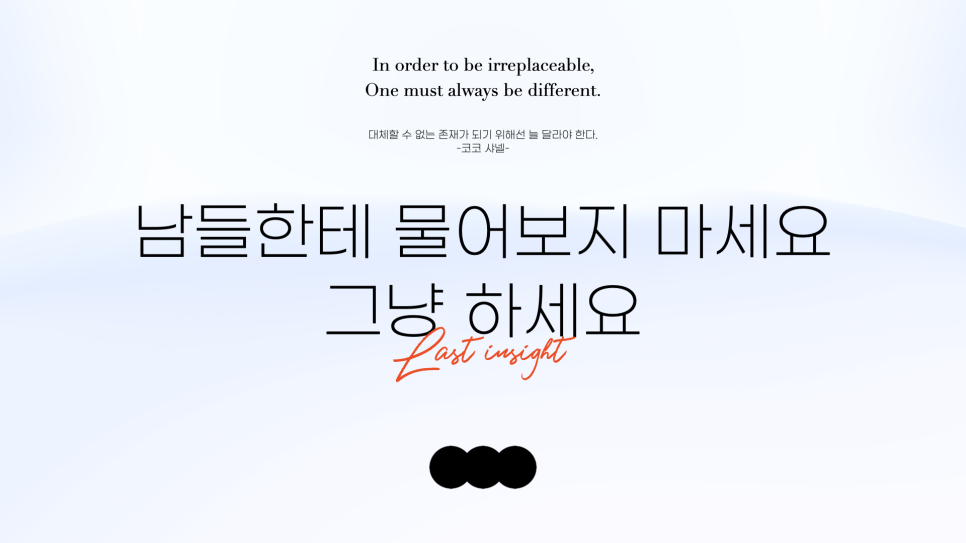
DENTALBEAN <Supplemental Class for Dental Practice Opening and Initial Setup> PPT
Of course, even a dental clinic with an obvious, plain concept
can sometimes gain a monopolistic position depending on its real estate location.
Because there are so few people brave enough to open a practice in the countryside,
a country practice still has enough room left in that market.
But monopoly does not necessarily have to be a certain "location" or "product."
Simply put, in dentistry, it means that a service category does not have to be a monopoly.
For example, if we take orthodontics as an example, saying that one must "monopolize" it
does not mean you have to become the only orthodontic specialist in the neighborhood.
For a while in Cheonan,
there was "the only orthodontic specialist in South Chungcheong Province from Seoul National University,"
and creating such a niche allows you to monopolize a certain part of the market.
In a previous post, I said
not to become the nth clear aligner clinic, but to become the only lingual orthodontics clinic,
and I think it is the same perspective.
There are many clinics that do orthodontics, but the question is what kind of orthodontic clinic I will be.
It does not even have to be about a service category.
At the OF DENTIS opening-branding seminar,
I said that when doing marketing, instead of showing patients before-and-after panoramic images,
you should take facial photos and show those,
because then you can become the only clinic that conducts consultations using facial photos.
I opened my practice in Gangnam specializing in Direct Composite Veneer (resin veneer),
highlighting the natural tooth's "color gradient" and "translucent layer."
When clinics that built their brand with no-prep laminates deceive patients
by making the veneer look thin and translucent before placement as if that were a "translucent layer,"
and finish with a completely unnatural opaque laminate,
I have been creating a translucent layer that truly reproduces the optical opalescent effect.
Of course, behind that lies a treatment philosophy of "minimally invasive,"
and rather than choosing the next more invasive treatment in a borderline situation,
it is much more important to maintain and diagnose a minimally invasive treatment concept even in difficult situations,
and to take responsibility for the treatment results.
In other words, even something like "minimally invasive," which is nothing new in dentistry,
I think can become differentiated when repeated persistently.
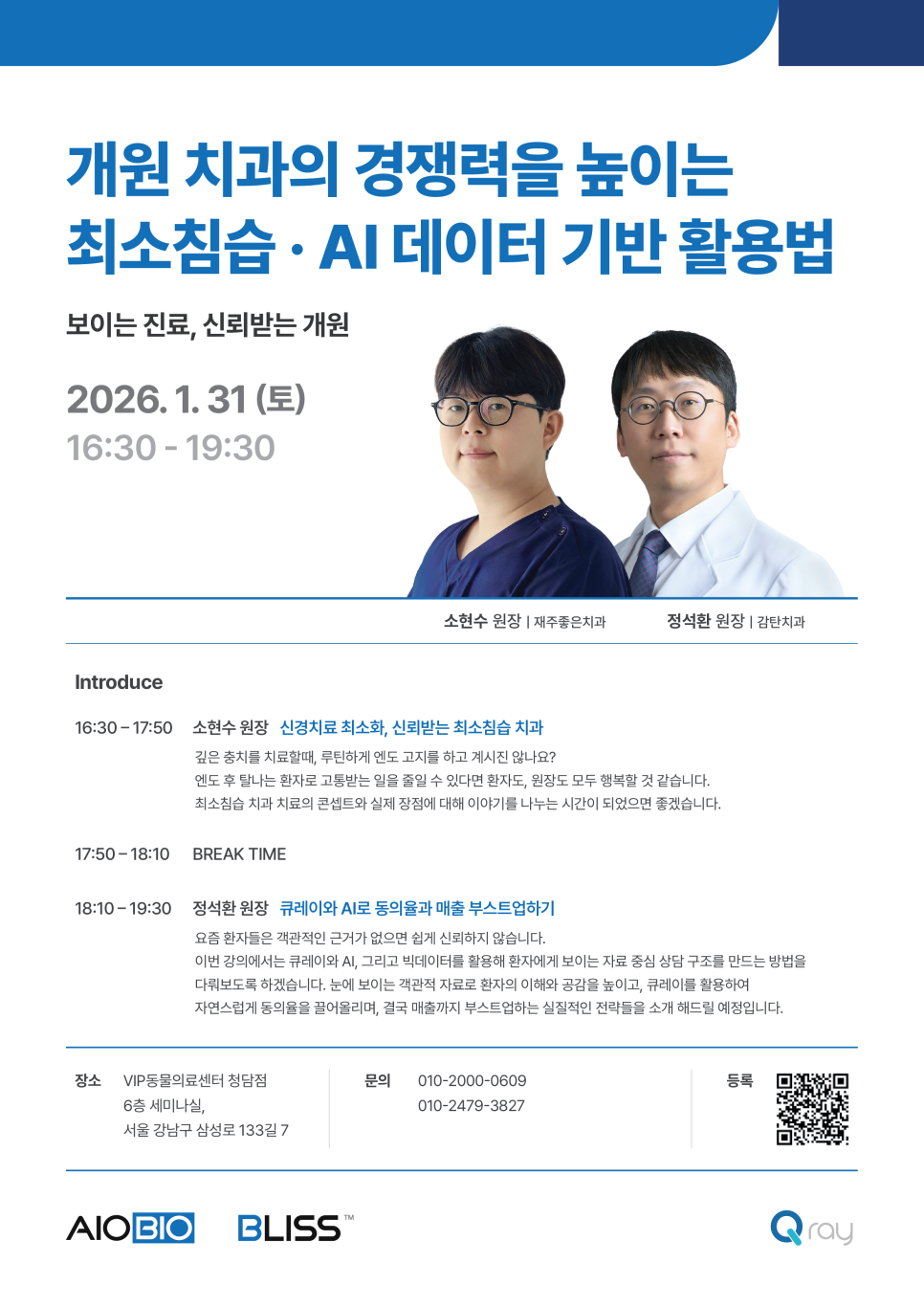
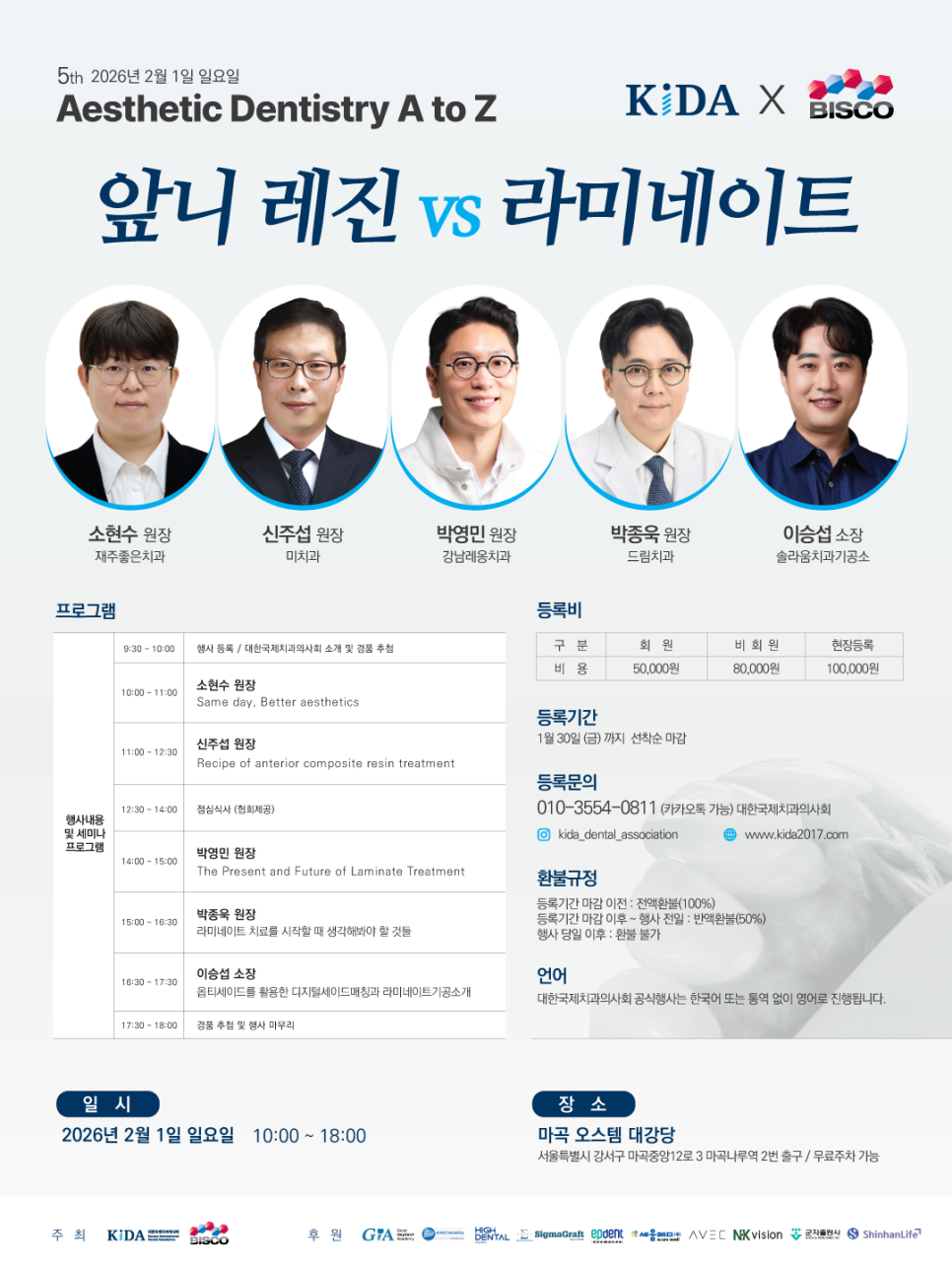
No matter where I give a lecture or what subject I cover,
the basic way I think is like that.
Differentiation, branding, and a slightly unconventional way of thinking.
The things others think cannot be done, the things they say are not any kind of differentiation,
those things are impossible because it is that person, or because it is that neighborhood, or because this cannot work for this reason and that cannot work for that reason.
The things people say are special cases that can only be done if certain special conditions are met.
Of course, they may be right,
but I also think it is true that there are always hints for differentiation in those kinds of things.
Of course, at CUREA I focus a bit more on "minimally invasive,"
and at the International Dental Association I would focus on "anterior composite resin,"
but when it comes to branding and differentiation, I am always
speaking from the same perspective.
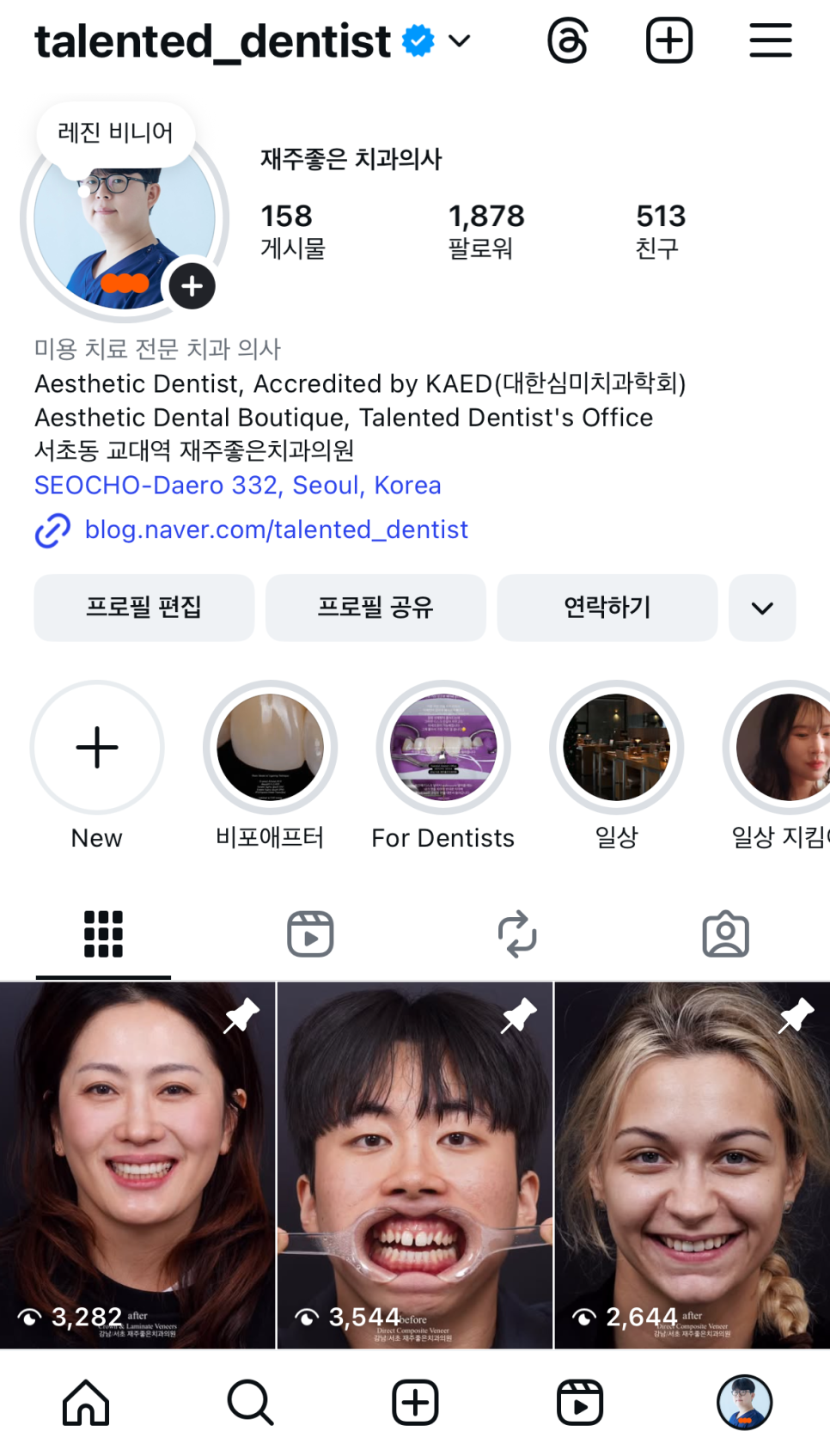
When I talked in the DENTIS opening lecture about taking and uploading facial photos,
most people probably thought it was difficult or impossible,
and did not even think of trying.
But I believe that through such difficulties, one by one, even if only intermittently,
there needs to be an effort to build things up.
Even in something as trivial as translating a dental clinic name into English,
not just Dental Clinic,
but Dentist's Office,
Aesthetic Dental Boutique,
I think the subtle nuances that express our clinic's identity
are things that accumulate one by one.
You might think translating a name is no big deal,
you might think upgrading the interior is not very profitable,
you might think a minimally invasive concept is not much of a differentiation,
but as those things pile up,
there comes a moment when they reach the identity of the "director" and the context is completed.

When the director sets his or her own perspective,
and persistently spreads a consistent message across various channels,
an aura is created, and that becomes the brand.
In that sense, going from 0 to 1
is the same as fully blending the director's personal brand into the dental clinic.
Because no two people are exactly the same.
I am just doing what I want to do.
Something that moved me emotionally because I wanted to do it.
(Taking face photos and uploading them to Instagram, with the patient's consent) is the same.
It was something I wanted to do for no particular reason even before opening my practice,
and perhaps I wanted to intuitively observe how my anterior tooth treatment results affect a patient's face,
and constantly repeat and reconfirm the value of my existence and the reason why I should continue doing this,
but the thought that this could become a point of differentiation
came only afterward, once I already had the feeling that I wanted to do it.
Just as I do not want to go to the countryside but cannot go,
I cannot create a special dental clinic if I do not want to.
The standard for what is ordinary may differ for each person,
but what everyone usually calls "ordinary"
is the trace of someone's intense 고민, the result of blood that was shed.
The excellence of Clinic A,
the stability of Clinic B,
the differentiation of Clinic C,
and Clinic D's revenue performance are combined
and sometimes mistaken for <ordinariness>,
but once you open a practice, you will easily realize
that all of that ordinariness is someone's battlefield.
You have to risk your life on differentiation out of a desire for monopoly
in order to survive on the fierce battlefield.
I want to share that kind of story through various seminars.