Conservative Dentistry: The Meaning of Minimally Invasive Treatment
In the past, dental treatment often focused mainly on treatment itself.
When cavities appeared, dentists would remove a lot,
perform root canal treatment,
place a crown…
and if it progressed further, it often led to implants.
However, the atmosphere in dentistry has been changing little by little recently. The direction is to remove less tooth structure when possible, avoid root canal treatment, and preserve natural teeth for as long as possible.
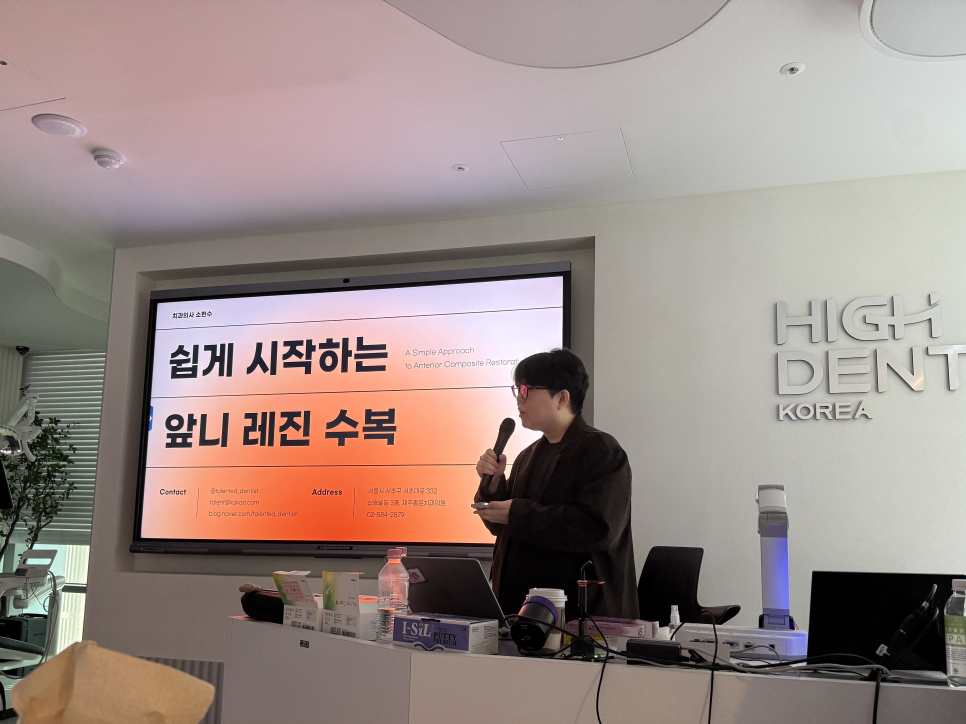
That is why the hottest keyword in academic societies these days is “Minimal Invasive”: minimizing damage.
I also consider minimally invasive treatment the most important approach, and I share my thoughts through academic lectures, especially on minimally invasive treatment for front teeth.
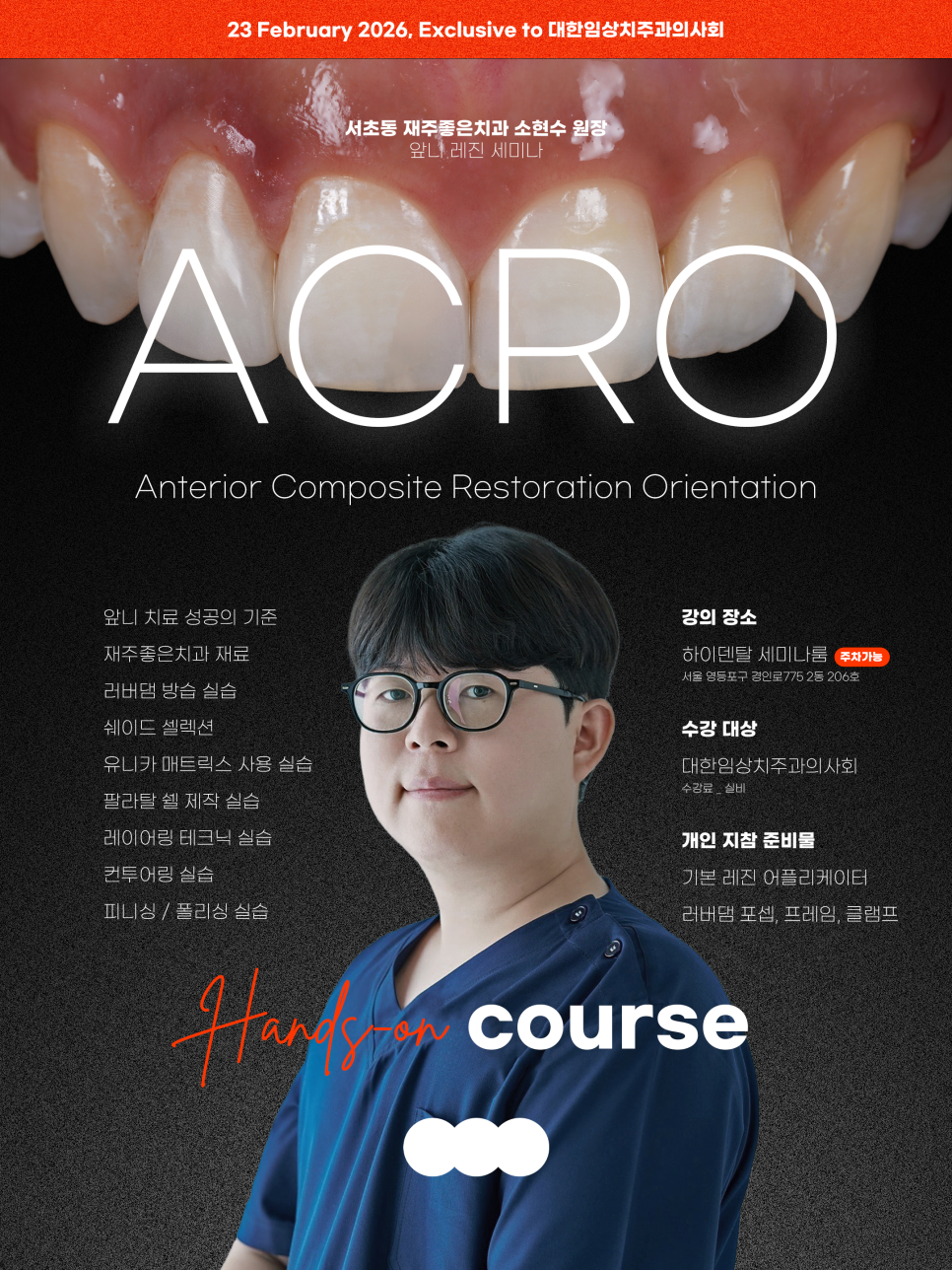
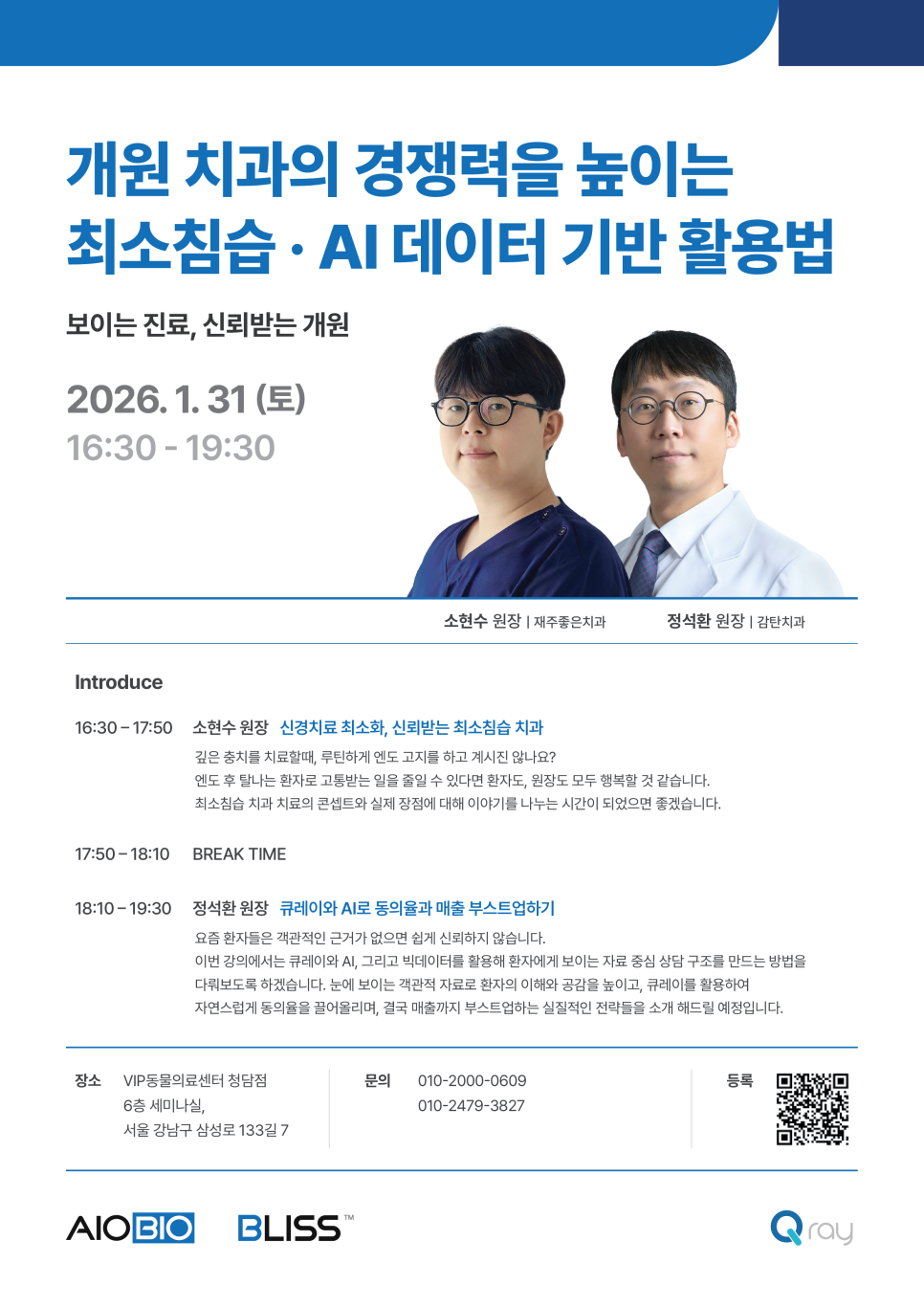 Lecturing to dentists on the topic of minimally invasive treatment^^
From last winter through this spring, I was thankfully invited to many places, so I was able to give many lectures on minimally invasive treatment. 😊
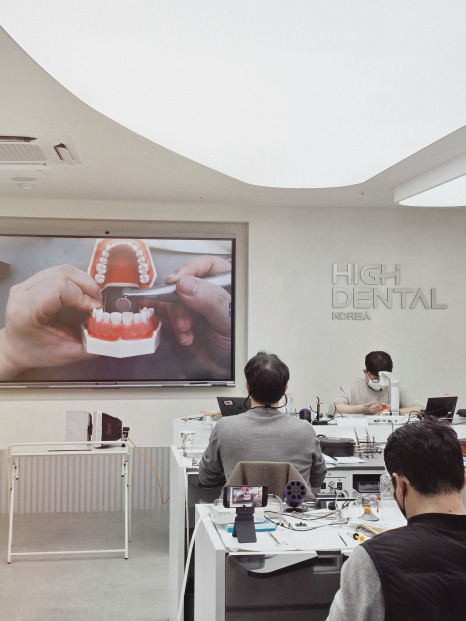
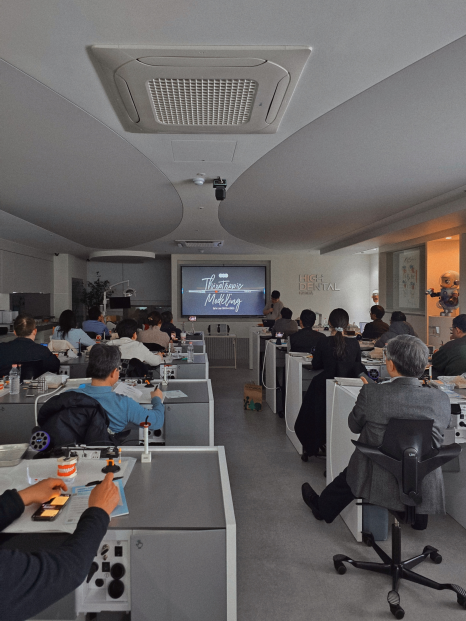 A lecture for dentists 😄
On February 23, I gave a hands-on resin training lecture for front teeth hosted by the Korean Academy of Clinical Periodontology.
I was truly happy that many people showed interest, from associate dentists to senior clinic directors with many years of experience..ㅎㅎ
As a doctor who actively practices minimally invasive treatment, I am very pleased that this trend in dentistry seems to be moving in a healthy direction.
What Does Minimally Invasive Treatment Mean in Front Tooth Care?
Conservative Dentistry
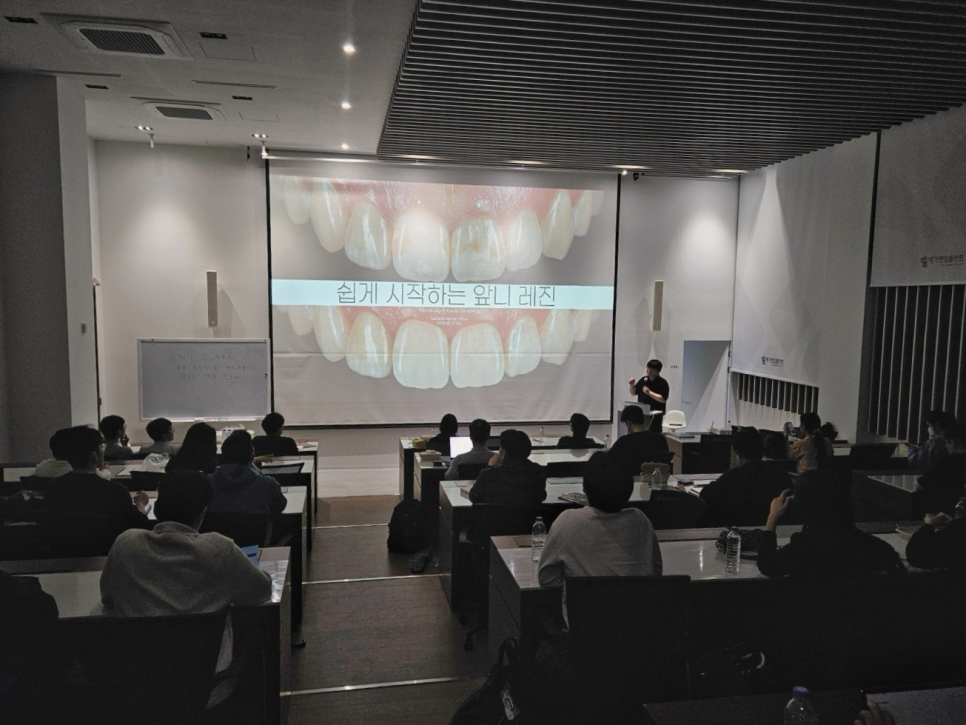
When talking with patients about front teeth, I hear that more people than expected have been told things like this.
“Putting laminate veneers on a few front teeth will make them look neat,” or “A crown can match the color and make the shape look nice.” Of course, there are definitely cases where such treatment is necessary.
However, front teeth are especially an area where the amount of tooth reduction determines the outcome.
1️⃣ Front teeth have a high proportion of enamel.
: If too much is removed and dentin is exposed, bonding strength may decrease, making it difficult for resin or restorations to remain stable over the long term.
2️⃣ Front teeth are the area with the greatest esthetic impact.
: If too much tooth structure is removed, the translucency and color depth of the natural tooth can be reduced, making it harder for restorations to reproduce the original shade.
3️⃣ Front teeth are structurally thin.
: If unnecessary reduction is excessive, tooth strength may weaken and the risk of fracture may increase. That is why, in front tooth treatment, minimally invasive care that preserves as much natural tooth as possible becomes the key standard.
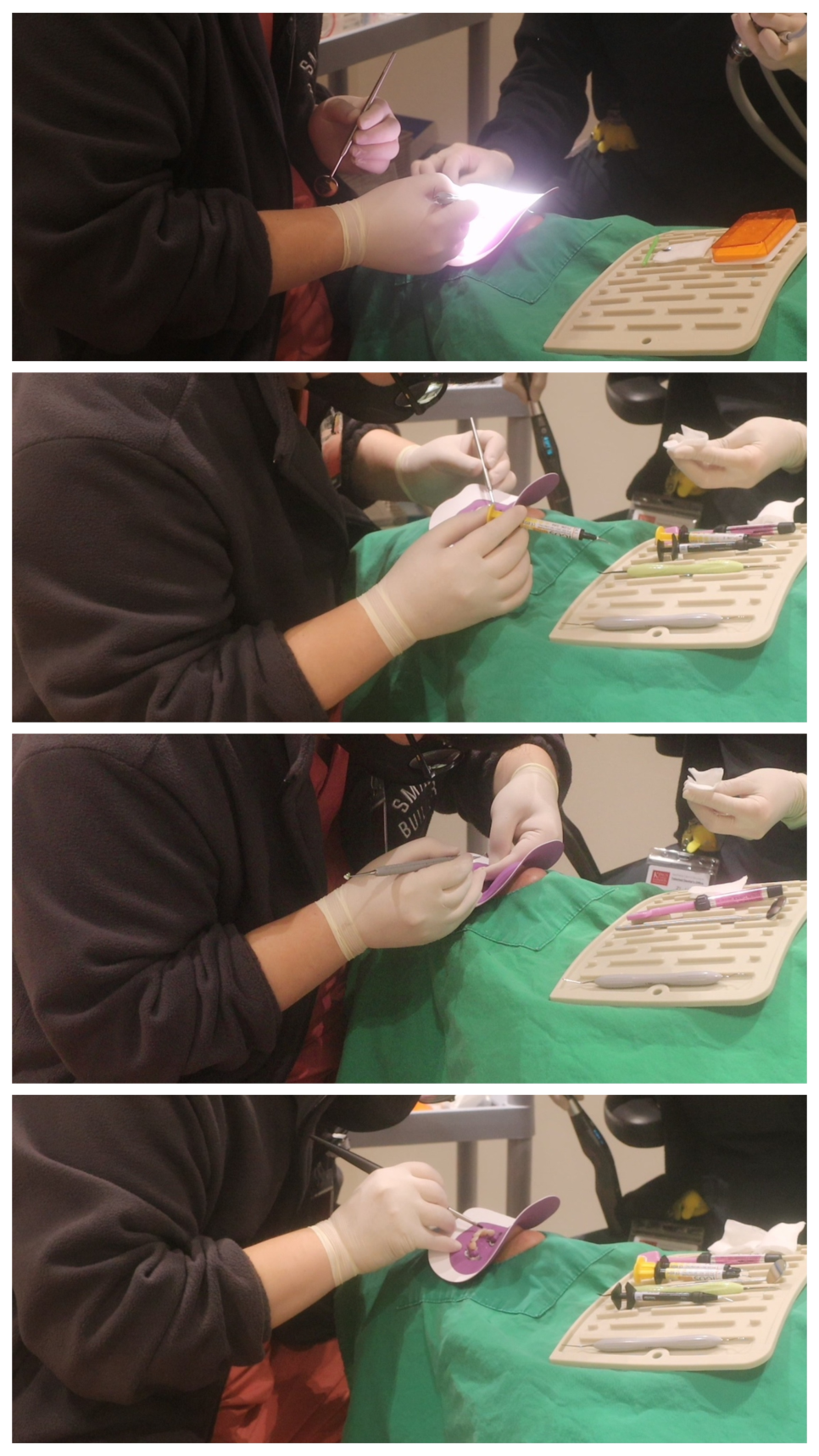
So in front tooth treatment, what determines the completeness of the treatment is not “how beautiful it looks,” but “how much natural tooth was preserved.”
If the gap or shape issue is small, resin alone can improve it with only minimal correction, and in some cases there are methods that require almost no reduction at all.
Equipment That Makes Minimally Invasive Treatment Possible: Qray
Conservative Dentistry
One of the devices that makes this kind of minimally invasive treatment possible is Qray, which I always use in my practice.
To be honest, using Qray makes treatment take a little longer. We have to take photos and check the condition of the cavities one by one. It can also feel uncomfortable for patients because they have to keep their mouth open a little longer.
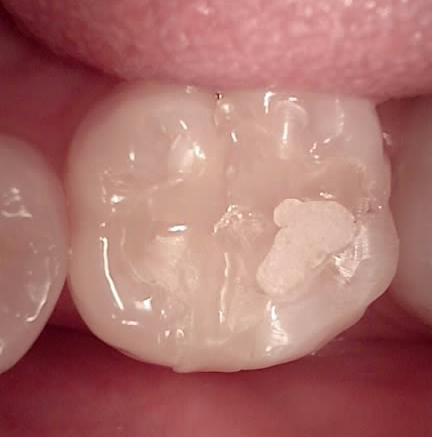
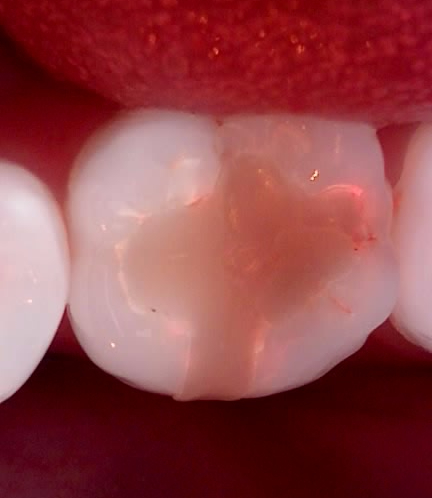 Before and after Qray
Even so, the reason I insist on Qray is very simple. It accurately shows the boundary between decay and healthy tooth structure.
Cavities often look different on the outside and inside.
Conservative Dentistry
Even if they look like a small spot on the surface, they are often much more extensive on the inside.
The problem is that if you rely only on what you can see with the naked eye, it is difficult to judge this boundary accurately.
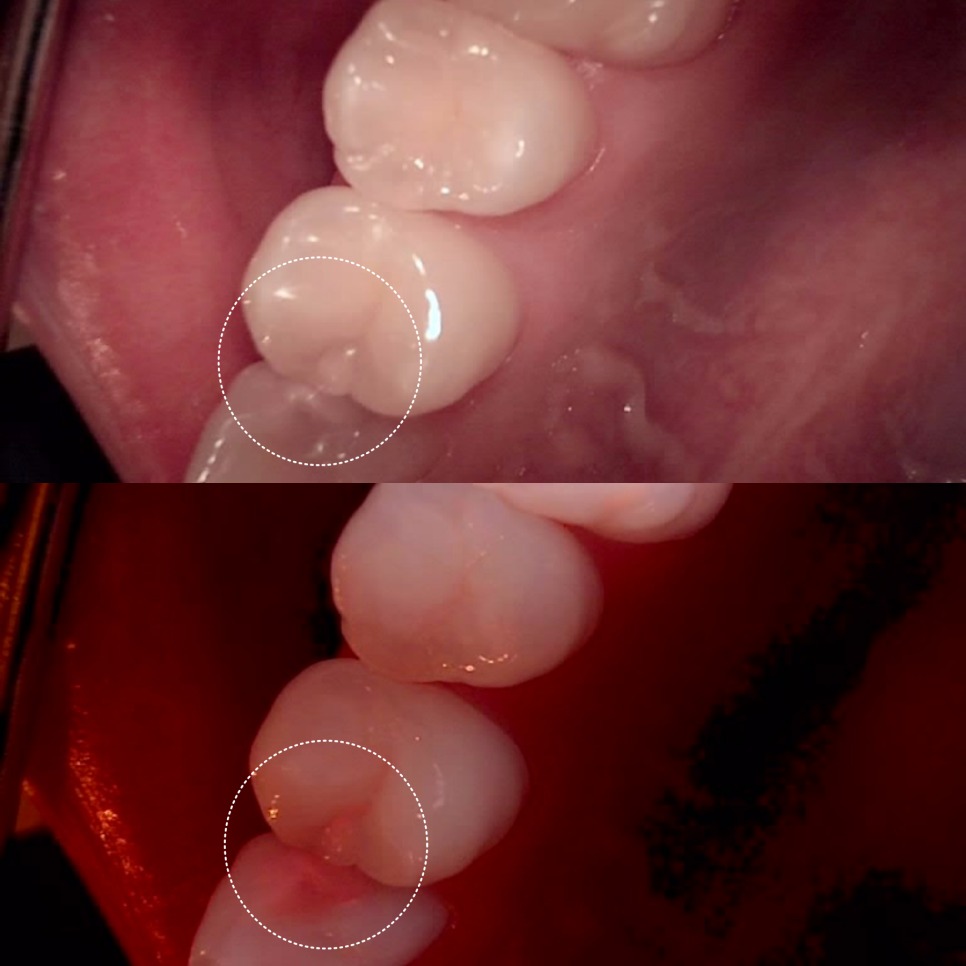
So during treatment, situations like this can happen. Areas that are not actually decayed may be removed together, or on the contrary, some decay may be left behind.
But when Qray is used, the boundary between the decayed area and healthy tooth structure becomes relatively clear. Simply put, you can think of it as a device that shows “how far treatment needs to go”^^
What Changes When Unnecessary Reduction Is Reduced
Conservative Dentistry
When diagnosis becomes more accurate like this, the process changes too. We can remove only the decayed area and leave healthy tooth structure intact.
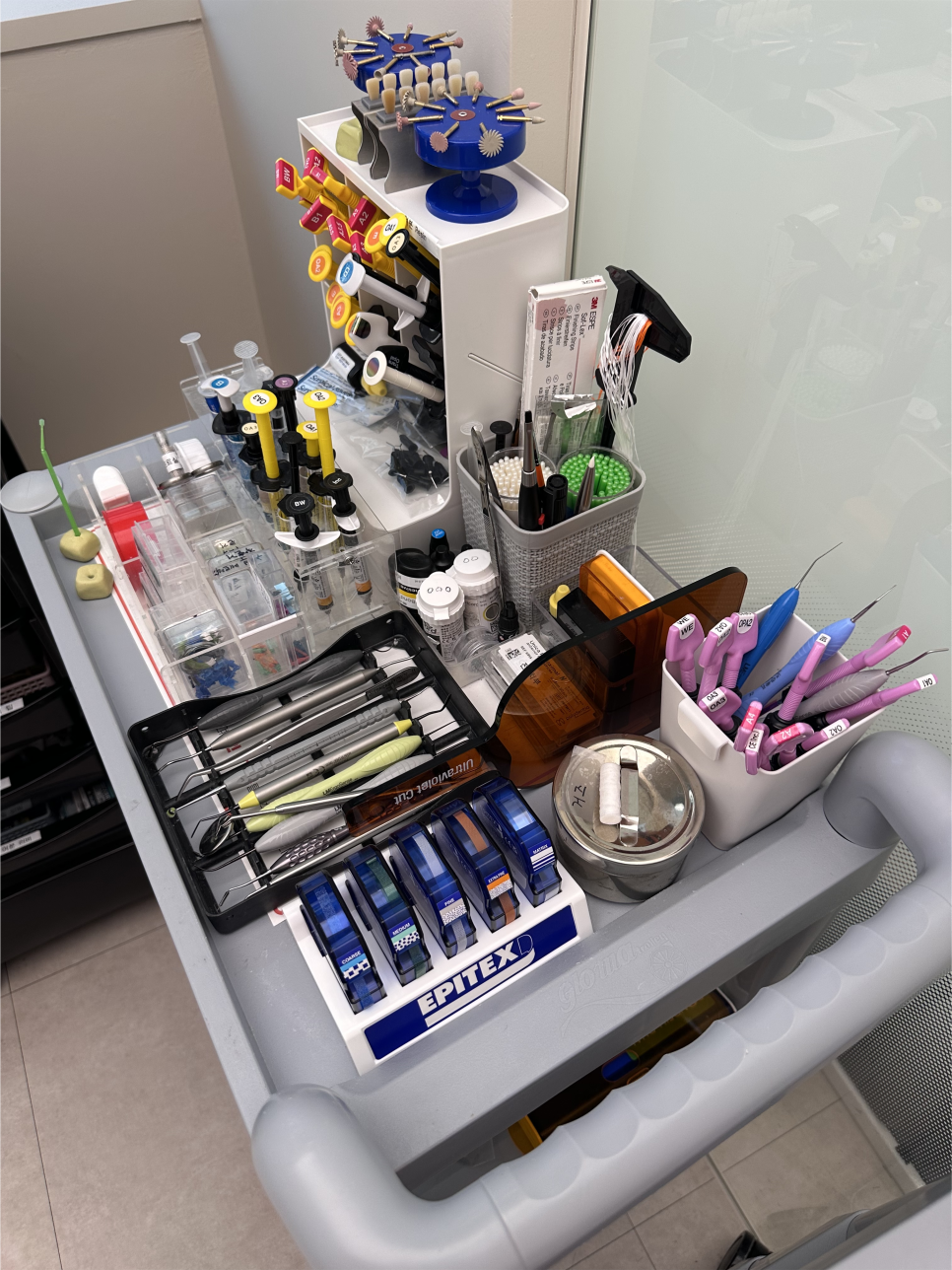 Materials used for resin restoration
As this experience accumulates, changes naturally follow. In the past, teeth that would have gone on to root canal treatment can often be finished with resin alone.
In fact, there are quite a few cases where patients came in with a diagnosis of root canal treatment from another clinic, but after rechecking with Qray, they were completed with minimally invasive resin treatment.
From the patient’s perspective, it means one more tooth was saved, haha.
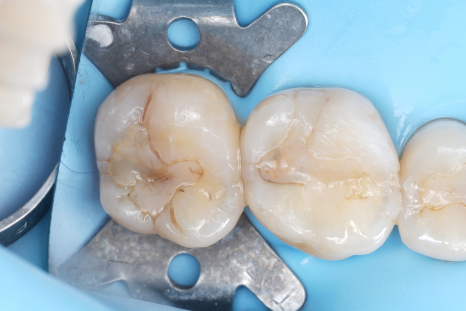
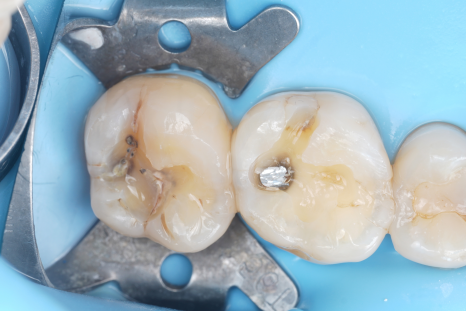
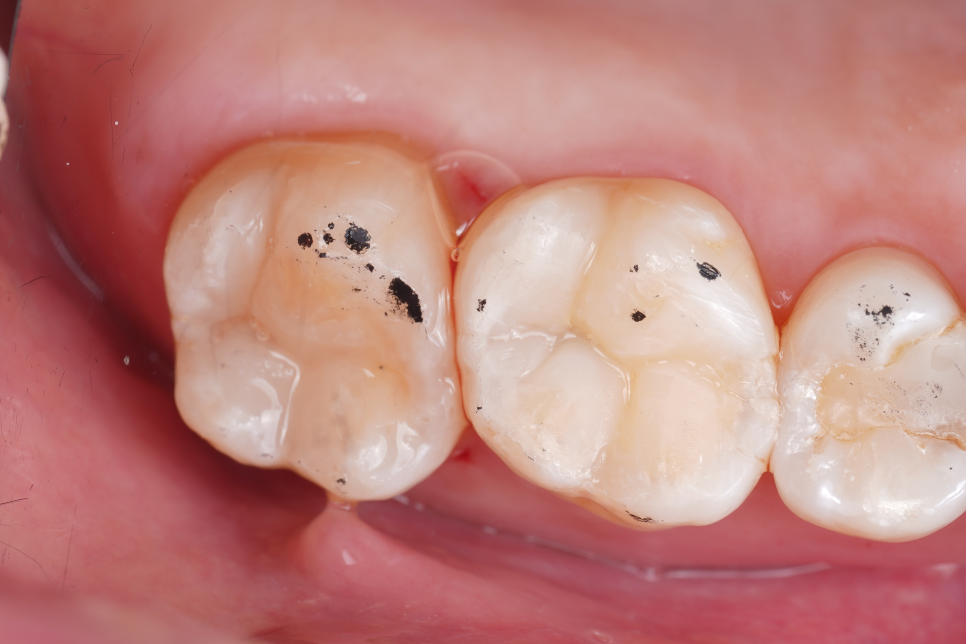 I filled it naturally with resin so it doesn’t stand out👏🏻
I believe the goal of dental treatment is not simply to eliminate cavities, but to help teeth last longer.
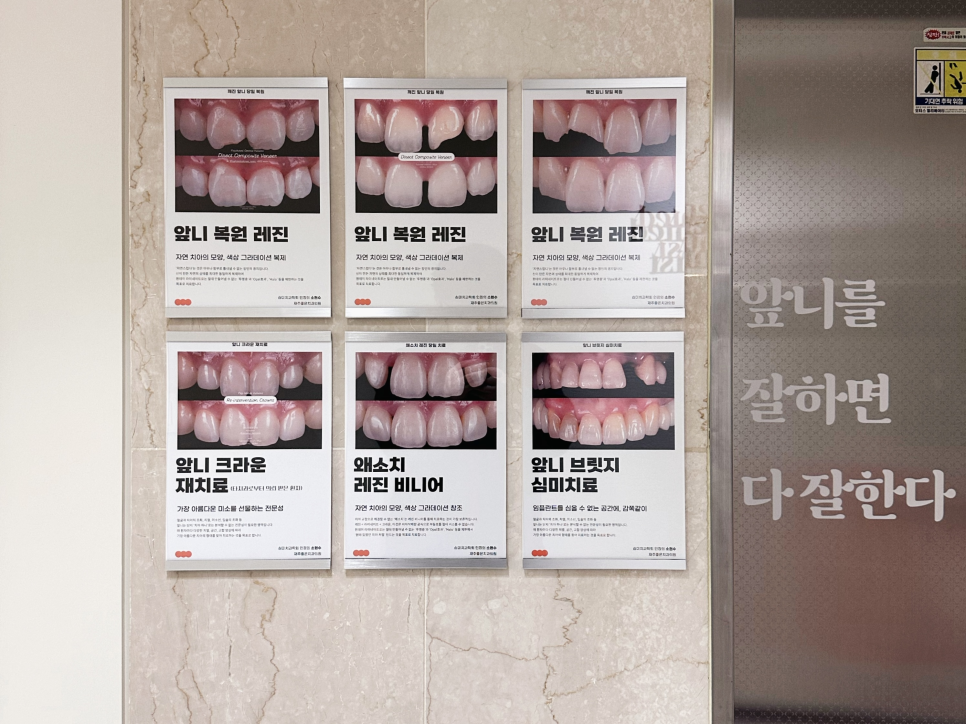
Conservative dentistry may not look flashy from the outside. It is not a major surgery like an implant, and it does not always involve eye-catching equipment.
But there is more thought in it than people may expect. “How can I preserve this tooth even a little more?” When you keep asking that question, the direction naturally converges on minimally invasive treatment.
And in that process, devices like Qray can be a great help.
Once a tooth is shaved down, it cannot recover. That is why today as well, I try to look at teeth a little more slowly and a little more carefully when treating patients. If possible, I want to preserve any tooth that can be saved until the very end^^
👇🏻 Quick reservation 👇🏻
👇 Articles worth reading together! 👇