The full heat of summer is now upon us.
For those who are undergoing laser procedures, and for those heading out for summer vacations,
I’d like to introduce the proper way to use sunscreen
from the perspective of a plastic surgeon, focusing on how to protect yourself from UV rays.

- Types of Ultraviolet Rays
Ultraviolet rays are the main cause of freckles, lentigines, and age spots,
as well as skin wrinkles and aging...
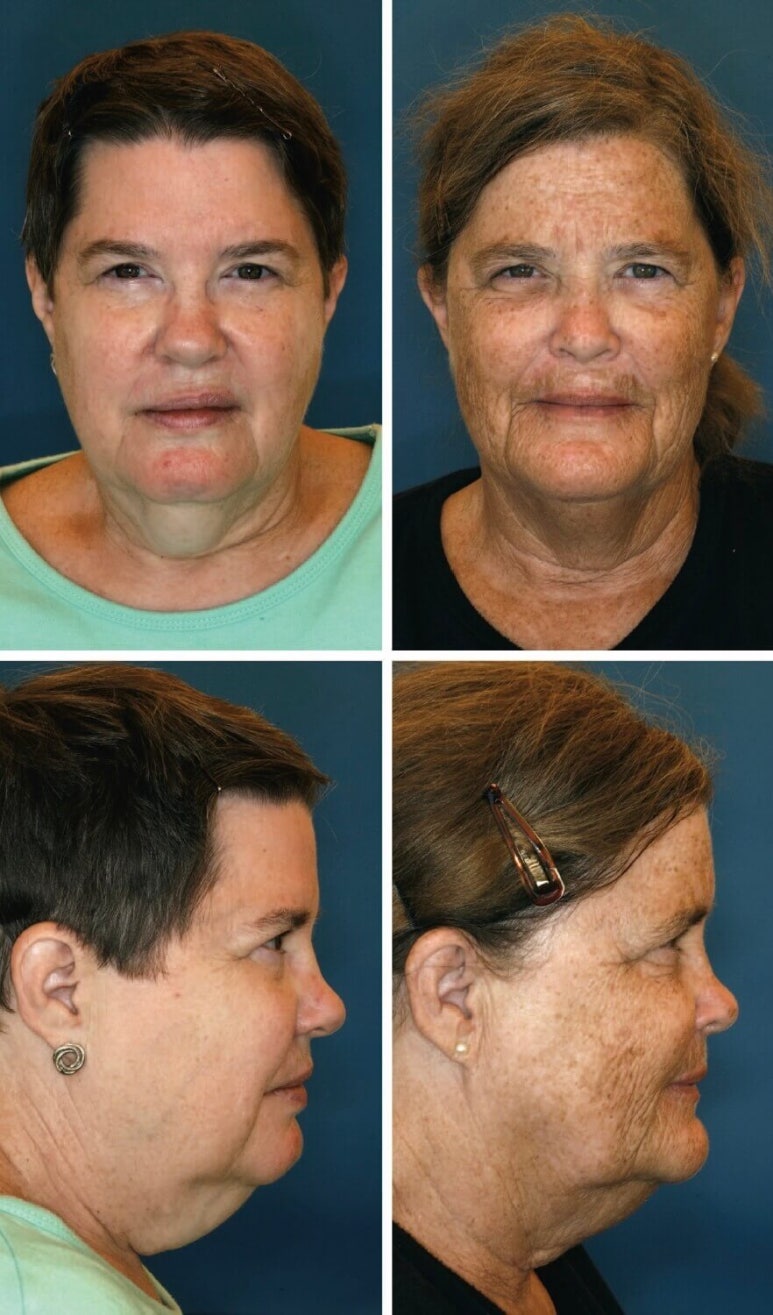
Aged appearance of identical twins exposed to different amounts of UV radiation
Ultraviolet rays are divided into A, B, and C according to wavelength.
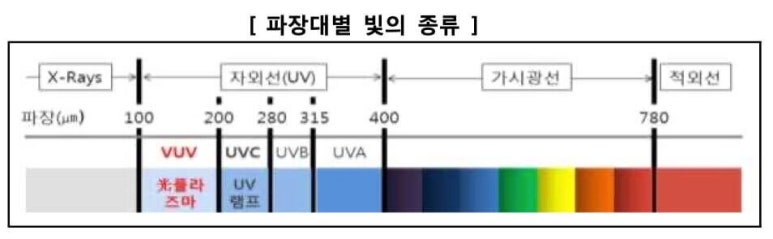
Types of ultraviolet rays
●Ultraviolet A (UVA): wavelength of 320–400 nm. Causes aging and pigmentation.
●Ultraviolet B (UVB): wavelength of 290–320 nm. Causes sunburn. It penetrates the skin less deeply than ultraviolet A.
●Ultraviolet C (UVC): wavelength of 200–290 nm. It is blocked by Earth’s ozone layer and does not reach the surface.
Sunscreen usually needs to block both ultraviolet A and B,
and sunscreens on the market list protection ratings that distinguish between the two.
- PA (UVA Protection Rating)
This indicates the degree to which ultraviolet A is blocked.
The more plus signs there are, the better the protection,
and based on the UVA that reaches the skin,
++ means 1/4,
+++ means 1/8
of UVA reaches the skin.
- SPF, the UV Protection Index
The SPF number used on sunscreen indicates the degree to which ultraviolet B is blocked.
In general, SPF 15 is said to block 93% of UV rays,
SPF 30 blocks 97%,
and SPF 50 blocks 98%.
Some of you may have noticed,
but a higher number does not mean UV protection increases in direct proportion;
instead, it forms a gradually flattening curve as shown below.
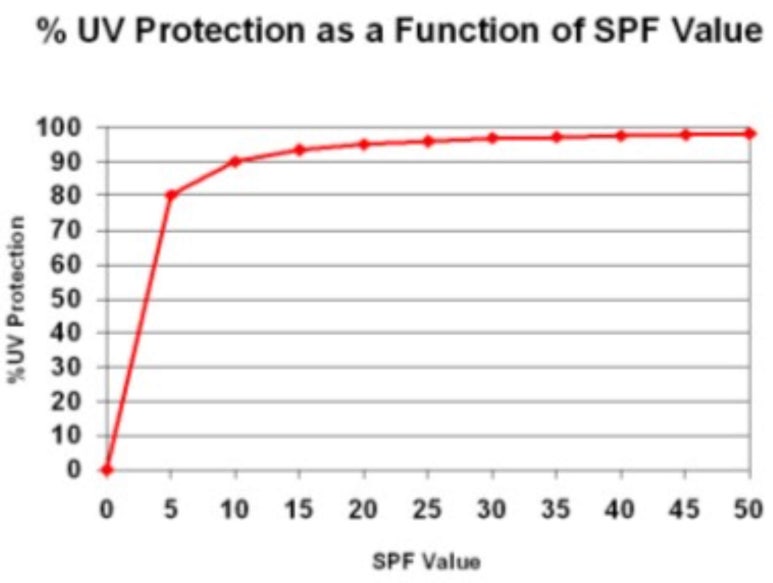
Protection rate by SPF
However, for a short outing, use SPF 20 or higher,
for outdoor activities such as golf, use a product with around SPF 35,
and at the beach or during water sports, it is important to use a product that does not wash off in water.
- Does a higher SPF mean longer UV protection?
One of the most commonly misunderstood ideas about sunscreen recommendations is
thinking that SPF is proportional to how long protection lasts,
which leads people to insist on only high-SPF products.
When cosmetics companies test sunblock and determine the rating,
they are not measuring how long UV rays are blocked,
but quantifying ‘how much light’ is blocked.
For example, if you apply an SPF 40 product,
the amount of UV reaching the skin is reduced to 1/40.
This does not mean you can stay in the sun 40 times longer.
- Can you trust the SPF rating completely?
Also, when cosmetics companies conduct tests, the sunscreen effect is measured
when it is applied in its ‘optimal condition.’
In other words, how thickly it is applied is important.
No matter how high the SPF is, if you apply only a small amount and spread it thinly,
it is difficult to get the protection effect stated by the manufacturer.
Because the standard for this optimal condition can vary by product,
the key is to apply a sufficient amount when using sunscreen.
- Why do you need to reapply it?
Even after applying sunscreen, our skin
continually secretes sweat and breathes,
so the sunscreen applied to the surface can inevitably be washed away.
Regardless of whether the protection rating is high or low,
the reason it needs to be reapplied every 2 hours
is exactly that.
- Sunscreen Ingredients: Organic vs. Inorganic
Depending on the ingredients, sunscreens are classified as
chemical sunscreens (organic, organic UV blockers)
vs.
physical sunscreens (inorganic, inorganic UV blockers).
Chemical sunscreens
use benzene-based organic chemical compounds as their main ingredients,
and these ingredients absorb UV rays and reduce their penetration into the skin.
Physical sunscreens
are made of inorganic chemical compounds such as
zinc oxide and titanium dioxide,
and these ingredients block UV rays by reflecting and scattering them.
Neither type can be said to be overwhelmingly superior,
and each has its own advantages and disadvantages,
so there are also combination products that contain both substances.
- What kind of sunblock should be used after laser procedures?
In the summer, when UV rays are strong,
if you have undergone a laser procedure,
the product should be less irritating to sensitized skin (a gentle sunscreen)
and should also provide excellent sunblock effectiveness.
Therefore, even if you have to accept some whitening on the skin,
sunscreens with stronger physical blocking effects are recommended.