Hello, this is Park Seong-hyeok from Neunnopi Plastic Surgery.
On the internet, a topic like
Should you do a certain surgery, or not?
is good at attracting people’s attention.
More often than you might think, on YouTube,
non-specialist directors who are unable to make full use of their major field
and move from one aesthetic clinic to another
use provocative titles to attract attention,
saying things like,
Don’t do surgery (A); instead, do this procedure (B)...
while explaining as if the main procedure at their own clinic is superior...
Honestly, I know this is not just the fault of the individual director,
but also the calculation of content planners trying to get attention somehow in a fierce market. ㅠㅠ
In fact, to talk about something like this,
you need a lot of experience with both A and B,
and at the same time you must be free of personal conflicts of interest
in order to provide the listener with the right information.
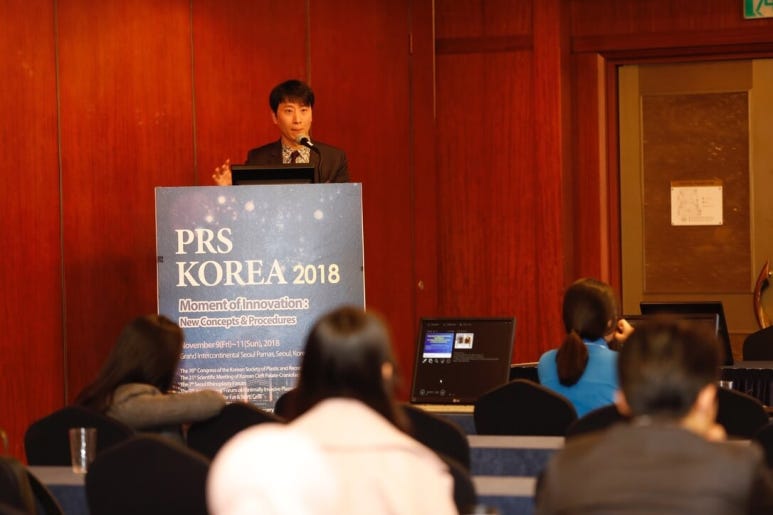
At the time of a presentation at the 2018 plastic surgery conference
In that sense,
when I was a rookie at Sinsa Station Plastic Surgery,
I performed 200 forehead reduction surgeries over 6 months,
and I also worked at a hair clinic known for excellent technical skill...
And above all,
I am not currently performing forehead reduction surgery or hair transplantation,
and I do not plan to actively do so in the future...
So on this topic,
I think I can dare to say
that I can speak more objectively
than most people^^;;
- Things to consider first
- Proportion
If you are interested in this post,
you are probably someone worried about a broad forehead...
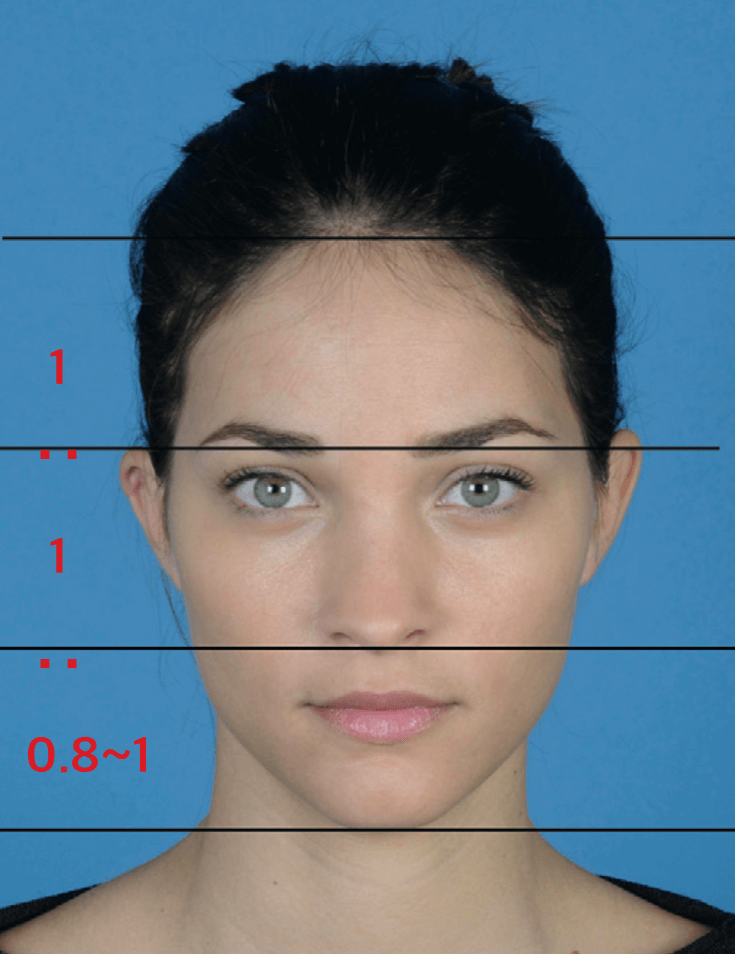
Ideal facial proportions
The face has ideal proportions,
and if you are considering either of these two procedures,
you should begin by carefully analyzing your own proportions.
- Differences between men and women
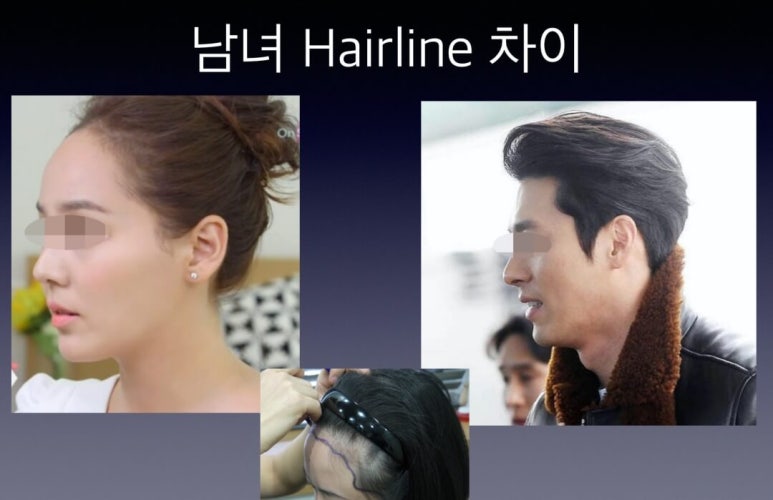
Differences in hairlines between men and women
Gender differences also need to be considered...
If a woman’s hairline is curved and has many fine baby hairs,
a man’s hairline is generally a little more straight,
and thicker hairs grow from the front part of the hairline.
- The hair cycle
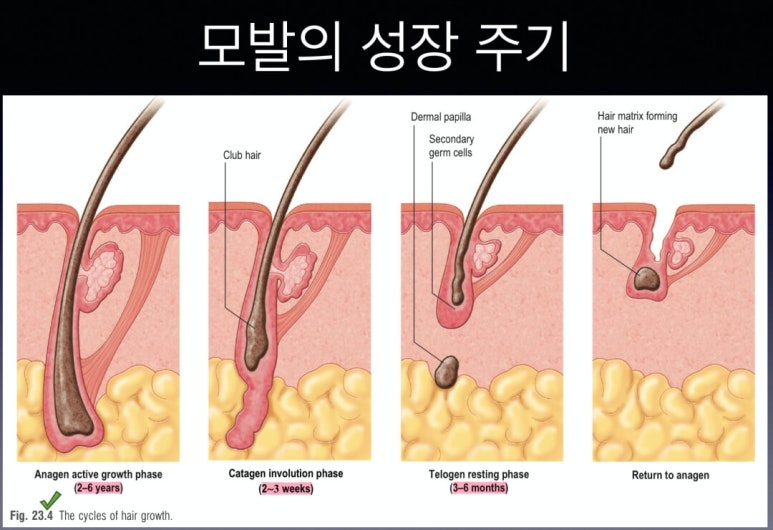
Hair cycle
Just as there are spring, summer, autumn, and winter,
hair also has a cycle of growth, regression, and transition.
This is why hair does not start growing immediately after a hair transplant.
- Hair loss
Male pattern hair loss is synonymous with hereditary hair loss or androgenetic alopecia,
and is characterized by shortening and thinning of the front hairline and the crown.
Textbook-wise,
hair loss treatment is divided into grades A to D
based on effectiveness:
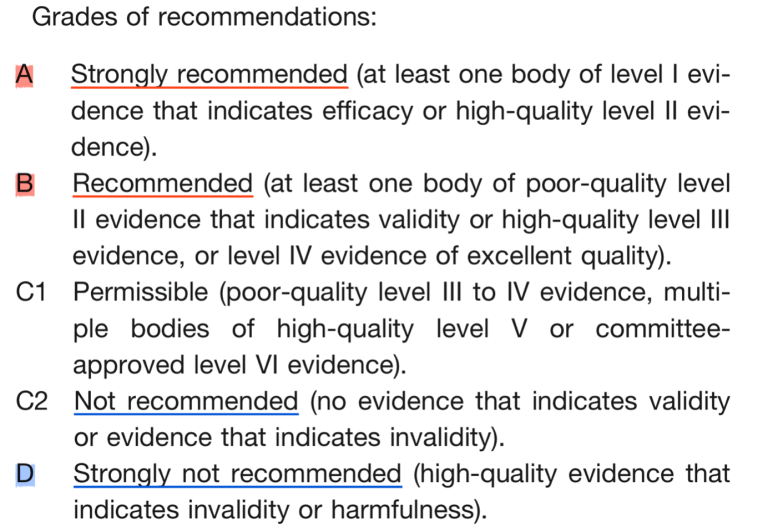
Grade of Recommendations
In Grade A, treatments with very well-established effectiveness include hair transplantation, minoxidil, and finasteride.
In Grade B, a relatively recommended treatment is low-level laser therapy (LLLT).
According to this standard, Grade D means a treatment that is not recommended.
- Structure of the hair root
The hair root (the part of the hair embedded in the skin) can be divided into three areas.
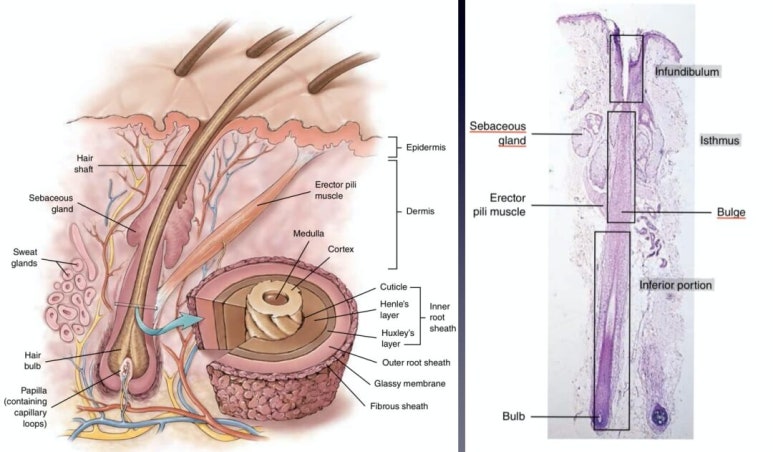
Structure of the hair root
• infundibulum : the hair shaft exists
• isthmus : stem cells (hair bulge) exist
• inferior portion : hair bulb. Androgen hormone receptors exist
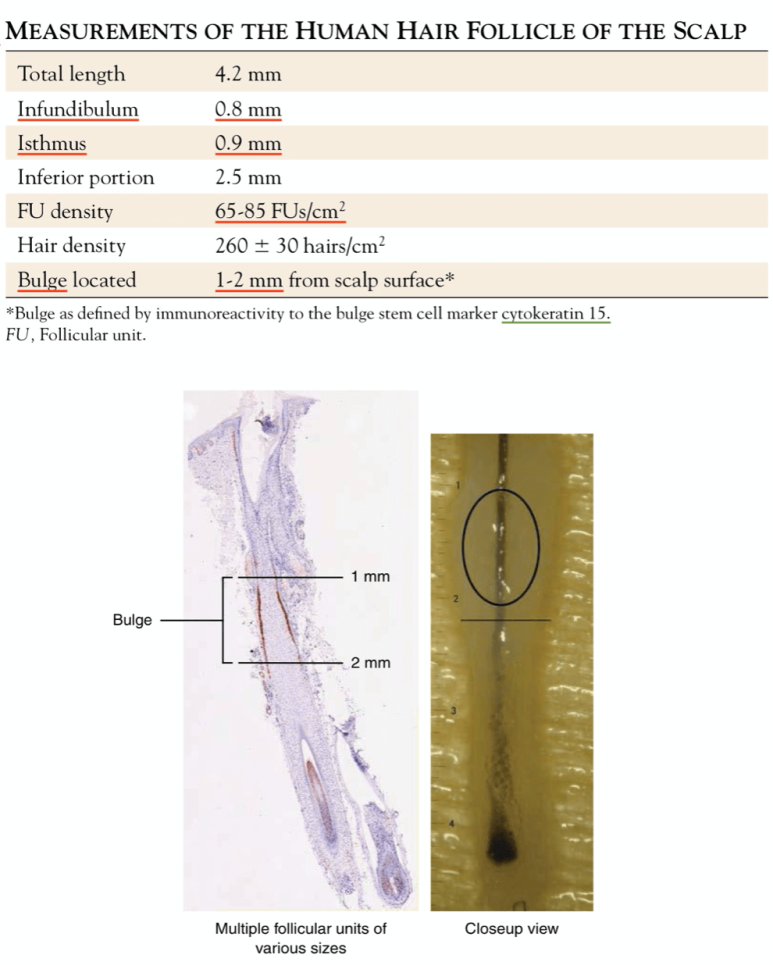
The stem cells of the hair root are located in the center
- Forehead reduction surgery
Forehead reduction surgery is an operation that removes part of the forehead,
and for a surgeon who has received formal training,
it is a procedure that can be performed without too much concern.
- Method
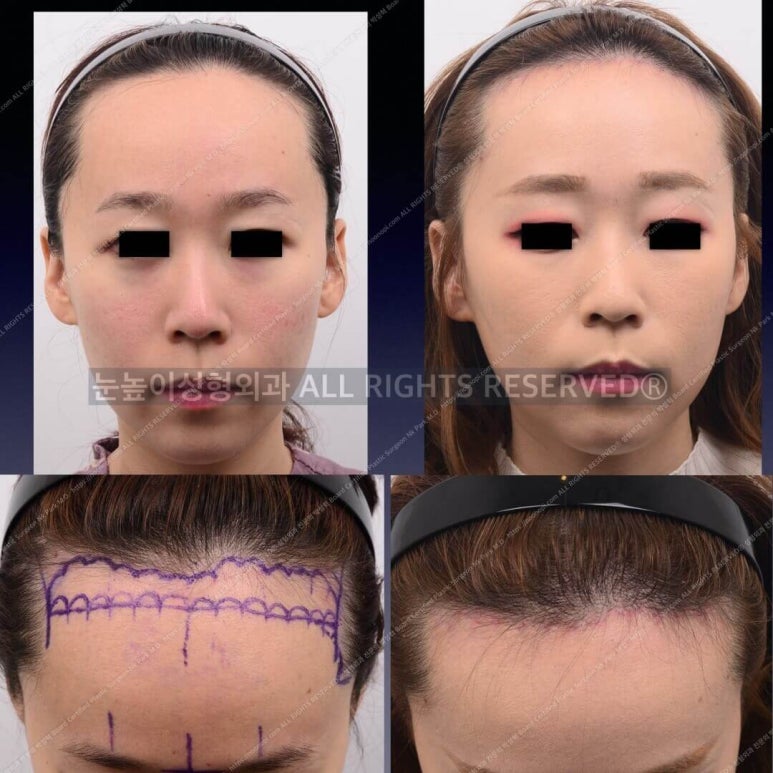
Surgical design and appearance 2 months after surgery
The incision is often designed in a wavy pattern,
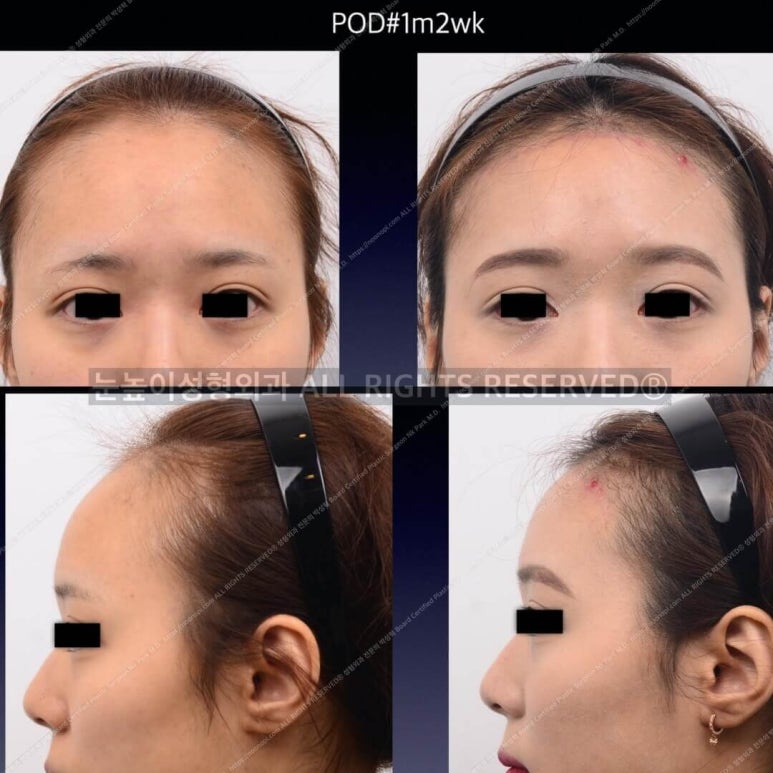
6 weeks after forehead reduction
Rather than making a vertical incision,
textbooks recommend making the cut obliquely.
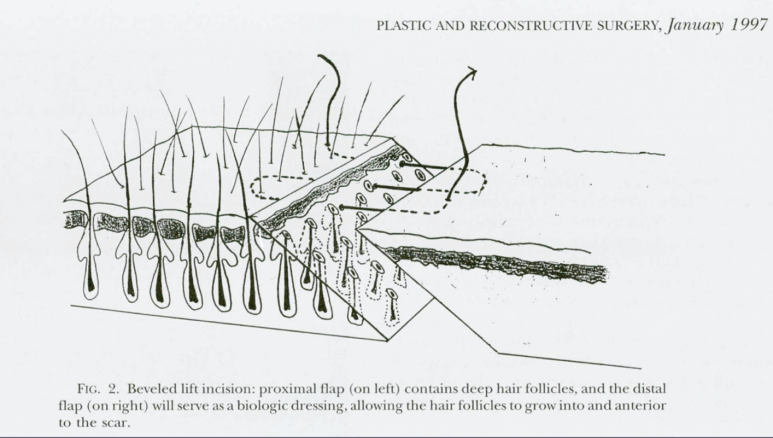
Oblique incision
However, based on my experience performing many surgeries in a short period of time,
in practice there is not a major difference in scarring even if the incision is made in a straight line,
and making the incision wavy only has the effect of lengthening the surgery time and the scar.
Making the cut surface an “oblique incision”
also does not actually allow fine hairs to grow through the scar.
The gap between reality and theory
After removing the tissue like this,
the scalp from the crown area is advanced forward
and fixed with Endotine or sutures.
- Disadvantages of forehead reduction
a) It cannot be reduced indefinitely
There is a limit to how much it can be reduced.
The amount of scalp movement varies by person, but on average
about 1.5 to 2 cm is the safe range.
b) Fine baby hairs are cut, and the scar is visible

The fine baby hairs near the hairline are a symbol of naturalness
Depending on how the surgery is done,
good intentions to hide the scar well
can sometimes require sacrificing the fine vellus hairs near the hairline.
If you want to preserve these baby hairs,
the incision becomes more noticeable.
This dilemma is something I used to discuss with patients
when I was performing a lot of forehead reduction surgeries in the past,
(once baby hairs are cut, they are difficult to restore,
and scars can be made less noticeable through conservative treatment)
so I recommended preserving the baby hairs as much as possible.
Instead, you would need to accept that for a while,
you may not be able to wear your hair slicked back because of the scar ㅠㅠ

A tattoo to hide the scar?
c) It is difficult to improve an M-shaped forehead
For men, there is a limit to reducing an M-shaped forehead.
This is because the technique of forehead reduction itself
physically cannot pull the sides more than the center.
- Advantages of forehead reduction
But if we talk about the advantages of forehead reduction that offset the disadvantages above,
the surgery fee is lower than the cost of hair transplantation,
and the effect appears more quickly.
- Cases where forehead reduction is recommended over hair transplantation
For the cosmetic purpose of reducing a broad forehead,
people consider hair transplantation or forehead reduction...
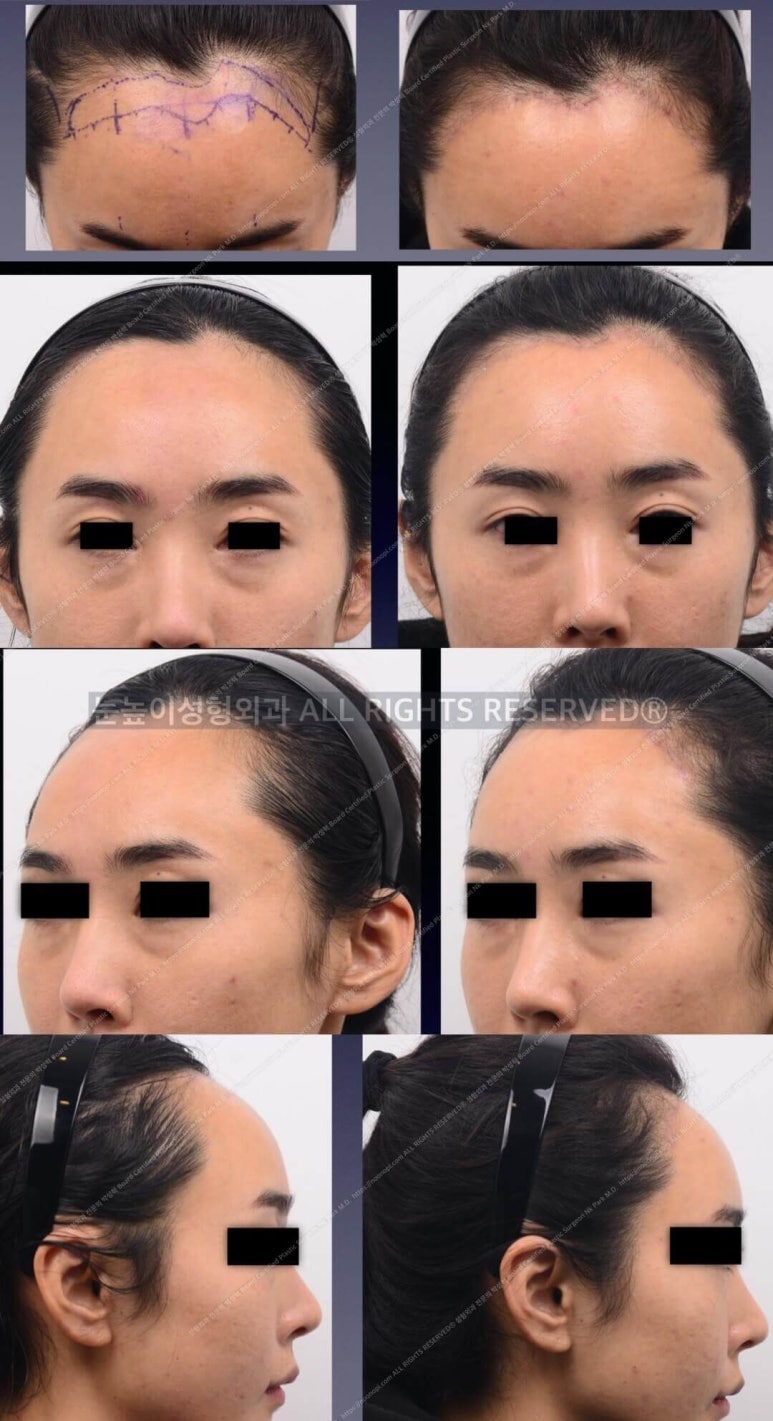
2 weeks before and after forehead reduction
Among them, forehead reduction seems especially advantageous in the following cases:
• People who shave the baby hairs
• People who do not care about baby hairs (usually men)
• People who do not wear slicked-back hairstyles
• People with an M-shaped forehead
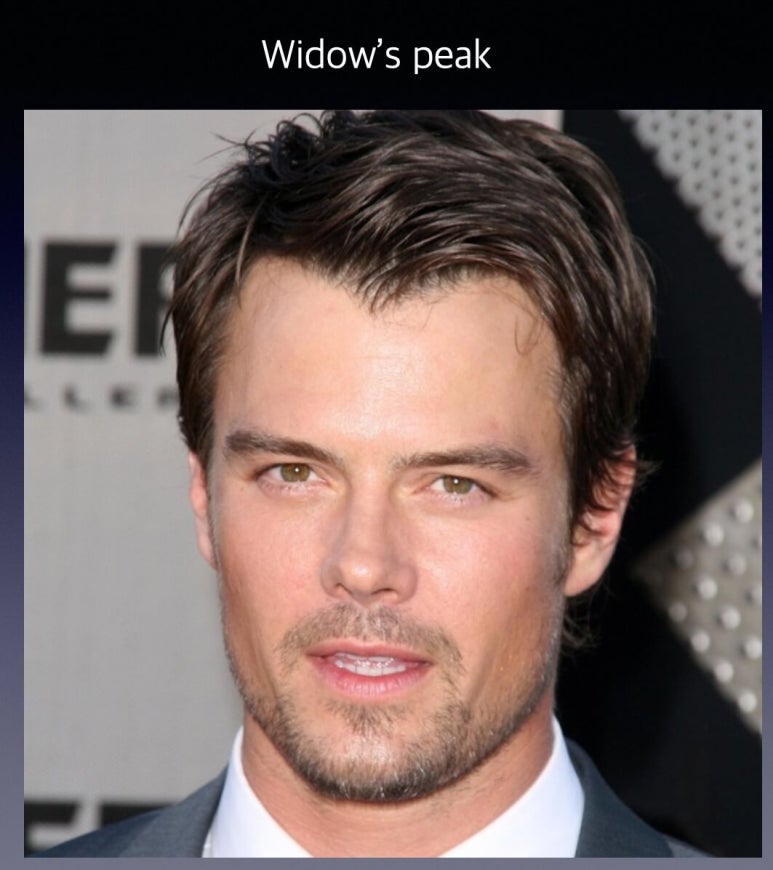
M-shaped forehead
An M-shaped forehead refers to a shape in which the center of the hairline
comes to a pointed V shape.
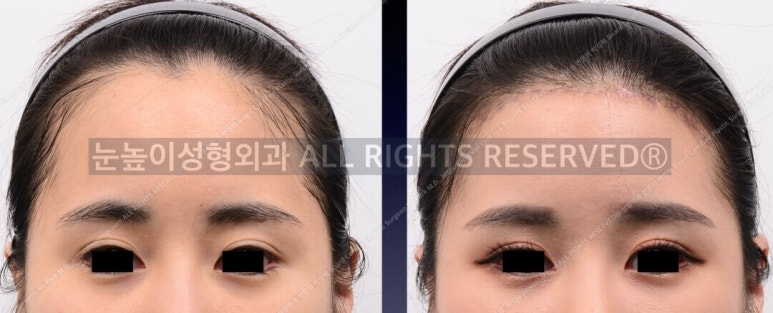
1 month before and after M-shaped forehead reduction
- Hair transplantation
- Celebrities who had hair transplants
Even if I have never heard of a celebrity who had forehead reduction,
there seem to be quite a few celebrities who had hair transplants.
Believe it or not...
- Method recommended by hair transplant clinics: strip vs non-strip
Hair transplantation is a surgery in which follicles are collected from the back of the head
and transplanted to areas that are lacking hair...
Depending on the collection method,
it can be divided into strip and non-strip procedures.
a) Strip
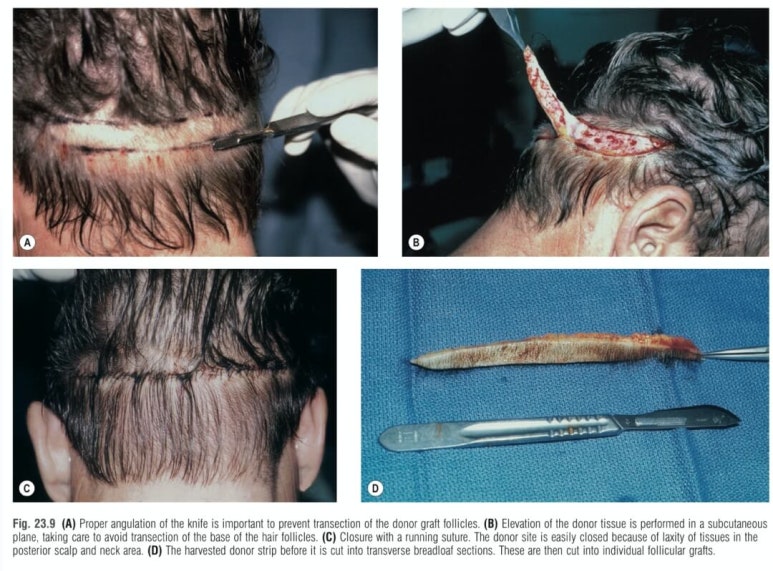
Strip hair transplant method
The width is determined by the mobility of the scalp, but usually a strip a little over 2 cm wide is harvested.
b) Non-strip
Depending on how much the hair in the harvesting area is shaved,
it is divided into full shaving, partial shaving, and no shaving,
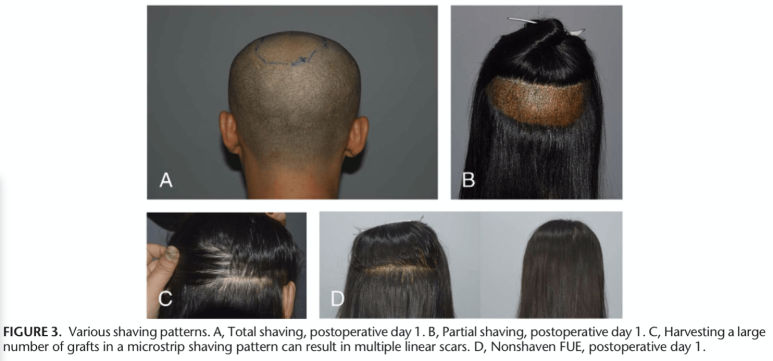
Photo: Classification by treatment of the donor area A: shaved, B: partially shaved, D: unshaven
Source: Nonshaven Follicular Unit Extraction, 2019 Annals of PS Dana Plastic Surgery
in a broad sense, all of these fall under non-strip harvesting.
If you are a woman with long hair or a man who likes a two-block hairstyle,
partial shaving is possible,
and if the medical team’s harvesting skill is excellent,
collection can also be done without shaving.
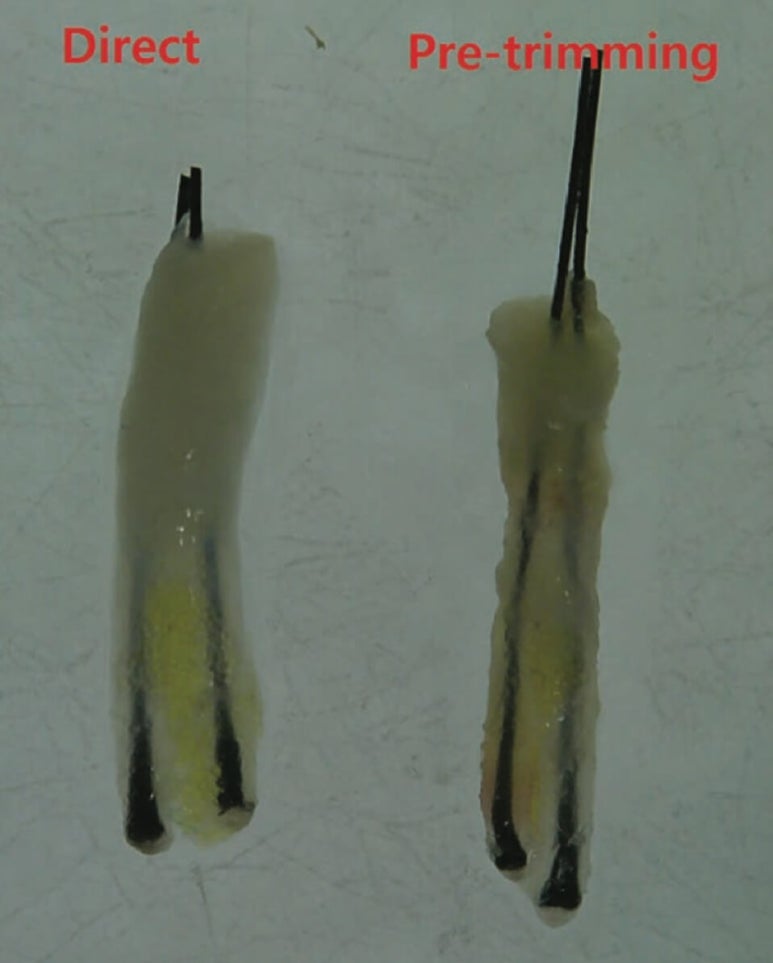
Appearance of the harvested follicles. Left = unshaven harvest. Right = partially shaved harvest.
Source: Pretrimmed versus Direct Nonshaven Follicular Unit Extraction, 2017 PRS GO Dana Plastic Surgery
In hair transplantation,
harvesting healthy follicles is the first key to a successful procedure...
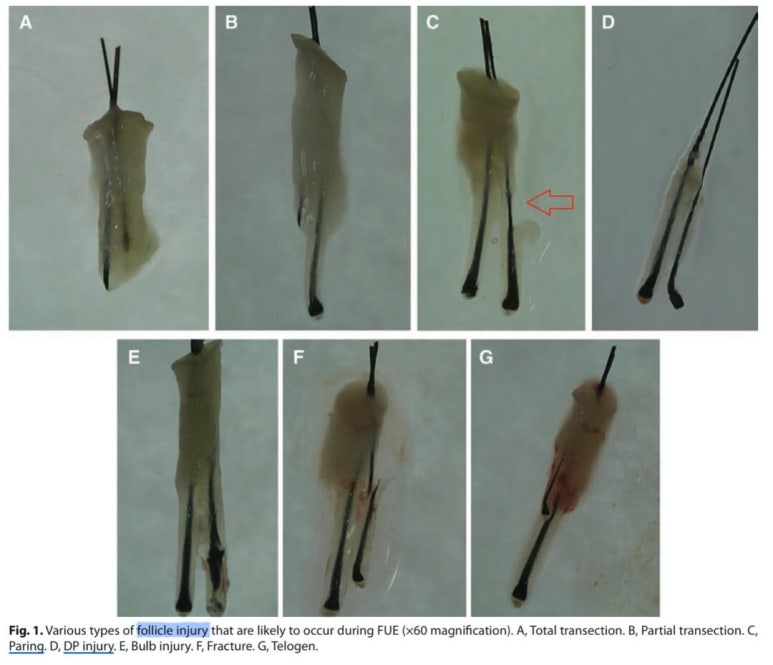
Example of damaged follicles
Source: Various types of minor truma to hair follicles during FUE for hair transplantation, 2017 PRS GO Dana Plastic Surgery
Not only the skill of the person harvesting the follicles,
but also the eye and experience of the follicle separator, and the clinic’s facilities
all matter.
In other words,
just because the surgeon is highly skilled by themselves
does not mean everything will work out.
If follicle separators do not use microscopes or loupes,
or if the transplant involves part-time follicle separators who move around from place to place like traveling peddlers,
unfortunately the results can never be good.
- Hair loss medication
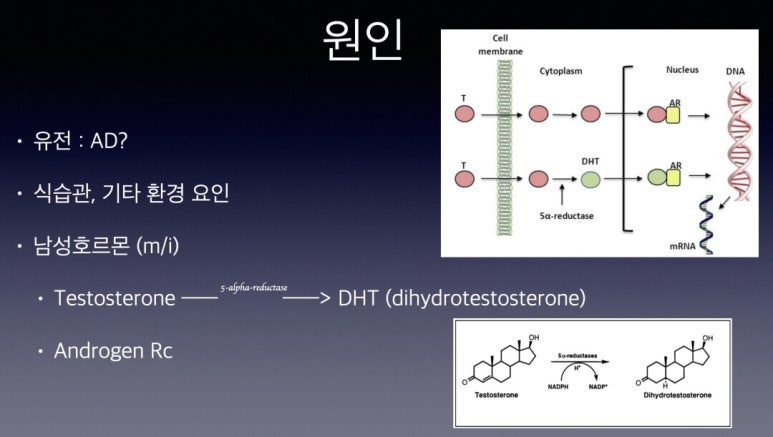
Causes of hair loss
The causes of hair loss are varied, but it is known to occur because of differences in hormone sensitivity,
that is, because male hormone (testosterone) is converted into DHT (dihydrotestosterone)
more actively.
The conversion of testosterone into DHT is carried out by 5-alpha reductase, and
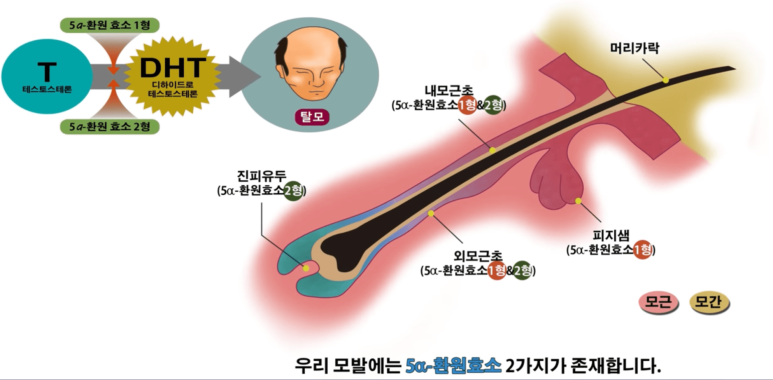
Two enzymes that affect hair loss
therefore the main mechanism of hair loss medication is
inhibiting this enzyme.
- 5-alpha reductase inhibitors
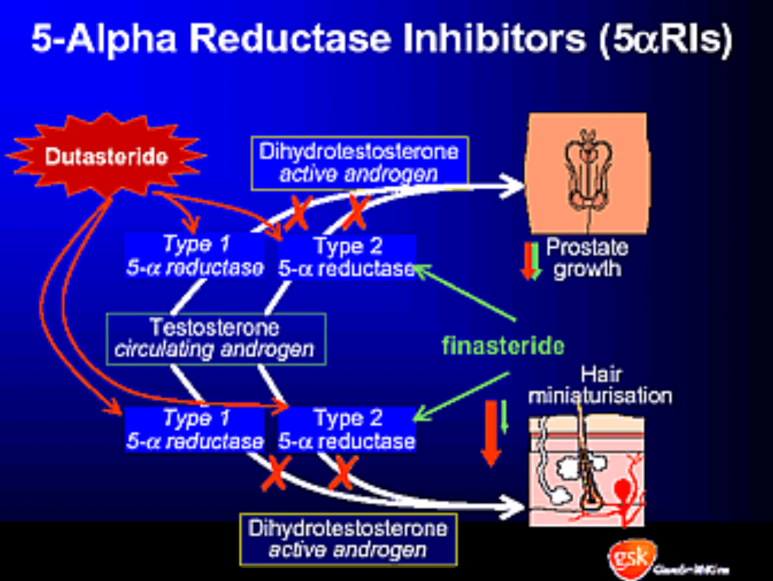
5-alpha reductase inhibitors
5-alpha reductase is divided into two types.
• inhibits type 2:
Finasteride 1 mg (e.g. Monad, Momopesia, Hairgrow, Fincasia)
• inhibits both type 1 and type 2:
Dutasteride 0.5 mg (e.g. Avodart)
These medications require a doctor’s prescription.
- Topical agents
A hair loss medication available without a doctor’s prescription is 5% minoxidil.

Rogaine
Minoxidil was originally a blood pressure medication ingredient,
and when applied, it is effective for hair loss treatment by widening the blood vessels that nourish the hair roots.
- Supplements
There are also Pantogar, Pansidil capsules, and Minoxyl S capsules, but these only show effects in female pattern hair loss.
- Other treatments
All of the treatments mentioned above are Grade A treatments whose effectiveness has been proven.
In particular, the combination of finasteride + 5% minoxidil
has long been considered the gold standard for hair loss treatment.
A relatively recent treatment is light therapy...

Low-level laser light therapy
This is a treatment that falls under Grade of Recommendation group B,
and low-level laser therapy (LLLT)
is one of the latest treatments.
The mechanism of LLLT is as follows:
• promotes hair growth by activating heat shock proteins
• increases oxygen supply to scalp tissue
• increases scalp blood flow
• increases reactive oxygen species
• suppresses DHT
This is how it works.
- Conclusion
So far, I have introduced a comparison between forehead reduction and hair transplantation
as surgical methods for reducing a broad forehead.
In my personal opinion, based on having experience in both fields to a meaningful degree,
I think that cases in which forehead reduction is more suitable than hair transplantation
account for less than 10% of ordinary clients.
However, forehead reduction is not all disadvantages,
and it is clear that in the cases mentioned above, it can definitely be helpful.
Price is also an important factor...
I worry that this post may have seemed to favor hair transplant clinics
because hair transplantation is more versatile,
but if you read between the lines,
you probably felt that places that truly perform hair transplantation well
are also not common.
There are many places that operate like salons, focusing only on scalp care ㅠ
If a hair transplant clinic is not one that pays attention to all of the following:
a facility where harvested follicles can be examined and separated under a microscope,
experienced follicle separators,
chairs and surgical tools optimized for harvesting,
and needles optimized for transplantation,
then it can end up wasting your precious hair.
Was this post helpful?
I will come back next time with an easy and interesting topic.
If you would like an honest consultation from Neunnopi Plastic Surgery,

Click the KakaoTalk consultation button right now!