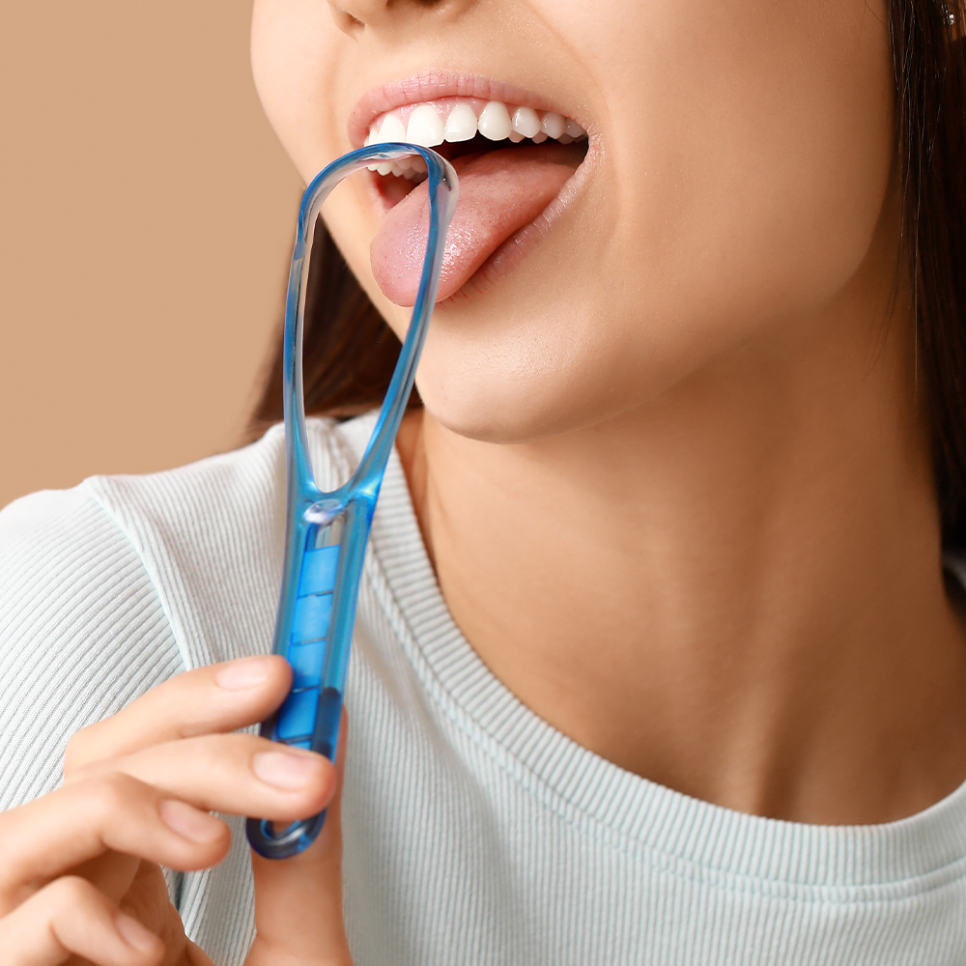
Even after brushing your teeth thoroughly,
if your mouth does not feel refreshed
or you have bad breath,
you should check the condition of your tongue.
The surface has tiny projections
that are difficult to see,
and food particles, bacteria, and other substances
can accumulate between them, causing a coating to form.
A tongue cleaner is a tool
that helps care for the surface of the tongue
in such cases.
However,
if it is used incorrectly,
it may irritate the mucous membrane
or damage the projections.
It is important to learn how to use a tongue cleaner properly
and care for your tongue correctly.
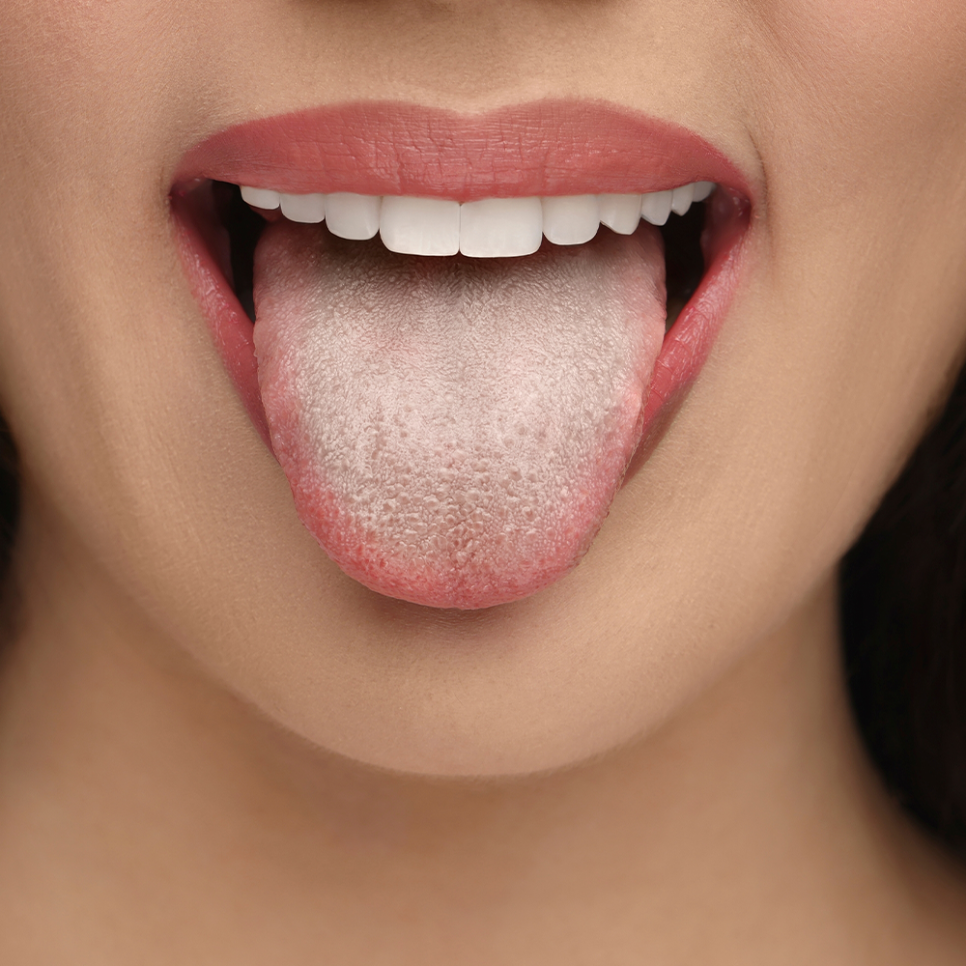
Why should you use one?
The tongue may look smooth to the naked eye,
but it actually has countless projections.
The back portion is difficult for a toothbrush to reach,
making it an area where bacteria and residue can easily remain.
In particular, if you have dry mouth,
or frequently smoke or drink coffee,
deposits can accumulate more easily on the surface.
Brushing the tongue with a toothbrush
can cause irritation from the bristles,
so it is not recommended.
A tongue cleaner, however,
is designed to fit the structure of the tongue
and helps gently remove the coating.

How do you use a tongue cleaner?
After comfortably sticking your tongue out of your mouth,
gently use the tongue cleaner on its inner portion.
If this causes a gagging sensation,
avoid reaching too far back at first
and begin within a range you can comfortably tolerate.
Move it slowly
from the back toward the front
using light pressure.
After one pass,
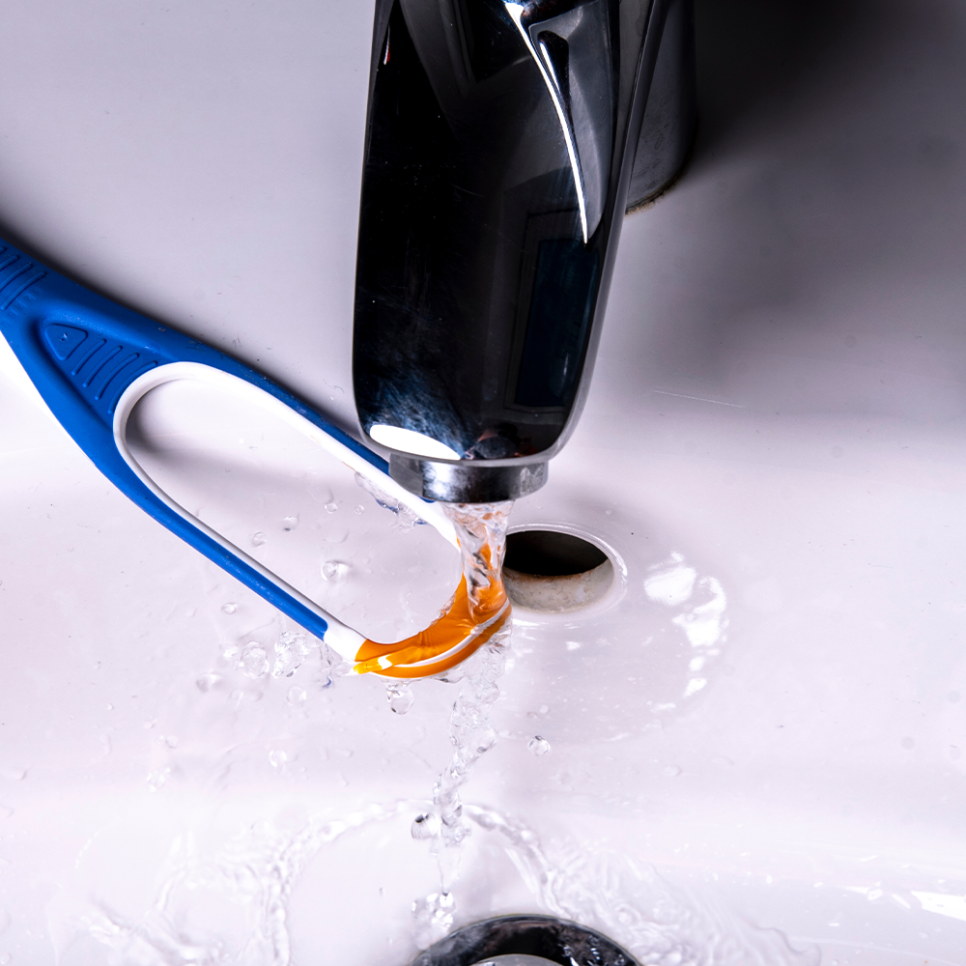
rinse it immediately under running water,
then repeat 2–3 times in the same direction.
Avoid rubbing forcefully back and forth
or scraping strongly from side to side.
If the surface becomes red
or feels stinging or sore,
you are using too much force.
The important point when using a tongue cleaner
is to care for the tongue gently,
without causing irritation.
How many times a day should you use it?
Generally, using it once a day,
during your morning tooth-brushing routine,
is recommended.
During sleep,
saliva production decreases
and bacterial activity in the mouth increases,
which can cause coating and bad breath
to be noticeable in the morning.
However, if you clean your tongue
every time you eat,
the mucous membrane may become dry
or injuries may develop.
After use, rinse your mouth with water
and clean the tongue cleaner thoroughly,
then allow it to dry completely.

What should you be careful about when using it?
Using it with greater force
does not remove the coating more effectively.
The tongue has an abundant supply of blood vessels and nerves,
so even minor irritation
can cause bleeding or pain.
If you have an ulcer or wound,
or if pain from canker sores is severe,
you should stop using it.
✅ Do not share a tongue cleaner with family members
or store it without cleaning it first.
✅ Inserting it too far toward the back
may trigger a strong gag reflex,
so use it only as far as you can comfortably reach.
✅ For children,
an adult should monitor the amount of pressure
so the coating can be removed gently.
What if the coating continues to remain?
Some people continue to have a thick coating
or persistent bad breath
even when they use a tongue cleaner properly.
Tongue coating can be caused by various factors,
not just hygiene, including insufficient fluid intake,
dry mouth, smoking, and rhinitis.
If you see a white film on the surface
or also experience pain and a burning sensation,
you should check for the possibility
of an oral condition.
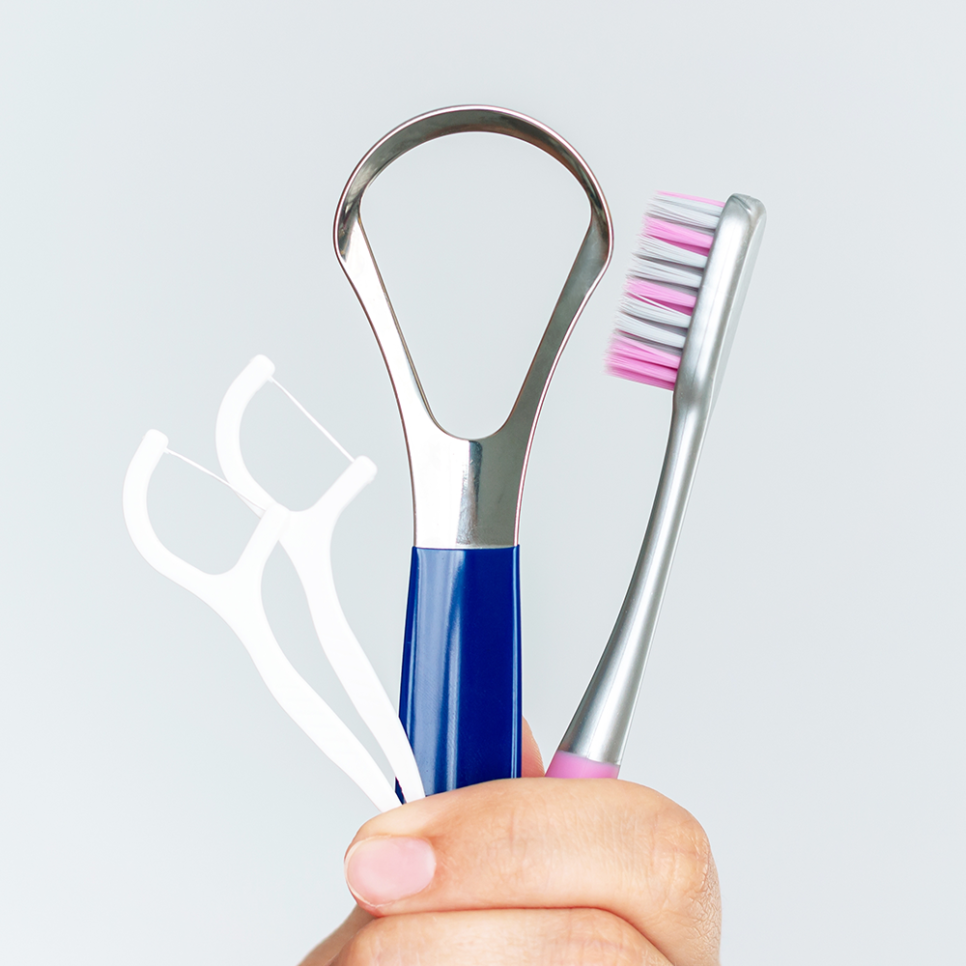
A tongue cleaner cannot replace tooth brushing.
It is recommended as an additional method
to use after brushing your teeth,
flossing, and similar care.
Using a tongue cleaner properly
can help you keep your mouth
cleaner.