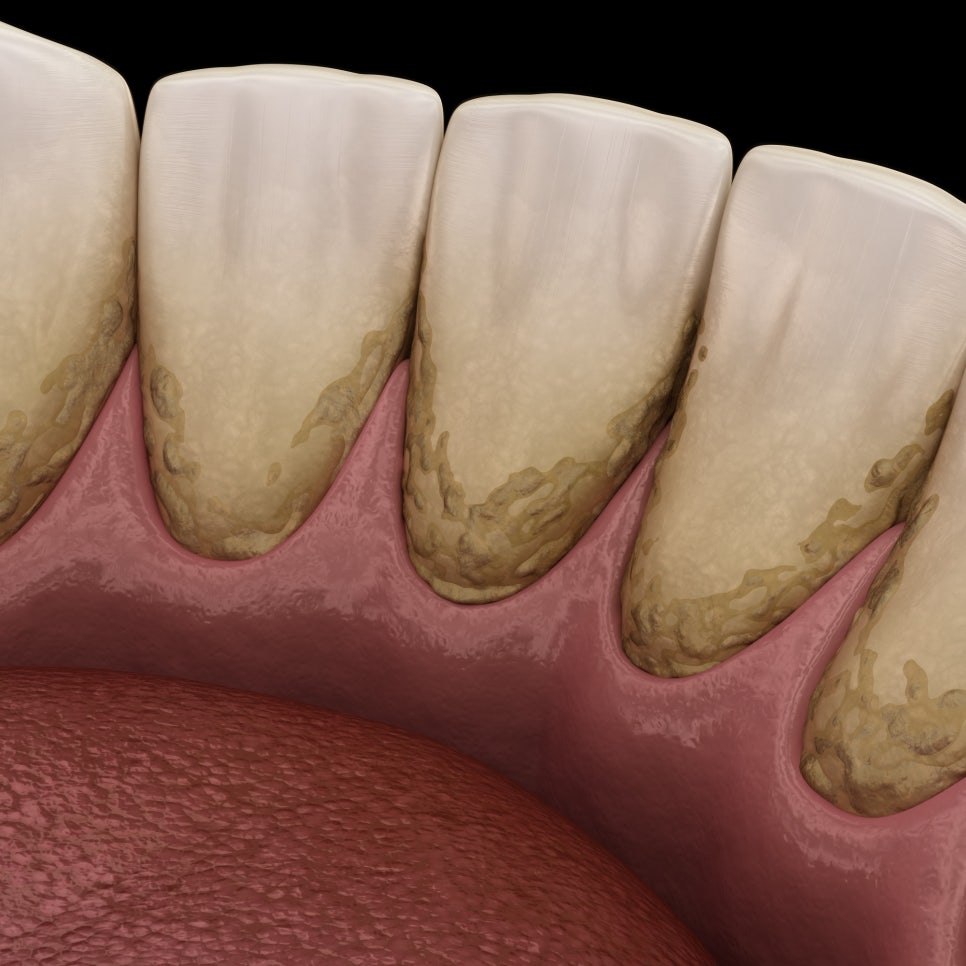
Despite brushing their teeth regularly, quite a few people are told that they have a lot of tartar.
Many people think that tartar forms simply because they have not brushed their teeth properly, but tartar develops through a combination of various factors.
After eating, a thin film called plaque forms on the surface of the teeth. It is made up of bacteria and food particles that have combined.
Plaque is soft and can be removed sufficiently with just a toothbrush and dental floss.
However, if plaque is not removed and remains in place, minerals such as calcium and phosphorus in saliva combine with the plaque, causing it to gradually harden.
This hardened substance is tartar.

Can’t Tartar Be Prevented by Brushing Properly?
Brushing your teeth is very important, but brushing alone may not be sufficient.
The areas between the teeth, along the inner sides of the gums, and deep around the molars are difficult for toothbrush bristles to reach.
If plaque remains in these areas, it can turn into tartar.
If you brush for too short a time or do not use the proper technique, the amount of plaque removed can drop significantly.
When it comes to why tartar forms, the quality of brushing and oral care habits are more important than how often you brush.
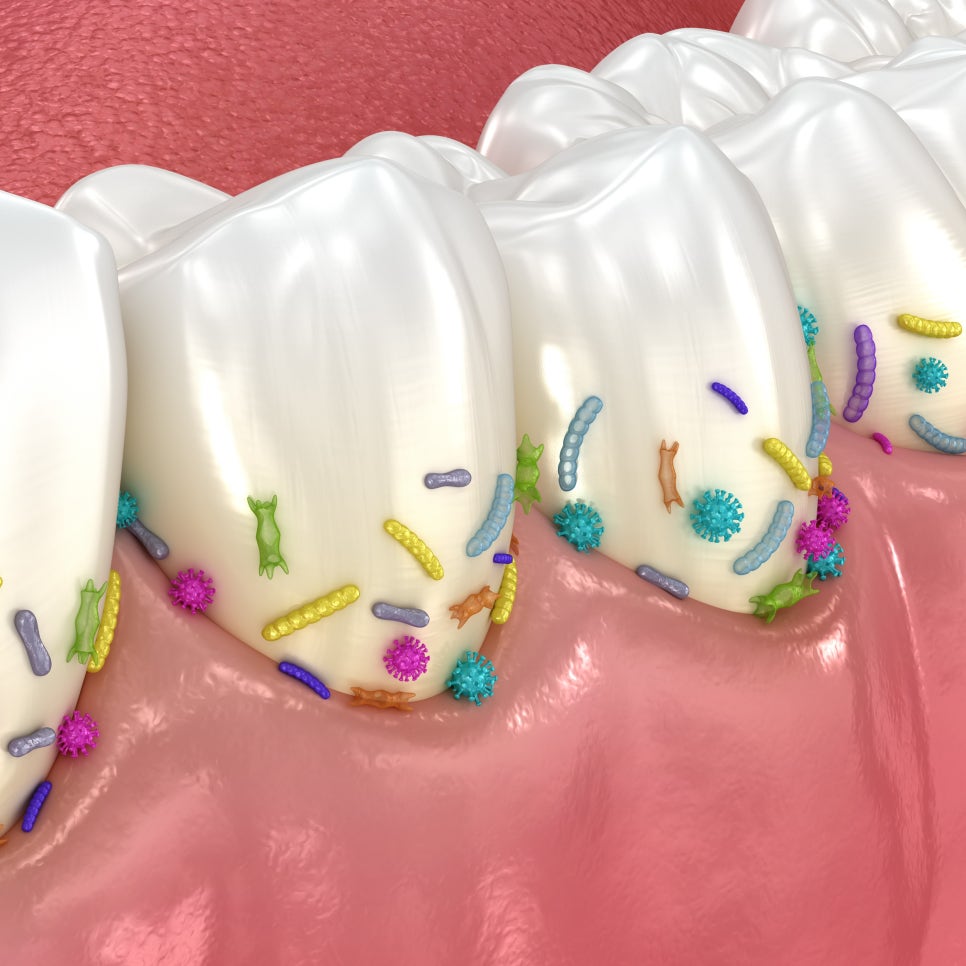
What Causes Tartar to Form Easily?
Even among people with the same brushing habits, the extent to which tartar forms can vary.
One of the main causes is the composition of saliva.
When the concentration of minerals in saliva is high, tartar may form more quickly.
Saliva also naturally helps clean the mouth, so when saliva production decreases, bacteria can multiply more easily.
Why tartar forms varies depending on an individual’s lifestyle and oral environment.
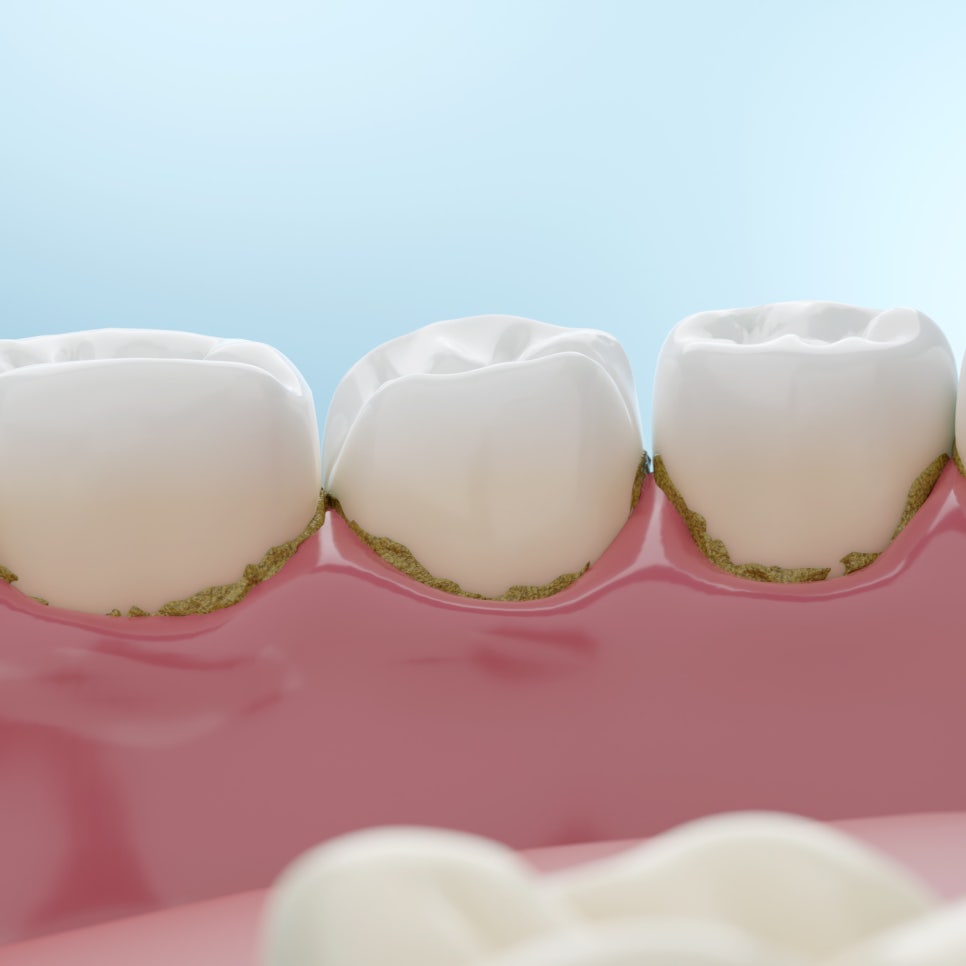
What Problems Can Occur If Tartar Is Left Untreated?
One major problem with tartar is that its surface is very rough.
Bacteria attach more easily to a rough surface and continue to multiply.
As a result, gingivitis, an inflammation of the gums, may begin. If it is not treated in this state, it may progress to periodontitis.
Periodontitis is a condition in which the bone supporting the teeth is destroyed. In severe cases, the teeth may become loose, and extraction may be necessary.
It is important to remember not to leave tartar untreated and to have regular dental cleanings.

How Can Tartar Be Prevented?
To prevent tartar, it is important to remove plaque before it turns into tartar.
We recommend brushing properly two to three times a day and using dental floss and interdental brushes.
If brushing immediately after a meal is difficult, rinsing your mouth thoroughly with water can also help.
However, the best method above all is to have regular dental cleanings.
Even if you do not notice any particular symptoms, please have a dental checkup and professional cleaning once every six months to one year to maintain healthy gums.