Some people come in to have their wisdom teeth removed and are surprised to hear that they have a cavity.
A patient with a similar case also visited Yonsei Grida Dental Clinic, Yeomchang Station.
Today, I would like to introduce the course of treatment.
Because it is often difficult to notice on your own whether you have a cavity, I wanted to explain it in detail through an actual case.
Recurrent Caries: Why Is It Difficult to Detect in Advance?
A 33-year-old female patient visited our dental clinic for a consultation about wisdom tooth extraction.
During a comprehensive oral examination, recurrent caries was found in the upper right first molar (#16).
Recurrent caries refers to a cavity that develops again around an area that was previously filled or covered.
Recurrent caries often progresses without any particular pain.
Bacteria gradually penetrate through the margins of an existing restoration and decay the tooth from the inside, making it difficult to notice from the outside.
If this patient had not come in for a wisdom tooth consultation, she might have remained unaware of it for some time.
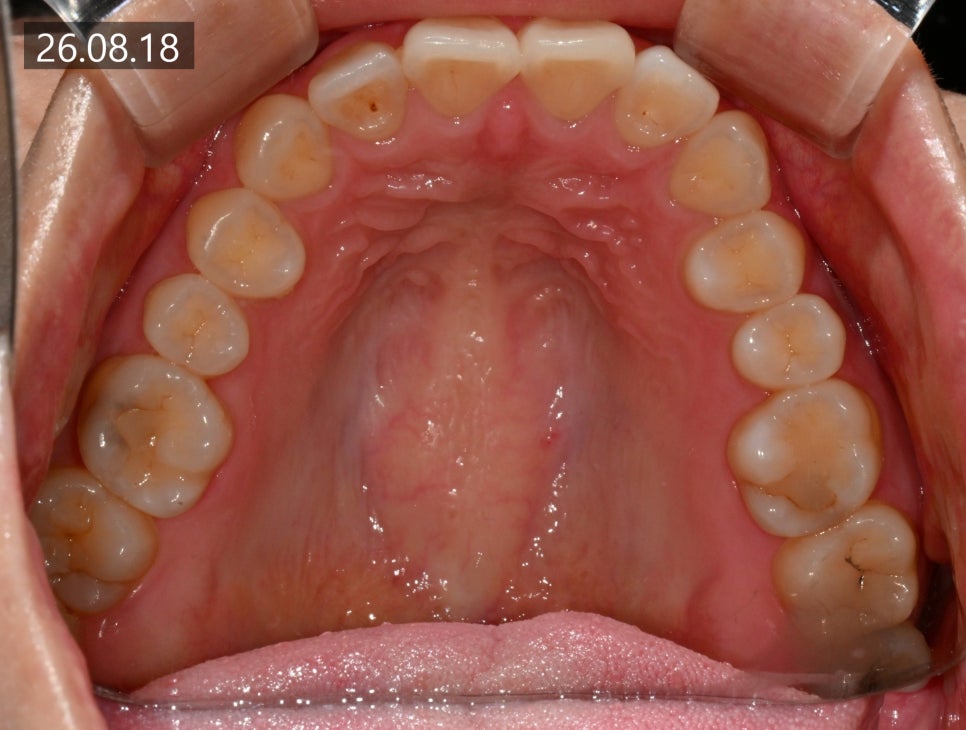
Why Was Resin Build-Up Possible Instead of a Crown?
When I discover a cavity, I first explain two things.
The exact extent cannot be determined until the existing restoration and the cavity are removed, and a crown may be necessary if the affected area is extensive.
In many cases, it is difficult to accurately assess how far the decay has progressed until the tooth is actually accessed and the decayed area is removed.
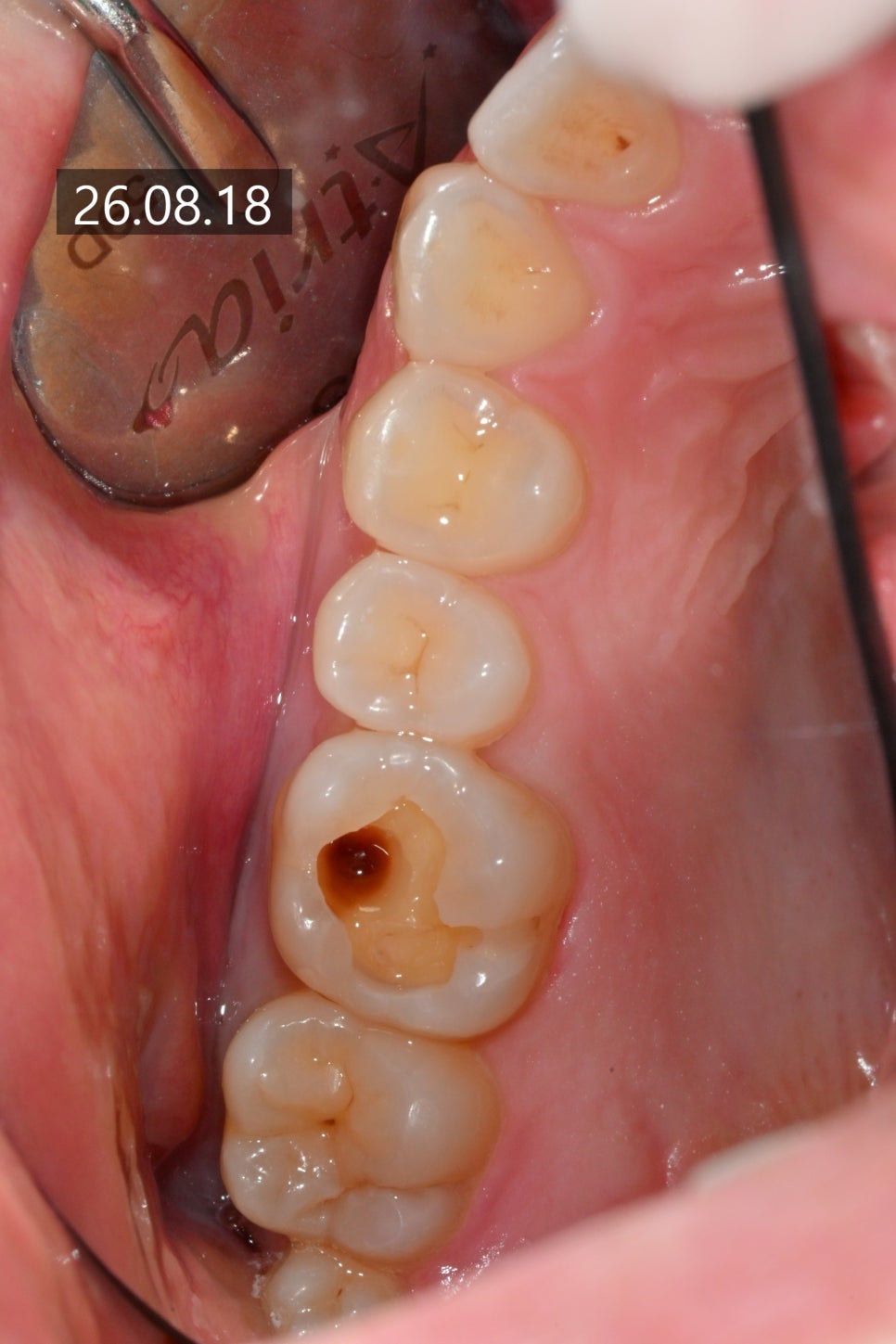
※Photo taken to check for caries after removal of the existing restoration
After removing and examining the existing restoration and the cavity, we found that sufficient healthy tooth structure remained.
Therefore, instead of proceeding to a crown, resin build-up treatment was possible with minimal tooth reduction.
We chose a treatment approach focused on preserving as much of the tooth as possible.
Resin Build-Up vs. Crown: What Is the Difference?
A crown involves removing more tooth structure, but it offers advantages in terms of strength and durability.
Resin build-up minimizes tooth reduction and has the advantage of preserving as much of the natural tooth as possible.
The appropriate treatment is determined after an actual examination, based on the depth and extent of the cavity.
For this reason, rather than making a definitive decision before removing the restoration, our dental clinic usually discusses the options with patients after removing it and showing them the condition of the tooth.
This Is How the Treatment Was Performed
First, local anesthesia was administered to the treatment area to minimize discomfort during the procedure.
Next, we removed the area that had previously been filled and examined the condition underneath.
Only the infected tooth structure was carefully removed, while as much healthy tooth structure as possible was preserved.
An adhesive procedure was performed so that the tooth and resin could bond firmly.
The resin was placed to restore the tooth's original shape.
Finally, the surface was smoothly polished to achieve natural occlusion and appearance.
How the Tooth Changed After Treatment
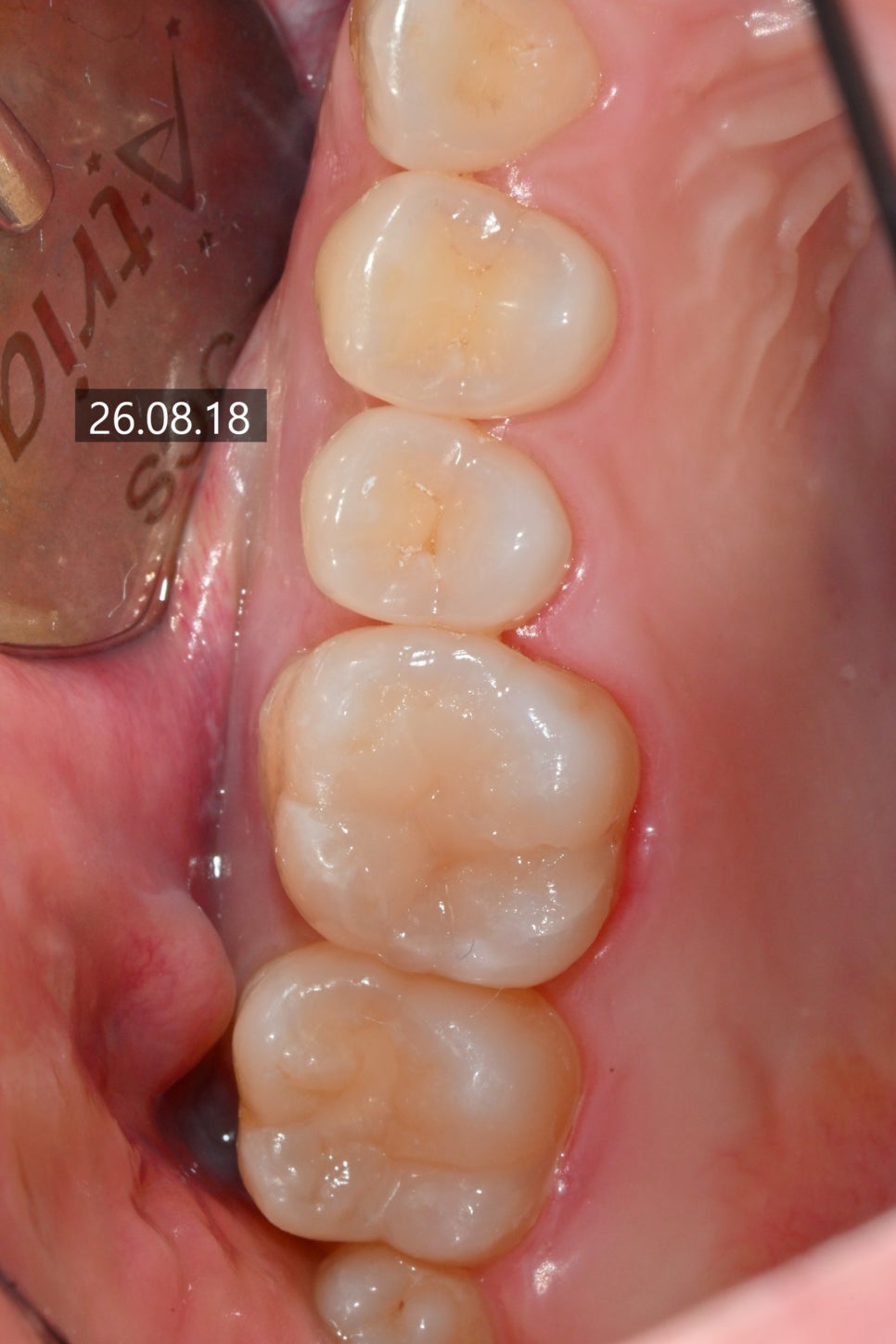
The treatment was completed with a natural tooth shape and color, without the area of decay that had appeared dark.
The patient was also satisfied with the result.
Although she had come in for a wisdom tooth consultation and unexpectedly ended up receiving additional treatment, this case ultimately allowed us to detect the cavity early and treat it as conservatively as possible.
After treatment, the newly restored area needs time to adjust to chewing forces, so it is best to avoid foods that are particularly hard or chewy for the first few days.
Please continue brushing and flossing regularly as usual, and have a routine examination every six months. This can help detect recurrence at an early stage.
In particular, if you have teeth that were previously filled or covered, toothbrush bristles may not reach the margins well, so it is advisable to pay extra attention to these areas with dental floss or an interdental brush.
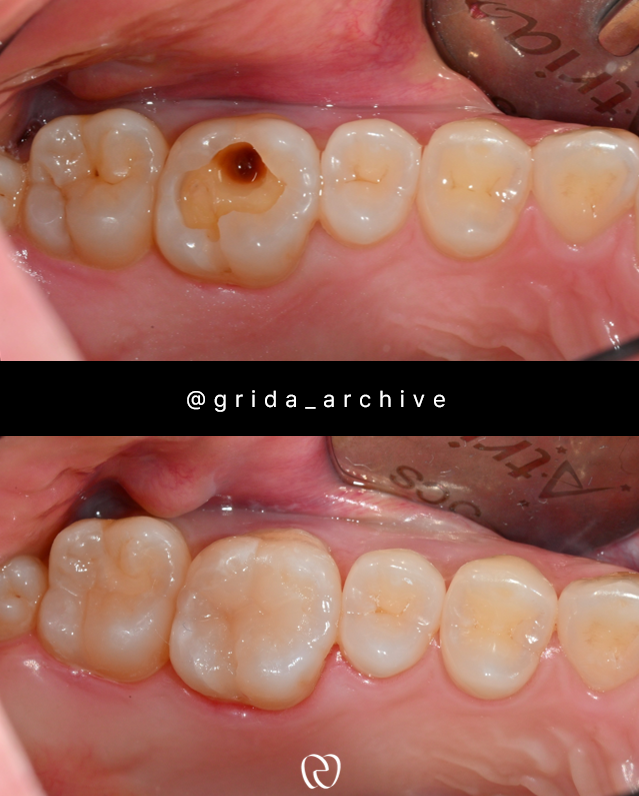
A Few Words at the End of Treatment
When providing treatment, unless a crown or root canal treatment is absolutely necessary, I first consider approaches that preserve the natural tooth as much as possible.
Fortunately, the extent of the cavity in this patient was not large, so treatment could be completed with minimal tooth reduction.
However, this is ultimately something that can only be determined after an examination, and I would also like to emphasize that there are certainly cases in which a crown is necessary.
I tend to first examine what conservative options are available in the current condition and how the tooth can be maintained for as long as possible.
As in this case, recurrent caries often has no symptoms and is discovered only during a routine examination.
The longer a cavity is left untreated, the more extensive the treatment can become, potentially leading to root canal treatment or extraction. When detected early, however, the tooth can be preserved with minimal treatment, as in today's case.
Whether you are visiting for a wisdom tooth or another reason, if you have an opportunity to visit the dentist, I recommend having a comprehensive oral examination at the same time.
If you are considering cavity treatment or resin build-up near Yeomchang Station, I recommend receiving an accurate diagnosis first.
We will provide detailed guidance through an in-person consultation.
*All case photos were posted with the consent of the individuals concerned, in accordance with Articles 23 and 56 of the Medical Service Act.
*All treatment photos are of patients treated at our dental clinic.
*All treatment photos are of the same individual and were taken under the same conditions.
*Depending on individual differences, side effects may occur after procedures or surgery. Please consult thoroughly with your medical professionals.