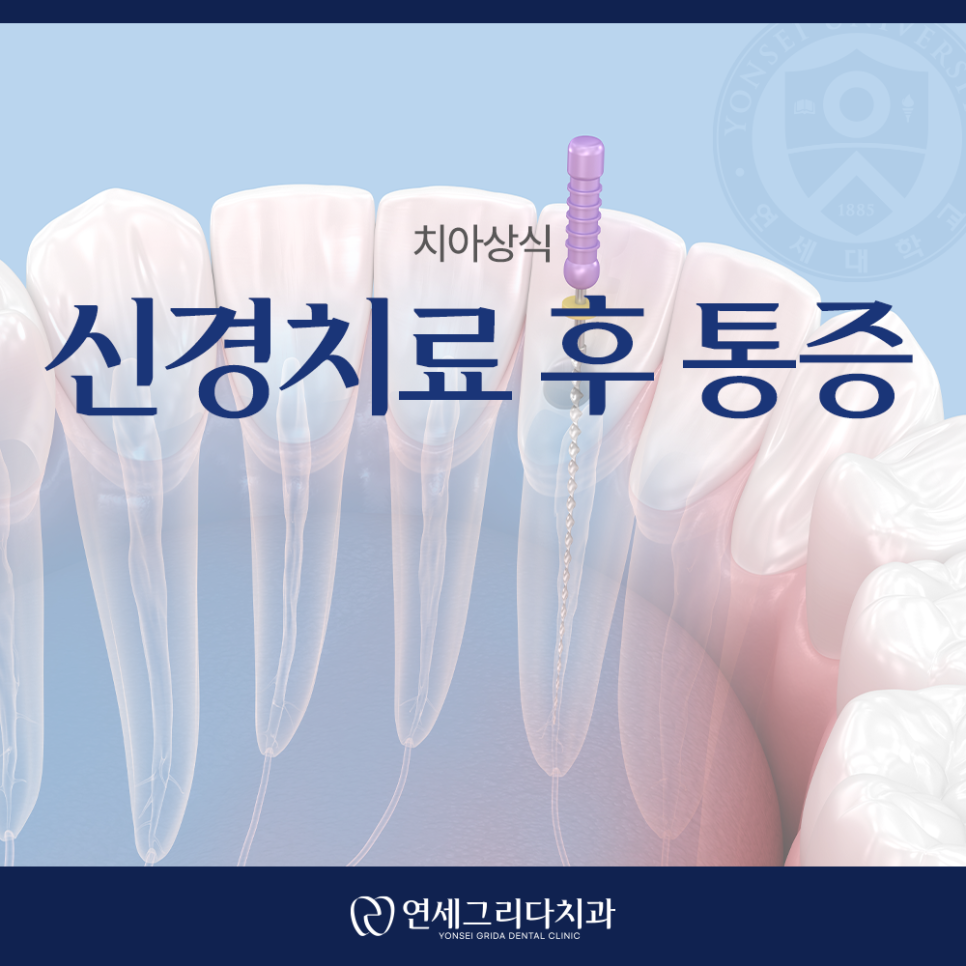
After receiving root canal treatment,
many people worry,
“Why does it still hurt
even though the nerve was removed?”
Root canal treatment involves
removing the infected nerve and tissue
inside the tooth,
cleaning the root canal,
and then sealing it.
Even after treatment is complete,
inflammation and irritation in the tissues around the tooth
do not disappear immediately,
so the tooth may feel sore for several days
or feel uncomfortable when chewing.
However, if the pain after root canal treatment
does not decrease over time
or instead becomes worse,
it is necessary to recheck
the condition of the area.
How many days of pain after treatment is considered normal?
During root canal treatment,
the tissues around the tip of the tooth root
may be affected by the instruments
or the cleaning process.
For this reason, after the anesthesia wears off,
the tooth may feel heavy,
or there may be slight discomfort
that feels like pressure when chewing.
If the inflammation was already severe
or there was a lesion around the root tip,
the discomfort may last somewhat longer
during the healing process.
What matters is not simply whether pain is present,
but whether its intensity gradually decreases
over time.
What could cause pain only when eating?
If you feel fine when staying still
but experience pain only when eating,
the tissues around the tooth may still be healing,
or a temporary filling or prosthesis
may be making contact too high.
If the treated tooth touches first,
repeated pressure is transferred each time you chew,
which can cause the pain to persist
or make the tooth more sensitive.
In this case, rather than simply
putting up with it and waiting,
it is advisable to have the bite checked
and receive any necessary adjustment.
If pain after root canal treatment
repeatedly occurs whenever you chew
in a particular direction,
it can also be helpful to explain during your appointment
exactly when the pain occurs.
In addition, a tooth undergoing root canal treatment
is often covered with a temporary filling
until the final prosthesis is completed.
During this period, it is best not to repeatedly chew
chewy or hard foods with that tooth,
and if the temporary material falls out or breaks,
it should be checked even if there is no pain.
What if throbbing pain continues?
Unlike the mild discomfort
that may occur immediately after treatment,
if the pain throbs enough to disturb your sleep,
continues even after taking pain medication,
or becomes worse over time,
additional examination may be necessary.
✅An underlying cause of inflammation may remain
inside the root canal.
✅Inflammation around the tip of the tooth root
may not have subsided sufficiently.
✅There may be a fine crack in the tooth.
Several possibilities need to be considered together.
It is difficult to attribute the cause of pain
after root canal treatment to just one factor.
Therefore, through radiographic imaging and clinical examination,
it is necessary to check not only the inside of the tooth
but also the condition of the area around the root tip
and the surrounding tissues.
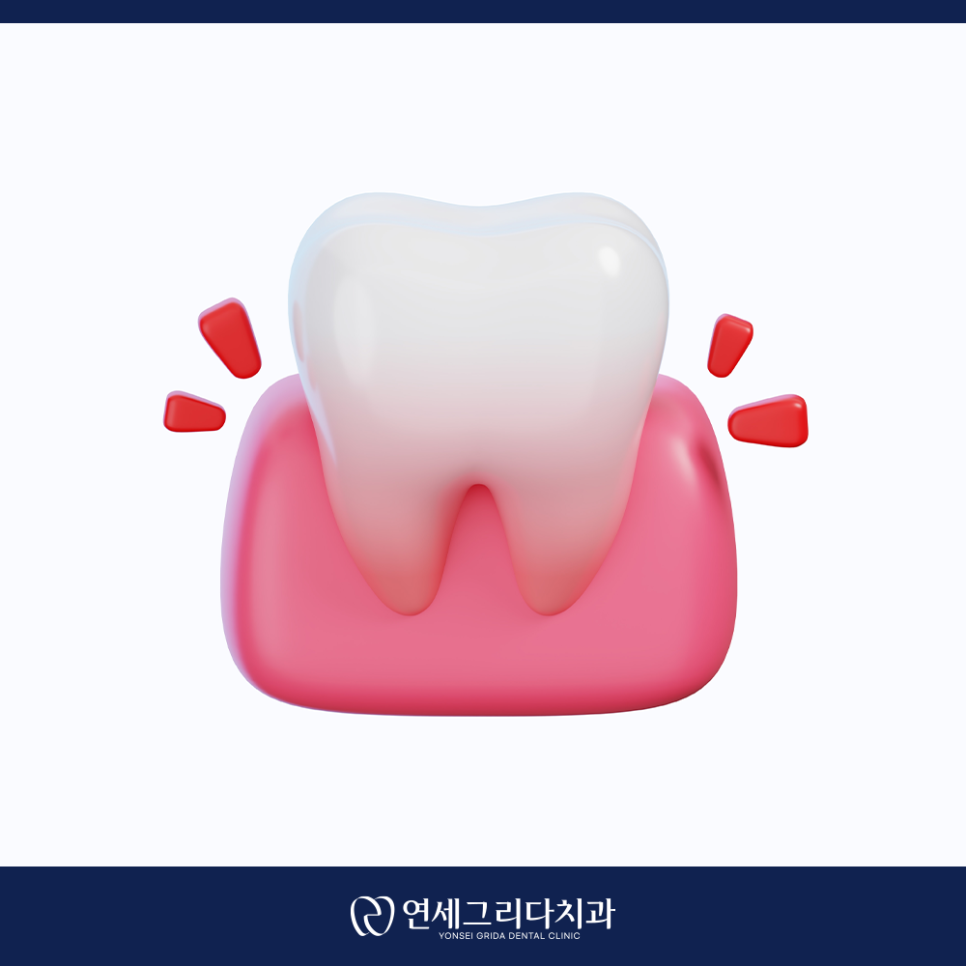
What if swelling or pus occurs as well?
If the gums swell along with the pain,
pus is discharged,
or your face feels swollen,
it may be difficult to regard this
as merely part of the normal healing process.
In particular, if new swelling appears
a few days after treatment
or the pain suddenly becomes more severe,
it is necessary to check for changes in the inflammation.
Acute worsening, with increased pain and swelling
after treatment, may occur,
and depending on the condition,
additional root canal procedures
or medication may be considered.
If you also experience a feeling of heat
or general discomfort,
it is best not to delay your dental visit for too long.
How should you manage the pain?
Rather than chewing hard foods immediately
with the treated tooth,
it is advisable to use the teeth on the opposite side
to reduce the strain.
Whether pain medication can be used
may vary depending on your health condition
and the medications you are taking,
so it is recommended that you follow
the instructions provided by your dentist.
Pain after root canal treatment
often gradually decreases
during the healing process.
However, if the pain remains unchanged
for several days
or is becoming worse,
it is best not to dismiss it
as simply part of the usual treatment process.
Please have your dentist check
whether the treated tooth is making contact first,
whether inflammation remains,
and whether additional treatment is needed.
After treatment is complete,
it is advisable to check not only
the degree of pain
but also the recovery of the tooth’s function
and the condition of the prosthesis.
Root canal treatment does not end
with addressing the source of infection inside the tooth.
It is also important to continue monitoring the healing process
so that you can use the tooth comfortably afterward.