Hello. I’m Park Jae-hyung, director of Wonjin Dental Clinic.
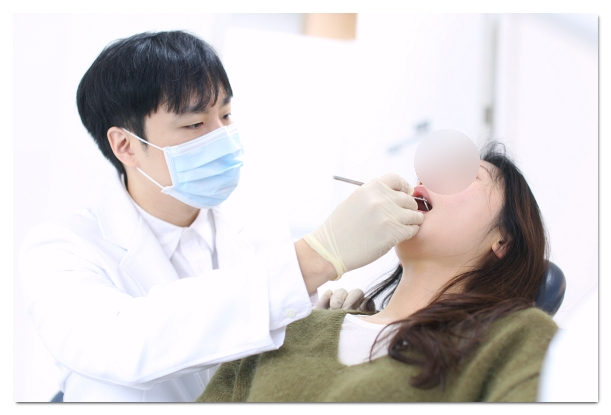
I have to drink at least one cup of coffee a day.
Won’t it stain my veneers?
You may be concerned that drinking a cup of coffee every day after getting veneers could cause your teeth to turn yellow.
Today, I’d like to explain the real relationship between coffee and veneer staining, along with important precautions to know before the procedure.
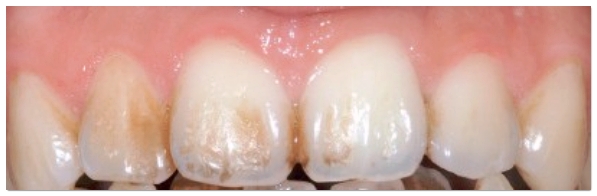
Stained teeth
Table of Contents
-
Does coffee really stain veneers?
-
If so, should you stop drinking coffee?
-
Essential precautions to know before the procedure
-
Frequently Asked Questions (FAQ)
-
If staining seems to have already begun
Does coffee really stain veneers?
Drinking coffee does not immediately turn the surface of a veneer yellow.
Ceramic materials widely used in dentistry have a glass-like, smooth surface, so pigments do not easily penetrate them.
However, there are vulnerable areas where actual staining can occur.
These are the thin margins where the restoration meets the gums, as well as the areas containing the adhesive resin used to attach the tooth and ceramic together.
Pigments in coffee gradually seep into these tiny gaps, making the margins look darker over time.
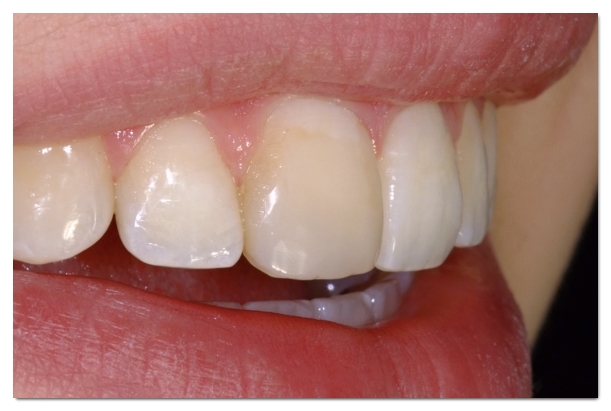
So rather than saying, “My teeth turned yellow because of coffee,”
it is much more accurate to say, “Pigments accumulated in the gaps over a long period, making the teeth look dull overall.”
You will not notice a difference after just one or two cups, but repeated daily habits can gradually leave visible traces.
The same applies not only to coffee, but also to dark-colored foods and beverages such as black tea, wine, cola, and curry.
Hot drinks in particular raise the temperature inside the mouth, allowing pigments to adhere more easily,
while acidic beverages can microscopically erode the tooth surface and contribute to staining.
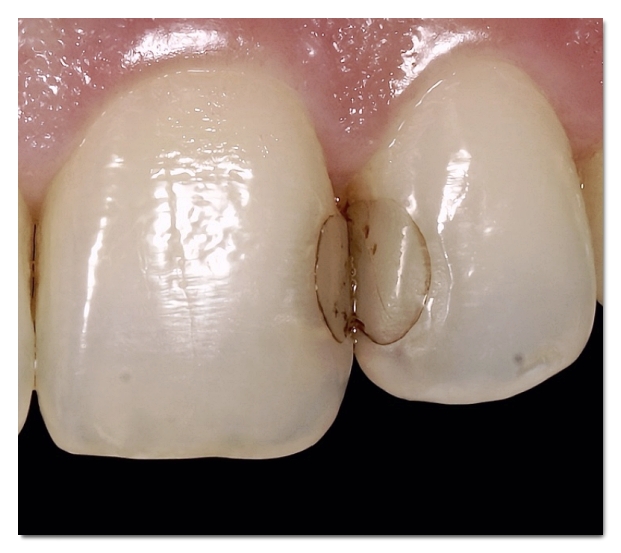 The black areas on the teeth in the photo above show that the margins of resin restorations have turned black.
That is why I always emphasize that, when placing veneers, it is best to use a high-quality resin adhesive from the beginning.
(The lower the cost, the lower the durability may be.)
It is also important to attach the veneers precisely so that no gaps form, minimizing lifting and staining as much as possible.
If the bonding is not done properly, staining, cavities, and veneer fractures are more likely to occur.
Receiving treatment as described below can help prevent these risks.
Should you stop drinking coffee?
There is no need to give up coffee, even if it is your favorite beverage.
Rather than forcing yourself to abstain, simply reducing your intake and managing it wisely can be enough.
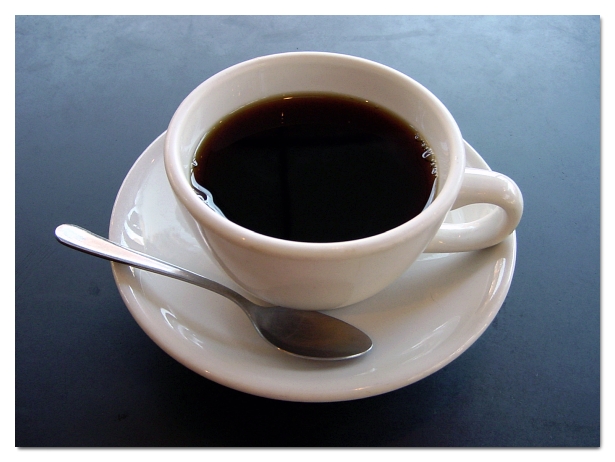
Rinse lightly after drinking
Rinse your mouth lightly with plain water immediately after drinking coffee.
This is the simplest and most reliable way to reduce the amount of time pigments remain in the gaps.
Use a straw
When drinking cold beverages, it is best to use a straw whenever possible.
Simply reducing the area where the beverage comes into direct contact with your front teeth can help considerably.
Avoid brushing immediately afterward
Avoid brushing your teeth immediately after drinking highly acidic beverages.
Because the tooth surface may be microscopically weakened, friction can cause damage instead. It is safer to wait about 30 minutes before brushing to protect the surrounding natural teeth.
Change your drinking habits
Rather than sipping one cup of coffee throughout the day, it is much better for your dental health to drink it within a set, shorter period and rinse your mouth afterward.
Essential precautions to know before the procedure
If you are about to undergo the procedure, be sure to consider the following three points in advance.
Veneers are restorations that you will generally use for quite a long time once they are attached.
- Choose the restoration material carefully.
Resin, a plastic-based material, has a low initial cost, but it is more vulnerable to discoloration over time.
If you regularly enjoy coffee, ceramic, which is more resistant to surface staining, is much more advantageous in the long term.
Rather than considering only the immediate cost, we recommend taking into account how well the color will be maintained several years from now.
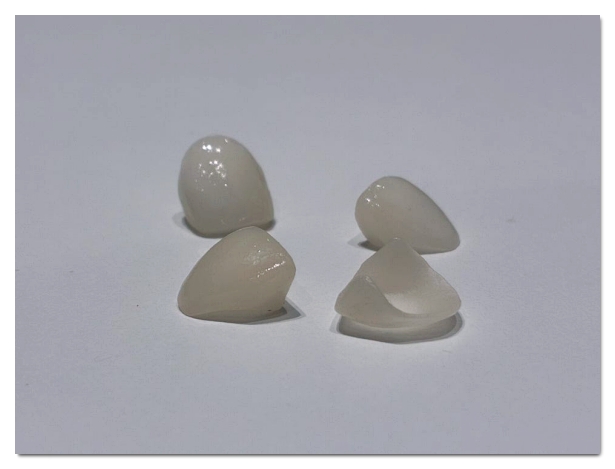
- Do not choose a tooth shade based solely on how white it is.
If you insist on an excessively bright shade from the beginning,
subtle differences in color from your natural teeth or staining along the margins may become especially noticeable later.
Finding a shade that naturally harmonizes with your skin tone and the color of your surrounding teeth is the key to maintaining satisfaction over time.
- Veneers cannot be made whiter again with ordinary tooth whitening.
Dental whitening agents work by breaking down pigments within living natural teeth, so they do not react with artificial restorations.
If staining has already progressed, the surface may need to be polished or the veneers may need to be remade.
That is why it is very important to develop preventive habits from the beginning.
Frequently Asked Questions (FAQ)
Q. Will mixing milk into coffee, as in a latte, reduce staining?
Some studies have found that it may help, but rinsing with water is a more reliable habit.
Q. Can whitening toothpaste help prevent staining?
We do not recommend it. Some whitening toothpastes on the market contain large amounts of coarse abrasives.
These ingredients can create microscopic scratches on the surface of restorations, ultimately making it easier for pigments to adhere.
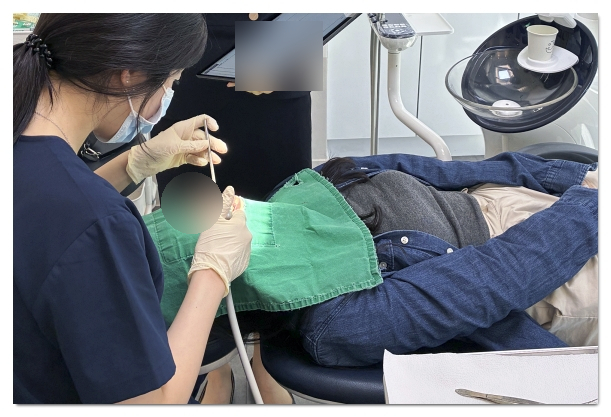
Rather than attempting intensive care at home, it is safer to receive professional cleaning at a dental clinic on a regular basis.
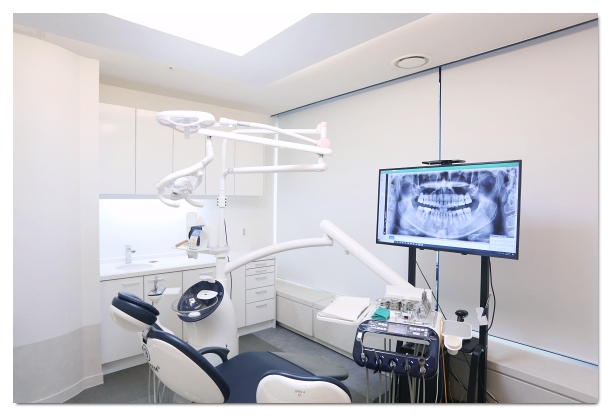
If staining seems to have already begun
If you already have veneers and the gum margins have become dark, there is no need to immediately assume that it is a serious problem.
If the staining is superficial and in its early stages, professional cleaning at a dental clinic, including scaling and polishing,
may restore a considerable amount of the original clarity.
If discoloration or contamination has progressed severely into the interior, the restorations may need to be remade.
The most important thing is not to make a hasty judgment on your own.
Even if the yellowish appearance looks similar, the appropriate solution differs depending on whether it is a simple stain, a problem with the marginal seal, or an issue caused by improper initial bonding.
In closing
In summary, drinking coffee does not cause veneers to deteriorate or discolor quickly.
However, a small habit of lightly rinsing with water after drinking,
along with visiting the dentist every six months for a checkup, can help you preserve the color of your veneers for quite a long time.
If you are considering the procedure, carefully consider the material and shade that are right for you.
If you already have veneers, we recommend first having your current dental condition evaluated.
Thank you. This has been Park Jae-hyung.
[Read the article below before getting veneers if you are considering them]